Three Newsroom Leaders Appointed to the Livingston Awards National Judging Panel

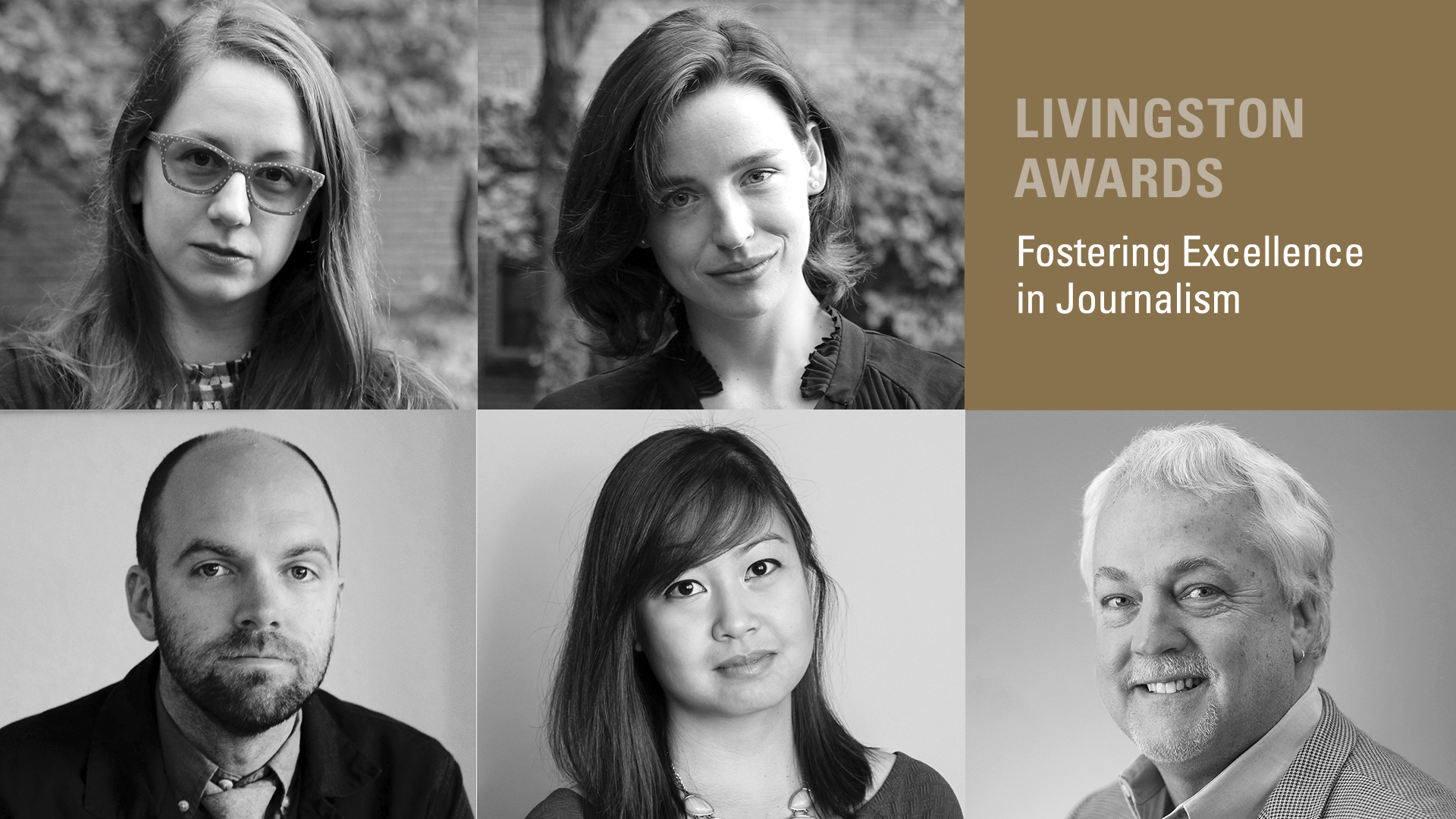
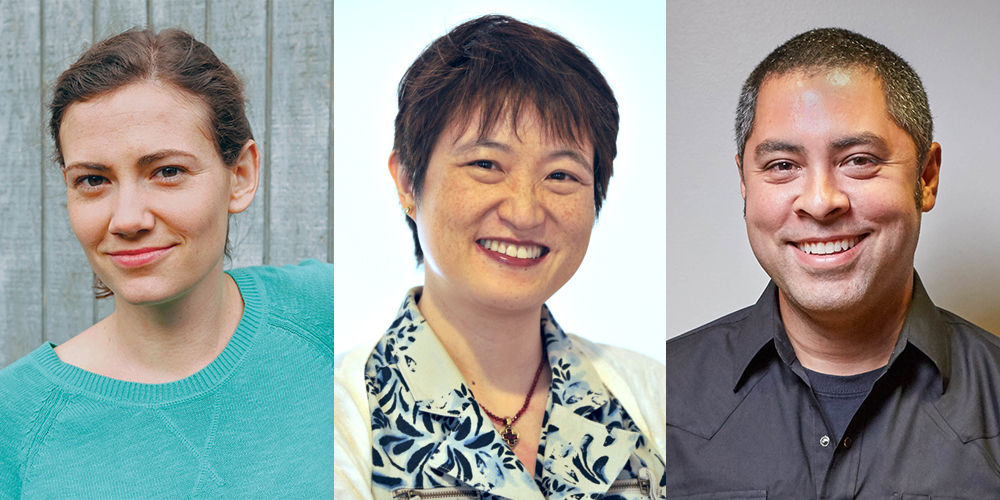
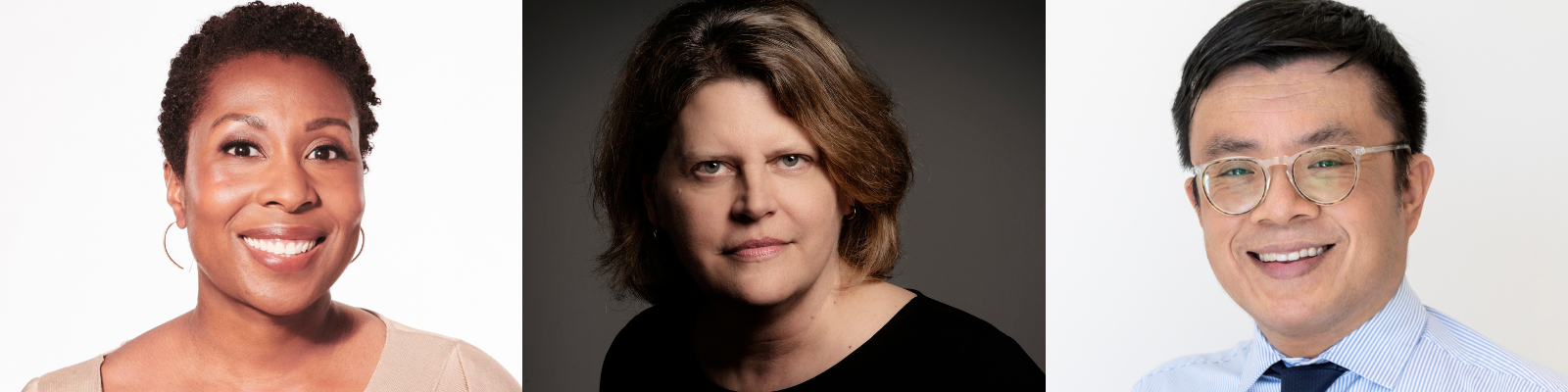
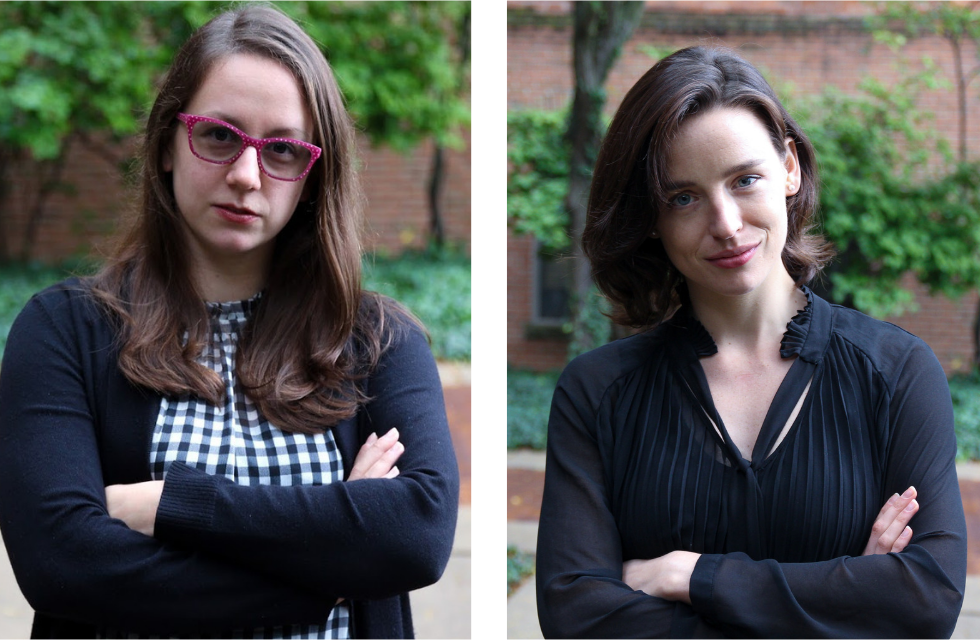
Newly appointed Livingston Award judges from left to right: Audie Cornish of CNN, Sally Buzbee of The Washington Post and Sewell Chan of The Texas Tribune.

Audie Cornish, Sally Buzbee and Sewell Chan join the Livingston Awards

Wallace House Center for Journalists and the Livingston Awards panel of national judges welcome Audie Cornish of CNN, Sally Buzbee of The Washington Post and Sewell Chan of The Texas Tribune to the Livingston Awards national judging panel. They will join our regional and national judges in identifying the best reporting and storytelling by journalists under 35.

Cornish is an anchor and correspondent for CNN. She hosts the CNN Audio podcast “The Assignment” and appears on CNN covering national, political and breaking news. Before joining CNN, Cornish was the co-host of NPR’s afternoon news program, “All Things Considered.” She began her journalism career with The Associated Press in Boston in 2001.

Buzbee is the executive editor of The Washington Post. She is the first woman to lead the Post’s newsroom. Under her leadership, the organization has created four managing editor roles and added 41 editor positions. Starting with The Associated Press in 1988 as a reporter in Kansas, she served as the organization’s Middle East regional editor, based in Cairo, Washington bureau chief, and executive editor.

Chan is the editor-in-chief of The Texas Tribune. Previously he was the deputy managing editor and editorial page editor at the Los Angeles Times. Chan worked at The New York Times as a metro reporter, Washington correspondent, deputy op-ed editor, and international news editor. He began his career as a local reporter at The Washington Post in 2000.

In addition to Cornish, Buzbee and Chan, the national judging panel includes Raney Aronson-Rath, executive producer, “Frontline,” PBS; Matt Murray, editor in chief, The Wall Street Journal; Lydia Polgreen, opinion columnist, The New York Times; María Elena Salinas, contributor, ABC News; Bret Stephens, op-ed columnist, The New York Times; and Kara Swisher, executive producer, Code Conference and host of the podcast “Pivot.” The national judges read all final entries and meet to select the Livingston winners in the local, national and international reporting categories and the Richard M. Clurman recipient, an award honoring a senior journalist for on-the-job mentoring.

As we welcome these three new judges, four of our long-serving national judges will move to emeritus status and continue to serve the Livingston Awards in various capacities. These include our longest-serving Livingston Award judge, Ken Auletta, who joined the judging panel in 1982; Clarence Page, who has been with the Livingston Awards since 1993; and John Harris and Anna Quindlen, who became  Livingston Awards judges in 2009.

The Livingston Awards regional judges read all qualifying entries and select the finalists in local, national and international reporting categories. Their selections move to the national judges for the final round of judging. The regional judging panel includes Molly Ball, national political correspondent, TIME; Stella Chávez, immigration and demographics reporter, KERA Public Radio (Dallas); Chris Davis, deputy for the Local Investigative Reporting Fellowship, The New York Times; David Greene, host, “In the Moment with David Greene,” Religion of Sports and PRX; Stephen Henderson, executive editor, BridgeDetroit; Shirley Leung, associate editor, The Boston Globe; and Amna Nawaz, co-anchor, “PBS NewsHour.”

Now Accepting Entries

The Livingston Awards are now accepting entries for work published in 2022. The entry deadline is February 1, 2023. The deadline to submit a Clurman nomination is March 1, 2023.

This year’s Livingston Award winners will be announced on June 13, 2023, at a ceremony in New York City.

About the Livingston Awards

Livingston Awards honor journalists under the age of 35 for outstanding achievement in local, national and international reporting across all forms of journalism. The awards bolster the work of young reporters, create the next generation of journalism leaders and mentors, and advance civic engagement around powerful storytelling.
Announcing the 2022 Livingston Award Winners

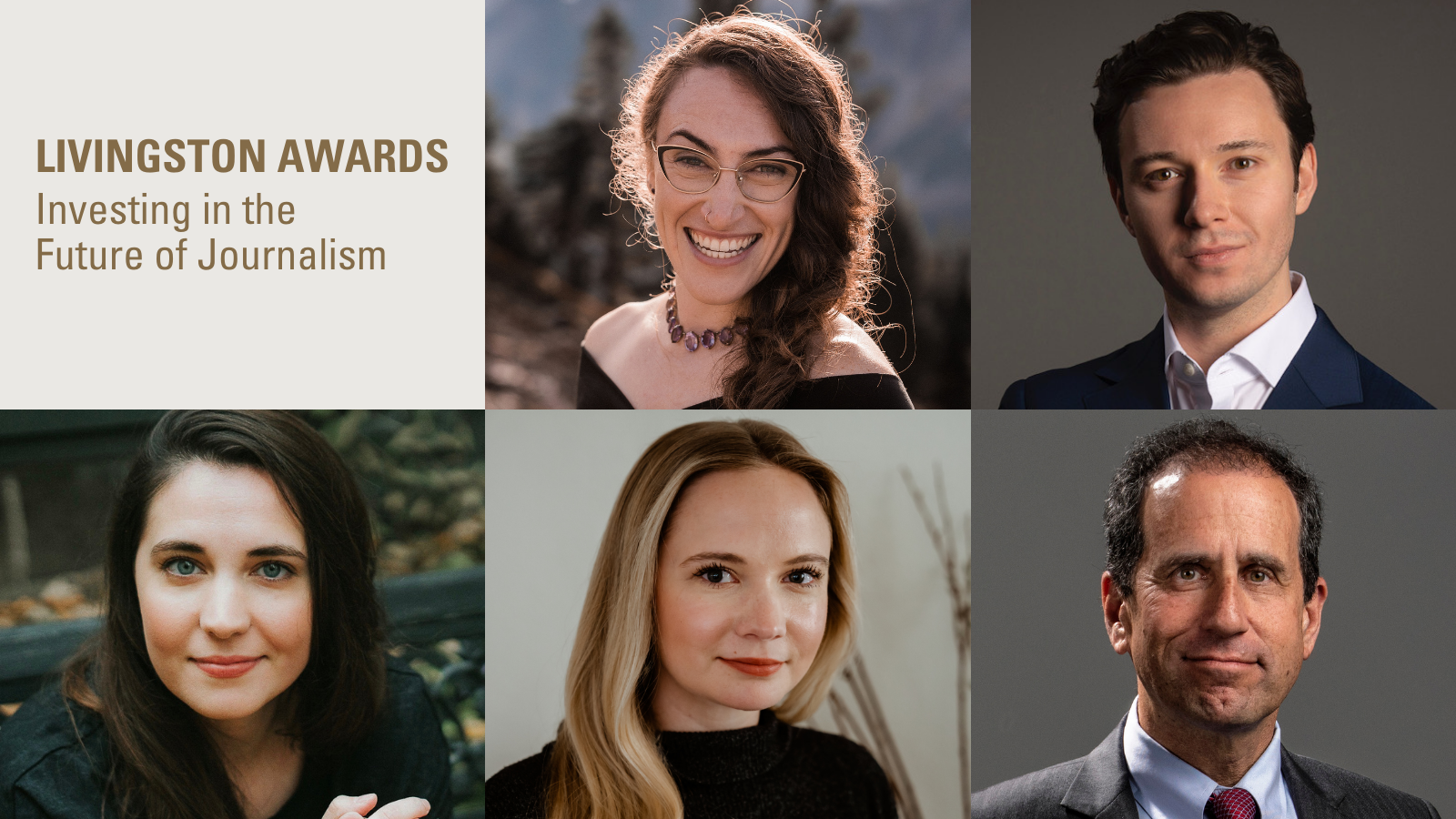
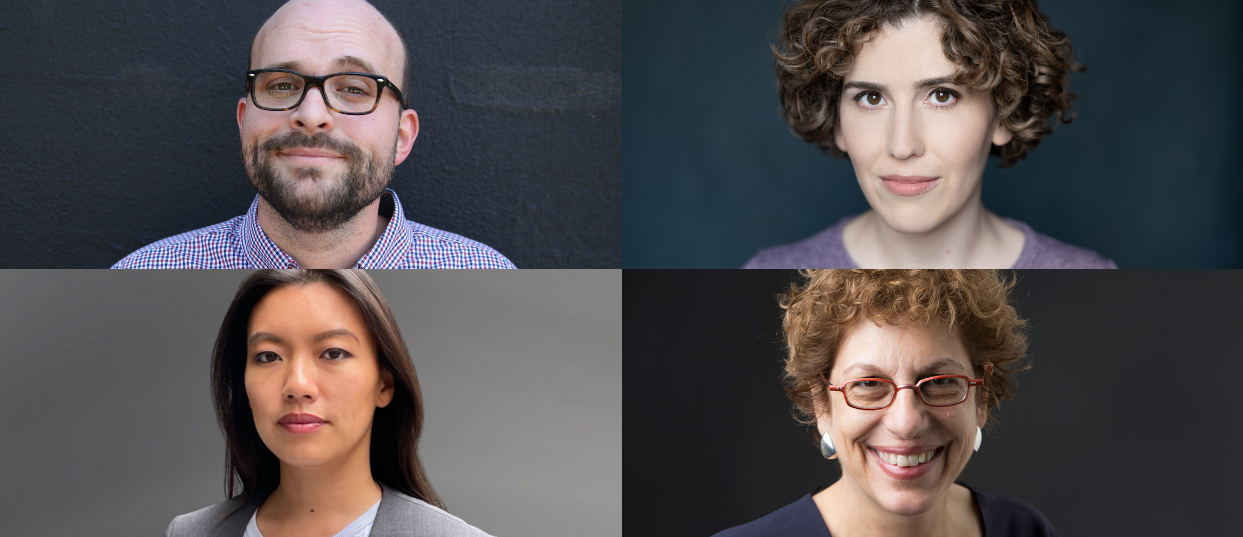
2022 Livingston Award winners (clockwise from top-left) Alex Stuckey of the Houston Chronicle, Jose A. Del Real of The Washington Post, Erika Lantz and Elin Lantz Lesser of Rococo Punch and iHeartRadio, and the Richard M. Clurman Award recipient, the late Fred Hiatt.

Today the Livingston Awards honor stories that represent the best in local, national and international reporting by journalists under the age of 35. The winning stories highlight Texas’s troubled mental healthcare system, the spread of viral disinformation and its effects on personal relationships, and the darker side of a religious order founded by Mother Theresa. The $10,000 prizes are for work released in 2021.

The Livingston Awards also honored the late Fred Hiatt, editorial page editor of The Washington Post, with the Richard M. Clurman Award for mentoring. The $5,000 prize is given each year to an experienced journalist who has played a pivotal role in guiding and nurturing the careers of young reporters. The prize is named for the late Richard M. Clurman, former chief of correspondents for Time-Life News Service and architect of the Livingston Awards.

Livingston Awards national judges Raney Aronson-Rath of Frontline, María Elena Salinas of ABC News, Anna Quindlen, author, and Bret Stephens of The New York Times introduced the winners at a ceremony, hosted by former long-serving Livingston Awards national judge Dean Baquet of The New York Times.

“Reading the Livingston Award entries we are reminded of the power of journalism to chronicle not just the biggest stories of the moment, but also looming crises and long ago misdeeds only now being called to account. This year’s winners each crafted beautifully nuanced portraits of the consequences of systemic failures and loss of trust in institutions,” said Lynette Clemetson, director of Wallace House. “Through meticulous reporting, they leave us no choice but to ponder the responsibility of those in power and our individual roles in either perpetuating or changing the systems that guide our lives.” 

Celebrating its 41st year, the awards bolster the work of young reporters, create the next generation of journalism leaders and mentors, and advance civic engagement around powerful storytelling. The sponsors include the University of Michigan, Knight Foundation, the Indian Trail Charitable Foundation, the Mollie Parnis Livingston Foundation, Christiane Amanpour, the Fred and Judy Wilpon Foundation, Dr. Gil Omenn and Martha Darling, and Google News Inititative.
The 2022 winners for work released in 2021 are listed below.

Local Reporting

Alex Stuckey, 31, of the Houston Chronicle for “In Crisis,” an investigation of Texas’s mental health facilities, revealing an underfunded system shrouded in secrecy, where patient care takes a backseat to blame-avoidance. Her work prompted new state procedures and legislation to begin to address these problems.

“Alex Stuckey’s vivid accountability journalism about the challenges people living with severe mental illness face in Texas reveals a state in crisis and a serious bureaucratic breakdown with devastating human consequences. The systematic failure in Texas set against the stories of individual families is both urgent and heartbreaking and a model of great journalism. Drawing on a long-standing personal interest in care for those living with mental illness, her investigation illustrates a complex web of state level policies and failures that have a dire impact on the people who need the services the most.” – Raney Aronson-Rath

National Reporting

Jose A. Del Real, 31, of The Washington Post for “Truth, Trust and Conspiracy Theories in America,” a series examining viral disinformation, how it spreads and the impact it has on the personal relationships of those involved.

“As we try to navigate this complicated world we are living in, chock full of divisions and conspiracy theories that lead to anger and hatred, it is refreshing to read the humanity that Jose Del Real put into his stories on this very perplexing issue. He treats his characters with respect and compassion and helps the reader try to understand what moves them. Jose Del Real is a gem who so eloquently reminds us that conspiracy theories are part of American history and that only truth and trust can attempt to overcome them.” – María Elena Salinas

International Reporting

Erika Lantz, 31, and Elin Lantz Lesser, 30, of RococoPunch and iHeartRadio for “The Turning, The Sisters Who Left” a podcast series exploring the insular world of the Missionaries of Charity, the religious order founded by Mother Theresa, and the darker side of devotion.

“Sometimes it is the intimate, the human, that unexpectedly illuminates the great world for us. That was the case for me with ‘The Turning: The Sisters Who Left.’ In the anguished words of women who had entered the Missionaries of Charity, the religious order founded by Mother Teresa, I heard the classic dilemma of women’s lives: sacrifice versus freedom. Following faith and seeking to serve the poor, these women had discovered a system of isolation and control that began to break their spirits. Their stories were told with such care and sensitivity that their struggles lived within me afterward, less a podcast, more a world.” – Anna Quindlen

Mentoring Award

Fred Hiatt, editorial editor of The Washington Post, was honored posthumously with the Richard M. Clurman Award for his personal commitment to counsel, nurture and inspire young journalists.

“Somehow, Fred saw through the writer I was to the writer I wanted to be, one I couldn’t have become without his patience and support, one encouraging email at a time…Fred must have had access to some reservoir of time that most people do not, because I can name dozens of people who feel the same gratitude for the doors he opened.” – Alexandra Petri of The Washington Post.

In addition to Aronson-Rath, Salinas, Quindlen and Stephens, the Livingston national judging panel includes Ken Auletta of The New Yorker; John Harris of Politico; Matt Murray of The Wall Street Journal; Clarence Page of the Chicago Tribune; Lydia Polgreen of Gimlet; and Kara Swisher of The New York Times and Vox Media.

More on the winners here.

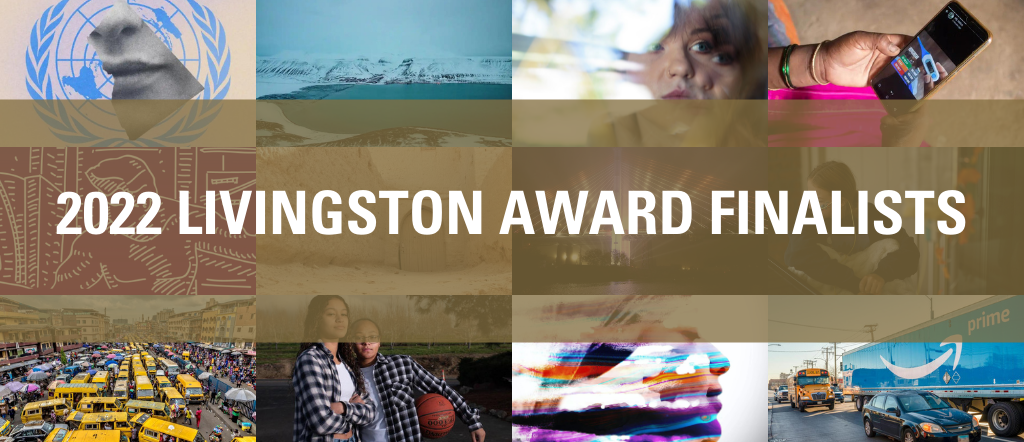
Announcing the 2022 Livingston Award Finalists

Wallace House and the University of Michigan announced today the 2022 Livingston Awards finalists in local, national, and international reporting. The awards support young journalists and honor the best reporting and storytelling by journalists under the age of 35 across all forms of journalism. The 52 finalist selections were chosen from more than 450 entries for work released in 2021.

This year’s winners will be announced on June 8, 2022, at an in-person awards ceremony hosted by Dean Baquet, long-serving Livingston Award judge and executive editor of The New York Times.  

“As the world continues to move through various types of upheaval, it’s encouraging to see younger journalists taking on and tackling important and complex stories,” said Wallace House Director Lynette Clemetson, Wallace House Director. 

Celebrating its 41st year, the awards bolster the work of young reporters, create the next generation of journalism leaders and mentors, and advance civic engagement around powerful storytelling. The sponsors include the University of Michigan, Knight Foundation, the Indian Trail Charitable Foundation, the Mollie Parnis Livingston Foundation, Christiane Amanpour, the Fred and Judy Wilpon Foundation, and Dr. Gil Omenn and Martha Darling.

The Livingston Awards regional judges read all qualifying entries to select the finalists in local, national and international reporting. The regional judging panel includes Molly Ball, national political correspondent, TIME; Stella Chávez, immigration and demographics reporter, KERA Public Radio (Dallas); Chris Davis, executive editor and Vice-President of Investigative Journalism, Gannett; David Greene, host, “Ukraine Stories,” Fearless Media; Stephen Henderson, host, “Detroit Today,” WDET; Shirley Leung, columnist and associate editor, The Boston Globe; and Amna Nawaz, senior national correspondent, PBS “NewsHour.”

The Livingston Awards national judges review all finalist entries and select the winners. The national judges are Raney Aronson-Rath, executive producer, “FRONTLINE”; Ken Auletta, author and media and communications writer, The New Yorker; John Harris, co-founder, POLITICO; Matt Murray, editor in chief, The Wall Street Journal; Clarence Page, syndicated columnist; Lydia Polgreen, head of content, Gimlet; Anna Quindlen, author; María Elena Salinas, contributor, ABC News; Bret Stephens, op-ed columnist, The New York Times; and Kara Swisher, executive producer, Code Conference and host of the podcasts “Sway” and “Pivot.”

We present the 2022 Livingston Awards finalists and invite you to review their work here.

Local Reporting

  • Jessica Bakeman, New York Magazine
  • Sarah Blaskey, Miami Herald
  • Zoë Carpenter, The Nation
  • Rebecca Ellis, Oregon Public Broadcasting
  • Callie Ferguson, The Bangor Daily News
  • Amelia Ferrell Knisely and Molly Born, Mountain State Spotlight and The GroundTruth Project
  • Marie J. French, POLITICO
  • Amy Julia Harris, The New York Times
  • Madison Hopkins and Cecilia Reyes, Better Government Association and the Chicago Tribune
  • Cary Junior II, Detroit Free Press
  • Mark Keierleber, The 74
  • Danae King, The Columbus Dispatch
  • Kate McGee, The Texas Tribune
  • Mandy McLaren, The Courier-Journal (Louisville, KY)
  • Brittny Mejia, Los Angeles Times 
  • Jessica Miller, Paighten Harkins, Abby Ellis, Taylor Eldridge, Sam Stecklow and Muna Mohamed FRONTLINE in partnership with The Salt Lake Tribune
  • Jessica Seaman, The Denver Post
  • Andrew Seidman, The Philadelphia Inquirer
  • Alex Stuckey, Houston Chronicle
  • Evey Wilson Wetherbee, Georgia Public Broadcasting 

 National Reporting

  • Jess Bidgood, The Boston Globe
  • Jamelle Bouie, The New York Times
  • Tony Briscoe, ProPublica
  • Claire Hannah Collins, Los Angeles Times
  • Maddy Crowell, The Atavist Magazine
  • Jose A. Del Real, The Washington Post
  • Hannah Dreyfus, ProPublica
  • Katelyn Ferral, Milwaukee Journal Sentinel
  • Maggie Freleng and Julieta Martinelli, Futuro Media/PRX
  • Drew Harwell, The Washington Post
  • Baxter Holmes, ESPN
  • Lauren Leatherby, The New York Times
  • Claire McNear, The Ringer
  • Laura C. Morel and Mohamed Al Elew, Reveal from The Center for Investigative Reporting
  • Cecilia Nowell, New York Magazine’s The Cut
  • Rita Omokha, ELLE
  • Lizzie Presser, ProPublica
  • Roman Stubbs, The Washington Post
  • Saidu Tejan-Thomas Jr., Gimlet Media
  • Kaveh Waddell and Maanvi Singh, Consumer Reports and The Guardian

 International Reporting

  • Rachael Bale, National Geographic
  • Max Bearak, Júlia Ledur and Dylan Moriarty, The Washington Post
  • Khalid Bencherif, In These Times
  • Olivia Carville, Bloomberg Businessweek
  • Gloria Dickie, Scientific American 
  • Thomas Gibbons-Neff, The New York Times
  • Sanket Jain, The Verge (Vox Media)
  • May Jeong, New York Magazine
  • Olivia Konotey-Ahulu, Bloomberg News
  • Erika Lantz and Elin Lantz Lesser, Rococo Punch and iHeartRadio
  • Louisa Loveluck and Mustafa Salim, The Washington Post
  • David Mora, VICE News

Announcing the 2021 Livingston Award Winners

2021 Livingston Award winners (counter-clockwise from top left) Joshua Sharpe of The Atlanta Journal-Constitution, Hannah Dreier of The Washington Post, and Chao Deng of The Wall Street Journal and 2021 Clurman Award recipient Susan Chira, editor-in-chief of The Marshall Project.

Today the Livingston Awards honor stories that represent the best in local, national and international reporting by journalists under age 35. The winning stories highlight an investigation proving the innocence of a man serving two life sentences for murder, the deadly consequences of a teenage asylum-seeker in the flawed U.S. immigration system, and early Covid reporting from Wuhan, China. The $10,000 prizes are for work released in 2020.

The Livingston Awards also honored Susan Chira, editor-in-chief of The Marshall Project with the Richard M. Clurman Award for mentoring. The $5,000 prize is given each year to an experienced journalist who has played a pivotal role in guiding and nurturing the careers of young reporters. The prize is named for the late Richard M. Clurman, former chief of correspondents for Time-Life News Service and architect of the Livingston Awards.

Livingston Awards national judges Anna Quindlen, author, Matt Murray of The Wall Street Journal, Raney Aronson-Rath of FRONTLINE and Lydia Polgreen of Gimlet introduced the winners at an online ceremony, hosted former Livingston Award national judge Christiane Amanpour of CNN and PBS.

“We are always moved by the work of our Livingston Award entrants, finalists and winners. But the work published in 2020 is especially important and inspiring. Under incredibly difficult reporting circumstances, these tenacious journalists doggedly pursued work that pushed criminal justice, immigration and global public health systems – toward truth, transparency and greater accountability,” said Livingston Awards Director Lynette Clemetson. “We are proud to honor this year’s winners and we look forward to extending the reach of their work and following their promising careers.” 

Celebrating its 40th year, the awards bolster the work of young reporters, create the next generation of journalism leaders and mentors, and advance civic engagement around powerful storytelling. The sponsors include the University of Michigan, Knight Foundation, the Indian Trail Charitable Foundation, the Mollie Parnis Livingston Foundation, Christiane Amanpour, the Fred and Judy Wilpon Foundation, and Dr. Gil Omenn and Martha Darling.
The 2021 winners for work released in 2020 are:

Local Reporting

Joshua Sharpe, 33, of The Atlanta Journal-Constitution for “The Imperfect Alibi,” an exhaustive re-examination of a 35-year old double murder mystery that debunked the alibi of a long-overlooked suspect and proved the innocence of a man wrongly imprisoned for 20 years.

Only very rarely does one of our stories – one of us – change the course of human events. For more than two decades, a man said that he wasn’t the person who murdered a deacon and his wife, both pillars of the local black community in Spring Bluff, Georgia. Joshua Sharpe asked the right questions, refusing easy answers and pretty much proved that man was telling the truth and was innocent. And that another man was guilty of those crimes and had gotten over for so many years with an alibi so thin that you could read a newspaper through it. – Anna Quindlen

National Reporting

Hannah Dreier, 33, of The Washington Post for “Trust and Consequences,” a portrait of Kevin Euceda, a teenage asylum-seeker fleeing Honduras, who was held in U.S. custody and required to see a therapist only to have notes from those confidential sessions turned over to ICE and used against him in court hearings.

Hannah Dreier’s series does what the best reporting can do. It leaves an indelible impression by making abstract policy and institutional decisions, human and concrete, and shows the effect they can have on real lives. Whatever one’s views on immigration, no one who reads these stories can fail to be moved outraged and informed by them. – Matt Murray

International Reporting

Chao Deng, 32, of The Wall Street Journal for “On the Front Lines in Wuhan,” a remarkable series of reports which, despite the Chinese government’s attempts to silence her, tells the complex and rapidly evolving story on the ground at the epicenter of the coronavirus pandemic in the early stages of the crisis.

The gathering of anonymous accounts from government officials, paired so eloquently with family stories of Chinese citizens, dealing with the then mysterious outbreak. Chao Deng’s reporting amplified the voices of the citizens of Wuhan. It was, and is, vital and crucially important journalism. – Raney Aronson-Rath

Mentoring Award

Susan Chira was honored with the Richard M. Clurman Award for her newsroom commitment to counseling, nurturing and inspiring young journalists. Chira is the editor-in-chief of The Marshall Project and former deputy executive editor of The New York Times. In a video tribute introduced by Lydia Polgreen, reporters from The New York Times and The Marshall Project spoke about Chira’s influence on their careers.

Susan inspired me to follow in her footsteps and become a leader, a mentor, a coach and an editor. Looking back now I know that the most important work of my life is not the swashbuckling exploits that I enjoyed as a young foreign correspondent. Susan inspired and championed that work for sure. But more importantly, she inspired me to emulate her leadership and to be a Susan Chira for everyone who wasn’t lucky enough to work with the real Susan Chira. – Lydia Polgreen

In addition to Quindlen, Murray, Aronson-Rath and Polgreen, the Livingston national judging panel includes; Ken Auletta of The New Yorker, Dean Baquet of The New York Times; John Harris, co-founder of Politico, Clarence Page of the Chicago Tribune; María Elena Salinas, CBS News contributor; Bret Stephens of The New York Times; and Kara Swisher of The New York Times and Vox Media.

More on the winners here.

Watch the virtual ceremony here.


About the Livingston Awards

The Livingston Awards for Young Journalists are the most prestigious honor for professional journalists under the age of 35 and are the largest all-media, general reporting prizes in American journalism. Entries from print, online, visual and audio storytelling are judged against one another, as technology blurs distinctions between traditional platforms. The $10,000 prizes are awarded annually for local, national and international reporting. The Livingston Awards are a program of Wallace House at the University of Michigan, home to the Knight-Wallace Fellowships for Journalists and the Wallace House Presents event series.

Announcing the 2021 Livingston Award Finalists

Wallace House and the University of Michigan announced today the 2021 Livingston Awards finalists in local, national and international reporting. The awards support young journalists and honor the best reporting and storytelling by journalists under the age of 35 across all forms of journalism. The 50 finalist selections were chosen from more than 500 entries for work released in 2020.

This year’s Livingston Award winners will be announced at a virtual ceremony on June 10, 2021. Hosted by  Christiane Amanpour, former Livingston Award winner and judge, the event is open to everyone. Information and registration can be found here.  

“We are proud and honored to acknowledge and showcase the reporting of this year’s Livingston Award finalists, who produced exceptional works of journalism despite the numerous intersecting challenges facing the nation today,” said Wallace House Director Lynette Clemetson. “That we received more than 500 strong entries this year is testament to the conviction and dedication of young journalists to pursue stories that need to be told, especially in the most difficult times.”

Celebrating its 40th year, the awards bolster the work of young reporters, create the next generation of journalism leaders and mentors, and advance civic engagement around powerful storytelling. The sponsors include the University of Michigan, Knight Foundation, the Indian Trail Charitable Foundation, the Mollie Parnis Livingston Foundation, Christiane Amanpour, the Fred and Judy Wilpon Foundation, and Dr. Gil Omenn and Martha Darling.
The Livingston Awards regional judges read all qualifying entries to select the finalists in local, national and international reporting. The regional judging panel includes Molly Ball, national political correspondent, Time; Stella Chávez, immigration and demographics reporter, KERA Public Radio (Dallas); Chris Davis, executive editor and Vice-President of Investigative Journalism, Gannett; David Greene, former host, “Morning Edition,” NPR; Stephen Henderson, host, “Detroit Today,” WDET; Shirley Leung, columnist and associate editor, The Boston Globe; and Amna Nawaz, senior national correspondent, PBS “NewsHour.”

The Livingston Awards national judges review all finalist entries and select the winners. The national judges are Raney Aronson-Rath, executive producer, “Frontline,”; Ken Auletta, author and media and communications writer, The New Yorker; Dean Baquet, executive editor, The New York Times; John Harris, co-founder, Politico; Matt Murray, editor in chief, The Wall Street Journal; Clarence Page, syndicated columnist; Lydia Polgreen, head of content, Gimlet; Anna Quindlen, author; María Elena Salinas, contributor, CBS News; Bret Stephens, op-ed columnist, The New York Times; and Kara Swisher, executive producer, Code Conference and host of the podcasts “Sway” and “Pivot.”

We present the 2021 Livingston Awards finalists and invite you to review their work here.

Local Reporting

  • Haley BeMiller, Green Bay Press-Gazette
  • Lauren Caruba, San Antonio Express-News
  • Lakeidra Chavis, The Trace in partnership with The Chicago Sun-Times
  • Ann Choi, Rachel Holiday Smith and Will Welch, The City (NY, NY)
  • Jessica Contrera, The Washington Post
  • Courtney Crowder, The Des Moines Register
  • Andrew Ford, Asbury Park Press in partnership with ProPublica
  • Eileen Grench, The City (NY, NY)
  • Samantha Hogan and Agnel Philip, The Maine Monitor and ProPublica with support from Report for America
  • Lizzie Johnson, San Francisco Chronicle
  • Josh Kaplan, DCist in partnership with Spotlight DC
  • Soumya Karlamangla, Los Angeles Times
  • Ana Ley, The Virginian-Pilot
  • Nichole Manna, Fort Worth Star-Telegram
  • Jessica Miller, The Salt Lake Tribune
  • Thad Moore, The Post and Courier (Charleston, S.C.)
  • Bridget Read, New York Magazine
  • Eric Sandy, Cleveland Scene
  • Joshua Sharpe, The Atlanta Journal-Constitution

 National Reporting

  • Kenzi Abou-Sabe, Adiel Kaplan and Kit Ramgopal, NBC News Investigative Unit
  • Hamed Aleaziz, BuzzFeed News
  • Bethany Barnes, Tampa Bay Times
  • Eric Boodman, STAT
  • Sydney Brownstone, Scott Greenstone and Will James, KNKX Public Radio and The Seattle Times
  • Elizabeth Bruenig, The New York Times
  • Chabeli Carrazana, The 19th
  • Elizabeth Dias, The New York Times
  • Hannah Dreier, The Washington Post
  • Blake Ellis and Melanie Hicken, CNN
  • Katie Engelhart, The California Sunday Magazine
  • Alissa Escarce, Max Siegelbaum and Mazin Sidahmed, Documented, Latino USA and Type Investigations
  • Eli Hager, The Marshall Project in partnership with The Atlantic
  • Ellen Huet and Shawn Wen, Bloomberg News
  • Jamiles Lartey, The Marshall Project
  • Daniel Lombroso, The Atlantic
  • Alysia Santo and Elaine Sheldon, The Marshall Project in partnership with FRONTLINE and America ReFramed on WORLD Channel
  • Emily Shugerman, The Daily Beast
  • Roman Stubbs, The Washington Post
  • Sarah Zhang, The Atlantic 

 International Reporting

  • Josh Baker, FRONTLINE
  • Luisa Conlon, Gabriela Dematteis and Paola Ramos, Vice News
  • Maddy Crowell, Virginia Quarterly Review
  • Chao Deng, The Wall Street Journal
  • Caitlin Dickerson, The New York Times
  • Emily Feng, NPR
  • Ruby Gaviola, Lauryn Schroeder and Kate Morrissey, San Diego Union-Tribune
  • Claire Harbage and Kat Lonsdorf, NPR in partnership with the John Alexander Project
  • Isayen Herrera and Julie Turkewitz, The New York Times
  • Emily Keen and Isobel Yeung, Vice News
  • Timothy McLaughlin, The Atlantic
  • J. Weston Phippen, POLITICO

More on the finalists and links to their work »

Join our 2021 Virtual Awards Ceremony

Celebrating our 2021 Livingston Winners Together Online

Join us online from 12:30 to 2 p.m. ET on Thursday, June 10 for a virtual event to meet the Livingston winners in local, national and international reporting, honor their work in the pursuit of truth and celebrate the future of journalism. 

2021 marks 40 years of the Livingston Awards identifying exceptional young journalists and the next generation of newsroom leaders. This year’s fully virtual ceremony will feature all of the celebrity, young talent and inspiring journalism of our annual celebration in an online and safe environment.

We’ll miss gathering with our Livingston supporters and friends in person at our award luncheon in New York City, but we look forward to the participation of those from across the country and the world who can not regularly join us.  We look forward to celebrating with you on June 10.

Watch the ceremony on our Virtual Event page »

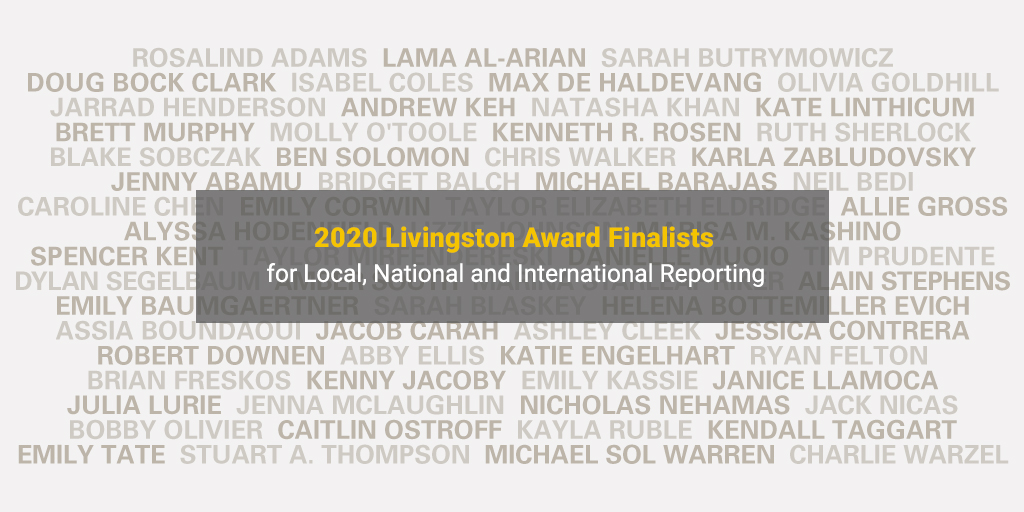
Announcing the 2020 Livingston Award Finalists


Wallace House and the University of Michigan announced today the 2020 finalists in local, national and international reporting. The awards support young journalists and honor the best reporting and storytelling by journalists under the age of 35 across all forms of journalism. The 56 finalist selections were chosen from more than 500 entries for work released in 2019.

This year’s Livingston Award winners will be announced on the Wallace House website and Twitter on June 4, 2020 and honored in person in June 2021, when we hope to return to our traditional awards luncheon. We will not gather this year due to public health concerns.

“This year’s Livingston Award finalists affirm the persistence, commitment and creativity of journalists to push beyond the surface to reveal complex truths and illuminate the human experience,” said Wallace House Director Lynette Clemetson. “The more than 500 entries we received are a testament to the role young journalists play in pushing the craft forward despite industry challenges and public efforts to invalidate journalism’s role in society. In recognizing these finalists we hope to extend the reach of their work and encourage the further development of their careers.”

Funded by the John S. and James L. Knight Foundation and the University of Michigan to support the vital role of a free and independent press, the awards bolster the work of young reporters, create the next generation of journalism leaders and mentors, and advance civic engagement around powerful storytelling. Other sponsors include the Indian Trail Charitable Foundation, the Mollie Parnis Livingston Foundation, Christiane Amanpour and Dr. Gil Omenn and Martha Darling.
The Livingston Awards regional judges read all qualifying entries to select the finalists in local, national and international reporting. The regional judging panel includes: Raney Aronson-Rath, executive producer, “Frontline,” PBS; Molly Ball, national political correspondent, Time; Stella Chávez, education reporter, KERA Public Radio (Dallas); Chris Davis, Vice-President of Investigative Journalism, Gannett; David Greene, host, “Morning Edition,” NPR; Stephen Henderson, host, “Detroit Today,” WDET; and Shirley Leung, columnist and associate editor, The Boston Globe.

The Livingston Awards national judges review all finalist entries and select the winners. The national judges are Christiane Amanpour, chief international correspondent, CNNi and host, “Amanpour on PBS”; Ken Auletta, author and media and communications writer, The New Yorker; Dean Baquet, executive editor, The New York Times; John Harris, co-founder, Politico; Clarence Page, Chicago Tribune; Anna Quindlen, author; María Elena Salinas, contributor, CBS News; Bret Stephens, op-ed columnist, The New York Times; and Kara Swisher, editor at large, Recode.

We present the 2020 Livingston Awards finalists and invite you to review their work here.

Local Reporting

  • Jenny Abamu, WAMU
  • Bridget Balch, Richmond Times-Dispatch
  • Michael Barajas, Texas Observer
  • Neil Bedi, Tampa Bay Times
  • Caroline Chen, ProPublica co-published with NJ Advance Media and WNYC
  • Emily Corwin, New Hampshire Public Radio
  • Taylor Elizabeth Eldridge, Type Investigations in partnership with The Appeal
  • Allie Gross, Detroit Free Press
  • Alyssa Hodenfield, The Sacramento Bee
  • Lizzie Johnson, San Francisco Chronicle
  • Marisa M. Kashino, Washingtonian
  • Spencer Kent, NJ Advance Media
  • Taylor Mirfendereski, KING 5
  • Danielle Muoio, POLITICO New York
  • Tim Prudente, The Baltimore Sun
  • Dylan Segelbaum and Amber South, The York Daily Record
  • Marina Starleaf Riker, San Antonio Express-News
  • Alain Stephens, The Trace in partnership with NBC Bay Area, NBC San Diego and NBC Los Angeles

 National Reporting

  • Emily Baumgaertner, Los Angeles Times
  • Sarah Blaskey, Nicholas Nehamas and Caitlin Ostroff, Miami Herald
  • Helena Bottemiller Evich, POLITICO
  • Assia Boundaoui, PBS’s POV
  • Jacob Carah, Abby Ellis and Kayla Ruble, FRONTLINE
  • Ashley Cleek and Janice Llamoca, Latino USA
  • Jessica Contrera, The Washington Post
  • Robert Downen, Houston Chronicle
  • Katie Engelhart, The California Sunday Magazine
  • Ryan Felton, Consumer Reports
  • Brian Freskos, The Trace in partnership with The New Yorker
  • Kenny Jacoby, USA TODAY Network
  • Emily Kassie, The Marshall Project in partnership with The Guardian
  • Julia Lurie, Mother Jones
  • Jenna McLaughlin, Yahoo News
  • Jack Nicas, The New York Times
  • Bobby Olivier and Michael Sol Warren, NJ Advance Media
  • Kendall Taggart, BuzzFeed News
  • Emily Tate, EdSurge and WIRED
  • Stuart A. Thompson and Charlie Warzel, The New York Times

 International Reporting

  • Rosalind Adams, BuzzFeed News
  • Lama Al-Arian and Ruth Sherlock, NPR
  • Sarah Butrymowicz, The Hechinger Report in partnership with Marie Claire
  • Doug Bock Clark, GQ magazine
  • Isabel Coles, The Wall Street Journal
  • Max de Haldevang, Quartz
  • Olivia Goldhill, Quartz
  • Jarrad Henderson, USA Today
  • Andrew Keh, The New York Times
  • Natasha Khan, The Wall Street Journal
  • Kate Linthicum, Los Angeles Times
  • Brett Murphy, USA TODAY Network
  • Molly O’Toole, Los Angeles Times
  • Kenneth R. Rosen, WIRED
  • Blake Sobczak, E&E News
  • Ben Solomon, FRONTLINE on PBS
  • Chris Walker, Rock and Ice Magazine
  • Karla Zabludovsky, BuzzFeed News

More on the finalists and links to their work »

How to Use Audio to Break Assumptions and Create Empathy

Livingston Awards winners Lindsey Smith and Kate Wells speak at 2019 IRE Houston

June 14 | 3:45 p.m.
Texas F
2019 IRE Houston


Meet the 2019 winners of the Livingston Awards for Young Journalists. Michigan Radio and NPR’s podcast “Believed” moved beyond the headlines for an intimate look at how a detective, prosecutor and army of survivors brought down former U.S.A. Gymnastics doctor and serial sex offender, Larry Nassar. Learn how Kate Wells and Lindsey Smith investigated Nassar’s assaults through the voices and experiences of his victims and their families to capture listeners and hit the number one spot on the iTunes chart.


Panelists:

  • Lindsey Smith, 2019 Livingston Award winner for local reporting. Michigan Radio’s Investigative Reporter. Mom of two girls. Lover of The Great Lakes. Lindsey Smith teamed up with Kate Wells on “Believed,” a podcast exploring how former sports doctor Larry Nassar got away with child sexual abuse for decades. The podcast was awarded a Livingston Award and Peabody, two firsts for the station. Smith’s 2015 documentary, “Not Safe to Drink,” led Michigan Radio’s award-winning coverage of the Flint water crisis.
  • Kate Wells, 2019 Livingston Award winner for local reporting. Kate’s a reporter at Michigan Radio and the co-host of the Livingston Award-winning NPR podcast, Believed. @KateLouiseWells


Sponsored by the Knight Foundation

2019 Livingston Winners Announced

2019 Livingston Award winners (counter-clockwise from top right): Kate Wells, Lindsey Smith, Chris Outcalt, Davey Alba and Rob Hiaasen, recipient of the Richard M. Clurman Award


Stories about the women who brought down U.S.A. Gymnastics doctor Larry Nassar, the murder of a gang leader at the highest security prison in the U.S., and Philippine President Rodrigo Duterte’s Facebook-fueled rise to power won the Livingston Awards today. The $10,000 prizes honor outstanding achievement in local, national and international reporting and recognize the best journalism by professionals under age 35 across of all platforms, including text, visual and audio storytelling.


The Livingston Awards also honored the late Rob Hiaasen of the Capital Gazette with the Richard M. Clurman Award for mentoring. The $5,000 prize is given each year to an experienced journalist who has played an active role in guiding and nurturing the careers of young reporters. The prize is named for the late Richard M. Clurman, former chief of correspondents for Time-Life News Service and architect of the Livingston Awards.


Funded by the John S. and James L. Knight Foundation and the University of Michigan to support the vital role of a free and independent press, the awards bolster the work of young reporters, create the next generation of journalism leaders and mentors, and advance civic engagement around powerful storytelling. Other sponsors include the Indian Trial Charitable Foundation, the Mollie Parnis Livingston Foundation, Christiane Amanpour, and Dr. Gil Omenn and Martha Darling.

 

Livingston Awards national judges Anna Quindlen, author, Ken Auletta of The New Yorker and Bret Stephens of The New York Times, and Livingston Awards regional judge, Stephen Henderson of WDET (Detroit) introduced the winners today at a luncheon in New York City.


“This year’s winners represent exceptional reporting and storytelling, illuminating both personal journeys and systemic failings,” says Livingston Awards Director Lynette Clemetson. “Whether through ubiquitous social platforms, elite athletics or prison gangs, these stories expand public understanding of how powerful networks are manipulated and exploited.”


The 2019 winners for work published in 2018 are:


Local Reporting

Lindsey Smith and Kate Wells of Michigan Radio and NPR for the podcast series “Believed,” a haunting and multifaceted account of U.S.A. Gymnastics doctor Larry Nassar’s belated arrest and an intimate look at how an army of women – a detective, a prosecutor and survivors – brought down the serial sex offender.


“Big stories wind up told in broad strokes. Instead of amplifying their power, that sometimes makes them less accessible as human drama. Lindsey Smith and Kate Wells of Michigan Radio decided to go the other way, which is why their pieces on Larry Nassar grabbed me by the throat,” says Anna Quindlen. “They illuminate, not the judicial process, but the people: the uber-mom who won’t back down from a fight, the father who never suspected and whose torment suffuses his voice, the investigators and, of course, the survivors. These reporters use the small details of a big story to give it a human scale.”


National Reporting

Chris Outcalt of The Atavist Magazine for “Murder at the Alcatraz of the Rockies,” a riveting narrative of a prison murder committed under the gaze of security cameras, a rookie FBI agent and the inner workings of the Mexican Mafia, a criminal prison organization spawned in California juvenile facilities in the 1950s.


“The best journalism doesn’t always cover the best-known stories. Chris Outcalt’s extraordinary reporting introduces readers to sides of American life few people will ever see: life within the country’s most secure prison, an infamous gang’s rules of violence and honor, and the decade-long investigation and trial of a killing that is nothing like the open-and-shut case it first appears to be,” says Bret Stephens. “Outcalt’s writing grips the reader’s attention from the first sentence to the last and doesn’t waste a word. It reminds us at every turn of the humanity of our most dangerous felons, the complexity of their motives, and the difficulty of ascertaining truth and doing justice.”


International Reporting

Davey Alba of Buzzfeed News for “How Duterte Used Facebook to Fuel the Philippine Drug War,” a sweeping investigation of Facebook’s breakneck proliferation in the Philippines and how President Rodrigo Duterte’s regime weaponized the social media platform to spread fake news, imprison dissenters and murder innocent Filipinos.


“Davey Alba’s reporting brings home the immense power of digital platforms. We see how Facebook created the ultimate walled garden in the Philippines by subsidizing the Internet, thus making Facebook synonymous not just with getting online but as the primary source of news,” says Ken Auletta. “By relying on algorithms rather than humans to police news and content, Facebook ignored how fake news went viral and was used by a corrupt government to punish opponents, sometimes with death. Rather than hire editors to police false news, Facebook engineers hubristically believed their algorithms would do the job, thus saving money. This is what they’ve done around the world, with sometimes bloody consequences.”


Mentoring Award

The late Rob Hiaasen was honored with the Richard M. Clurman Award for his newsroom commitment to counseling, nurturing and inspiring young journalists. Hiaasen was the assistant editor and columnist at the Capital Gazette in Annapolis, Maryland and a lecturer at the University of Maryland Philip Merrill College of Journalism. In June 2018, he was killed in a mass shooting at the Capital Gazette offices, along with Gerald Fischman, John McNamara, Rebecca Smith and Wendi Winters, in the deadliest attack on journalists in the United States on record. In a video tribute at the luncheon, former colleagues spoke about Hiaasen’s influence on their writing, approach to storytelling and his encouragement of young journalists.


In addition to Quindlen, Stephens and Auletta, the Livingston national judging panel includes Christiane Amanpour of CNNi and PBS; Clarence Page of the Chicago Tribune; Dean Baquet of The New York Times; John Harris of Politico; María Elena Salinas, independent journalist and producer; and Kara Swisher of Recode.


About the Livingston Awards:

The Livingston Awards for Young Journalists are the most prestigious honor for professional journalists under the age of 35 and are the largest all-media, general reporting prizes in American journalism. Entries from print, online, visual and audio storytelling are judged against one another, as technology blurs distinctions between traditional platforms. The $10,000 prizes are awarded annually for local, national and international reporting. The Livingston Awards are a program of Wallace House at the University of Michigan, home to the Knight-Wallace Fellowships for Journalists and the Wallace House Presents event series. Learn more at wallacehouse.umich.edu/Livingston-awards.


About the John S. and James L. Knight Foundation

The Knight Foundation supports transformational ideas that promote quality journalism, advance media innovation, engage communities and foster the arts. The foundation believes that democracy thrives when people and communities are informed and engaged. For more, visit:  knightfoundation.org.

The Livingston Lectures with Brooke Jarvis

Brooke Jarvis, Ann Lin and Jason De Leon

“Beyond the Wall: The Human Toll of Border Crossings”

January 31, 2018 | 4 p.m. to 5:30 p.m.
Gerald R. Ford School of Public Policy
Annenberg Auditorium

Free and open to the public
Reception with speakers following the event.
Watch the discussion »

A Conversation with Brooke Jarvis, Ann Lin and Jason De León

In the public debate over immigration policy, the mortal toll of border crossings are too often faceless statistics. A Livingston Award-winning journalist, a MacArthur Genius and anthropologist, and a U-M public policy expert will share the stories and findings behind immigration statistics and discuss the complexities, ramifications and human lives that are involved in clandestine migration.

About the Speakers

Brooke Jarvis is a contributing writer to The New York Times Magazine and The California Sunday Magazine. Her work has been anthologized in “The Best American Science and Nature Writing” and her story about working for a year at a remote leper colony in Hawaii was included in the collection “Love and Ruin.” Jarvis received the 2017 Livingston Award for national reporting for her feature story “Unclaimed,” the story of an anonymous man, an undocumented immigrant kept alive by machines for nearly 17 years in a San Diego hospital, and the networks of immigrant families that search for their missing loved ones.

Jason De León is an associate professor of Anthropology at the University of Michigan and director of the Undocumented Migration Project (UMP). His research interests include theories of violence, materiality, death and mourning, Latin American migration, crime and forensic analyses, and archaeology of the contemporary. De León was awarded a MacArthur Genius Grant in 2017.

About the Moderator

Ann Lin is Associate Professor of Public Policy in the Gerald R. Ford School of Public Policy at the University of Michigan. She teaches courses on public policy implementation, gender and politics, qualitative research methods and immigration. Lin is currently studying potential immigration policies and the beliefs of American immigrants with a special focus on Arab Americans.

This Livingston Lecture event is co-sponsored by the Gerald R. Ford School of Public Policy and the International Policy Center.

This Livingston Lecture event is produced with support from the John S. and James L. Knight Foundation.