“Our liberty depends on the freedom of the press, and that can not be limited without being lost.” – Thomas Jefferson
Two hundred fifty years ago this summer, a group of delegates in Philadelphia signed a document that risked everything on a single conviction: that ordinary people, given truthful information about those in power, could govern themselves. But that promise is harder to keep every year. The Information Age has transformed into information overload; it’s more difficult than ever to know what to trust, and in cities and towns across America, there are far fewer independent reporters demanding government transparency and holding our officials to account.
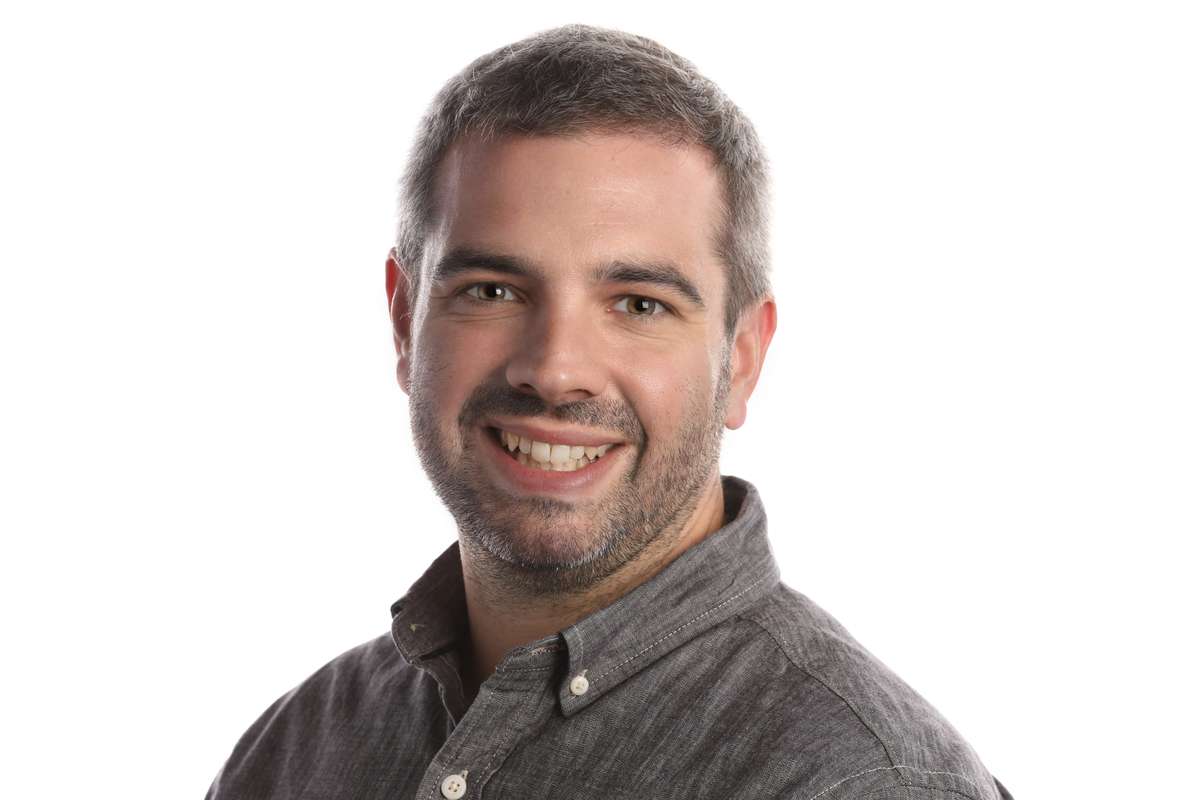
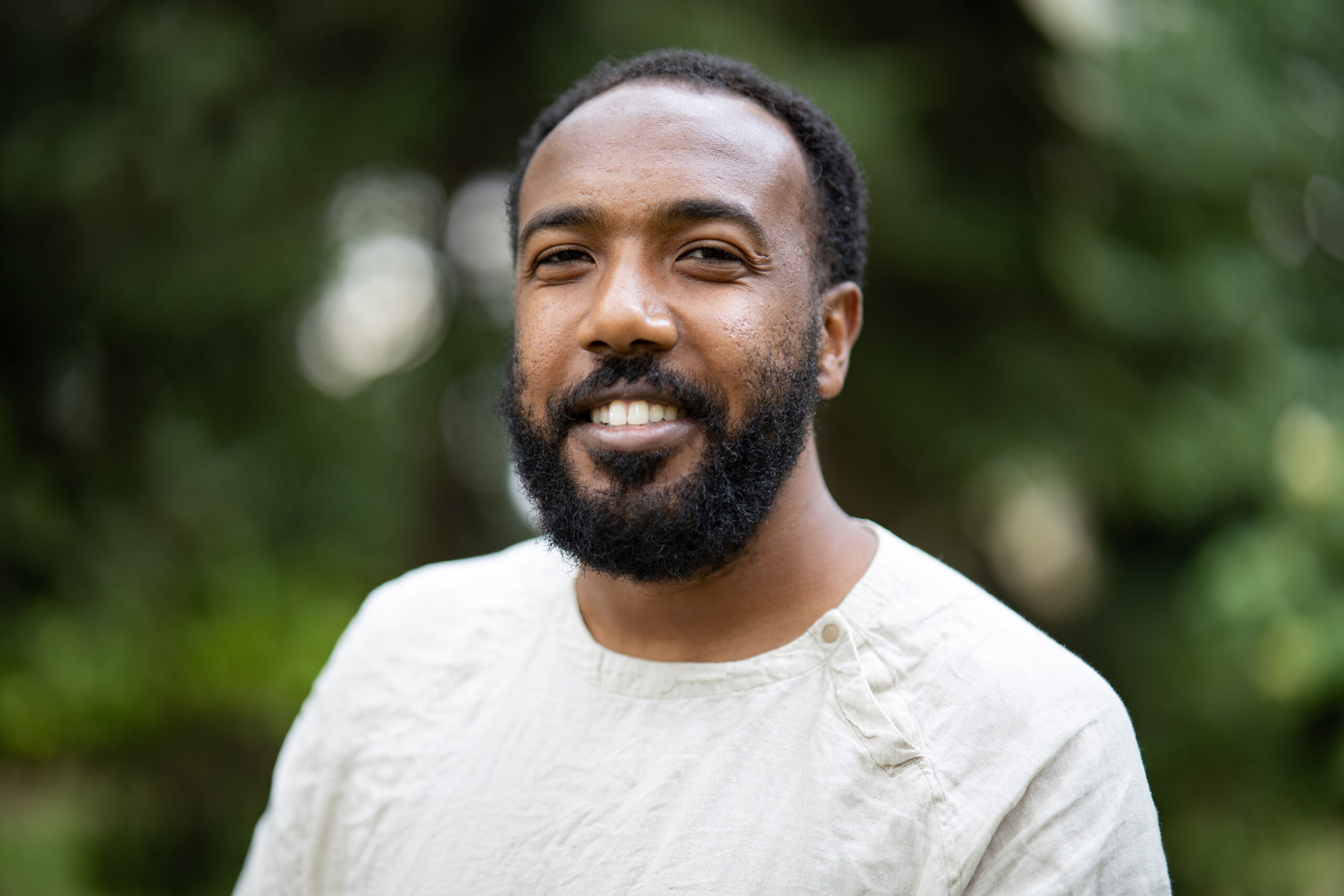
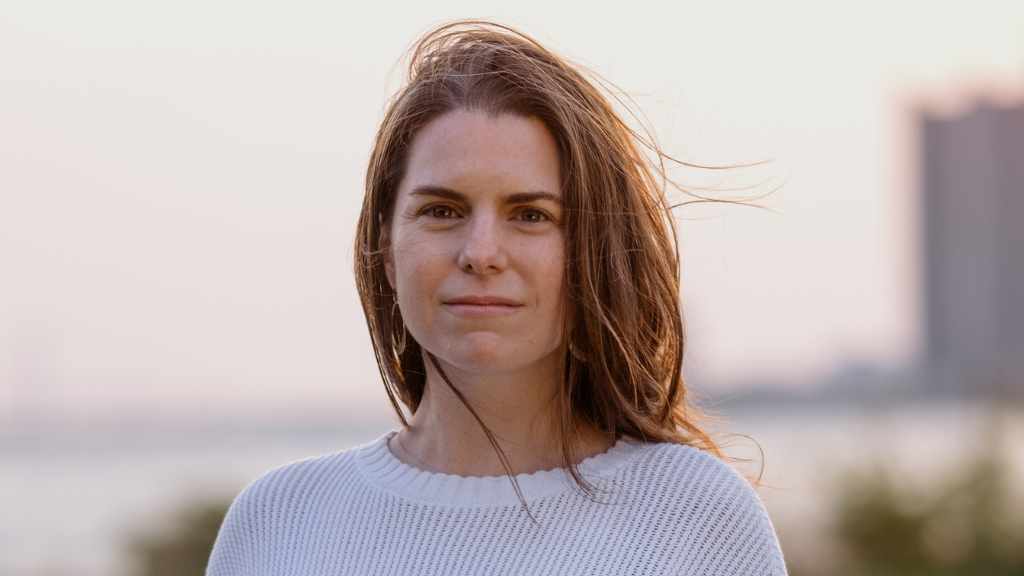
Join Christopher Baxter, 2016 Knight-Wallace Fellow and founder of the Pennsylvania nonprofit newsroom Spotlight PA, for a discussion on how local news lost its way, why the future of our free society and the future of a free press are inextricably linked — as the founders understood in 1776 — and what journalists and the public can do to ensure the press can fulfill its constitutional role in service to “We the People.”
This is an in-person event and will not be live-streamed. However, a recording of the lecture will be available on our website following the event.
About the Speaker
Christopher Baxter is the CEO/president and founding editor of Spotlight PA, and oversees all aspects of the organization. His work as an investigative reporter and editor has regularly prompted meaningful change in the form of new laws and regulations, criminal investigations, resignations, legislative hearings, and more. Most recently, he was the editor for data and investigations at NJ Advance Media (NJ.com & The Star-Ledger), where he led the newsroom’s highest-level investigative projects with a digital-first approach and an emphasis on journalism that gets results. Previously, he was the Mike Wallace Fellow in Investigative Reporting with the Knight-Wallace Fellowships at the University of Michigan and, before that, worked for four years as a statehouse investigative reporter in The Star-Ledger’s Trenton Bureau. He began his career as a local reporter for The Morning Call in Allentown, Pennsylvania. His work has garnered numerous state and national awards, including the 2014 Livingston Award in Local Reporting, the 2018 Investigative Reporters & Editors Freedom of Information Award, as well as the 2019 Knight Award for Public Service and the 2019 Investigative Data Journalism Award from the Online News Association.
About the Graham Hovey Lecture
The annual Graham Hovey Lecture recognizes a Knight-Wallace journalist whose career exemplifies the benefits of a fellowship at the University of Michigan and whose ensuing work is at the forefront of our national conversations. The event is named for the late Graham Hovey, director of the fellowship program from 1980 to 1986 and a distinguished journalist for The New York Times.
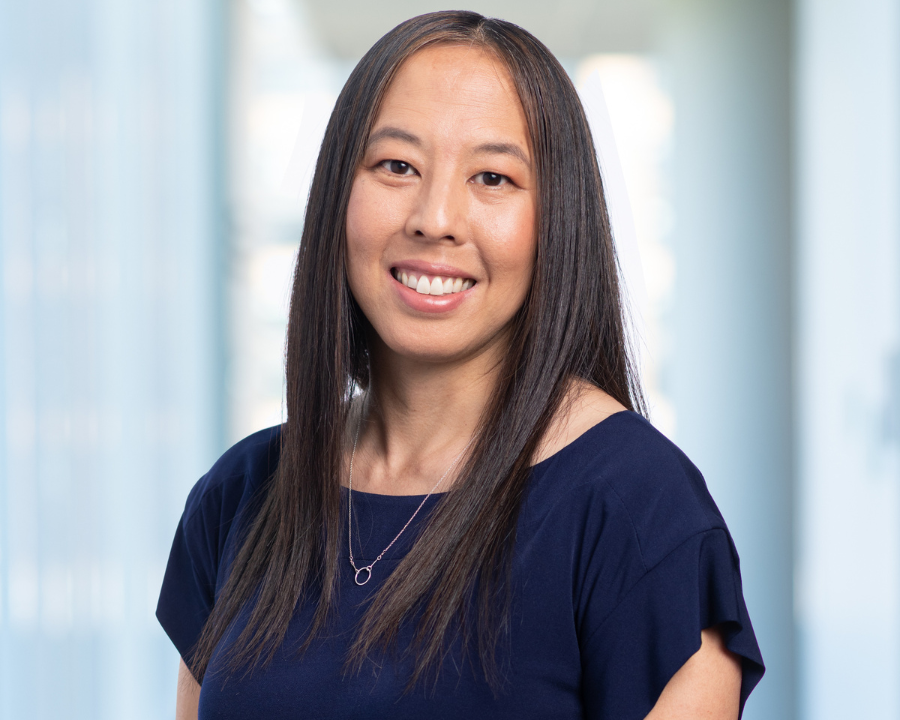
Andrea Hsu is the labor and workplace correspondent for NPR, focusing on the evolving dynamics of work in the United States. As a 2012 Knight-Wallace Fellow, Hsu studied innovative approaches to health care awareness. She returned to Wallace House in September to deliver the 38th annual Graham Hovey Lecture. Before the event, Hsu spoke with Lynette Clemetson, director of Wallace House.
Clemetson: You started as a labor and workplace reporter during the COVID-19 pandemic, and the job was shaped by the pandemic. What was the focus of your beat when you started?
HSU: It started out as a temporary stint, filling in on the business desk in the fall of 2020, when a lot of office workers were working from home. Their offices had closed, and many schools were also closed. Working parents were figuring out what to do with their children. At the same time, there were the essential workers who had to keep things going – people working in grocery stores, hospitals, nursing homes and factories. It was a period of upheaval for all different types of workers.
When did it shift from being pandemic-driven to being focused on the federal workforce?
Not until this year. In fact, covering the federal workforce had never been part of my beat. Before January of this year, I think I had done maybe three stories on the federal workforce: one about the rollback of telework in the government, and two about federal employee unions.
But sometime between the election and the inauguration, a memo went out to staff announcing that I would be covering the federal workforce. This was a surprise to me! And then, as soon as Trump took office on January 20, he began signing executive orders that laid out huge changes for the federal workforce, and that took over my beat.
When did it shift from being pandemic-driven to being focused on the federal workforce?
Not until this year. In fact, covering the federal workforce had never been part of my beat. Before January of this year, I think I had done maybe three stories on the federal workforce: one about the rollback of telework in the government, and two about federal employee unions.
But sometime between the election and the inauguration, a memo went out to staff announcing that I would be covering the federal workforce. This was a surprise to me! And then, as soon as Trump took office on January 20, he began signing executive orders that laid out huge changes for the federal workforce, and that took over my beat.
I was really struck by how worried these people were, not just about their own jobs security, but about what would happen to the work they were doing.
So were federal workers expecting change?
There were ideas from Trump’s first term that he reintroduced. Some of them were in Project 2025. Still, it was the speed at which this all happened that was surprising to people. On January 28, eight days after the inauguration, an email went out inviting almost the entire federal workforce to resign. More than 2 million people got this email. There was a lot of confusion over whether the offer was legal or if it was even real. Shortly after that, in the middle of February, federal agencies started firing probationary employees en masse. Those were mostly people in their first or second year on the job, fired supposedly for performance reasons, even though many had stellar performance reviews.
My colleagues and I began getting all kinds of messages from federal workers — emails, LinkedIn messages, and mostly Signal messages. Many federal workers were scared to speak out but were very willing to send screenshots of communications they were getting as they tried to make sense of what was happening.
The public messaging was that it was about cleaning out waste in Washington. Who were you hearing from?
The people contacting me were from all over the country, largely not in Washington. In fact, 80% to 85% of federal workers don’t live in the Washington, D.C. area. That often comes as a surprise to people. I was hearing from people in Georgia, Utah, Alaska — all over the country.
What did you learn from that flood of messages?
I was really struck by how worried these people were, not just about their own job security, but about what would happen to the work they were doing. These are people who feel a deep sense of responsibility to the public.
I imagine some of their jobs are not visible to the general public at all.
Yes. For example, one woman worked for the USDA Agricultural Research Service in Logan, Utah. She was a Ph.D. scientist, and her job was helping alfalfa farmers in Washington state. She was helping them manage pests in their alfalfa fields. The farmers she was working with grow alfalfa for seed, which is then used as feed for the U.S. dairy industry, which supplies our milk. The reason the government pays a researcher like her to be out there helping these farmers is that her work is seen as critical to America’s food supply. I heard from many people like this who took the time to explain these things to me.
What will the reductions look like by the end of this year?
According to the U.S. Office of Personnel Management, by the end of December, the federal workforce will be down roughly 300,000, to about 2.1 million employees. So that’s about one in eight federal workers out by the end of the year. Many of those leaving are people with a lot of experience, so there is worry about the loss of institutional knowledge.
What are you watching going forward?
The push by the Trump administration to turn much more of the federal workforce into “at will” employees. The administration has argued that the president needs to be able to remove those who are unwilling to help him fulfill the promises he made to the American people. Currently, only about 4,000 federal employees, out of more than 2 million, are political appointees who serve at the pleasure of the president. The rest enjoy civil service protections, designed to give the federal government stability and continuity through changeovers in administration. Upending this system would really change the nature of the federal workforce. Ultimately, this will come down to the Supreme Court to decide.
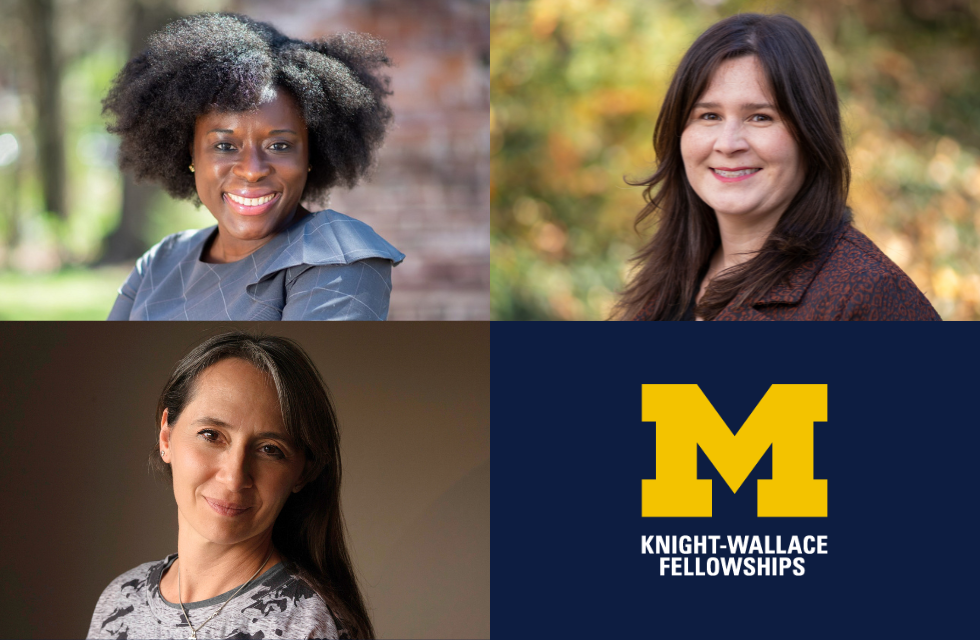
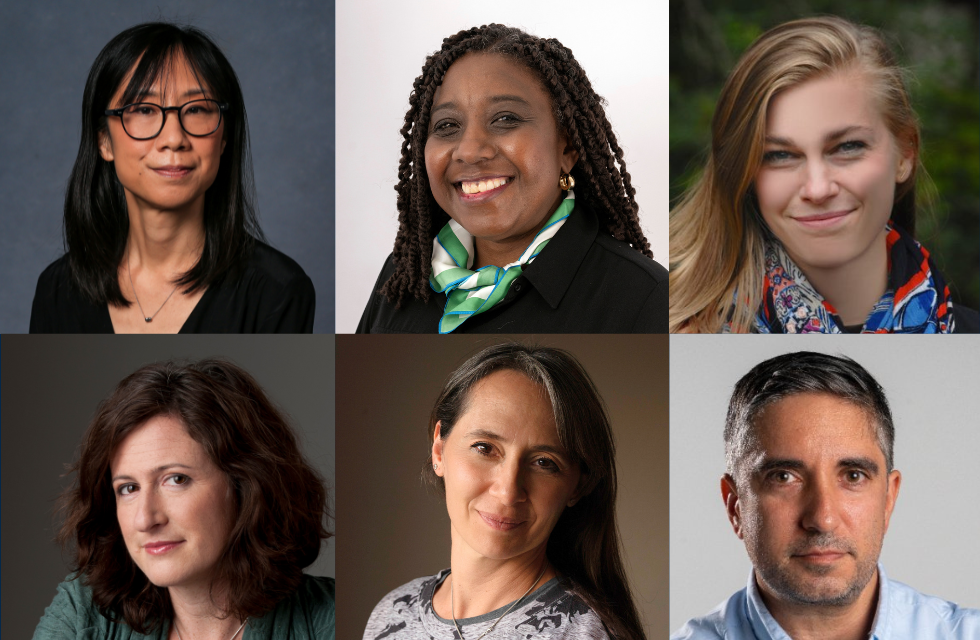
Alumni presenters (clockwise from top left): Delece Smith-Barrow, Ally Jarmanning, and María Arce
Conversational Webinars for Knight-Wallace Fellowship Applicants
Wallace House Center for Journalists invites all interested Knight-Wallace Fellowship applicants to a webinar conversation on one of the three dates listed below.
Meet our Knight-Wallace alumni and discover how their year in Ann Arbor, access to a world-class university’s resources, and dedicated time to focus on a journalism project broadened their perspectives and advanced their careers. They’ll answer your questions and share insights about the Knight-Wallace Fellowship experience.
Monday, Oct. 27, Noon to 1:15 p.m. ET
Delece Smith-Barrow, deputy health editor at Politico
Friday, Nov. 21, Noon to 1:15 p.m. ET
María Arce, education program manager at Documented
Wednesday, Dec. 10, Noon to 1:15 p.m. ET For U.S. applicants only
Ally Jarmanning, senior reporter at WBUR
About Our Alumni Presenters
Monday, Oct. 27, noon – 1:15 PM ET
Delece Smith-Barrow | 2017 Knight-Wallace Fellow
Delece Smith-Barrow is a deputy health editor at POLITICO. She was previously the education editor and led a team of journalists writing about national education policy. Prior to joining POLITICO, she was a senior editor for higher education at The Hechinger Report. As a Knight-Wallace Fellow, she examined underrepresented minority faculty recruitment in top universities.
Friday, Nov. 21, noon – 1:15 PM ET
María Arce | 2023 Knight-Wallace Fellow
María Arce is the education program manager at Documented, a non-profit news organization reporting for and with immigrant communities in New York City. Based in Puerto Rico for seven years and now based in Florida, she specializes in covering natural disasters. She previously worked as the digital multiplatform director of El Vocero and as a correspondent for numerous media outlets. As a Knight-Wallace Fellow, she curated emergency response strategies tailored to the needs of small newsrooms.
Wednesday, Dec. 10, noon – 1:15 PM ET For U.S. applicants only
Ally Jarmanning | 2025 Knight-Wallace Fellow
Ally Jarmanning is a senior reporter at WBUR in Boston, where she focuses on stories about accountability using data and public records. She is host and reporter of the Murrow Award-winning podcast “Last Seen: Postmortem,” where she digs into the thefts of donated human remains from the Harvard Medical School morgue. As a Knight-Wallace Fellow, she explored how to create a set of standards for working with vulnerable sources.
Application Deadlines
Knight-Wallace Journalism Fellowship applications for the 2026-2027 academic year are now open. The deadline for international applicants was December 1, 2025. The deadline for U.S. applicants is February 1, 2026.
A sweeping effort to expand presidential power and overhaul the federal government began the moment Donald Trump returned to the White House on January 20, 2025. Executive orders targeted the federal workforce, reducing its size and making it more responsive to executive authority. Within a few months, tens of thousands of federal employees were fired, and far more resigned amid threats of mass layoffs. While a flurry of lawsuits has slowed those actions, it’s abundantly clear that the government workforce is not what it was on January 20. What’s unclear is what the government will ultimately become and how the country will be changed in the process.
NPR labor and workplace correspondent Andrea Hsu, a 2012 Knight-Wallace Fellow, has been closely covering the upheaval inside government agencies and the legal fights surrounding it. She’ll share insights from those still working within federal agencies and those who have recently been pushed out, and explore what this transformation could mean for how Americans experience and rely on their government.
This is an in-person event and will not be live-streamed. However, a recording of the lecture will be available on our website following the event.
About the Speaker
Andrea Hsu began her journalism career as a locally hired researcher for the BBC’s Beijing bureau. She joined NPR’s Washington, D.C., newsroom in 2002, spending nearly two decades as a producer for “All Things Considered.” In late 2020, she transitioned to NPR’s business desk, where she reported on how the COVID-19 pandemic reshaped the workforce. Since 2021, she has served as NPR’s labor and workplace correspondent, focusing on the evolving dynamics of work in the United States. As a 2012 Knight-Wallace Fellow at the University of Michigan, Hsu studied innovative approaches to health care awareness.
About the Graham Hovey Lecture
The annual Graham Hovey Lecture recognizes a Knight-Wallace journalist whose career exemplifies the benefits of a fellowship at the University of Michigan and whose ensuing work is at the forefront of our national conversations. The event is named for the late Graham Hovey, director of the fellowship program from 1980 to 1986 and a distinguished journalist for The New York Times.
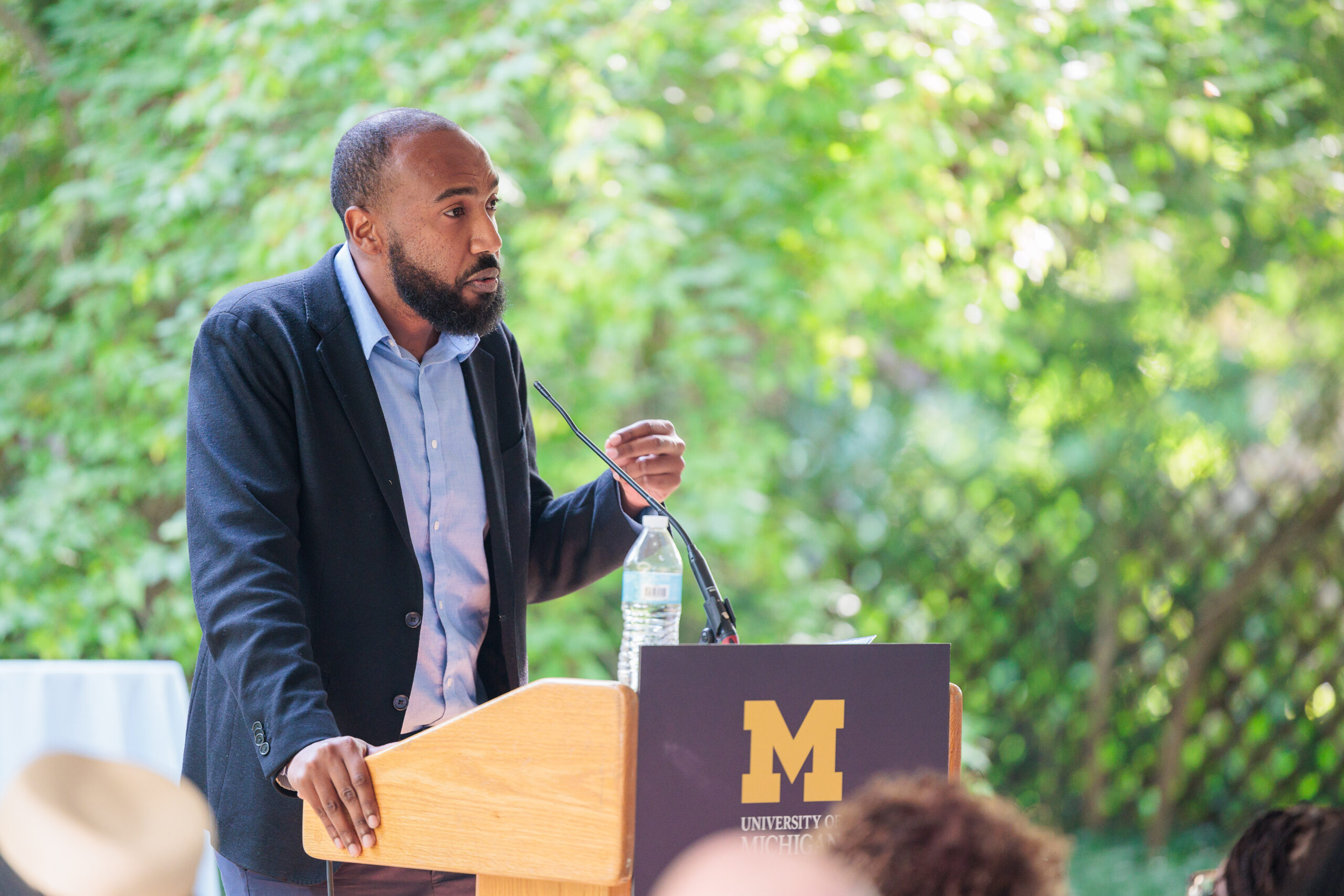
Mazin Sidahmed is co-executive director of Documented, an independent, non-profit newsroom dedicated to reporting with and for immigrant communities in New York City. He was a 2021 Knight-Wallace Reporting Fellow during the Covid-19 pandemic. Sidahmed returned to Wallace House in September to deliver the 37th annual Graham Hovey Lecture. Before the event, he spoke with Lynette Clemetson, director of Wallace House, about starting Documented.
Clemetson: You describe Documented as a community-driven news organization. What’s the difference between community-driven news and local news?
Sidahmed: When you’re community-driven, you’re thinking about what kind of news and information will serve your local community best. How can we be good neighbors and actually make this a better place for all of us to live? To accomplish that, we have to listen and ask the community what they need from us and let those needs drive our decision-making, as opposed to business incentives driving our decisions.
In a city like New York, how did you determine which communities to serve and how to reach them?
We were super naive at the start. We thought the only reason the publications we’d worked at previously weren’t reaching low-wage immigrants, or the immigrants who were at the center of the stories, was that those publications weren’t translating their stories. We thought that if we just translated, published and tweeted out our stories, everyone would find them.
And when you realized that wasn’t going to work, what did you do?
We actually went to Spanish-speaking communities in New York City — predominantly immigrant Spanish- speaking communities — and asked them: “Where do you get your news? What kind of news and information do you want? What kind of news and information would be useful to you?” That’s what led us to build our first news product, our WhatsApp news service.
And now you publish in Spanish on WhatsApp. And you also publish in Chinese on WeChat, and in Haitian Creole on Nextdoor. That’s very tailored news delivery to specific communities. How has that changed your editorial structure?
In order to get the model to where we needed it to be, we created a newsroom role called community correspondent. It’s part reporter, part product manager, part community engagement. Our Spanish-speaking community correspondent spends about a third of his day on WhatsApp replying to people’s messages, hearing from people, trying to understand their interests, replying to their questions and bringing those insights into editorial meetings. So if a bunch of people say they had issues with their utility bills, he’ll report a story on that.
I imagine it’s not the kind of journalism you thought you’d be doing when you started.
It took a lot of soul-searching to get to where we let the communities lead on what they wanted us to do. The things that I’ve been trained to reach for or valorize were not necessarily aligned with what the community wanted. But when we actually listened to the community, the readership went up. People read those stories. They were shared and had traction in the communities we wanted to reach.
You’ve also done some deeply meaningful investigative work, including an investigation with ProPublica that uncovered more than 13,000 wage theft cases, totaling more than $203 million in stolen wages, from more than 127,000 New York workers.
We did a listening tour, and every community group that we went to speak to wanted to talk about wage theft. That was the problem that was at the top of people’s minds. So [my co-founder] Max Siegelbaum thought, “How can we put our investigative muscle toward creating something useful to the community?”
He decided to create a database of all the companies in New York state that had been convicted of stealing wages. He thought it would be straightforward for the state to give him the names of the companies. It ended up being a four-year lawsuit against the New York State Department of Labor. Our stories led to legislation introduced in the New York State Legislature that uses our database to set guidelines for how wage theft should be prosecuted. So that’s an example of how you go from listening to a community to powerful investigative journalism.
You applied for and received the fellowship during the Covid-19 pandemic. How did the fellowship help you move forward with your work?
I was at that stage that most founders get to when they realize they really need to focus on the business and operation side. There’s this dream, you know, that you’ll hire a person so you can do the fun stuff you always dreamed of doing. You’ll hire someone to be the adult in the room and take care of the business and the operations. But you quickly realize that no one can speak as authentically to your work as you can, and you can’t give up those decisions to an outside party. It became clear to me — maybe even a year before I started the fellowship — that I should take on that role. But I was in denial because it felt like the end of my journalism career, and I wasn’t ready to do that yet.
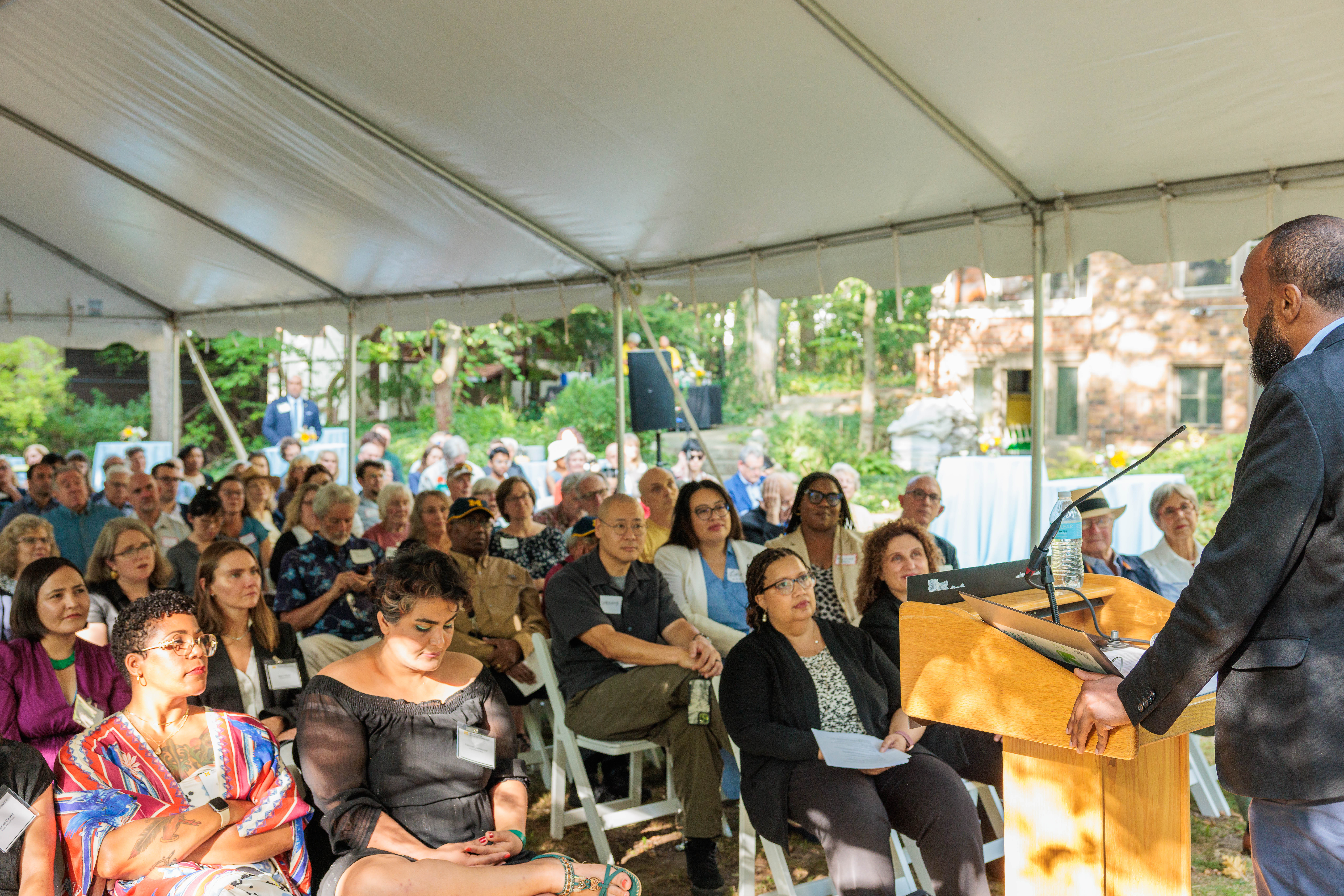
A September tradition at Wallace House: More than 200 guests gathered in the Wallace House gardens to hear Mazin Sidahmed deliver the 37th Hovey Lecture.
Did the need to focus on the business side of Documented lead to an identity crisis?
Yeah. I was having an identity crisis that year going into the fellowship. Having that space and time and the community of other Fellows to talk through what this might mean for me, to reflect on it and hear from other people who have gone through similar journeys and transformations helped me. And a lot of my long conversations with you. It made me come to terms with the fact that it’s what Documented needed. And it’s something I’m good at, and that’s okay.
What advice would you give to someone thinking about starting a community-focused news organization in Ohio, Indiana, or somewhere very removed from the networks and resources in New York?
Start by fully understanding the problem that you’re trying to solve. If you have an inherent feeling of what your community needs, go out, make a case and try to prove it. Find somebody who has a skill set different from yours, someone who complements you in some way, and build together. Then, find a community of other folks who are doing a similar thing. Building community with other leaders around the country will help you get through the hard times. Always keep your North Star, and keep in touch with the people who will be impacted by your work.
Knight-Wallace alumni and webinar presenters (left to right): Candice Choi, Arnessa Garrett, Chantel Jennings, Neda Ulaby, Maria Arce, and Azi Paybarah.
Conversational Webinars for Knight-Wallace Fellowship Applicants
Wallace House Center for Journalists invites all interested Knight-Wallace Fellowship applicants to a webinar conversation on one of the three dates listed below.
Meet our Knight-Wallace alumni and discover how their year in Ann Arbor, access to a world-class university’s resources, and dedicated time to focus on a journalism project broadened their perspectives and advanced their careers. They’ll answer your questions and share insights about the Knight-Wallace Fellowship experience.
Monday, Oct. 21, Noon to 1:15 p.m. ET
Candice Choi, editor for The Wall Street Journal
Neda Ulaby, cultural correspondent for NPR
Friday, Nov. 15, Noon to 1:15 p.m. ET
Arnessa Garrett, editor at The Advocate/ Times-Picayune
Maria Arce, journalist and editor specialized in covering natural disasters
Wednesday, Jan. 15, Noon to 1:15 p.m. ET For U.S. applicants only
Chantel Jennings, senior writer for The Athletic
Azi Paybarah, national reporter for The Washington Post
More About Our Alumni Presenters
Monday, Oct. 21, noon – 1:15 p.m. ET
Candice Choi | Class of 2018
Candice Choi is a news editor on the finance team at The Wall Street Journal. She joined the Journal from CNBC, where she was an editor on the company and business news team. Before that, she spent most of her career at the Associated Press, where she served in a variety of roles on the business news and health and science teams. As a Knight-Wallace Fellow, she researched the social and corporate forces influencing our eating habits.
Neda Ulaby | Class of 2019
Neda Ulaby is a cultural correspondent for NPR, where she has worked in diverse roles for more than 20 years. In 2012, Ulaby also hosted the Emmy-award winning public television series, Arab American Stories. Before coming to NPR, Ulaby was the managing editor of Chicago’s Windy City Times and co-hosted a local radio program. As a Knight-Wallace Fellow, she studied the cultural history of the veil in world religions.
Friday, Nov. 15, noon – 1:15 p.m. ET
Arnessa Garrett | Class of 2019
Arnessa Garrett is the Opinion Page editor at The Advocate / Times-Picayune. She previously worked as the metro editor at the Dallas Morning News and as senior editor of news at The Daily Advertiser, a community newspaper in her hometown of Lafayette, Louisiana. As a Knight-Wallace Fellow, she explored how to rebuild trust with local audiences through digital engagement.
Maria Arce | Class of 2023
Maria Arce is a journalist and editor who specializes in covering natural disasters. Based in Puerto Rico for seven years, she worked as the digital multiplatform director of El Vocero and a correspondent for numerous media outlets, including serving as an editorial coach at Global Press. While working for GFR Media, she led digital coverage of Hurricane María. As a Knight-Wallace Fellow, she curated emergency response strategies tailored to the needs of small newsrooms.
Wednesday, Jan. 15, noon – 1:15 p.m. ET For U.S. applicants only
Chantel Jennings | Class of 2020
Chantel Jennings is The Athletic’s senior writer for women’s basketball. Before joining The Athletic, she worked for almost a decade as a staff writer at ESPN.com, covering Pac-12 and Big Ten football, men’s and women’s college basketball, and NCAA track and field. As a Knight-Wallace Fellow, she developed a first-of-its-kind national survey that created a picture of the more than 600 college newsrooms across America.
Azi Paybarah | Class of 2018
Azi Paybarah is a national reporter for The Washington Post. He previously covered politics for The New York Times and was part of the team that won a Pulitzer Prize in 2021 for coverage of the coronavirus pandemic. Before that, he reported for The New York Observer, WNYC and Politico New York. As a Knight-Wallace Fellow, he looked at strategies for rebuilding media credibility by reaching beyond natural audiences.
Application Deadlines
Knight-Wallace Journalism Fellowship applications for the 2025-2026 academic year are now closed. International applications are now closed. The deadline for U.S. applicants was February 1, 2025.
In a deeply polarizing election year, immigration remains one of the most contentious, sensationalized issues in American politics. Beyond the partisan rallying cries influencing the presidential race, immigration plays out in individual communities where needs, resources and actions often transcend party lines and knee-jerk responses. How journalists cover immigration – and who their coverage ultimately serves – can shape how Americans understand and debate this issue for generations.
Join Mazin Sidahmed, 2021 Knight-Wallace Reporting Fellow and co-founder of the non-profit newsroom Documented, for a discussion on how shifting our journalism focus from national coverage to local news outlets and from “reporting about” to “reporting for and with” immigrant communities can help us discern immigration fact from fiction and improve outcomes for everyone.
This is an in-person event and will not be live-streamed. However, a recording of the lecture will be available on our website following the event.
About the Speaker
Mazin Sidahmed is the co-founder and co-executive editor of Documented, an independent, non-profit newsroom dedicated to reporting with and for immigrant communities in New York City. He previously worked for the Guardian US in New York during the 2016 US elections, covering various issues, including surveillance and criminal justice, and the rise of hate crimes following the election. Sidahmed left the news desk to join the award-winning Guardian Mobile Innovation Lab, where he helped develop new mobile-specific story formats. He started his career writing for The Daily Star in Beirut, where he reported on the Syrian refugee crisis, weapons transfers to Lebanon and the plight of migrant domestic workers.
As a 2021 Knight-Wallace Reporting Fellow, Sidahmed reported for Documented on the role of local police in federal immigration enforcement.
About the Graham Hovey Lecture
The annual Graham Hovey Lecture recognizes a Knight-Wallace journalist whose career exemplifies the benefits of a fellowship at the University of Michigan and whose ensuing work is at the forefront of our national conversations. The event is named for the late Graham Hovey, director of the fellowship program from 1980 to 1986 and a distinguished journalist for The New York Times.
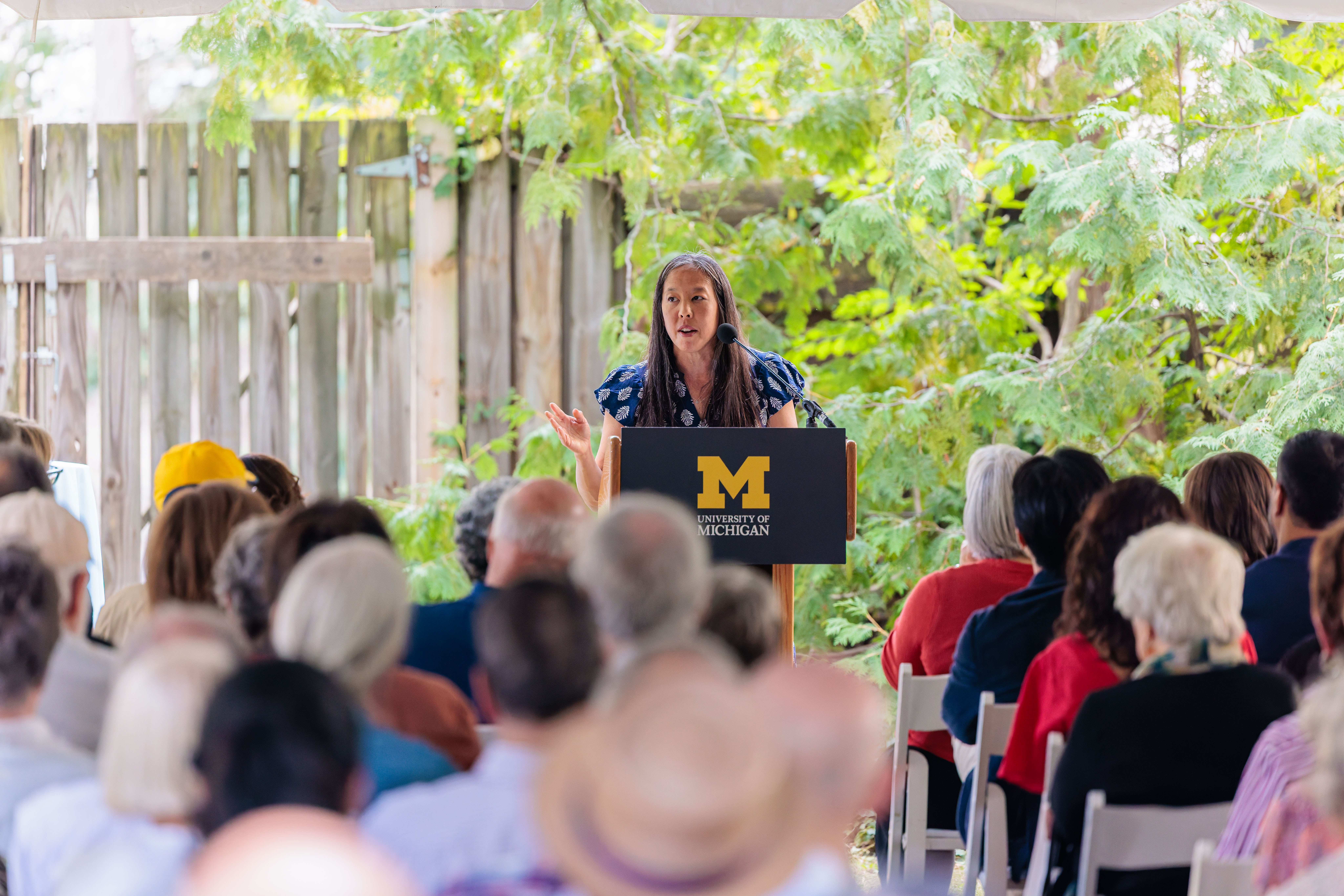
The annual Graham Hovey Lecture was started by Charles Eisendrath in 1987 in honor of his predecessor Graham Hovey, director of the fellowship program from 1980 to 1986, to recognize a Knight-Wallace journalist whose career exemplifies the benefits of a fellowship and whose ensuing work is at the forefront of our national conversations. This year we welcomed Anna Clark, a 2017 Knight-Wallace Fellow and currently a journalist with ProPublica living in Detroit. She is the author of “The Poisoned City: Flint’s Water and the American Urban Tragedy,” which won the Hillman Prize for Book Journalism and the Rachel Carson Environment Book Award, and was longlisted for the Andrew Carnegie Medal for Excellence in Nonfiction. She is a nonfiction faculty member in Alma College’s MFA Program in Creative Writing and was also a Fulbright fellow in creative writing in Kenya. Anna sat down with director Lynette Clemetson to discuss the dangers of a culture of secrecy and what it takes to push back.
Q: When I raised the idea of government transparency to you as a possible topic for your Hovey Lecture, I was concerned that you might think it was too wonky, but you were all in.
A: Freedom of information and public disclosure policies are part of our architecture for democracy and justice. I’m very passionate about it.
Q: Many people don’t know that Michigan ranks low in some areas of transparency.
A: I love this state, but I am sorry to say that we are not on the strongest side of this issue. We’re notable for being one of only two states in which the legislature and the governor’s office are exempt from public records requests.
Anna Clark returned to Wallace House not only with her infectious smile, but to offer insight into the restrictive laws preventing access to public records.
Q: It comes up for debate regularly, but the law hasn’t changed.
A: Well, interestingly, whatever party is not in power is really pro opening things up, and then once they are in power, they hesitate. (Laughs.) So yeah, people have been talking about this for years and years. And it has real stakes for the ability of reporters to do their jobs and for people to know what’s going on in their communities.
Q: For large institutions that get a lot of requests, public universities included, it can be easy to think of FOIA as a nuisance. How do we change that?
A: It’s true. Not every FOIA request is made in the name of democracy. There are frivolous requests, harassing ones, excessive ones, overly vague and broad ones that are a genuine burden to our public officials. Still, I think it is a virtue that you aren’t required to give a reason to make a request. If you’re an official who is doing the right thing, if you’re educating people, serving this state, this nation, in important ways, that should be evident in the details of the released records. Not making them available, even when you’re doing the right things, cultivates a kind of secrecy that breeds suspicion and distrust.
Q: There’s been a lot written about how a lack of government transparency exacerbated the water disaster in Flint. You document the downfalls in your book, “The Poisoned City.” You also recently wrote about a lack of transparency in a different part of the state—the ongoing wait for an external review of the 2021 mass shooting at Oxford High School. How do larger government transparency issues relate to the situation in Oxford?
A: The Oxford school shooting in November 2021 was a very different kind of crisis than Flint. What’s similar is that the people in Oxford are starved for a clear, comprehensive telling of what happened, not just in the courts, which are prosecuting the shooter and his parents, but in the context of their school and the public school district that had a number of interactions with the shooter in the days and hours leading up to the shooting.
If you have a culture where the attitude is “just trust us” and you expect people to be okay with it, that trickles down to even the most locally elected, part-time, volunteer school board officials, who nonetheless are responsible for high-stakes decisions that could potentially cost people their lives. We’re creating a norm that is actually dangerous where this culture of secrecy is something we’re familiar with. That doesn’t mean it needs to be our normal.
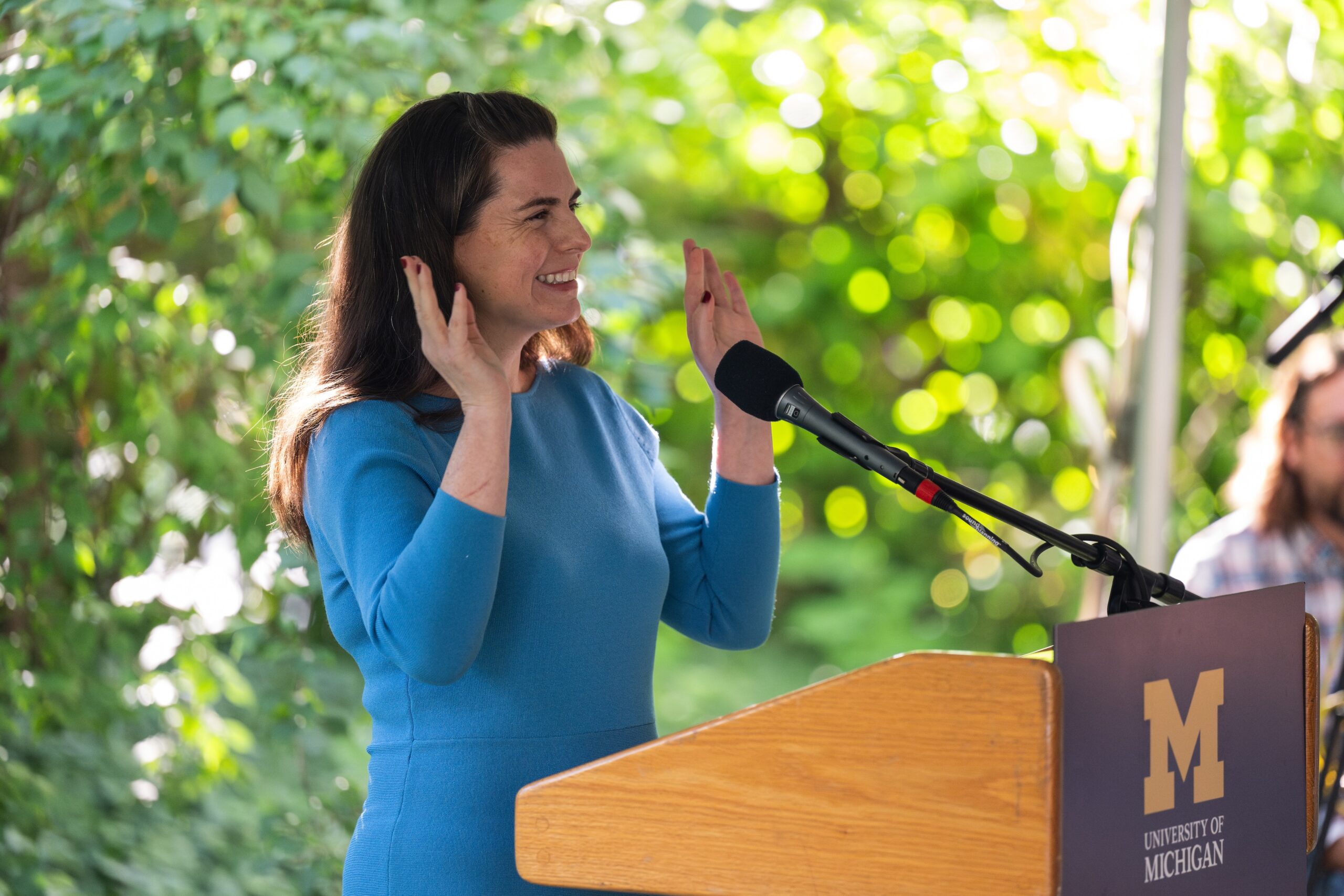
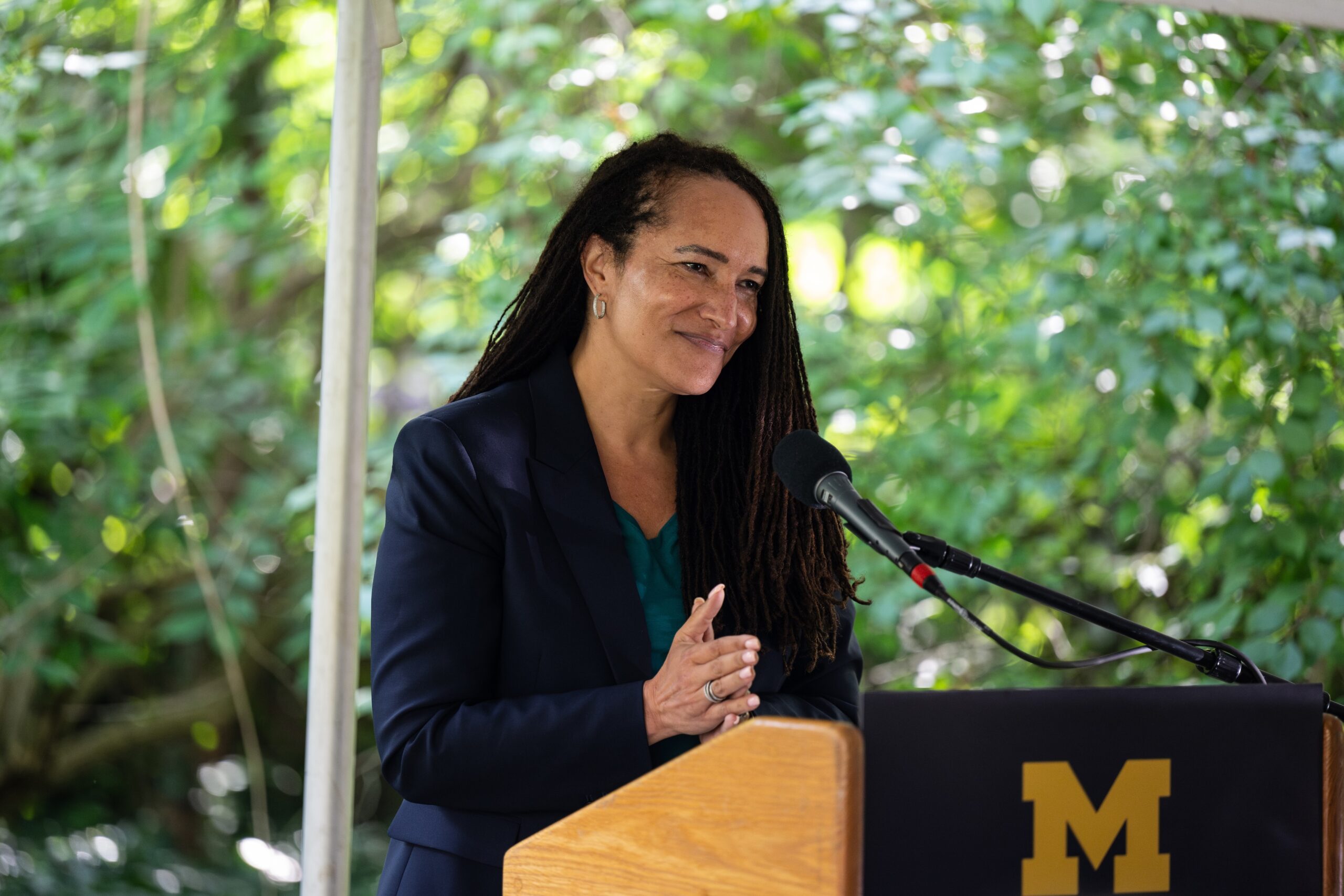
Tabbye Chavous, Vice Provost for Equity and Inclusion, Chief Diversity Officer at the University of Michigan and member of the Wallace House Executive Advisory Board, welcomes guests to the Wallace House gardens.
Q: How did the fellowship prepare you to tackle this issue of government secrecy, starting with your book on Flint?
A: Well, I was a completely fried, burned out, single, full-time freelancer working all the time and feeling increasingly depleted. Without the fellowship, I don’t know how I would have emotionally been able to sustain the work of reporting and writing the book, let alone the emotional toll. Having fun with people, sleeping more, not worrying about my bills all the time, it was so restorative. And that was essential to help me go forward to finish this book and bring it into the world.
Q: What did you gain from the university?
A: It was a powerful opportunity to come at the book with resources and tools I just never had before. I took classes in the law school on water policy and environmental justice. I took an urban planning class on metropolitan structures. Visiting cities in Brazil and South Korea gave me a new perspective to think about how cities in the U.S. are made and unmade. Not having any institutional affiliation or much money when I came to the fellowship, I never had access to archives like that. Suddenly, I got this university email address and all the resources of the campus libraries, including the library at the U-M’s Flint campus, became available.
Q: And yet, you didn’t come into the fellowship with a concrete plan for what you were going to do. That makes a lot of people nervous. What advice would you give to current or future fellows who worry about having everything mapped out?
A: Some of it is just trusting yourself. Like, if you have a Tuesday, and you don’t have any classes at all, you can trust that things will show up on that day that you will learn and grow from, including just empty space, which might be the thing you need most of all.
Q: That can be a hard case to make when people’s careers feel so perilous and the industry is under so much pressure.
A: The toll this work takes—even in the best of times, let alone in these times of scarcity and threat—is so excruciating. If people are going to do this work for years and decades, well, people are not machines. We’re not machines. You need to replenish yourself. We need journalists who are whole people, who have the internal and external resources to sustain themselves for the long run. This program is so rare for truly investing in journalists, not just in what they produce. That’s an investment in journalism for the long term, not just the news cycle.
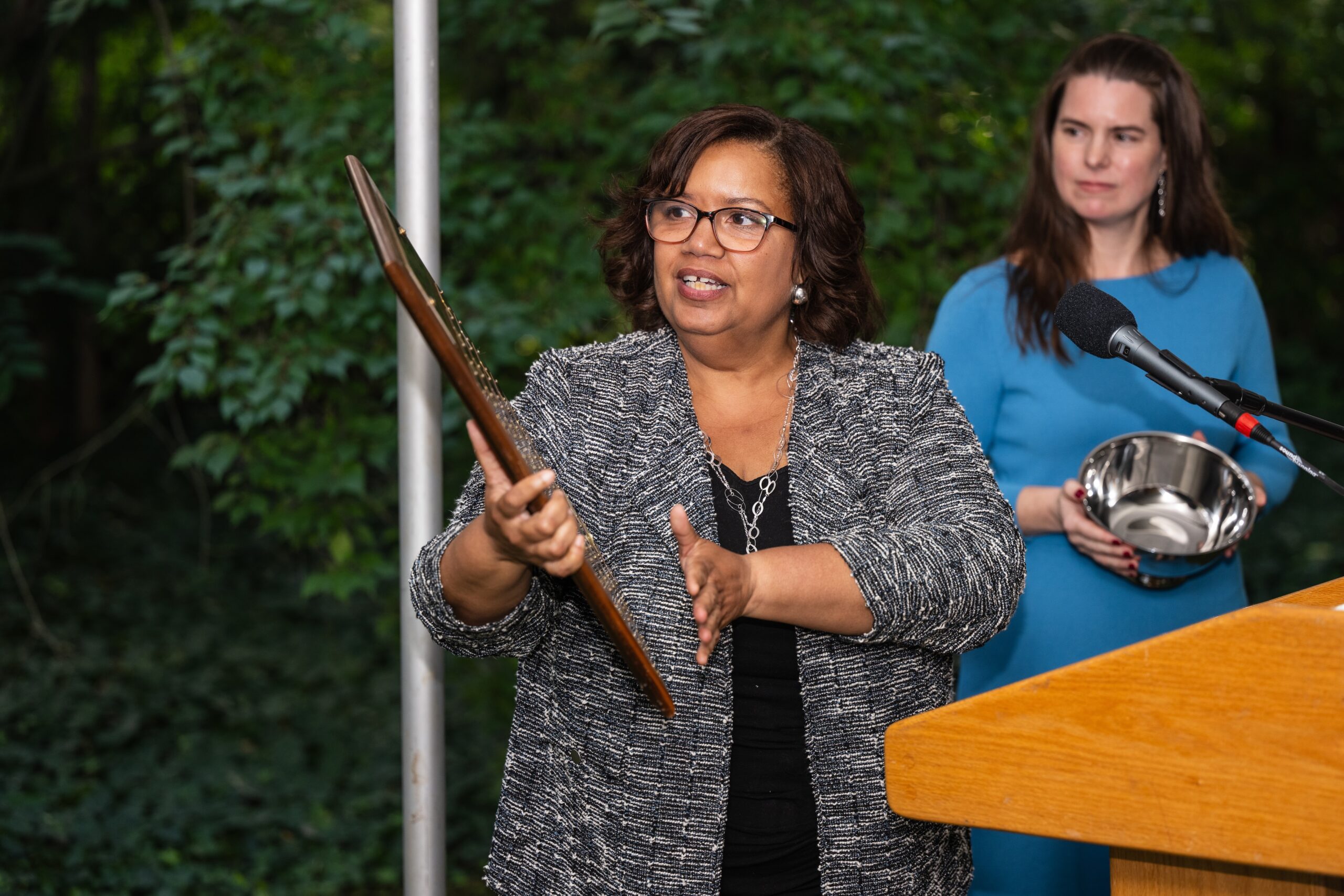
Wallace House director Lynette Clemetson presents Anna Clark with the inscribed Hovey Bowl and her name added to the Hovey Lecture plaque.
Michigan’s transparency laws are among the most restrictive in the nation. The state is one of only two that totally exempts the governor’s office and lawmakers from open records laws. With political polarization high and public trust in institutions low, a lack of transparency threatens to further weaken the social fabric. Pushing past the official version of events is essential to understanding abuses of power and exploring possible remedies.
For nearly two decades of reporting from and about Michigan, 2017 Knight-Wallace Fellow and ProPublica journalist Anna Clark has covered numerous consequential stories, from the Flint water crisis to the mass shooting at Oxford High School. Join her for a discussion on the dangers of a culture of secrecy for Michigan and beyond, and what it takes to push back.
This event will not be livestreamed. A recording of the lecture will be available on our website following the event.
About the Speaker
Anna Clark is a ProPublica journalist who lives in Detroit. She is the author of The Poisoned City: Flint’s Water and the American Urban Tragedy, which won the Hillman Prize for Book Journalism and the Rachel Carson Environment Book Award, and was longlisted for the Andrew Carnegie Medal for Excellence in Nonfiction.
Clark’s writing has appeared in The New York Times, The Washington Post, Elle, The New Republic, Politico, Columbia Journalism Review, and other publications. She edited “A Detroit Anthology,” a 2015 Michigan Notable Book.
She is a nonfiction faculty member in Alma College’s MFA Program in Creative Writing. She was a Fulbright fellow in creative writing in Kenya. As a 2017 Knight-Wallace Fellow at the Univeristy of Michigan, Clark explored how chronic underfunding of American cities imperils residents.
About the Graham Hovey Lecture
The annual Graham Hovey Lecture recognizes a Knight-Wallace journalist whose career exemplifies the benefits of a fellowship at the University of Michigan and whose ensuing work is at the forefront of our national conversations. The event is named for the late Graham Hovey, director of the fellowship program from 1980 to 1986 and a distinguished journalist for The New York Times.
Wallace House announces the return of our outdoor, in-person Graham Hovey Lecture
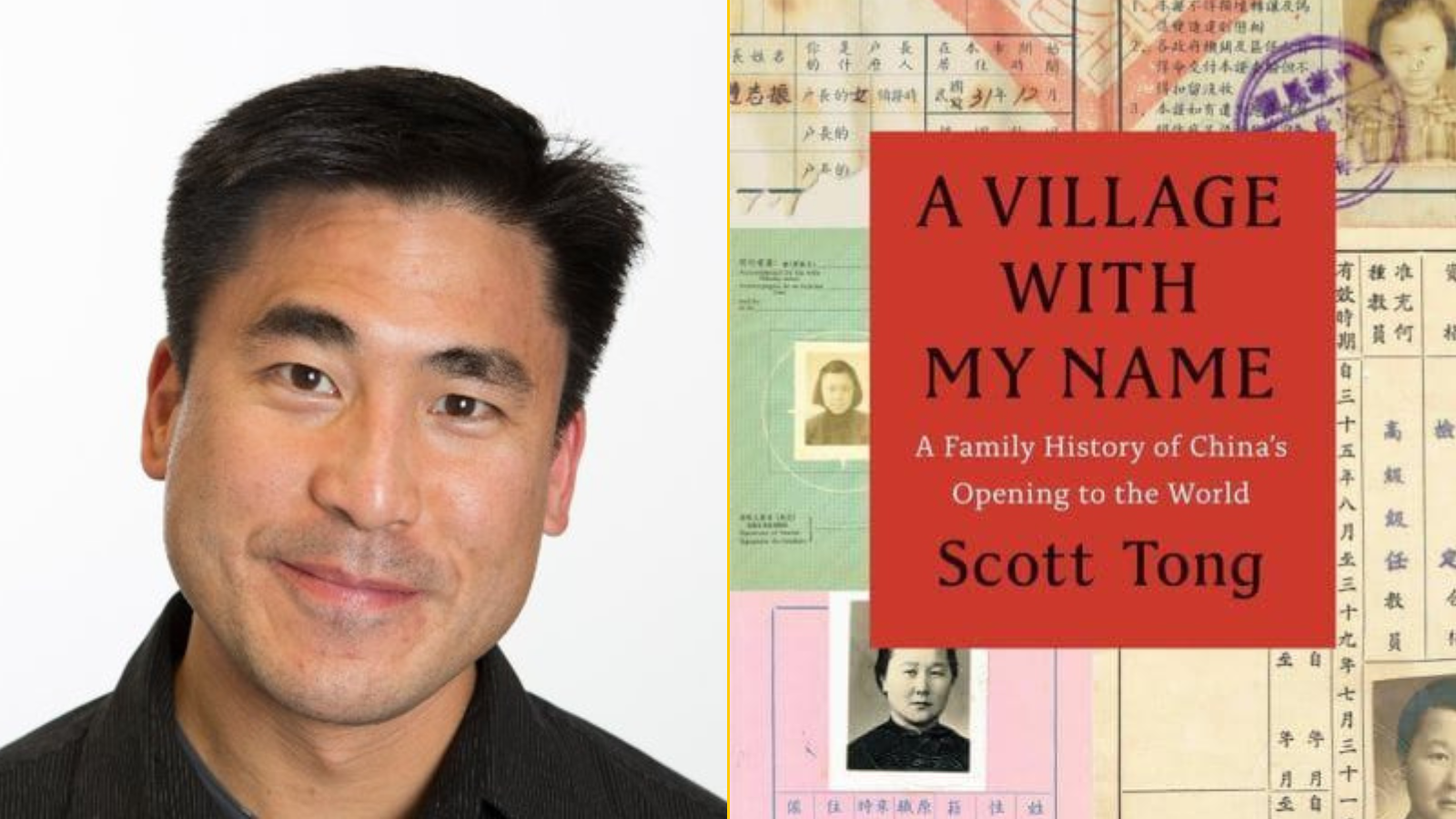
In 2013, longtime China correspondent Scott Tong came to the Knight-Wallace Fellowships to research China’s on-again, off-again ties with the global community and how it connected with his own family. The resulting book, “A Village with My Name: A Family History of China’s Opening to the World,” examines nationalism and globalization through the stories of five generations of Tongs. China’s openness to the western world delivered great benefits to the country yet came at a devasting human price during Mao’s communist rule. In the end, this openness made it possible for Tong to become an American journalist covering China.
Today, Beijing’s increasingly antagonistic relations with Washington and many advanced economies present a great risk to its own economy and high-tech development.
Now a co-host of NPR’s Here & Now Tong returns to Wallace House to deliver the 35th Graham Hovey Lecture and discuss Beijing’s increasing authoritarianism and international aggression and what it signals for its own future and that of globalization.
About the Speaker
Scott Tong is an author and the co-host of Here & Now, NPR’s midday news magazine, produced at WBUR. Previously he spent 16 years at Marketplace as Shanghai bureau chief and senior correspondent. As a 2014 Knight-Wallace Fellow at the University of Michigan, Tong explored comparative ecosystems, innovation and the history of China.
About the Graham Hovey Lecture
The annual Graham Hovey Lecture recognizes a Knight-Wallace journalist whose career exemplifies the benefits of a fellowship at the University of Michigan and whose ensuing work is at the forefront of our national conversations. The event is named for the late Graham Hovey, director of the fellowship program from 1980 to 1986 and a distinguished journalist for The New York Times.
This event is outdoors. Wallace House will follow the University of Michigan’s Covid protocol and guidelines for this in-person event.