University of Michigan Names 2019-2020 Knight-Wallace Journalism Fellows

Knight-Wallace Fellows 2019-2020

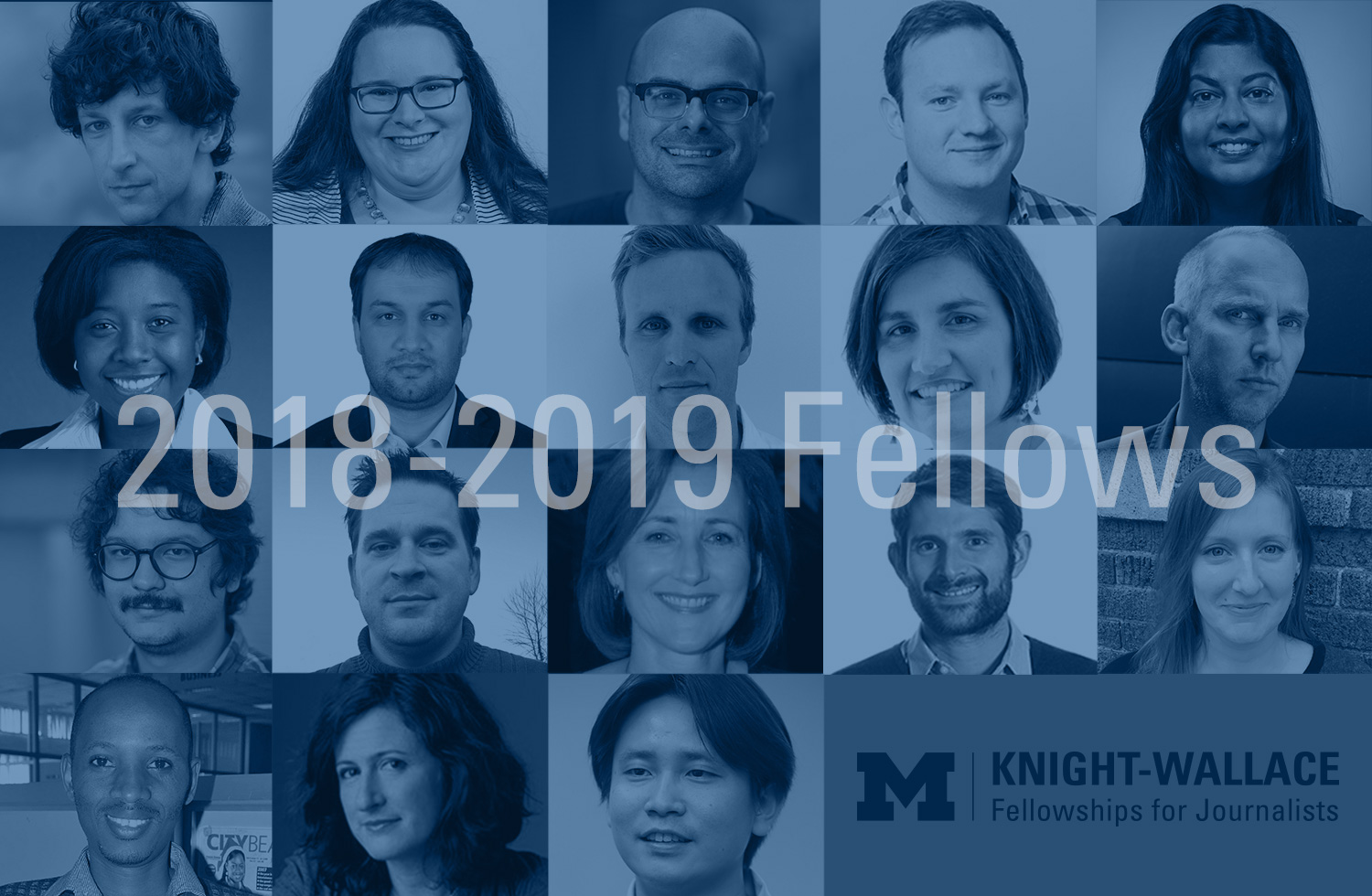
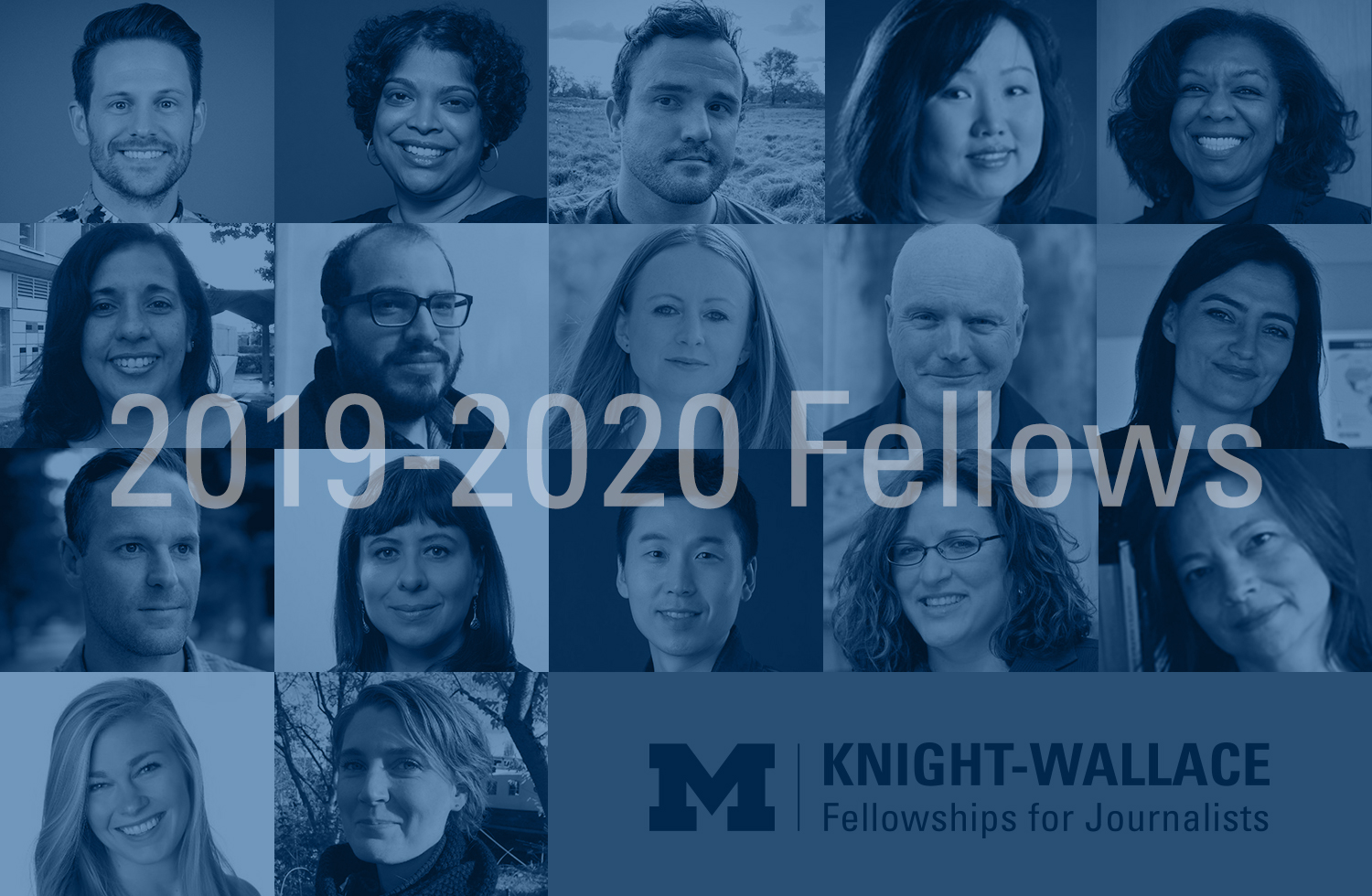
The University of Michigan has named 17 journalists as Knight-Wallace Journalism Fellows for the 2019-20 academic year. The accomplished group includes journalists from countries facing extreme political upheaval, cities facing transformational change and organizations confronting shifting public attitudes toward news consumption and the value of the press.

“At a time when the safety and freedom of the press are under threat and newsroom resources are continuing to shrink, it is especially important to provide journalists the space and support to pursue solutions, ” said Wallace House Director Lynette Clemetson. “Whether sharing techniques and tools across borders, experimenting with new storytelling forms or deepening important coverage areas and building public trust, these journalists all share a commitment to forging the path forward. It is a privilege to provide them with this unique opportunity.”

Knight-Wallace Fellows spend an academic year at the University of Michigan in Ann Arbor to pursue individual study plans and to engage in collaborative learning through fellowship seminars, training workshops and travel. Through twice-weekly seminars, Fellows engage with visiting journalists, eminent scholars and creative thinkers from a range of fields. Weeklong international news tours provide broader context to political, economic and social forces shaping their fields of study, and to trends and challenges facing journalism in other countries. In recent years, Fellowship classes visited South Korea, Brazil, Canada, Turkey, Argentina and Russia.

This is the 46th class of journalism fellows at the University of Michigan. The program is based at Wallace House, a gift from the late newsman Mike Wallace and his wife, Mary. Knight-Wallace Fellows receive a stipend of $75,000 for the eight-month academic year. The program is funded through endowment gifts by foundations, news organizations and individuals committed to journalism’s role in fostering an informed and engaged public.

Fellows and their study projects are:

Tommy Andres, Senior Special Projects Producer, Marketplace, American Public Media. Utilizing transmedia production models to craft a single narrative storytelling experience across platforms

Ana Avila, Deputy Director, Newsweek en Español (Mexico City, Mexico). Measuring, tracking and documenting threats and dangers to Mexican journalists for safer newsroom practices

Niala Boodhoo, Host, “The 21st,” Illinois Public Media. Developing a sustainable, replicable business plan for local news podcasts

Maria Byrne, Senior Producer, BBC News (Brussels, Belgium). Expanding coverage of China’s growing ambitions in the world

Jacob Carah, Investigative Reporter and Producer, “Frontline,”  PBS, Flint Beat, Flintside (Flint, Michigan), and The Detroit News. Developing new visual design through data analysis, coding and documentary film

Janet Cho, Business Reporter, The Plain Dealer (Cleveland, Ohio) and others. How words and images influence public perception about immigrants and U.S. immigration policy

Chantel Jennings, Senior Writer, The Athletic. Forging editorial partnerships between local news organizations and college newsrooms

Tracie Mauriello, Washington Bureau Chief, Pittsburgh Post-Gazette. Experimentation with points of view and narration techniques in literary journalism

Maurício Meireles, Reporter and Columnist, Folha de São Paulo (São Paulo, Brazil). Digital approaches to covering arts and culture

Marielba Núñez, Writer, Editor and Regional Coordinator, Crónica Uno (Caracas, Venezuela). New narrative strategies to report on the changing identities of migrants

Karen Rouse, Reporter, WNYC News, New York Public Radio. Improving strategies for newsrooms to recruit and develop journalists from underrepresented groups for long term success and leadership

Jet Schouten, Reporter, ICIJ and AVROTROS Public Broadcasting TV (Amsterdam, Netherlands). Deepening the understanding of truth and news in constructive journalism

Kwang Young Shin, Head of Criminal Justice Team, Dong-A Ilbo (Seoul, South Korea). Using digital storytelling to maximize the reach of Korea’s legacy media

Patrick Symmes, Contributing Editor, Harper’s Magazine,  Outside and others. A comparative study of authoritarianism and its influence on the press

Eileen Truax, Author and Reporter, The New York Times Edición Español and others. Developing global connections, shared networks and resources for journalists covering migration

Elodie Vialle, Head of  Journalism and Technology Desk, Reporters Without Borders (Paris, France). Building tools and training to counter online harassment and threats against female journalists

Elliott Woods, Writer and Photographer, Texas Monthly, The Guardian and others. Covering ongoing wars in an age of media contraction and declining military service rates

Read more on the Class of 2020 Knight-Wallace Journalism Fellows

The selection committee included Wallace House Director Lynette Clemetson and Associate Director Birgit Rieck; former fellows Teresa Frontado (Digital Director, WLRN, Miami), Kate Linebaugh (Deputy National Editor, The Wall Street Journal), Mosi Secret (Investigative and Literary Journalist) and Yvonne Simons (News Director, KATU-TV, Portland, Oregon); and University of Michigan Professors Bobbi Low (Environment and Sustainability) and Carl Simon (Mathematics, Complex Systems and Public Policy).

About Wallace House
Committed to fostering excellence in journalism, Wallace House at the University of Michigan is home to the Knight-Wallace Fellowships, the Livingston Awards and the Wallace House Presents event series, programs that recognize exceptional journalists for their work, leadership and potential.
Wallacehouse.umich.edu
Hop Off the Hamster Wheel, Apply for a Knight-Wallace Fellowship


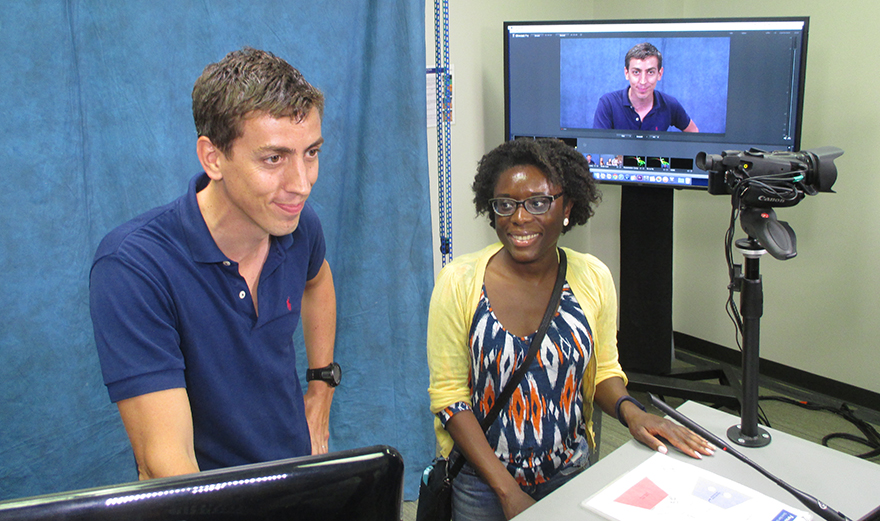
2017 Knight-Wallace Fellows Laurent Richard and Delece Smith-Barrow
2017 Knight-Wallace Fellows, Laurent Richard and Delece Smith-Barrow, at a multimedia workshop.


After producing 280 stories within three years, a busy reporter takes a Knight-Wallace Fellowship and an eight-month dive into research on under-reported education stories.


Education reporter and editor Delece Smith-Barrow goes to Medium to share how a Knight-Wallace Fellowship gave her the time and resources to pursue ambitious, thoughtful stories.  Taking a deep dive into how top-tier universities recruit faculty of color, Smith-Barrow writes about auditing education courses at Michigan, doing comparative research into other universities and having time to acquire new skills and enjoy life.

Read Smith-Barrow’s reflection of her fellowship year and return to the work world on Medium.

The Knight-Wallace Fellowships for Journalists at the University of Michigan are accepting applications from U.S. applicants for the 2019-20 academic year. We’re looking for accomplished journalists eager for growth and deeply committed to the future of journalism. The deadline to apply is February 1, 2019.

Delece Smith-Barrow is a senior editor at The Hechinger Report. As a 2017 Knight-Wallace Fellow, she studied how top-tier universities recruit faculty of color.

Room for Something New: Apply for a Knight-Wallace Fellowship


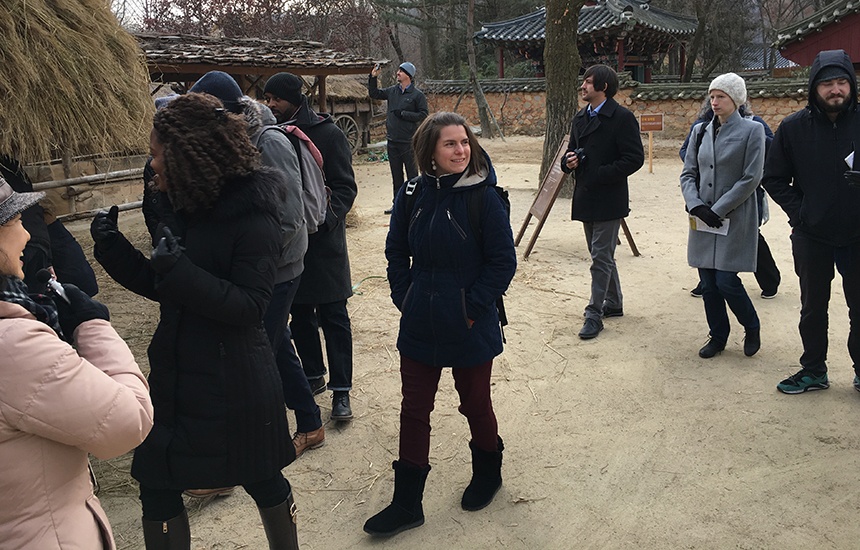
Anna Clark and her cohort of Fellows visit a Korean open-air museum during a Knight-Wallace news tour to South Korea.


How an independent journalist breaking stories on the Flint water-crisis found inspiration and turned her reporting into a book.

Need time away from daily deadlines to dig deeper and become an expert on an issue or topic? Anna Clark goes to Medium and shares how a Knight-Wallace Fellowship brought something new to her life: intellectual space.  From taking classes at the University of Michigan Law School to workshops and collaborative learning with her fellow Fellows, Clark writes “The Knight-Wallace year replenished my spirit at the time I needed it most.”

Clark wrote many of  the early stories about the lead discovered in Flint’s drinking water before coming to the program. Following the fellowship, she spent 14 months writing the first full account of the Flint water crisis. Her book, “The Poisoned City: Flint’s Water and the American Urban Tragedy,” was published this July.

Read Clark’s reflection of her fellowship journey on Medium.

The Knight-Wallace Fellowships for Journalists at the University of Michigan are accepting applications from U.S. applicants for the 2019-20 academic year. We’re looking for accomplished journalists eager for growth and deeply committed to the future of journalism. The deadline to apply is February 1, 2019.

Anna Clark is an independent journalist based in Detroit and author of “The Poisoned City: Flint’s Water and the American Urban Tragedy.” As a 2017 Knight-Wallace Fellow, she studied how chronic underfunding of American cities imperils its residents.

Knight-Wallace Reunion 2020


For Fellowship Alumni:

We’ve decided to space out the frequency of our beloved fellowship reunions to every five years. The date for our next big get-together will be September 4-6, 2020. We expect that Labor Day weekend, with plenty of notice for advance planning, will entice you and your families back to Ann Arbor for a beautiful September visit.

We hope to see Fellows from what will by then be all 47 fellowship classes for a weekend of engaging events, dinner and dance, and, of course, barbeque at Wallace House.

As our plans develop, we’ll be in touch with information on hotel bookings, RSVP’s and more.

For now, save the date!

Wallace House

Wallace House Welcomes Emilio Gutiérrez Soto and His Son to Ann Arbor


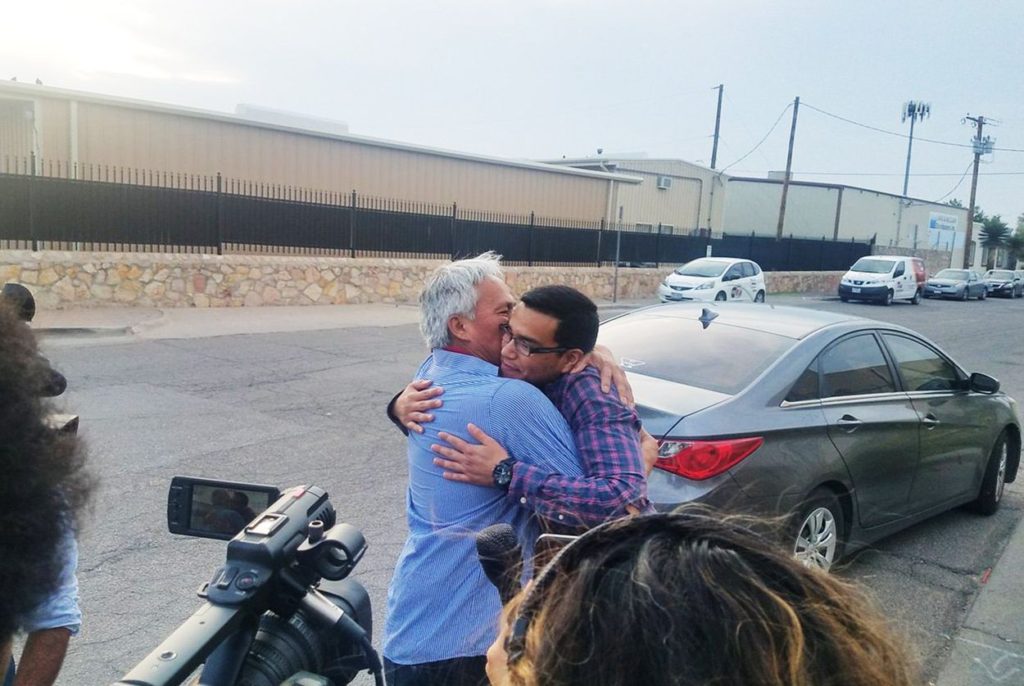
Emilio Gutierrez-Soto and son Oscar are freed from a U.S. detention center on July 26, 2018.
Photo credit: Julián Aguilar, The Texas Tribune

Read the announcement in Spanish.

Wallace House is pleased to welcome Mexican journalist Emilio Gutiérrez-Soto to Ann Arbor to join the 2018-2019 Knight-Wallace Fellowship class as a Senior Press Freedom Fellow. Gutiérrez and his son, Oscar, were freed on Thursday, July 26, 2018, from a U.S. Immigration and Customs Enforcement detention facility in Texas, where they were held since December, 2017.

Their release came a day before a federal judge’s deadline for the Department of Homeland Security officials to produce documents to explain why it detained the journalist.


“With so many challenges to press freedom, and in the midst of a crisis around immigration policy, it is easy to feel powerless,” said fellowship director Lynette Clemetson, who met with Gutiérrez in April at the El Paso detention facility to invite him to join the Knight-Wallace Fellowship program. “Emilio’s release, due to the efforts of many, is a reminder that we all can do something to affect change.”


Gutiérrez is seeking asylum in the United States following death threats related to his reporting. Mexico is the most dangerous country in the world for journalists, after war-torn Syria. Wallace House joined numerous journalism organizations including The National Press Club, Reporters Without Borders and the American Society of News Editors to collaborate in support of Gutiérrez’s case.

Wallace House, the University of Michigan and the Ann Arbor community are eager to receive Gutiérrez and his son as the family works to resume their life in the U.S. and Gutiérrez has the opportunity to reconnect with journalism.  While at the university, Gutiérrez will study issues related to global press freedom and safety.

“Freedom was a big surprise for me. When it happened I was confused,” said Gutierrez, by phone from New Mexico, where he went following his release. “I feel nervous now, but so thankful. The fellowship, all of the supporters and friends who helped, they are our family here now. We are so thankful.”


Knight-Wallace Journalism Fellowships invite a select group of accomplished, mid-career journalists to spend an academic year at the University of Michigan in Ann Arbor pursuing individual research and collaborative learning through classes, seminars, training workshops and travel. Knight-Wallace Fellows receive a stipend of $75,000 for the eight-month academic year plus full tuition and health insurance. The program is funded through endowment gifts by foundations, news organizations and individuals committed to protecting the role of a free press.

Wallace House Presents ProPublica’s Bernice Yeung

The 33rd Graham Hovey Lecture

“Unheard Voices of the #MeToo Movement: Telling the Stories of America’s Most Vulnerable Workers” with Bernice Yeung ’16

September 18, 2018 | 5 p.m.

Wallace House Gardens
620 Oxford Road, Ann Arbor

Welcome remarks by Mark S. Schlissel, President, University of Michigan

View video »

Bernice Yeung, 2016 Knight-Wallace Fellow, will discuss the sexual harassment and assault that migrant farmworkers and night-shift janitors routinely face on the job and examine what these workers have done to fight back and seek justice.

Yeung is a reporter with ProPublica who covers labor and employment. Previously, she was a reporter with Reveal from The Center for Investigative Reporting, where she was part of the national Emmy-nominated “Rape in the Fields” reporting team, which investigated the sexual assault of immigrant farmworkers. The project won an Alfred I. duPont-Columbia University Award and a Robert F. Kennedy Journalism Award and was a finalist for the Goldsmith Prize for Investigative Reporting. Yeung also was the lead reporter for the national Emmy-nominated “Rape on the Night Shift” team, which examined sexual violence against female janitors. That work won an Investigative Reporters and Editors Award, the Society of Professional Journalists Sigma Delta Chi Award for investigative journalism, and the Third Coast/Richard H. Driehaus Foundation Competition. Those projects led to her first book, “In a Day’s Work: The Fight to End Sexual Violence Against America’s Most Vulnerable Workers.”

Yeung has a bachelor’s degree in journalism from Northwestern University and a master’s degree from Fordham University, where she studied sociology with a focus on crime and justice. ​​As a 2015-2016 Knight-Wallace Fellow at the University of Michigan,​​ she explored how journalists can employ social science survey methods in their reporting.

The annual Graham Hovey Lecture recognizes a Knight-Wallace journalist whose career exemplifies the benefits of a fellowship at the University of Michigan and whose ensuing work is at the forefront of national conversation. The event is named for the late Graham Hovey, director of the fellowship program from 1980 to 1986 and a distinguished journalist for The New York Times.

Michigan Radio is a co-sponsor of the event.

Read the conversation between Wallace House Director Lynette Clemetson and Bernice Yeung ’16 regarding Yeung’s work in the context of the #MeToo Movement.

Wallace House Awards Press Freedom Fellowship to Emilio Gutiérrez Soto

Emilio Gutiérrez Soto accepting the National Press Club’s John Aubuchon Freedom of the Press Award in October 2017. Photo credit: Noel St. John

Read the announcement in  Spanish

The Knight-Wallace Fellowships for Journalists at The University of Michigan has invited Emilio Gutiérrez Soto to join its 2018-19 Fellowship class as a Senior Press Freedom Fellow. Gutiérrez, a Mexican journalist who is currently seeking asylum in the United States following death threats related to his reporting, has been held in a U.S. Immigration and Customs Enforcement detention facility near El Paso, Texas since December.

“On World Press Freedom Day, and every day, we must uphold the vital role of a free and independent press in the United States and around the world,” said Lynette Clemetson, director of the fellowship program. “Emilio Gutiérrez Soto’s accomplishments, experiences and commitment ensure that he will contribute much to the class of exceptional journalists selected as Knight-Wallace Fellows. It is our hope that U.S. Immigration officials will release Emilio so that he may accept this special honor.”

The University of Michigan named its Knight-Wallace Journalism Fellows for the 2018-2019 academic year on Monday, April 30. The program invites a select group of accomplished, mid-career journalists to spend an academic year at the University of Michigan in Ann Arbor pursuing individual research and collaborative learning through classes, seminars, training workshops and travel. If released and permitted to stay in the United States while his asylum case is appealed, Gutiérrez will join the class to study issues related to global press freedom and safety.

Gutiérrez, a longtime journalist in Mexico, came to the United States as a legal asylum seeker in 2008 to escape death threats tied to his investigative reporting on drug cartels. Mexico is consistently ranked as one of the most dangerous countries for reporters. “Mexican authorities have failed to prosecute the killers of journalists. They have also failed to provide adequate protection for journalists under threat,” said Joel Simon, executive director of the Committee to Protect Journalists, which tracks threats and violence against reporters.

In 2017, an immigration judge in El Paso denied Gutiérrez’s asylum request and he was scheduled for deportation. The deportation was halted after protest from numerous journalism organizations including The National Press Club, Reporters Without Borders and the American Society of News Editors. The Knight-Wallace Fellowships for Journalists is one of several organizations that signed amicus briefs organized by The National Press Club in support of Gutiérrez’s case.

Clemetson will discuss the fellowship award to Gutiérrez at a press conference at 1 p.m. on May 3 at The National Press Club in Washington, D.C. The event will be live streamed on the organization’s website.

Knight-Wallace Fellows receive a stipend of $75,000 for the eight-month academic year plus full tuition and health insurance. The program is funded through endowment gifts by foundations, news organizations and individuals committed to journalism’s role in fostering an informed and engaged public.

Read the announcement in Spanish

University of Michigan Names Knight-Wallace Journalism Fellows


The University of Michigan has named its Knight-Wallace Journalism Fellows for the 2018-2019 academic year. The group, which includes 12 American and six international journalists, is the 45th class of journalism fellows at the University.

“Part of upholding the essential role of journalism in our society is supporting the careers of journalists. It is a privilege to be able to recognize and nurture the talents of this wide-ranging group of Fellows through a year of academic research and experiential learning,” said Wallace House Director Lynette Clemetson.

Knight-Wallace Fellows spend an academic year at the University of Michigan in Ann Arbor to pursue individual study plans and to engage in collaborative learning through fellowship seminars, training workshops and travel. Through twice-weekly seminars, Fellows engage with visiting journalists, eminent scholars and creative thinkers from a range of fields. Weeklong international news tours provide broader context to political, economic and social forces shaping their fields of study, and to trends and challenges facing journalism in other countries. In recent years, Fellowship classes visited South Korea, Brazil, Canada, Turkey, Argentina and Russia.

The program is based at Wallace House, a gift from the late newsman Mike Wallace and his wife, Mary. Knight-Wallace Fellows receive a stipend of $75,000 for the eight-month academic year plus full tuition and health insurance. The program is funded through endowment gifts by foundations, news organizations and individuals committed to journalism’s role in fostering an informed and engaged public.

Fellows and their study projects are:

Itai Anghel, Senior Correspondent, UVDA, TV Channel 2 (Tel Aviv, Israel). Tribalism and the politics of fear in the Middle East following the Arab revolutions

Michelle Jolan Bloom, Senior Designer, Politico (Washington, D.C.). Visual storytelling through social media

Seungjin Choi, Reporter, Maeil Business Newspaper (Seoul, South Korea). Reshaping strategies for digital news distribution

Arnessa Garrett, Assistant Business Editor, The Dallas Morning News (Dallas, Texas). Rebuilding trust with local audiences through digital strategy and engagement

Emilio Gutiérrez Soto, Press Freedom Fellow.  Issues related to safety and freedom of journalists

Sharilyn Hufford, Deputy Editor, The New York Times (New York, New York). Creating high-impact news products and best practices for workflow

Anders Kelto, Creator and Senior Producer, GameBreaker with Keith Olbermann (Ann Arbor, Michigan). The connection between sports and social movements

Fredrik Laurin, Editor for Special Projects, SVT Swedish Television (Stockholm, Sweden). Exploring and developing tools to protect news content from digital manipulation

Catherine Mackie, Team Leader, Digital Video, BBC Midlands (Birmingham, England). The impact of class on news consumption and reconnecting with audiences

Seema Mehta, Political Reporter, Los Angeles Times (Los Angeles, California). How automation will impact the economy and the 2020 presidential election

Aaron Nelsen, Rio Grande Valley Bureau Chief, San Antonio Express-News (Mission, Texas). The effect of militarization on communities along the U.S.-Mexico border

Daigo Oliva, Deputy Photo Editor, Folha de São Paulo (São Paulo, Brazil). New ways to publish image-driven narratives

Ben Penn, Reporter, Bloomberg Law (Washington, D.C.). The impermanent future of work

Rachel Rohr, Managing Editor, The GroundTruth Project (Boston, Massachusetts). New approaches to news and media literacy for teens and young adults

Stephen Ssenkaaba, Contributing Editor and Senior Features Writer, The New Vision (Kampala, Uganda). Inclusive online news strategies for emerging news markets

Jawad Sukhanyar, Reporter, The New York Times (Kabul, Afghanistan). Afghan women’s issues in the global context

Luis Trelles, Reporter and Producer, Radio Ambulante (San Juan, Puerto Rico). The politics of reconstruction in U.S. territories devastated by natural disasters

Neda Ulaby, Correspondent, NPR (Washington, D.C.). A cultural history of the veil in world religions

AJ Vicens, Staff Reporter, Mother Jones (Washington, D.C.). How artificial intelligence, cyber security and data shape modern society

The selection committee included Wallace House Director Lynette Clemetson and Associate Director Birgit Rieck; Teresa Frontado (Digital Director, WLRN, Miami), Kate Linebaugh (Deputy National Editor, The Wall Street Journal), Mosi Secret (Investigative and Literary Journalist) and Yvonne Simons (Assistant News Director, CBS 13, Sacramento); and University of Michigan Professors Bobbi Low (Environment and Sustainability) and Carl Simon (Mathematics, Complex Systems and Public Policy).

About Wallace House
Committed to fostering excellence in journalism, Wallace House at the University of Michigan is home to the Knight-Wallace Fellowships and the Livingston Awards, two programs that recognize exceptional journalists for their work, leadership and potential.
Wallacehouse.umich.edu



Read more on the Class of 2019 Knight-Wallace Journalism Fellows

Korea Without Frilly Clothes

A highlight of the trip: revisiting my grandparents’ place in Seoul and digging up old photos that I didn’t
find as interesting on previous trips.
Photo submitted by Candice Choi

Staring at video of the Samsung chairman allegedly with prostitutes, I knew this trip to Korea would differ from my past visits.

The hidden camera footage was published by Newstapa, an investigative group formed in 2012. The newsroom was one of the first stops for the Knight-Wallace Fellows and signaled I’d be seeing the country from new perspectives.

My last trip to Seoul was more than 20 years ago, when I was in high school. Upon arriving for childhood visits, my conservative grandparents would take my brother and me shopping for stuffy clothes and make us wear them to a formal restaurant. The ritual made me see new clothing and the entire country of Korea as suffocatingly superficial.

Yet after learning the Fellows were headed to Korea, I grew excited about returning with a reporter’s mindset. I read up on modern Korean history and politics and began to see the country’s vibrancy.

Among our stops were a museum of antique Korean furniture, the taping of a K-pop TV competition, and a U.S. military base. We also went to the Demilitarized Zone, which jarringly played to tourists with cardboard cutouts of soldiers for photo ops while also reminding us of the peninsula’s tragic past.

Our visit would take on added significance weeks later, when the leaders of North and South Korea would meet at the same site to discuss denuclearization and perhaps formally ending the Korean War.

Back at the Newstapa office, our host was a young woman who left her job with the police force to become a reporter, inspired in part by the movie “Spotlight.” She wore a modern black hanbok that gave her an authoritative presence as she explained libel laws that allow journalists to be criminally charged.

Newstapa nevertheless published video that appears to show the Samsung chairman with prostitutes. Adding to the intrigue, the tapes were apparently obtained for blackmailing purposes before ending up with Newstapa.

It was ethically messy, making the decision to publish all the more daring.

Newstapa’s model of relying on reader donations is also provocative. The idea is to gain public support as an independent news source in a society where conglomerates have huge power. The approach is a challenge to news outlets around the world.

Outside newsrooms, some of the best moments were unscheduled, such as people watching on the subway and wandering alone on the striking campus of Ewha University. Over a late night coffee, a friend who works as a TV sports analyst explained his quest to emulate the argumentative style of New York sports radio. I laughed imagining a Korean version of “Mike and the Mad Dog.”

The highlight of the trip, though, was returning to my grandparents’ apartment, which was largely unchanged from my childhood. My grandfather died of stomach cancer years ago and my grandmother has Alzheimer’s disease, making it too late to ask about their pasts. But I dug out stacks of old photo albums I had never bothered looking at before.

The black-and-white images showed them in unfamiliar contexts – smiling on a train, mingling at a garden party, wandering down a Seoul alley. I realized how little I knew about their lives, which spanned Japanese colonialism, the Korean War and the country’s economic boon.

Growing up, I thought my grandparents were overly conservative and limited in their worldview, traits I chalked up to their Korean background. In the years since, I’ve come to see the immaturity of those judgments, a realization this trip helped underscore.

Candice Choi is a 2018 Knight-Wallace Fellow and Food Industry Writer for the Associated Press (New York, N.Y.).

China’s Soft Power: Understanding Beijing’s Growing Worldwide Influence

Louisa Lim, Mark Magnier and Dayo Aiyetan

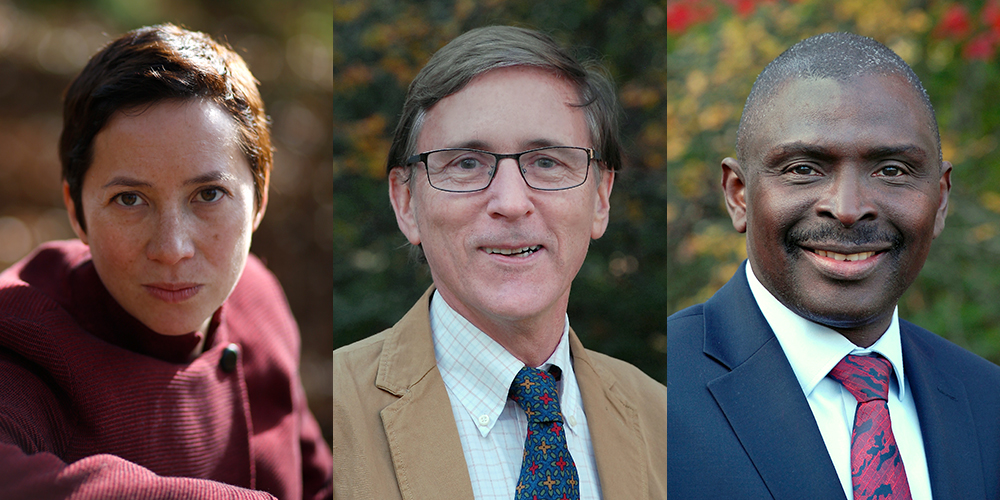
Knight-Wallace Fellows Louisa Lim, Mark Magnier and Dayo Aiyetan at the Eisendrath Symposium

March 20, 2018 | 3 p.m.
Rackham Amphitheatre, fourth floor
915 Washington Street, Ann Arbor

Watch the discussion
Have a question about the topic? Tweet using #WallaceHouse.


On stage with the foreign correspondents of Wallace House
China’s move to change the constitution, allowing President Xi Jinping to remain in power, could have a major impact on its global influence. A panel of Knight-Wallace international journalists examines China’s growing clout and how this power is being deployed around the world, with implications for media, academia and the entertainment industry. Is Beijing already influencing what we read and watch or are fears of its influence overblown?

The Eisendrath Symposium honors Charles R. Eisendrath, former director of Wallace House, and his lifelong commitment to international journalism.


About the Speakers
Dayo Aiyetan is a 2018 Knight-Wallace Fellow,  investigative reporter and founder and executive director of the International Center for Investigative Reporting, a nonprofit news agency in Abuja, Nigeria. In this role, he has trained more than 100 reporters, aiming to promote a culture of data-driven accountability journalism in Nigeria.

Louisa Lim is a 2014 Knight-Wallace Fellow and the author of “The People’s Republic of Amnesia; Tiananmen Revisited.” She reported from China for a decade for NPR and the BBC. She is now a senior lecturer in Audio Visual Journalism at the University of Melbourne and the co-host of the “Little Red Podcast,” a monthly podcast focusing on China beyond the Beijing beltway.

Mark Magnier is a 2018 Knight-Wallace Fellow and the Beijing-based China economics editor for The Wall Street Journal, where he oversees coverage of the world’s second-largest economy and its seismic impact on Chinese society and the rest of the world. Previously, he served as bureau chief in New Delhi, Beijing and Tokyo for the Los Angeles Times.


About the Moderator
Mary Gallagher is a professor of political science at the University of Michigan, where she is also the director of the Center for Chinese Studies, and a faculty associate at the Center for Comparative Political Studies at the Institute for Social Research. Her research areas are Chinese politics, comparative politics of transitional and developing states, and law and society.


Free and open to the public.

For questions about the event email: [email protected]

This event is produced with support from the John S. and James L. Knight Foundation. Michigan Radio is a co-sponsor of the event.