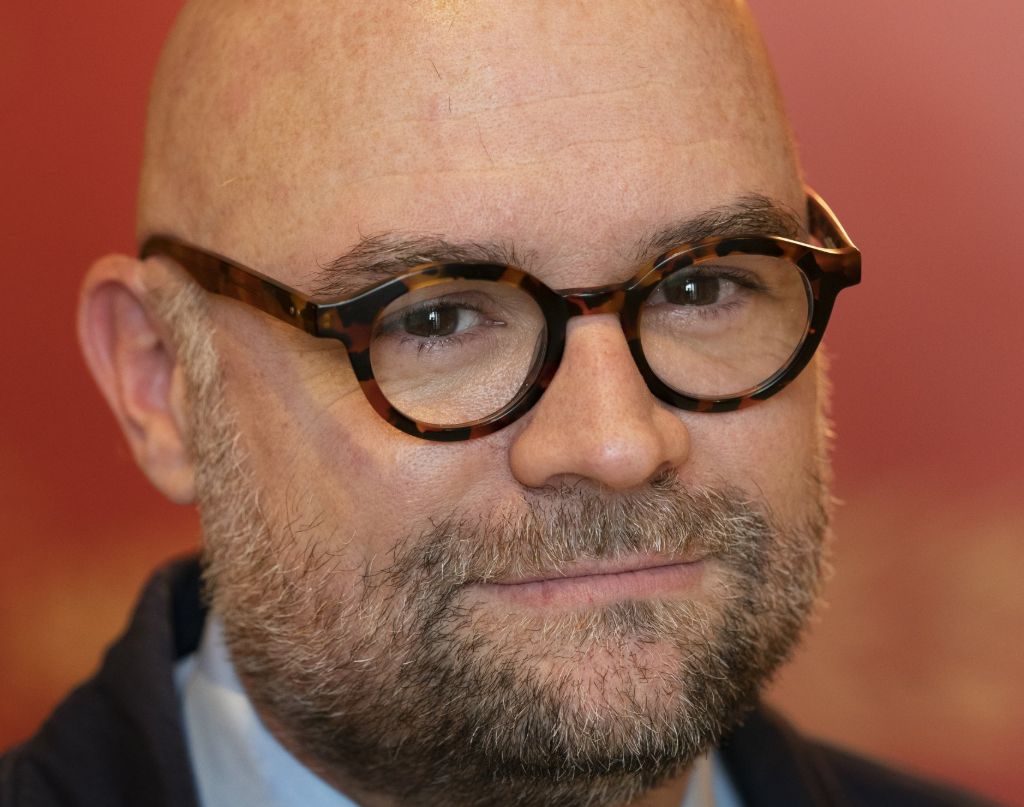
Gerard Ryle is executive director of the International Consortium of Investigative Journalists, which produced the Panama Papers, Paradise Papers and Pandora Papers.
I used to think the hardest part of journalism was prying loose facts others worked hard to conceal. And it is hard — buried documents, money routed through endless, shady paths, lawyers hired to bury the trail and corporate filings engineered to confuse. But over time, I’ve learned there’s another challenge just as steep: getting the resources to do the work.
Around the world, journalism is shrinking at the moment we need it most. When budgets are slashed, investigative reporting, which takes the longest and costs the most to produce, is the first to go.
At the International Consortium of Investigative Journalists (ICIJ), we feel these pressures all the time. We’ve had to stretch every dollar further and dip into our reserves. But we’ve made a deliberate choice: We will not retreat. And we’re finding ways to do more.
We see ICIJ not just as a newsroom but as part of a larger media ecosystem. And when that ecosystem is under strain, our responsibility is to strengthen it, not pull back. Even in these lean times, we’ve doubled down to help others survive.
We continue sharing the technology we built to handle massive data leaks. We resist the lone-wolf style of journalism by offering scoops to small newsrooms without the resources to find them on their own. And we keep training reporters so they can carry out this kind of work in their own countries and languages.
Just this year, we trained hundreds of journalists, from Argentina to Zimbabwe, on the secure, collaborative methods we created. The training took many forms: individual mentoring, small group seminars, onboarding sessions for new partners, full-semester courses at Dortmund University in Germany and presentations at major industry gatherings.
The model we’ve built ensures no single government or institution can suppress the story.
Strengthening other newsrooms fortifies the ecosystem. It’s how we make sure investigative journalism can weather financial strain, adapt to new challenges, withstand political pressure and remain a force for accountability wherever it’s practiced.
If this way of working sounds familiar, it should. It’s the model we used a decade ago when the Pulitzer Prize-winning Panama Papers showed the world what happens when collaboration meets secrecy head-on. We brought together 376 journalists from 70 countries to produce the biggest journalistic investigation the world had ever seen. Every project since — from 2017’s Paradise Papers to this year’s China Targets — was built on this foundation, evolving to take on ever more complex forms of secrecy.
The model we’ve built ensures no single government or institution can suppress the story.
Three factors keep this work going: the courage of whistleblowers who share information with us despite the risks; the grit of journalists who won’t stop digging; and our belief that reporters working together can withstand forces working against transparency.
Our investigations led to the ousting of four world leaders and changed laws in more than 70 countries. They helped governments claw back billions in taxes and exposed hidden wealth on a scale the world had never seen. Along the way, we built a new model of journalism that others are now using, too.
The path to that impact runs through Wallace House. My fellowship in 2005-2006 provided the rare gift of time to think differently about how journalism could be done. I came to see that while traditional journalism has its place, collaboration across borders was needed to tell the biggest, most consequential stories.
Charles Eisendrath put my conviction to the test just a few years later with an invitation to apply to lead ICIJ. Charles was director of Wallace House and on the board of the Center for Public Integrity, which ICIJ was part of at the time. That call was a turning point, not just for me, but for the new model of journalism ICIJ would come to pioneer.
I’ve seen what happens when the truth gets out. Leaders step down. Loopholes close. And citizens are reminded of how free societies are supposed to work. The test now is whether we can equip the next generation to carry this torch and keep the truth alive.
This article is part of Rising to Meet the Moment, a series from the Fall 2025 issue of the Wallace House Journal, featuring reflections from Knight-Wallace alumni, Wallace House board members and the Livingston Awards community on meeting today’s challenges with focus, resilience and resolve. Read more stories from our series:
Christopher Baxter, “Unexpected hope“
Lynette Clemetson, “Stepping up with focus and resolve“
Hayes Ferguson, “Nurturing innovation, adaptability and purpose“
Stephen Henderson, “Choosing civility“
Samantha Henry, “The future of our profession: student journalism“
Tracy Jan, “News deserts and fewer watchdogs“
Margaret Low, “Game Over? Not a chance“
Peggy Lowe, “Defunded, but not defeated“
Amy Maestas, “Building trust through community collaborations“
Kunal Majumder, “Defending the right to report“
Seema Mehta, “Why we keep reporting“
Rachel Rohr, “Swift action for the hardest hit“
Gerard Ryle, “We will not retreat“
Laura Santhanam, “Preserving knowledge“
Mazin Sidahmed and Maria Arce, “Training newsrooms to serve immigrant communities“
Celeste Watkins-Hayes, “Bending without breaking: resilience in academia“
Thomas Zurbuchen, “Never let a good challenge go to waste“