Joseph Sywenkyj is an American photographer of Ukrainiandescent who has lived and worked in Ukraine for 20 years.
I arrived in Ann Arbor from Ukraine with my family in August 2024 to begin my Knight-Wallace Fellowship. Air raid sirens wailed as our train pulled out of Kyiv. Days later, I was attending a seminar on Michigan politics and wondering, “What am I doing here?”
By spring 2025, when my cohort set off for three countries of the former Yugoslavia — Croatia, Bosnia and Serbia — I had mostly adapted to life without war. I was looking forward to learning how other war-torn European societies had attempted the difficult transition to peace and democracy.
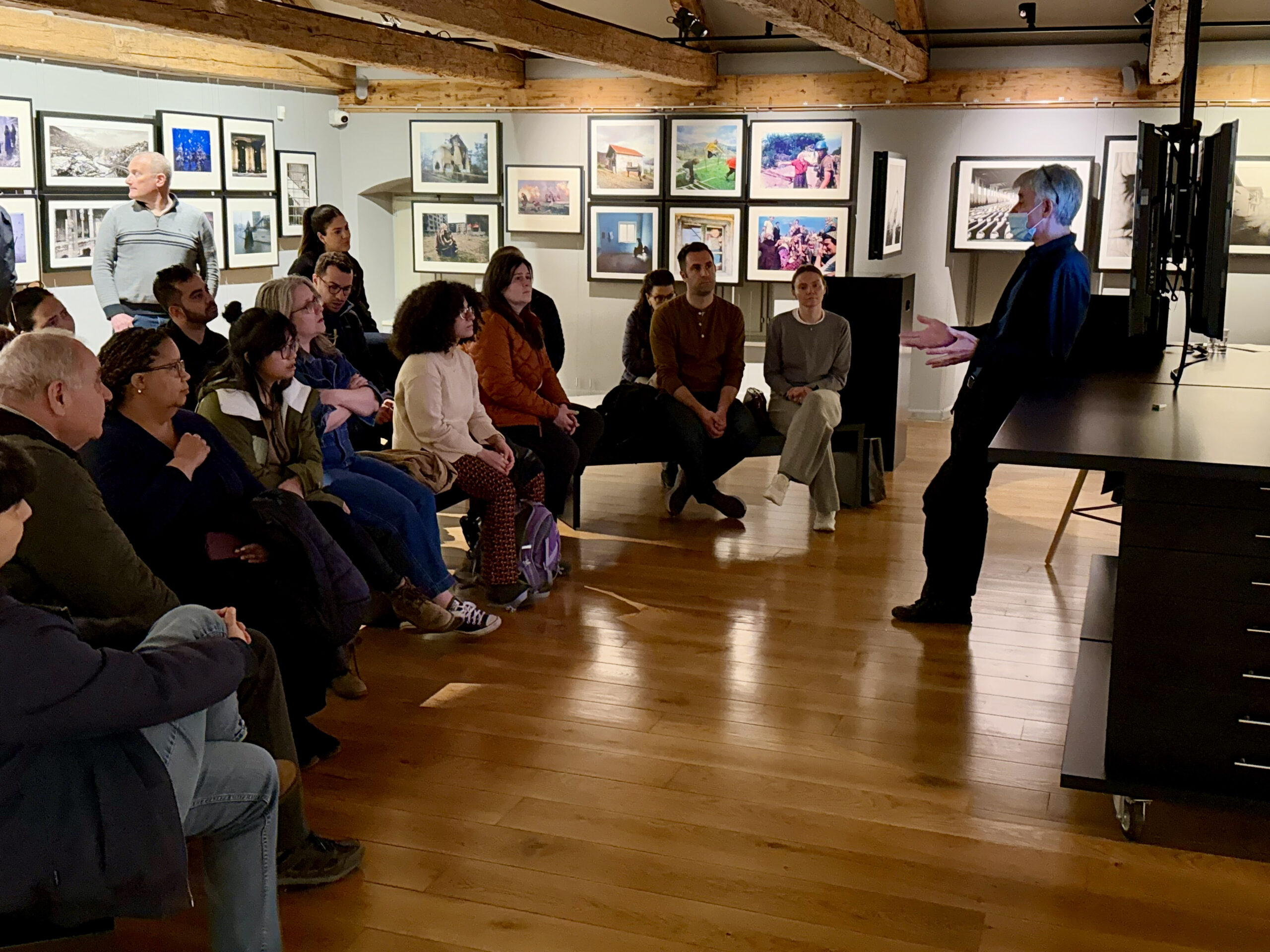
We began our trip in the Croatian coastal city of Dubrovnik, where we were welcomed by our guide, Bosnian photojournalist Ziyah Gafic. We toured a hilltop museum that chronicled the 1991 siege of Dubrovnik and visited photographer Wade Goddard, who ran a gallery dedicated to war photography. I had studied images of the Balkan wars as a young photographer, but to view them well into Russia’s full-scale war against Ukraine was something entirely new. My wife wept as I fought tears and tried to comfort her. It was like looking in a mirror.
Politicians, journalists, activists and religious leaders in Sarajevo helped us understand how selective memory, language and old animosities are harnessed to spark violence and war. Many guest speakers had warnings to share. Aida Čerkez, who was the Sarajevo bureau chief for the Associated Press during the war, recounted the mass denial before the Serbs began their 1992 attack. She cautioned: “Try to resist the denial, so you can recognize it in time to react. … You cannot save the world. But what you can do, privately and professionally, is position yourself toward the problem.”
The most haunting part of our trip was visiting Srebrenica, where Bosnian Serb forces murdered more than 8,000 Bosnian Muslims, most of them men and boys, while United Nations peacekeepers failed to act. We toured the cemetery and memorial center with curator Azir Osmanović, who survived the 1995 genocide at age 13. He told us more Bosnian Serbs deny the genocide today than they did in the 1990s. As a Ukrainian, I took note of the work we must do to commemorate the victims of Russia’s war against us in the years ahead.
We then traveled to Belgrade, the capital of Serbia, where I was surprised to feel a sense of hope. Our guide, Serbian photojournalist Marko Drobnjakovic, introduced us to courageous investigative reporters and election observers. And we observed peaceful, student-led protests against corruption, which had spread throughout the country. We were witnessing history in action.
I remain inspired by the people we met, working tirelessly to heal wounds of war and develop more open, accountable and democratic societies.
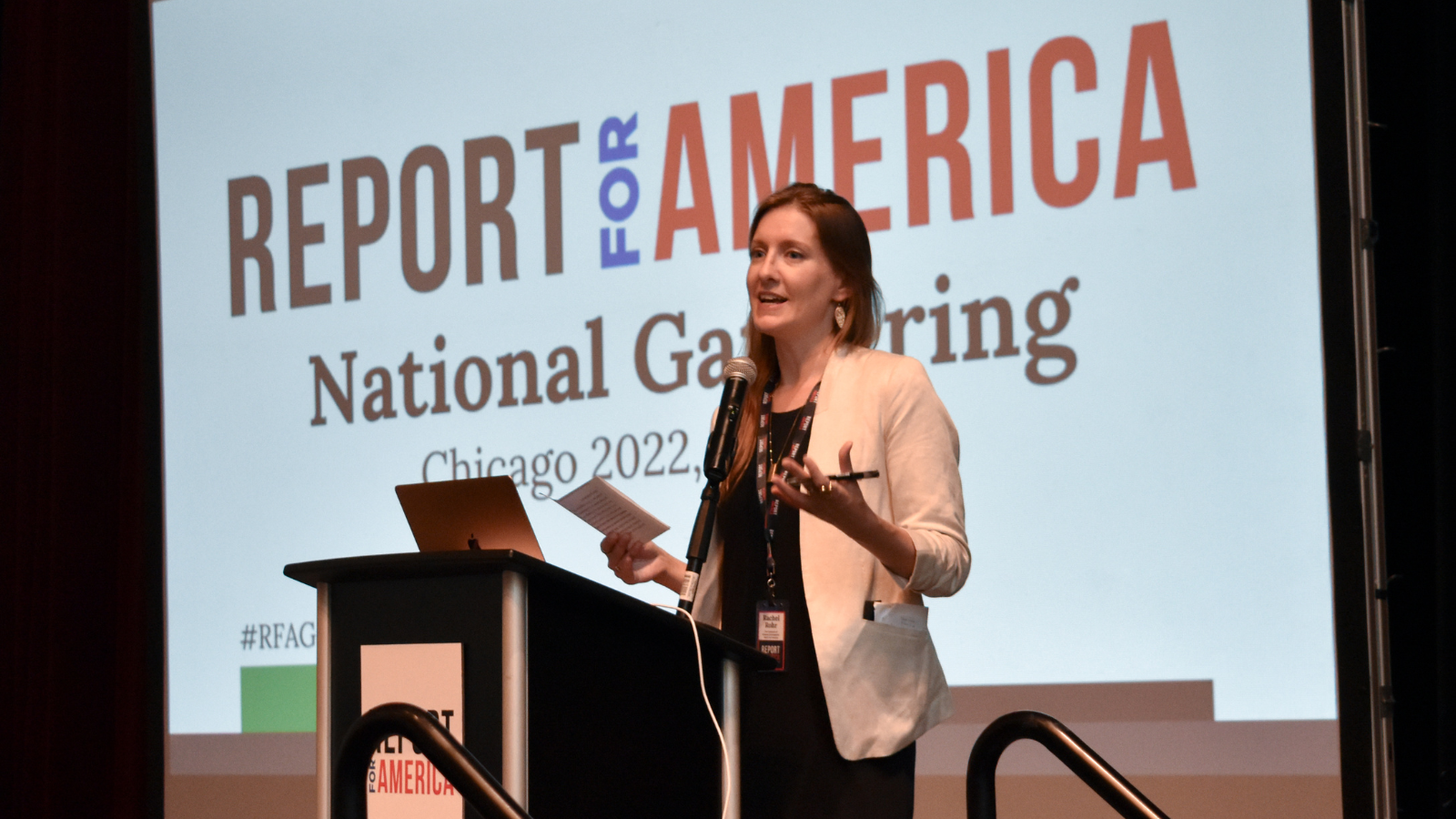
Rachel Rohr is vice president of program development at Report for America, a national service program that places journalists into local newsrooms to report on under-covered issues and communities.
Like the Knight-Wallace Fellowships, Report for America runs on a tight programmatic cycle. We had selected our 2025-26 corps members and our program year had started when Congress voted to rescind funding for public media in July. About 20% of the local newsrooms Report for America has supported since 2018 are public media stations. We reached out across our network to find out who was hardest hit.
In Alaska, one of our alumni at Alaska Public Media helped direct us to two urgent situations.
KRBD, a station in the southeast city of Ketchikan, was about to hire reporter Hunter Morrison when 37% of its budget evaporated. The small newsroom typically has a news director and one reporter covering a region that includes a busy tourist and fishing community as well as Alaska’s only Native American reservation. Not being able to fill the vacant reporter position would leave 20,000 people without essential local news coverage.
At KOTZ, a one-person newsroom above the Arctic Circle in Kotzebue, the station’s board and leadership told the news director, Desiree Hagen, that they would have to close the radio station within a year. In addition to serving as the news director, Hagen is the only reporter at KOTZ, which receives 41% of its funding from the Corporation for Public Broadcasting.
Shuttering the newsroom would cut off the primary local news source and safety information for approximately 10,000 people, most of whom are Alaska Natives.
Most of the stories Hagen covers involve weather alerts, Indigenous cultural programming, and news on issues such as road closures, subsistence meetings, and essential hunting and fishing information — updates vital for a community where 60% to 80% of the diet depends on harvested wild food. Shuttering the newsroom would cut off the primary local news source and safety information for approximately 10,000 people, most of whom are Alaska Natives.
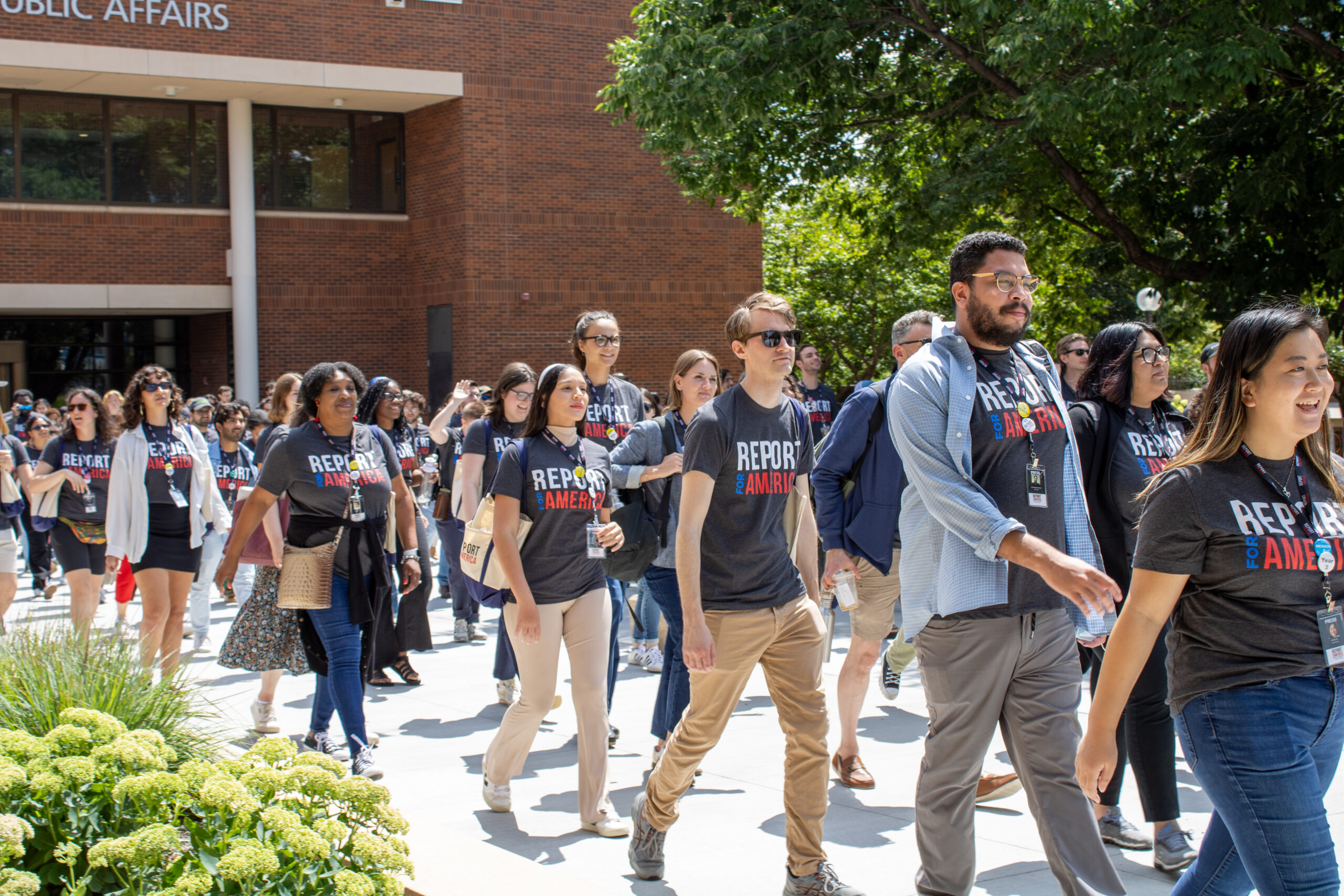
Report for America corps members from across the country.
We accepted Hagen and Morrison as corps members. Instead of our usual grants that cover 50% of reporters’ salaries in the first year, we’ll cover 100% of the reporters’ salaries and benefits in the first year — something we’ve never done before.
We’ll also assist the newsrooms with funding and sustainability strategy. And the reporters will be able to enjoy all the perks of being corps members. That includes mentorship, training, professional memberships and — perhaps best of all for reporters in rural and remote places — a supportive peer network of Report for America corps members and alumni.
As Desiree Hagen, who is deeply committed to continuing her work as news director and reporter, told us, “The funding prevents the voices of rural Alaska and the Arctic from going silent.”
This article is part of Rising to Meet the Moment, a series from the Fall 2025 issue of the Wallace House Journal, featuring reflections from Knight-Wallace alumni, Wallace House board members and the Livingston Awards community on meeting today’s challenges with focus, resilience and resolve. Read more stories from our series:
Accept the Challenge to Build Vibrant, Community-Centered Journalism
Journalism is a cornerstone of democracy and essential to an informed citizenry. As local news outlets across the U.S. and in the Great Lakes region have disappeared, communities have lost access to reliable information, weakening civic engagement and trust.
Responding to this urgent need, Wallace House Center for Journalists launched the Great Lakes Local News Fellowship in 2024 with a $1 million challenge grant from the Michigan-based Song Foundation and a $280,000 matching grant from the Illinois-based Joyce Foundation. This challenge is a call to others who believe in the power of local journalism to join us in sustaining and expanding this work. Together, we are collaborating with philanthropic partners across the Great Lakes region to establish a $5 million fund within the next five years — an investment in the future of local news.
“We believe that collective investments are urgently needed to preserve local journalism and ensure residents of the Great Lakes region have access to credible information to help guide their engagement and advocacy.” –Khalilah Burt Gaston, Executive Director of the Song Foundation
About the Great Lakes Local News Fellowship
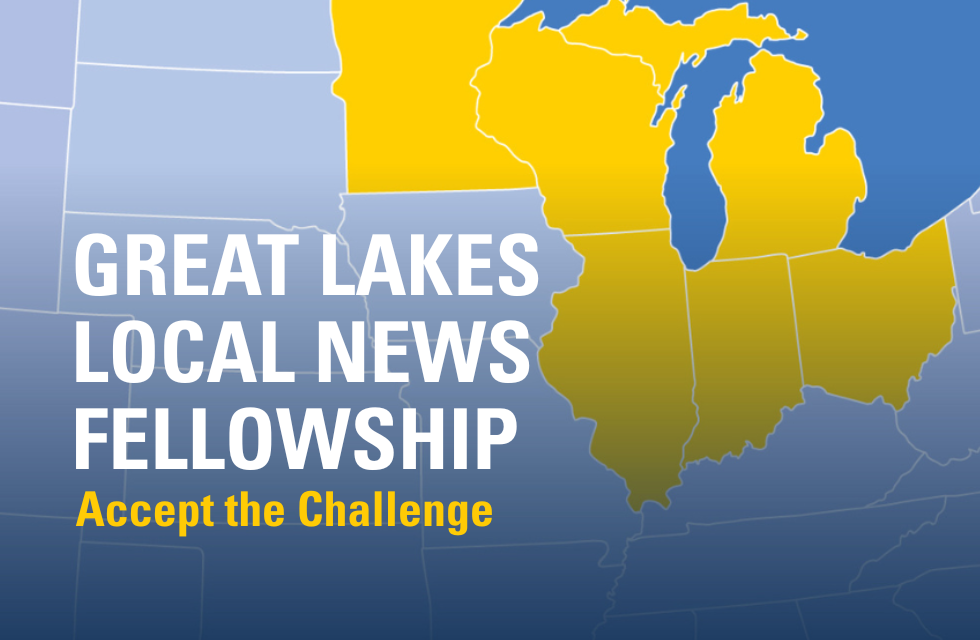
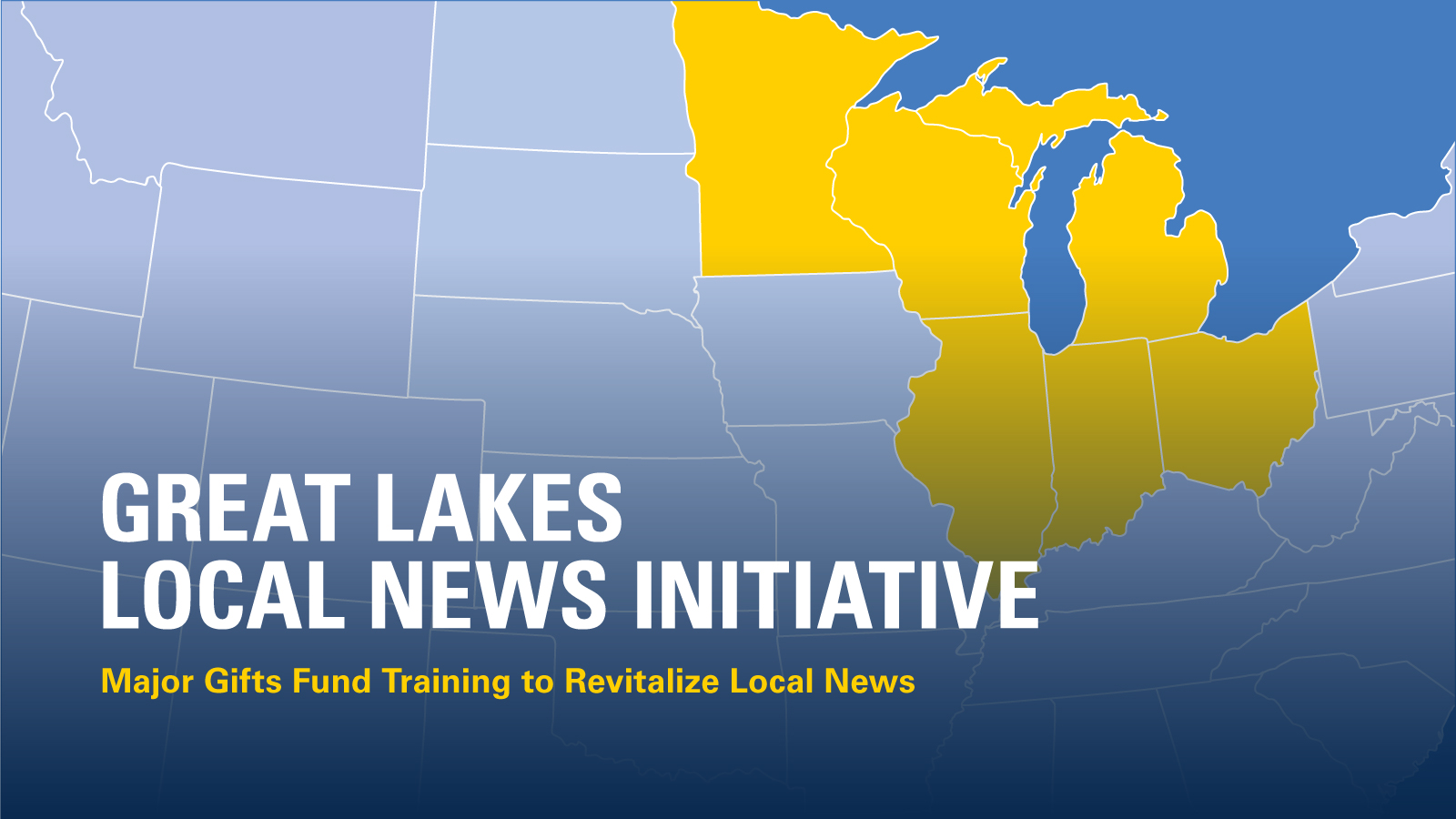
This specialized Knight-Wallace Fellowship supports journalists working to launch or rebuild local news in Indiana, Illinois, Michigan, Minnesota, Ohio and Wisconsin. Through access to the professional schools, faculty and resources at the University of Michigan, Great Lakes Local News Fellows pursue ambitious journalism projects and receive hands-on guidance in entrepreneurship, business, law and organizational development. Fellows also receive a $90,000 stipend, health insurance for the academic year and post-fellowship support to help bring their entrepreneurial journalism projects to life.
Meet the 2025-2026 Inaugural Fellows
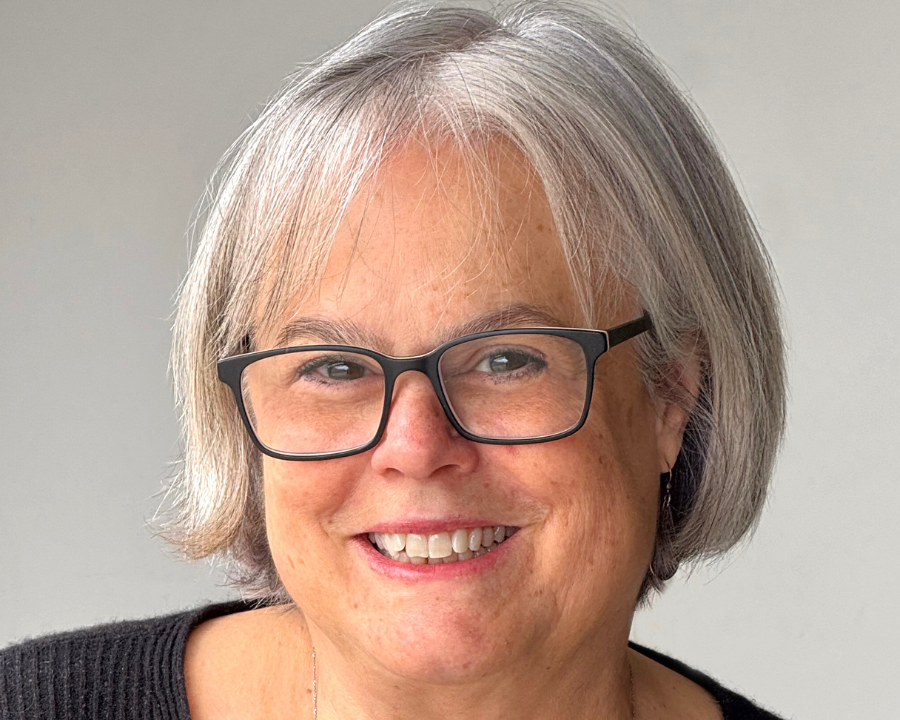
Elizabeth Jensen Press Forward Northern Michigan Jensen consults on journalism ethics and standards and serves as the co-chair of Press Forward Northern Michigan, an organization dedicated to supporting local journalism in the region. She will focus on developing strategies to bring together new and existing newsrooms across 23 mostly rural counties in Northern Michigan.
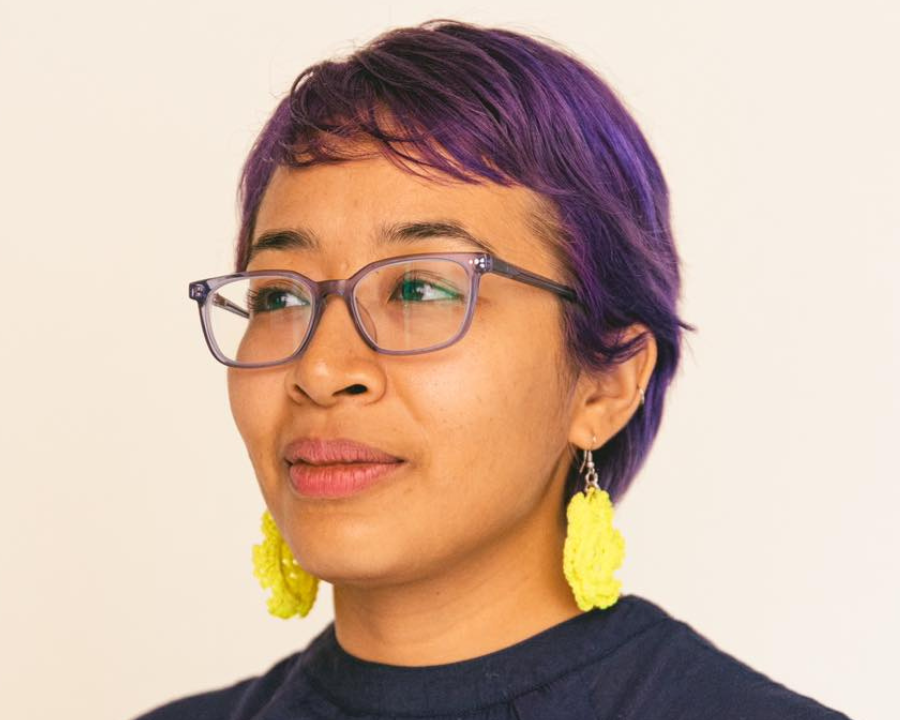
Irene Romulo Cicero Independiente Romulo is co-founder of Cicero Independiente, a bilingual newsroom that reports with and for the majority immigrant community of Cicero, Illinois. Her fellowship work will explore how to grow and sustain community-owned, community-powered newsrooms.
Help Build the Future of Local News
If you believe in the necessity of local journalism to strengthen communities, we invite you to join the Song Foundation, The Joyce Foundation and Wallace House in rising to this challenge. Together, we can build a future where vibrant, community-centered journalism thrives across the Great Lakes.
Contact Wallace House Director Lynette Clemetson to learn how your partnership can help sustain and grow this vital work.
About The Song Foundation
The Song Foundation, inspired by Southeast Michigan’s spirit of progress and creative risk-taking, supports ideas, people, and organizations that further its shared vision of an equitable, thriving community. It embraces disruptors and amplifies the signal of people already working, every day to create opportunities for neighbors in need and to foster economic, social, environmental, and cultural wealth—community wealth—for a more free, prosperous, and joyful future. song.foundation
About The Joyce Foundation
The Joyce Foundation is a private, nonpartisan philanthropy that invests in public policies and strategies to advance racial equity and economic mobility for the next generation in the Great Lakes region. joycefdn.org
About Wallace House Center for Journalists
Wallace Center for Journalists at the University of Michigan is committed to fostering excellence in journalism. We are home to programs that recognize, sustain and elevate the careers of journalists to address the challenges of journalism today, foster civic engagement and uphold the role of a free press in a democratic society. We believe in the fundamental mission of journalism to document, interpret, analyze and investigate the forces shaping society.
Wallace House Center for Journalists at the University of Michigan is pleased to announce an innovation-driven $1.28 million gift from the Song Foundation and the Joyce Foundation. This funding will launch the Great Lakes Local News Initiative and bolster the Knight-Wallace Fellowships, providing targeted support for journalists dedicated to revitalizing local news across the midwestern Great Lakes states.
The initiative will grant specialized fellowships within the Knight-Wallace program, offering entrepreneurship training from experts at Wallace House, the University of Michigan, and national and regional journalism partners. These fellowships will empower journalists to build or grow new journalism outlets or lead innovative initiatives within existing newsrooms, ensuring local communities have access to reliable, sustainable and equitable information.
The Great Lakes Local News Initiative is an effort to address the alarming decline of local journalism and the resulting breakdown in social cohesion necessary for informed, functioning communities. Nearly one-third of U.S. newspapers have closed since 2005, leaving behind news deserts and communities vulnerable to disinformation and unaccountable leadership, threatening the fabric of democracy. By building on the 50-year history of the Knight-Wallace Fellowships, this initiative will support journalists committed to creating or rebuilding strong, inclusive local news outlets essential to fostering community engagement, action and change. The effort aligns with numerous local news initiatives across the country.
“At a time when the strength of our democracy is under intense pressure, these generous gifts shine a bright light on the vital connection between journalism and an informed, civically engaged society,” said Lynette Clemetson, director of Wallace House. “Journalists in our region have the ideas, energy and dedication to design new strategies for reaching their local communities. Our ability to add directed training, tools and support networks will propel their efforts and foster a durable news ecosystem. We are deeply grateful to the Song Foundation and the Joyce Foundation for providing this transformative catalyst.”
The Michigan-based Song Foundation has pledged a $1 million challenge grant designed to inspire additional support from foundations and individual donors across the Great Lakes states of Indiana, Illinois, Michigan, Minnesota, Ohio, and Wisconsin. This gift will seed an endowment and build long-term sustainability over the next five years.
“We believe that collective investments are urgently needed to preserve local journalism and ensure residents of the Great Lakes region have access to credible information to help guide their engagement and advocacy at all levels of government,” said Khalilah Burt Gaston, executive director of the Song Foundation. “The Foundation’s commitment to building this ongoing endowment to support the Great Lakes Local News Initiative is our call for individuals and organizations to join us in supporting journalists with a vision and passion to chart new paths in their field.”
The Joyce Foundation, based in Illinois, has embraced this challenge with a $280,000 grant, reinforcing their shared commitment to equity and economic mobility in the Great Lakes region.
“It’s so important to give sharp minds the support they need to build the stronger local journalism we all need,” said Hugh Dellios, director of Joyce’s Journalism Program. “The Great Lakes region has been a fountain of innovative ideas for how to strengthen local news. We’re proud to partner with Wallace House and the Song Foundation to promote more successful entrepreneurship, and we hope others will join us in this effort.”
Applications for the Great Lakes Local News Fellowship will open in October to journalists committed to building or growing local news outlets across Indiana, Illinois, Michigan, Minnesota, Ohio, and Wisconsin. Like the traditional Knight-Wallace Fellowship, applicants must have at least five years of journalism experience and currently work in some aspect of journalism. The application deadline is February 1, 2025. The first recipients will be selected in May 2025 to join the 2025-2026 Knight-Wallace Fellowship cohort.
Meet the 2025-2026 inaugural Great Lakes News Fellows
The Song Foundation, inspired by Southeast Michigan’s spirit of progress and creative risk-taking, supports ideas, people, and organizations that further its shared vision of an equitable, thriving community. It embraces disruptors and amplifies the signal of people already working, every day to create opportunities for neighbors in need and to foster economic, social, environmental, and cultural wealth—community wealth—for a more free, prosperous, and joyful future. song.foundation
About The Joyce Foundation
The Joyce Foundation is a private, nonpartisan philanthropy that invests in public policies and strategies to advance racial equity and economic mobility for the next generation in the Great Lakes region. joycefdn.org
About Wallace House Center for Journalists
Wallace Center for Journalists at the University of Michigan is committed to fostering excellence in journalism. We are home to programs that recognize, sustain and elevate the careers of journalists to address the challenges of journalism today, foster civic engagement and uphold the role of a free press in a democratic society. We believe in the fundamental mission of journalism to document, interpret, analyze and investigate the forces shaping society.
Take a look at the logo accompanying this story. Wallace House is now Wallace House Center for Journalists.
What’s the point of those three extra words?
Sharper focus. Bolder ambition. Clarity of mission.
Part of it is simply about transparency and making it easier for people to quickly understand who we are and what we do. The other motivation is to reinforce the last of those three words – Journalists.
We are decidedly not the Wallace House Center for Journalism. Of course, we work in service of the future of journalism. But as significant amounts of money and talk have been directed toward saving journalism in the past decade, life has gotten harder for many journalists. The demands are greater. The work is more dangerous. The pay is worse and less stable.
We believe that supporting journalism requires supporting individual journalists.
As we approach the 50th anniversary of our fellowship program, we realize that we are being called to help journalists in more urgent ways.
Our mission is to help accomplished, working journalists survive and thrive, to help them learn new skills, explore new ideas, pursue ambitious projects, and tackle community and industry challenges. To be better journalists. And to keep at it – even when the business makes it ridiculously hard.
Within that mission is a resolve to provide a safe haven for journalists facing threats in both the U.S. and abroad. We’re not a humanitarian relief or social service organization. But in some cases, we are ideally poised to provide the structure, resources and networks needed to help a journalist escape peril. And when we can save one journalist, we save their journalism and their voice.
As we approach the 50th anniversary of our fellowship program, we realize that we are being called to help journalists in more urgent ways. A United Nations special report released this year on the decline in media freedom documented increasing threats to journalists the world over. Backsliding democracies, totalitarian regimes and coordinated disinformation have led to more journalists killed with impunity, more online harassment – especially of women journalists and journalists of color – and increased surveillance and targeted intimidation.
We were in the process of selecting our current Knight-Wallace Fellowship class when a non-profit organization in Washington D.C. contacted me to ask for ideas on how to help a young award-winning Kashmiri photojournalist, Masrat Zahra, who was facing bogus charges brought by the Indian government under an “anti-terrorism” law that could send her to prison for seven years.
Wallace House Center for Journalists is not only concerned with international press freedom. Journalists here in the U.S. need us more than ever.
At the time, we were working with The New York Times to bring our second Afghan journalist to Ann Arbor. And as you read in our cover story, we were also working to bring Russian journalist Elena Milashina for an extended residency. What an incredible opportunity it would be to have these brave, exiled journalists here at the same time, able to learn from and support one another while also bringing so much to the other journalists in our fellowship and the university community. The logistics in the cases were complicated. But we managed to prevail and get them here.
Introducing Masrat and Elena to each other outside the Wallace House kitchen was a brief interlude crackling with possibility. These two women are the sort who make autocrats shake with rage. One day we will be able to look back and understand that journalism and the world are safer because they met one August morning in Ann Arbor.
Wallace House Center for Journalists is not only concerned with international press freedom. Journalists here in the U.S. need us more than ever.
Across all forms of journalism, there’s a hunger among audiences for more in-depth storytelling. Yet for freelance writers, magazines often offer half or less than half of what they paid five years ago for the kind of long-form investigative and narrative journalism that takes months to produce.
A recent Livingston Award winner talked movingly from the stage as he accepted his award about needing to work as a bartender so he could afford to do journalism. The modest Livingston Award prize of $10,000 was more than he was paid for the story that won that year’s award for national reporting – a story that took him six months to produce.
Another Livingston winner, a freelancer with no financial, legal or safety support, paid her own way to Somalia and lived in a leaky storage container in Mogadishu to break the investigative story that won her the award.
They are both in staff jobs now, in part because of the recognition and connections the Livingston Awards brought their way. But that doesn’t make the precariousness of their reporting lives before the award okay.
I was at a journalism conference this summer having breakfast with two Knight-Wallace Fellows when their company announced that layoffs and buyouts were coming, “urgent choices” to keep the company strong. The company’s CEO made $7.74 million in 2021.
For many years the fellowship had a rule that journalists could not actively work during the fellowship. There were reasons for that. But we have to be in tune with the realities of the business. Much of the work we have supported in the past few years – magazine pieces, podcasts, documentary films, immersive multimedia series – would not exist without the financial support of the Knight-Wallace Fellowships.
This year we are back on campus, Fellows are taking classes, and we have resumed seminars at Wallace House. And we enjoy blending the old ways with the new.
If you do a Google search, you may find that Wallace House is a historic home in Somerville, New Jersey that served as the headquarters for General George Washington in late 1778 and the first half of 1779 when the Continental Army was stationed at Middlebrook.
That’s not us.
True, we have a beautiful, historic home. We are also at battle for democracy.
But we are not that Wallace House. We are Wallace House Center for Journalists.
Lynette Clemetson is the Director of Wallace House Center for Journalists, home of the Knight-Wallace Fellowships for Journalists and the Livingston Awards at the University of Michigan. She is a 2010 Knight-Wallace Fellow.
Wallace House, home of the Knight-Wallace Fellowships, the Livingston Awards and the Wallace House Presents event series, is now Wallace House Center for Journalists, a new name to reflect our expanding vision.
For nearly 50 years, Wallace House programs have been committed to fostering excellence in journalism. Starting with a grant in 1972 from the National Endowment for the Humanities to give accomplished journalists access to learning and research at the University of Michigan, we’ve grown into an internationally recognized organization that supports and develops the careers of journalists, advocates for press freedom issues, and promotes informed civic engagement.
It’s now time to adapt our name to reflect our ever-growing work and core mission to support journalism by supporting journalists.
As press freedom is under attack and democracy is threatened around the world and at home, Wallace House Center for Journalists will continue to expand our reach and ambitions. We’re providing emergency support for reporters under siege, adapting our fellowship to address challenges facing the journalism industry and supporting journalists with resources to develop journalism ventures.
You can still find us on these pages and follow us on Twitter, Facebook, and Instagram under the username @UMWallaceHouse. We look forward to sharing our growing vision with you.
About Wallace House Center for Journalists
Wallace House Center for Journalists at the University of Michigan is committed to fostering excellence in journalism. We are home to programs that recognize, sustain and elevate the careers of journalists to address the challenges of journalism today, foster civic engagement and uphold the role of a free press in a democratic society. We believe in the fundamental mission of journalism to document, interpret, analyze and investigate the forces shaping society.