Swift Action for the Hardest Hit

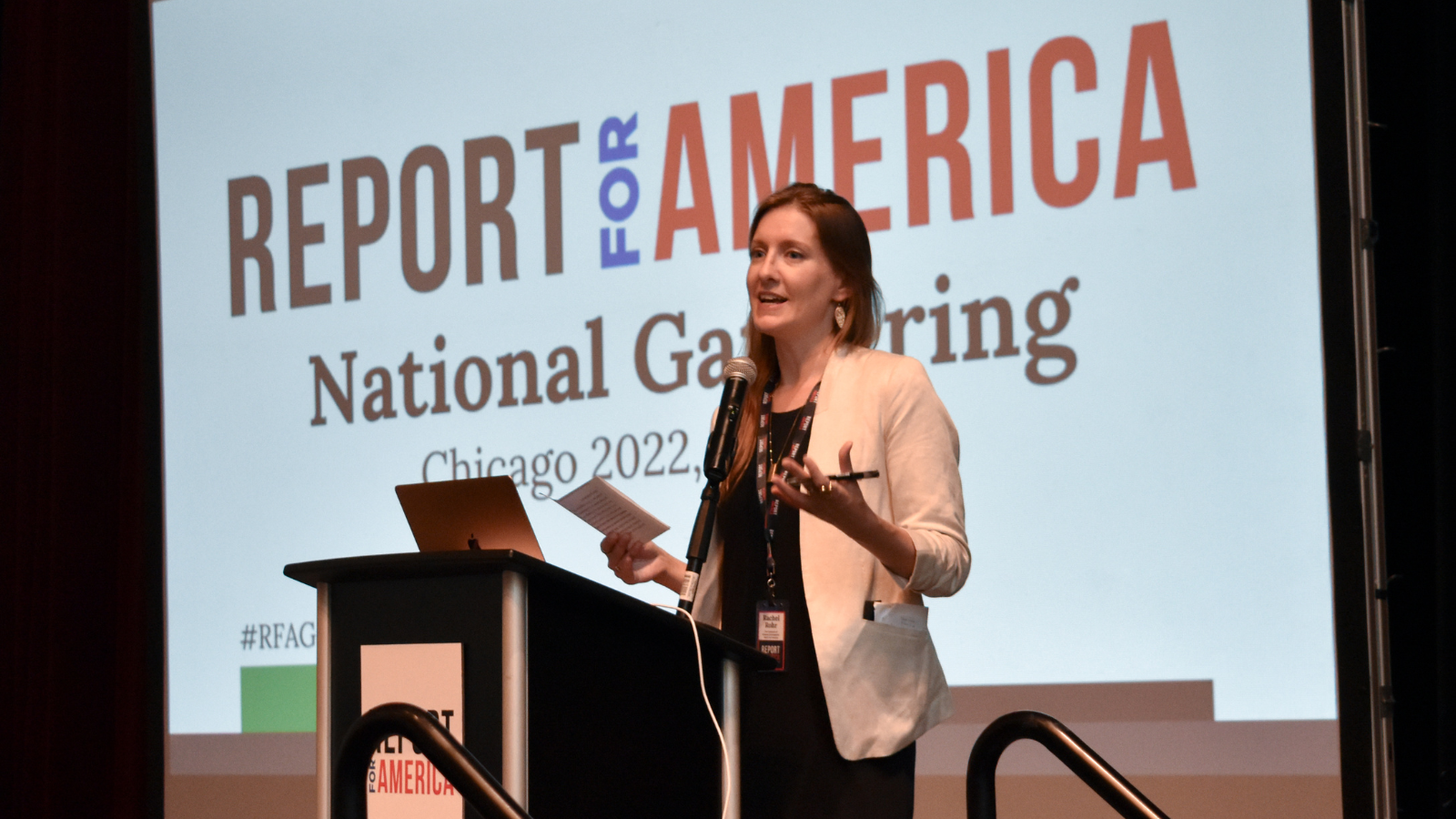
Rachel Rohr is vice president of program development at Report for America, a national service program that places journalists into local newsrooms to report on under-covered issues and communities.

Like the Knight-Wallace Fellowships, Report for America runs on a tight programmatic cycle. We had selected our 2025-26 corps members and our program year had started when Congress voted to rescind funding for public media in July. About 20% of the local newsrooms Report for America has supported since 2018 are public media stations. We reached out across our network to find out who was hardest hit.

In Alaska, one of our alumni at Alaska Public Media helped direct us to two urgent situations.

KRBD, a station in the southeast city of Ketchikan, was about to hire reporter Hunter Morrison when 37% of its budget evaporated. The small newsroom typically has a news director and one reporter covering a region that includes a busy tourist and fishing community as well as Alaska’s only Native American reservation. Not being able to fill the vacant reporter position would leave 20,000 people without essential local news coverage.

At KOTZ, a one-person newsroom above the Arctic Circle in Kotzebue, the station’s board and leadership told the news director, Desiree Hagen, that they would have to close the radio station within a year. In addition to serving as the news director, Hagen is the only reporter at KOTZ, which receives 41% of its funding from the Corporation for Public Broadcasting.

Shuttering the newsroom would cut off the primary local news source and safety information for approximately 10,000 people, most of whom are Alaska Natives.
Most of the stories Hagen covers involve weather alerts, Indigenous cultural programming, and news
on issues such as road closures, subsistence meetings, and essential hunting and fishing information —
updates vital for a community where 60% to 80% of the diet depends on harvested wild food. Shuttering
the newsroom would cut off the primary local news source and safety information for approximately 10,000 people, most of whom are Alaska Natives.

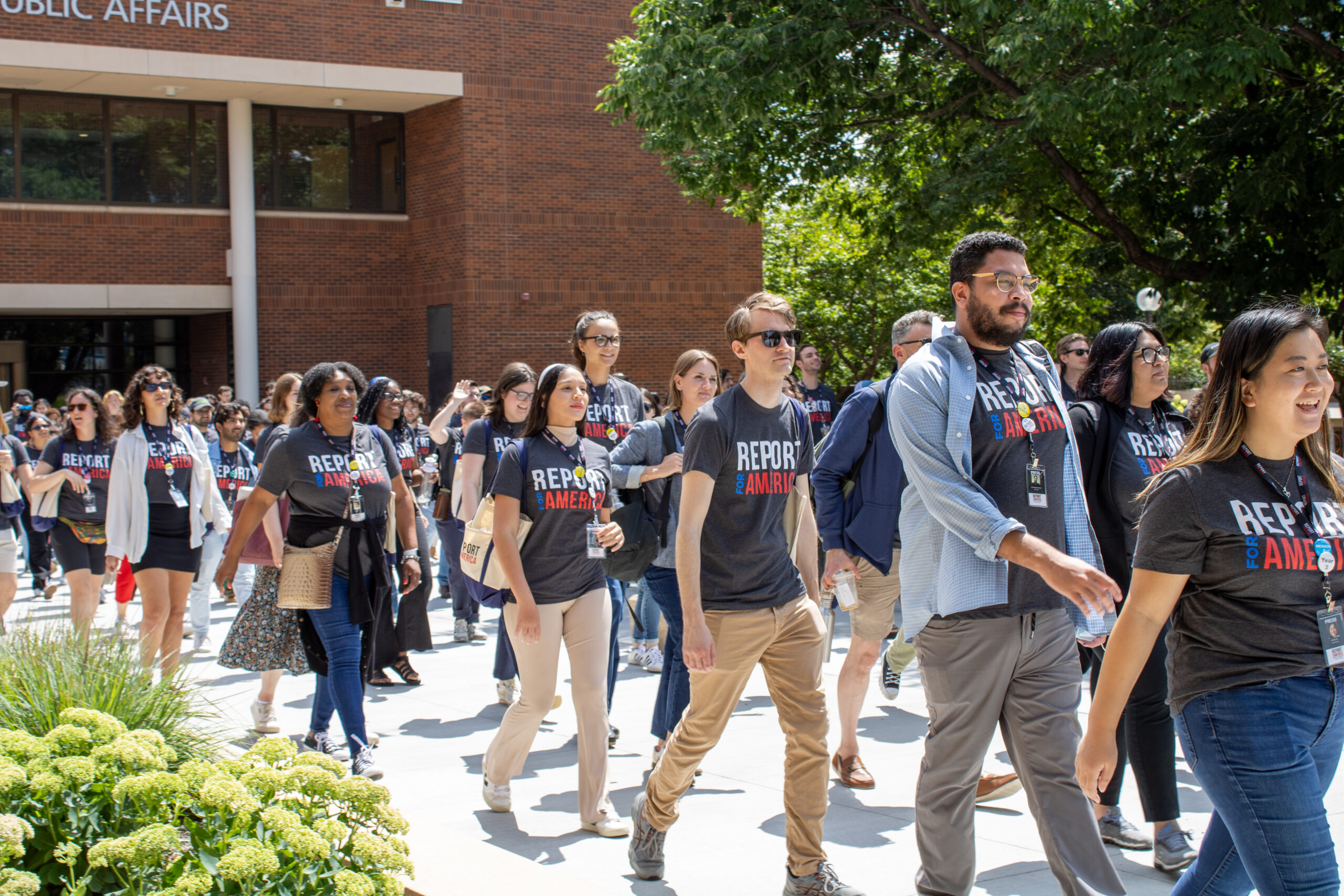
Report for America corps members from across the country.

We accepted Hagen and Morrison as corps members. Instead of our usual grants that cover 50% of reporters’ salaries in the first year, we’ll cover 100% of the reporters’ salaries and benefits in the first year — something we’ve never done before.

We’ll also assist the newsrooms with funding and sustainability strategy. And the reporters will be able to enjoy all the perks of being corps members. That includes mentorship, training, professional memberships and — perhaps best of all for reporters in rural and remote places — a supportive peer network of Report for America corps members and alumni.

As Desiree Hagen, who is deeply committed to continuing her work as news director and reporter, told us, “The funding prevents the voices of rural Alaska and the Arctic from going silent.”


This article is part of Rising to Meet the Moment, a series from the Fall 2025 issue of the Wallace House Journal, featuring reflections from Knight-Wallace alumni, Wallace House board members and the Livingston Awards community on meeting today’s challenges with focus, resilience and resolve. Read more stories from our series:

Christopher Baxter, “Unexpected hope

Lynette Clemetson, “Stepping up with focus and resolve

Hayes Ferguson, “Nurturing innovation, adaptability and purpose

Stephen Henderson, “Choosing Civility

Samantha Henry, “The future of our profession: student journalism

Tracy Jan, “News deserts and fewer watchdogs

Margaret Low, “Game Over? Not a chance

Peggy Lowe, “Defunded, but not defeated

Amy Maestas, “Building trust through community collaborations

Kunal Majumder, “Defending the right to report

Seema Mehta, “Why we keep reporting

Rachel Rohr, “Swift action for the hardest hit

Gerard Ryle, “We will not retreat

Laura Santhanam, “Preserving knowledge

Mazin Sidahmed and Maria Arce, “Training newsrooms to serve immigrant communities

Celeste Watkins-Hayes, “Bending without breaking: resilience in academia

Thomas Zurbuchen, “Never let a good challenge go to waste

Stepping Up With Focus and Resolve

Lynette Clemetson is the director of Wallace House Center for Journalists.

This is my 10th academic year as director of Wallace House. Over the years, among the key benefits I tout when speaking to journalists about our programs is the university as refuge, a sturdy port in the ever-turbulent storm that is the journalism industry.

As the last academic year came to a close, that didn’t feel like something I could continue to promise with any degree of confidence.

The Trump administration was targeting universities around the country, threatening colossal funding cuts and issuing demands that reached into governance, hiring, admissions and academic freedom. The University of Michigan discontinued its strategic diversity plan. Some departments were scrubbing websites of words and phrases that could draw government retribution. It was unclear whether international students — our own international Fellows included — would be granted entry to the United States.

The threats and absurdities haven’t gone away. The people in our extended Wallace House network — journalists, scientists, scholars, policy and legal experts — are prime targets in the strategic attempt to weaken institutions and consolidate presidential power.

Yet in the face of numerous obstacles, campus this fall still brims with possibility. The harsh realities of a raw and hostile national landscape are being met with expressions of creativity, collaboration, innovation, active listening, welcome and compassion. There is a tangible focus and resolve across departments and faculty, in student activities and community events that offer an ever-present reminder of what makes the University of Michigan special.

As our new Knight-Wallace Fellows move through the intellectual bounty of the fall semester, I am reminded time and again that the qualities that drew me here as a Fellow and that infuse my enthusiasm for outreach as director are no less true now than they have ever been.

But from our perch at Wallace House, each week we’re seeing inspiring evidence across our network of people stepping up boldly with both short-term assistance and long-term resolve.

The excellent work of alumni also reminds me that the dedicated journalists who Wallace House has helped to develop and empower over five decades are well-positioned to meet the moment.

And so this issue of the Wallace House Journal is built around resilience. Not naiveté or blind optimism. But the kind of clear-eyed focus and mission-driven leadership needed to respond to the multiple serious challenges we face with fortitude and vision.

We’ve all witnessed our share of feckless leadership over the past several months, from media executives and university presidents who somehow believed that cowering and capitulating might provide them protection. But from our perch at Wallace House, each week we’re seeing inspiring
evidence across our network of people stepping up boldly with both short-term assistance and long-term resolve.

In these pages, you’ll read stories of our colleagues reaching across organizations to lend financial, editorial and strategic support; about collaborations to build community-level trust and cross-border accountability; and about journalists pairing with scholars to rescue data essential to the work of both. We can all draw strength from these vignettes — and hopefully also ideas.

If after paging through, you feel inspired to reach out to a Knight-Wallace Fellow you haven’t spoken to in a while, or one you have never met, a Livingston Award winner you applauded, a faculty member whose research you’ve been wondering about, a board member you struck up a friendship with, or an engaged
community member you had a great conversation with at one of our events, go ahead and reach out. Check in.

That’s what networks are for. This is an exceptional one — and its members are not in retreat.


This article is part of Rising to Meet the Moment, a series from the Fall 2025 issue of the Wallace House Journal, featuring reflections from Knight-Wallace alumni, Wallace House board members and the Livingston Awards community on meeting today’s challenges with focus, resilience and resolve. Read more stories from our series:

Christopher Baxter, “Unexpected hope

Lynette Clemetson, “Stepping up with focus and resolve

Hayes Ferguson, “Nurturing innovation, adaptability and purpose

Stephen Henderson, “Choosing Civility

Samantha Henry, “The future of our profession: student journalism

Tracy Jan, “News deserts and fewer watchdogs

Margaret Low, “Game Over? Not a chance.

Peggy Lowe, “Defunded, but not defeated

Amy Maestas, “Building trust through community collaborations

Kunal Majumder, “Defending the right to report

Seema Mehta, “Why we keep reporting

Rachel Rohr, “Swift action for the hardest hit

Gerard Ryle, “We will not retreat

Laura Santhanam, “Preserving knowledge

Mazin Sidahmed and Maria Arce, “Training newsrooms to serve immigrant communities

Celeste Watkins-Hayes, “Bending without breaking: resilience in academia

Thomas Zurbuchen, “Never let a good challenge go to waste

Why We Keep Reporting

Seema Mehta is a political reporter at the Los Angeles Times.

I’ve covered politics at the Los Angeles Times for nearly two decades, and I cannot recall a more challenging time to do this work. The nation is deeply polarized. Many voters believe the mainstream media is fake news and won’t talk to us, making it harder to tell stories that reflect the viewpoints of all Americans. It seems impossible to keep up with the firehose of news coming out of the White House, including many policies that disproportionately affect Californians.

The ICE raids that began in Los Angeles in June and the ensuing deployment of the National Guard on the streets of the nation’s second-largest city are prime examples. In the early days, my colleagues and I wrote about the chaos that was violently unfolding amid one of the largest immigrant populations in the U.S., the legalities of the efforts, the administration’s justifications and Democrats’ opposition.

In the midst of an avalanche of breaking news, I heard about a veteran who had self-deported to South Korea.

Sae Joon Park legally immigrated when he was 7 years old and grew up in Los Angeles, becoming part of Southern California’s skateboarding and surfing scene in the 1980s.

After graduating from high school, Park joined the Army and was deployed to Panama in 1989 as the U.S. tried to depose the nation’s de facto leader, General Manuel Noriega. Park was shot twice, honorably discharged and awarded a Purple Heart.

Park said he spiraled into addiction as he sought to self-medicate his PTSD, leading to drug convictions and prison time. He eventually sobered up, moved to Hawaii and raised two children. Every year, Park was required to check in with federal officials and show that he was employed and sober.

People are willing to speak to us during the most harrowing moments of their lives, and we are privileged to be able to share their stories.

During his most recent check-in, Park was about to be detained and deported, but immigration agents placed an ankle monitor on him and gave him three weeks to get his affairs in order and self-deport. He is not allowed to return to the United States for 10 years. He worries he will miss his mother’s passing and his daughter’s wedding.

I spoke with him two days after he left the United States. He remains in South Korea.

Park’s saga is not uplifting. But it is a reminder of the importance of our work and motivation to keep doing it, to show the real-world impacts of decisions being made in the halls of power. People are willing to speak to us during the most harrowing moments of their lives, and we are privileged to be able to share their stories.


This article is part of Rising to Meet the Moment, a series from the Fall 2025 issue of the Wallace House Journal, featuring reflections from Knight-Wallace alumni, Wallace House board members and the Livingston Awards community on meeting today’s challenges with focus, resilience and resolve. Read more stories from our series:

Christopher Baxter, “Unexpected hope

Lynette Clemetson, “Stepping up with focus and resolve

Hayes Ferguson, “Nurturing innovation, adaptability and purpose

Stephen Henderson, “Choosing civility

Samantha Henry, “The future of our profession: student journalism

Tracy Jan, “News deserts and fewer watchdogs

Margaret Low, “Game Over? Not a chance

Peggy Lowe, “Defunded, but not defeated

Amy Maestas, “Building trust through community collaborations

Kunal Majumder, “Defending the right to report

Seema Mehta, “Why we keep reporting

Rachel Rohr, “Swift action for the hardest hit

Gerard Ryle, “We will not retreat

Laura Santhanam, “Preserving knowledge

Mazin Sidahmed and Maria Arce, “Training newsrooms to serve immigrant communities

Celeste Watkins-Hayes, “Bending without breaking: resilience in academia

Thomas Zurbuchen, “Never let a good challenge go to waste

Choosing Civility

Stephen Henderson is founder and executive advisor to BridgeDetroit, and hosts “American Black Journal” on Detroit Public Television. He has served as a judge for the Livingston Awards since 2015.

We’re definitely, assuredly, an unlikely pair.

Nolan Finley is a white conservative from the coal and tobacco fields of Kentucky and, since 1998, the editor of The Detroit News editorial page. I’m an African American liberal from Detroit, the nation’s most industrial big city, and, when we met, I was leading the editorial page at the Detroit Free Press. People delighted in getting us together — on stage, on air, at dinners — just to watch us fight. Politics, culture, race, class — you name the subject and there is likely a conflict between us.

But for more than 18 years, we’ve also indulged an exploration of across-the-divide exchanges that are both rare and instructive. In talking about our lives, work, families, hopes and aspirations, we’ve gotten to know each other. We’ve done the work to understand where our bitterly disparate takes on issues came from. Most importantly, we’ve come to draw value from our disagreements — for what they tell us about each other and our perspectives, and what they tell us about ourselves.

In so many circles and on so many platforms now, Americans talk at each other and about each other — a take-no-prisoners verbal combat designed to obliterate those who see the world differently. Five years ago, a Pew Research survey found that nearly 70% of Americans had no consistent interaction with someone who held opposite political views. Imagine what that number is today.

… we listen — really listen — to each other, and commit to staying in our prolonged dialogue, no matter how painful that might be.

On this landscape, Nolan and I partnered on a project, “The Civility Book,” which was released this spring. In it, we try to explain how, over nearly two decades, we’ve carved a different path. We avoid assumptions about each other. We set reasonable expectations about our encounters, we listen — really listen — to each other, and commit to staying in our prolonged dialogue, no matter how painful that might be.

We still argue, and even fight. After the 2024 election, we got into a row over immigration during a television taping. The argument got loud and had to be broken up by producers, who decided it was too awful to be aired. Nolan and I had a bit of a cooling-off period; I think we probably didn’t talk for the next week or so. But we also don’t let those moments define us or rip us from the work it takes to maintain a consistent dialogue. Soon enough, we were back at our civility work and back to doing other things together as part of our friendship.

In some ways, we aren’t proposing anything more complicated than what any of us were taught in kindergarten. But in America today, it’s elusive and even frowned upon. Civility is often viewed as capitulation or weakness, rather than a key to individual and collective strength.

We can do better.

Nolan and I, despite our differences, are proof.


This article is part of Rising to Meet the Moment, a series from the Fall 2025 issue of the Wallace House Journal, featuring reflections from Knight-Wallace alumni, Wallace House board members and the Livingston Awards community on meeting today’s challenges with focus, resilience and resolve. Read more stories from our series:

Christopher Baxter, “Unexpected hope

Lynette Clemetson, “Stepping up with focus and resolve

Hayes Ferguson, “Nurturing innovation, adaptability and purpose

Stephen Henderson, “Choosing civility

Samantha Henry, “The future of our profession: student journalism

Tracy Jan, “News deserts and fewer watchdogs

Margaret Low, “Game Over? Not a chance.

Peggy Lowe, “Defunded, but not defeated

Amy Maestas, “Building trust through community collaborations

Kunal Majumder, “Defending the right to report

Seema Mehta, “Why we keep reporting

Rachel Rohr, “Swift action for the hardest hit

Gerard Ryle, “We will not retreat

Laura Santhanam, “Preserving knowledge

Mazin Sidahmed and Maria Arce, “Training newsrooms to serve immigrant communities

Celeste Watkins-Hayes, “Bending without breaking: resilience in academia

Thomas Zurbuchen, “Never let a good challenge go to waste

Game over? Not a chance.

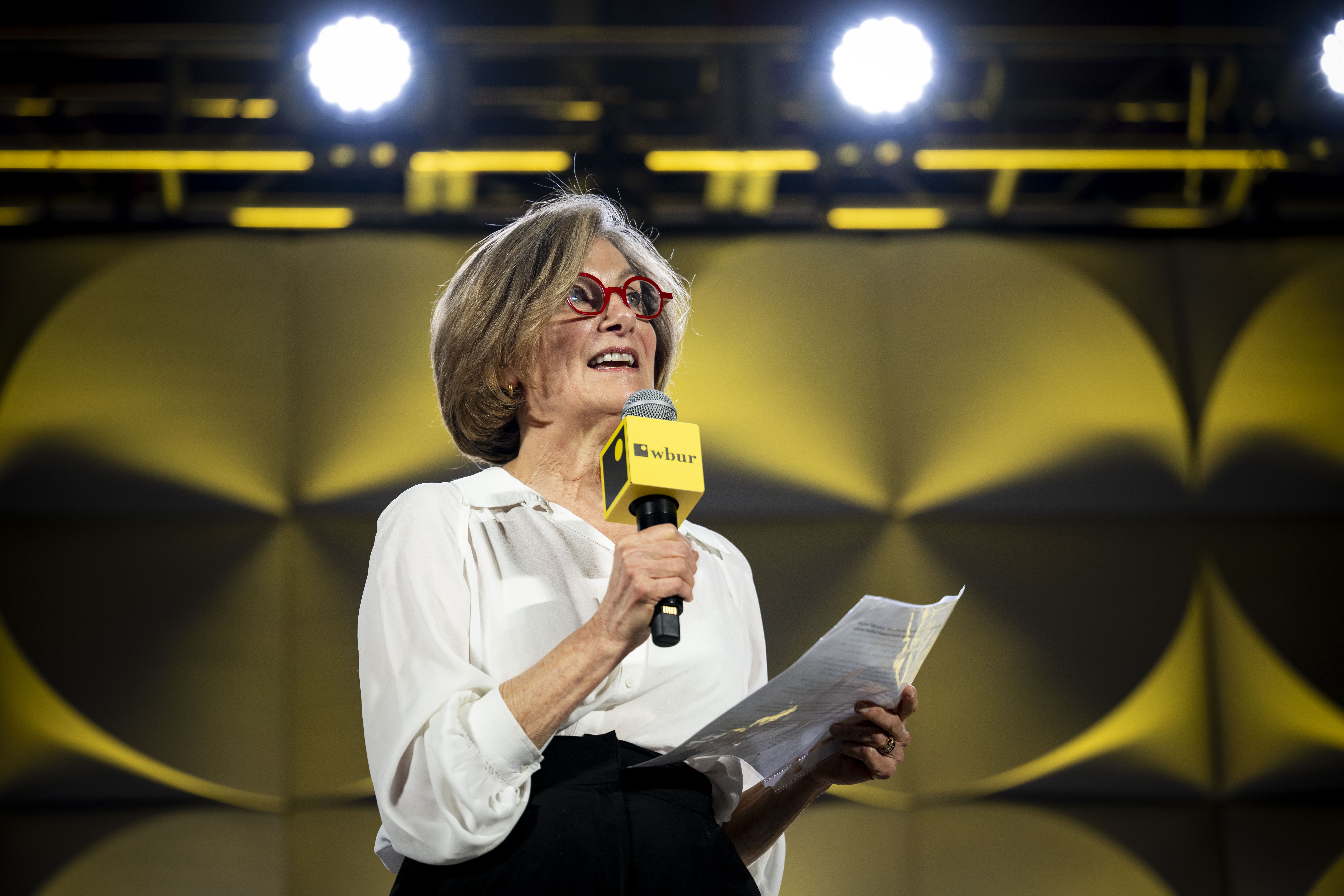
The WBUR Festival 2025 at WBUR in Boston, Massachusetts (Photo by Billie Weiss/Bolt Creative Group For WBUR)

Margaret Low is CEO of WBUR in Boston and serves on the Wallace House advisory board.

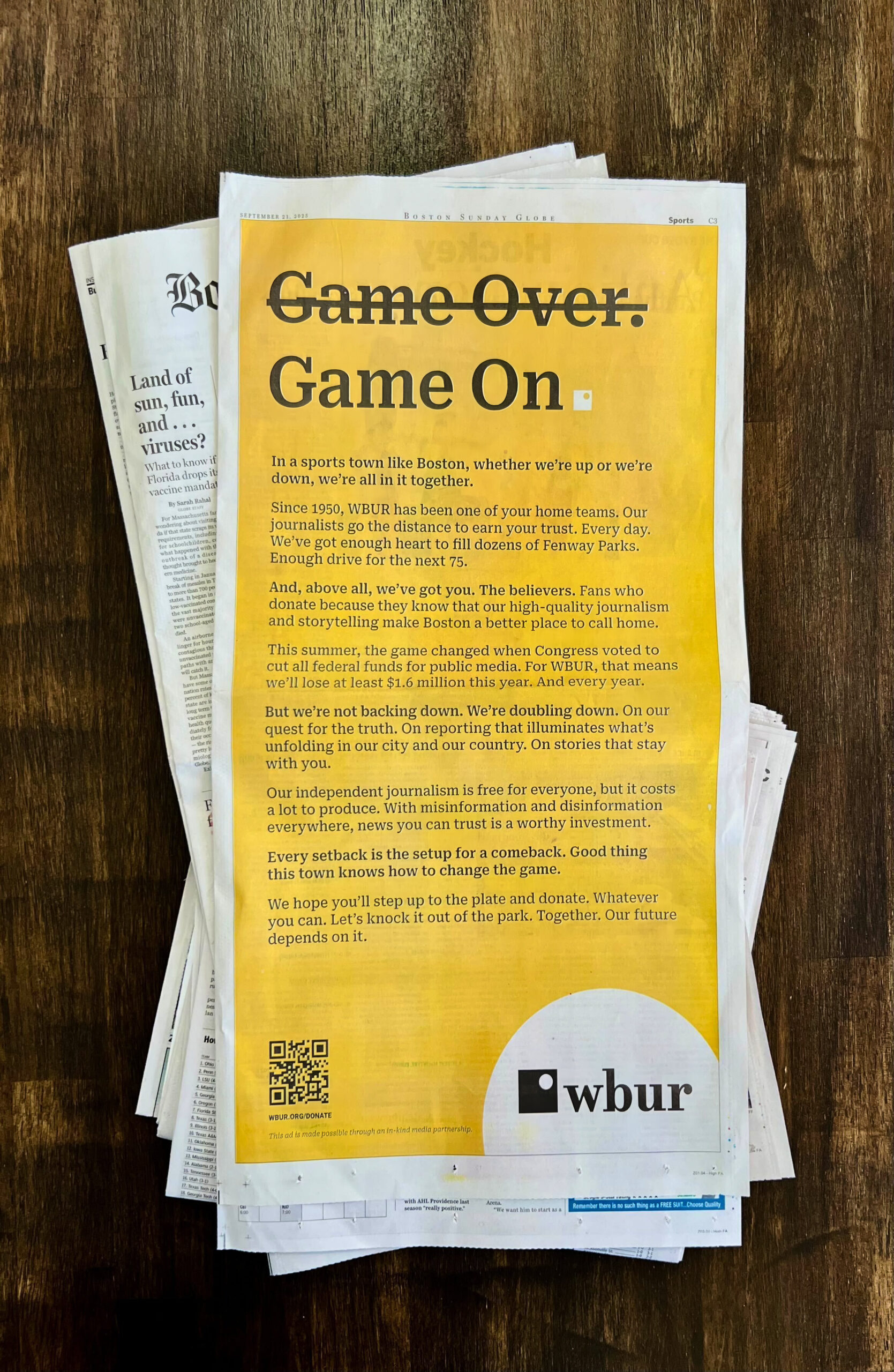
For those of us in public media, it is most definitely game on. At WBUR, we declared as much in a full-page ad we ran in the Sports section of The Boston Globe earlier this fall — paid for by trade, of course!

Massive cuts to federal funding for public media amount to a loss of at least $1.6 million for our station, this year and in the years ahead.

It’s a real blow and we’re already feeling it. We’ve always gotten half our federal dollars in October. That check didn’t come this year. There will be stations across the country that will shutter and many public media organizations will have to downsize. In some communities, people will be left without a single source of trustworthy news.

But I love the energy and the competitive spirit in that ad. As journalists, we’ll continue to do our work without fear or favor. No matter what is happening to us. It’s our job to understand and reflect the real concerns of people in this country with reporting that is fact-based and impartial. Reporting that goes beneath the surface to cover the most consequential issues with rigor, boundless curiosity and respect.

Boston is my hometown, and having lived in many American cities, I know it’s a very special place. I want us to show the rest of the country that we’re united in our belief that independent journalism makes a difference for our community and for our country.

We serve so many people who trust us to tell the truth and to tell it well. That includes more than 7 million people across the country who listen to our two national shows every week — “Here & Now” and “On Point.” People who hear us on the radio, visit WBUR.org, subscribe to our newsletters and podcasts, and those who come to WBUR’s CitySpace for all the wonderful events we produce.

This is an extraordinary time to be documenting what’s happening in our city and our country. Things are moving so quickly and we get to capture what it means to people in the middle of it — the real impact of the Trump administration’s policies. Like our reporter Martha Bebinger, who profiled a mother in New Hampshire trying to figure out how she’ll get puberty-blocking hormones for her kid. Or the story Simón Ríos reported about a man who was brought to this country as a baby from a Thai refugee camp. His family had escaped the Khmer Rouge in Cambodia, and now he’s seeking asylum because ICE wants to send him to Cambodia — a place he doesn’t know at all.

With all these critical stories to tell, I honestly believe we’re made for this moment. I have lots of optimism left in the tank, plenty of steel and stamina and a relentless belief in the importance of the work we do. My colleagues and I feel a profound sense of purpose. We’re at a perilous moment for journalism. It’s a moment that demands the very best of us.


This article is part of Rising to Meet the Moment, a series from the Fall 2025 issue of the Wallace House Journal, featuring reflections from Knight-Wallace alumni, Wallace House board members and the Livingston Awards community on meeting today’s challenges with focus, resilience and resolve. Read more stories from our series:

Christopher Baxter, “Unexpected hope

Lynette Clemetson, “Stepping up with focus and resolve

Hayes Ferguson, “Nurturing innovation, adaptability and purpose

Stephen Henderson, “Choosing civility

Samantha Henry, “The future of our profession: student journalism

Tracy Jan, “News deserts and fewer watchdogs

Margaret Low, “Game Over? Not a chance

Peggy Lowe, “Defunded, but not defeated

Amy Maestas, “Building trust through community collaborations

Kunal Majumder, “Defending the right to report

Seema Mehta, “Why we keep reporting

Rachel Rohr, “Swift action for the hardest hit

Gerard Ryle, “We will not retreat

Laura Santhanam, “Preserving knowledge

Mazin Sidahmed and Maria Arce, “Training newsrooms to serve immigrant communities

Celeste Watkins-Hayes, “Bending without breaking: resilience in academia

Thomas Zurbuchen, “Never let a good challenge go to waste

Never Let a Good Challenge Go to Waste

Thomas Zurbuchen served as NASA’s head of science from 2016 to 2022. He is now a professor and director of ETH Zurich | Space in Switzerland. He previously served on the Knight-Wallace advisory board.

It was June of 2022, and I was in a windowless room at the Space Telescope Science Institute near Baltimore with a handful of people who, like me, shared responsibility for running the world’s biggest, newest space telescope. The instrument had started working a few months earlier, after it completed a sequence of deployment maneuvers that seemed miraculous to anyone who understood the complexity of the operations.

The moment seemed to dilate time. A handful of stars spangled the foreground and behind them: near cosmic infinity. Thousands of galaxies studded an inky celestial well, a gathering of shapes and colors contained within a patch of space no bigger than a dust grain on an outstretched hand.

The photons from those galaxies had traveled through the universe at the speed of light for many billions of years before they collided with this new eye in the sky — our ultimate miracle mission, the James Webb Space Telescope.

Three years later, the dreams and aspirations surrounding that mission have been obscured by nightmares and worries. NASA’s science portfolio is facing its steepest cuts in decades. The proposed cuts in science for 2026 are 47% of the current budget with an overall proposed budget reduction from the current $1.5 billion to $487 million in 2026, the largest reduction in NASA history. The cuts would terminate 19 active science missions, including New Horizons, which has been exploring space beyond Pluto for nearly 20 years, plus a host of missions exploring Earth and all new astrophysics missions currently in development.

In response, I joined with the six other living former NASA heads of science in a joint letter to Congress opposing the cuts. It read in part:

“As former associate administrators responsible for managing NASA’s science activities, we know firsthand the incredible talent and capability that our country has built and sustained in the space sciences and engineering over nearly seven decades, and the severe consequences such an indiscriminate cut would impose on the extraordinary U.S. accomplishments and future initiatives.”

Never let a good challenge go to waste.

For this, and every other challenge we face, we must redirect our anxieties. How can we turn our current challenges into long-term strength? I have two observations that may help us move forward.

First, in times of geopolitical stress, astrophysics can look like a luxury. After public lectures, I am often asked: Why fund space science when people struggle to meet basic needs? My answer is simple: History shows that cutting fundamental science means losing out on the technologies and industries that drive growth, security and resilience. Science is about unlocking opportunities for tomorrow and solving problems we don’t even know yet.

Second, big science depends on unsung heroes. Every Webb image rests on decades of effort by instrument builders, engineers, project scientists and managers who solved the hardest problems long before the first data arrived. Yet our system mainly rewards those who publish results, not those who build the tools that make discovery possible. That imbalance must change for the community to be healthy and prosperous.

Astrophysics and journalism may seem far apart, but they share this truth: moments of challenge are also moments of opportunity.

Now is the time to act. We must step out of our academic bubble and engage policymakers, industry and the public with a broader message: not just about wonder, but about the tools and capabilities that keep nations secure and economies strong. And within our own community, we must value not only the visionaries but also the builders. The future depends on both.

This lesson is not unique to science. During my time on the board of the Knight-Wallace Fellowships, I saw how journalism too is navigating crises of trust and sustainability. In times of polarization, journalists have been cast as “enemies of the people,” and within the profession, attention often gravitates to big investigations at major outlets, while essential local and community journalism struggles to survive. Like science, journalism must both engage broader communities and confront its own feedback loops that can undervalue crucial, less visible work.

Astrophysics and journalism may seem far apart, but they share this truth: moments of challenge are also moments of opportunity. If we recognize and support not just the headline-makers but also the builders — whether they are telescope engineers or local reporters — we create resilience. And from resilience comes the possibility of renewal and of new opportunities.


This article is part of Rising to Meet the Moment, a series from the Fall 2025 issue of the Wallace House Journal, featuring reflections from Knight-Wallace alumni, Wallace House board members and the Livingston Awards community on meeting today’s challenges with focus, resilience and resolve. Read more stories from our series:

Christopher Baxter, “Unexpected hope

Lynette Clemetson, “Stepping up with focus and resolve

Hayes Ferguson, “Nurturing innovation, adaptability and purpose

Stephen Henderson, “Choosing civility

Samantha Henry, “The future of our profession: student journalism

Tracy Jan, “News deserts and fewer watchdogs

Margaret Low, “Game Over? Not a chance

Peggy Lowe, “Defunded, but not defeated

Amy Maestas, “Building trust through community collaborations

Kunal Majumder, “Defending the right to report

Seema Mehta, “Why we keep reporting

Rachel Rohr, “Swift action for the hardest hit

Gerard Ryle, “We will not retreat

Laura Santhanam, “Preserving knowledge

Mazin Sidahmed and Maria Arce, “Training newsrooms to serve immigrant communities

Celeste Watkins-Hayes, “Bending without breaking: resilience in academia

Thomas Zurbuchen, “Never let a good challenge go to waste

Bending Without Breaking: Resilience in Academia

Celeste Watkins-Hayes is the Joan and Sanford Weill Dean at the University of Michigan Gerald R. Ford School of Public Policy and serves on the Wallace House advisory board.

Last spring, as with every spring before it, my academic year culminated in commencement activities. Yet this year felt distinctly different. The familiar feeling of joy and pride was present, but it was accompanied by a palpable anxiety among our graduates, many confronting the uncertainties of a rapidly shifting policy landscape and a volatile labor market. Their questions leading up to graduation — about the role of public service, the diminished value of evidence-based policy solutions, and the seemingly intractable social problems they would face — were immediate and pressing.

In my remarks, echoed by Michigan Senator Elissa Slotkin in her keynote address, I emphasized the enduring value of resilience: the ability to bend without breaking, to navigate uncertainty with courage, and to approach the future with deliberate preparation and commitment to public service. The moment reminded me that resilience is essential not only for individuals stepping into their careers but also for the institutions that cultivate and sustain them.

Resilience has long been an animating force among colleges and universities, shaping not only their survival but their ability to thrive in the face of precarity. Many schools have historically navigated scarcity, systemic inequities across institutions and shifting societal expectations with creativity, determination and strategic foresight. Today, the landscape of higher education challenges even the most established and well-resourced universities. Recent federal lawsuits against Ivy League institutions, alongside sweeping cuts to critical research funding — including programs supporting lifesaving innovations — highlight the precarity of academic enterprises once assumed to be impervious.

Broadly, resilience can be understood in two interrelated ways. The first is toughness: the ability of groups or communities to cope with external stresses and disturbances (Neil, 2000), holding firm in the face of challenge. The second, drawn from material sciences, is elasticity: the capacity to absorb energy when deformed and release it upon unloading, emphasizing adaptability — the ability to bend and pivot when circumstances demand, returning stronger or in a reimagined form (Campbell, 2008).

While these qualities may seem paradoxical — holding steady versus bending — they are mutually reinforcing, together enabling universities to navigate financial uncertainty and shifting political demands.

Resilient institutions pivot strategically, aligning initiatives with mission-critical objectives and focusing energy on what is foundational rather than desirable. Teaching remains a core purpose; providing access to students, particularly those from underserved backgrounds, is one of the most profound ways universities exercise public impact. At the same time, universities are bastions of innovation, anticipating societal needs while stewarding finite resources. Leaders must act as strategic investors and careful fiscal managers, making wise cuts while also making bold investments that seed the future of scholarship, public service and social transformation. This dual role requires discernment, courage and a willingness to embrace uncertainty.

It also demands cultural and moral commitment. When this academic year draws to a close, I anticipate offering similar reflections to our 2026 graduates — reminding them, as I did with our 2025 graduates, of the enduring importance of resilience, courage and purpose. In the meantime, I draw hope and energy from my students and colleagues, just as I have each fall, finding inspiration in their curiosity, dedication and unwavering commitment to the public good. Indeed, it is through this ongoing exchange — between the hopes and ambitions our students carry and the guidance and support of our institutions — that the future of higher education, and of public service, is continually forged.


This article is part of Rising to Meet the Moment, a series from the Fall 2025 issue of the Wallace House Journal, featuring reflections from Knight-Wallace alumni, Wallace House board members and the Livingston Awards community on meeting today’s challenges with focus, resilience and resolve. Read more stories from our series:

Christopher Baxter, “Unexpected hope

Lynette Clemetson, “Stepping up with focus and resolve

Hayes Ferguson, “Nurturing innovation, adaptability and purpose

Stephen Henderson, “Choosing civility

Samantha Henry, “The future of our profession: student journalism

Tracy Jan, “News deserts and fewer watchdogs

Margaret Low, “Game Over? Not a chance

Peggy Lowe, “Defunded, but not defeated

Amy Maestas, “Building trust through community collaborations

Kunal Majumder, “Defending the right to report

Seema Mehta, “Why we keep reporting

Rachel Rohr, “Swift action for the hardest hit

Gerard Ryle, “We will not retreat

Laura Santhanam, “Preserving knowledge

Mazin Sidahmed and Maria Arce, “Training newsrooms to serve immigrant communities

Celeste Watkins-Hayes, “Bending without breaking: resilience in academia

Thomas Zurbuchen, “Never let a good challenge go to waste

The Future of Our Profession: Student Journalism

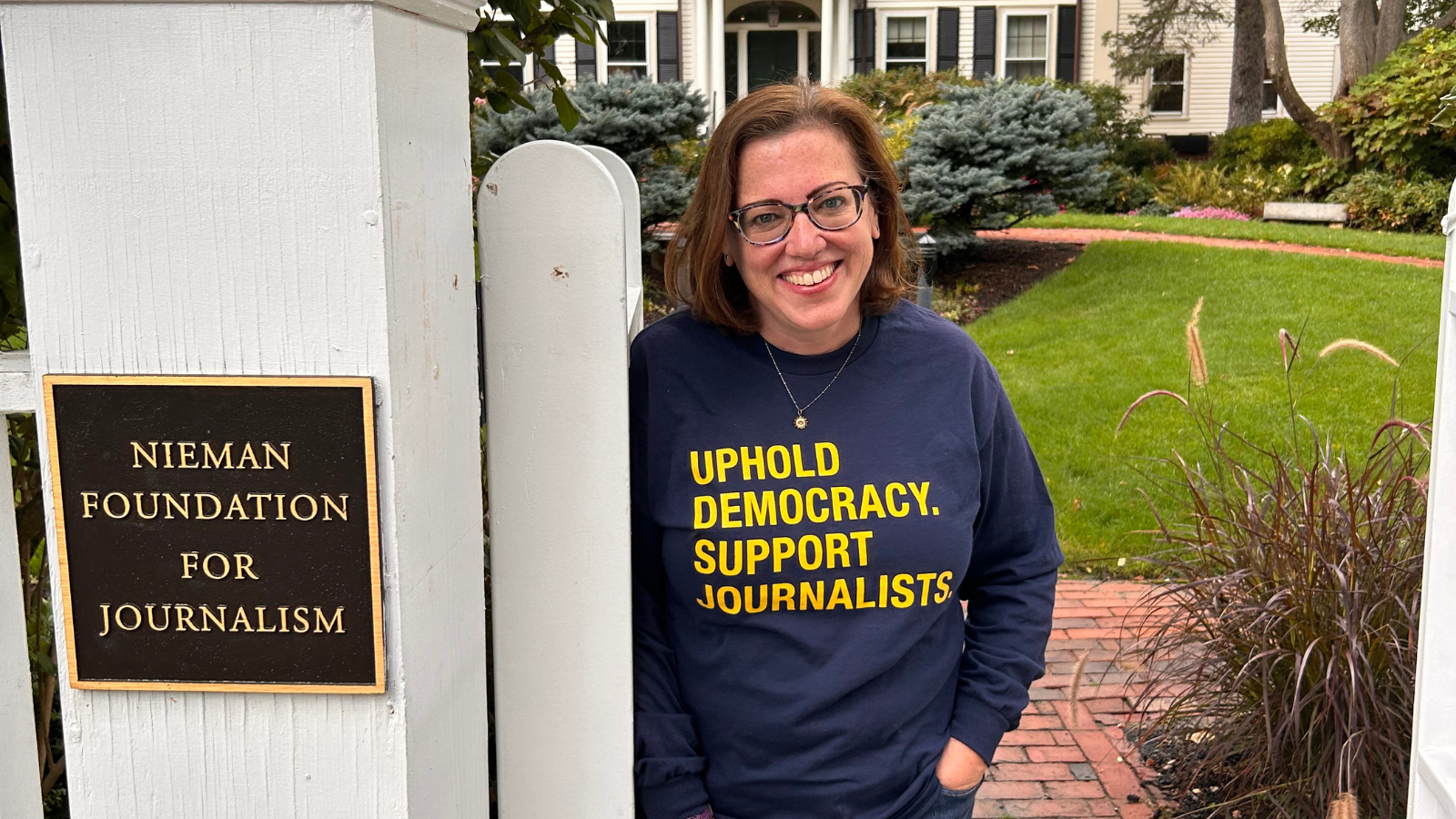
Samantha, wearing her Wallace House swag, standing in front of Walter Lippman House, home of the Nieman Foundation. (Photo credit: Peter Canova)

Samantha Henry is editor of Nieman Reports, the flagship publication of the Nieman Foundation for Journalism at Harvard.

The Nieman Foundation for Journalism at Harvard — where I came to work following my Knight-Wallace Fellowship year — currently occupies multiple rings on the Trump administration’s bullseye: We’re a media organization, host to international journalists on U.S. visas and at the heart of the Ivy League.

Setting aside the very real consequences that President Donald Trump’s actions have had on the university, from a media perspective, it often feels like a battle over who gets to control the narrative. Some outlets echo the administration’s talking points: insisting the campus is rife with antisemitism and an unsafe environment for those who disagree with the liberal worldview. Others label Harvard heroic for pushing back against the administration’s demands and view it as a symbol of strength in the face of relentless assault.

But the “heroic Harvard” narrative does not neatly accommodate the concessions the university has made — and may still make — nor does it account for the way Harvard’s leadership largely stayed silent as the university’s first Black woman president was fed to the congressional wolves.

There is one sector of the media that has largely resisted these oversimplifications, and it gives me hope for the future of our profession: student journalism.

The reality — as we should always try to emphasize in journalism — is much more complex and nuanced than the hero-villain narrative allows.

However, there is one sector of the media that has largely resisted these oversimplifications, and it gives me hope for the future of our profession: student journalism. Whether at The Harvard Crimson or outlets across the country that attend Nieman’s annual student journalism conference, many have been covering developments on their campuses with nuance, bravery in the face of intimidation and an ongoing commitment to platforming a wide range of perspectives.

For example, when an international student at nearby Tufts University was forcibly detained by masked immigration agents — ostensibly for having contributed to an op-ed in the school’s newspaper — The Crimson and other student outlets quickly published editorials in support of their student media colleagues.

“If publishing an op-ed can land a student in a detention center, then the freedoms of the press and speech are not just under threat — they are collapsing,” The Crimson’s editorial read, before urging its own university to take a stand. “In a world where an op-ed is grounds for deportation, democracy dies a silent death. Harvard must ensure it does not go quietly with it.”


This article is part of Rising to Meet the Moment, a series from the Fall 2025 issue of the Wallace House Journal, featuring reflections from Knight-Wallace alumni, Wallace House board members and the Livingston Awards community on meeting today’s challenges with focus, resilience and resolve. Read more stories from our series:

Christopher Baxter, “Unexpected hope

Lynette Clemetson, “Stepping up with focus and resolve

Hayes Ferguson, “Nurturing innovation, adaptability and purpose

Stephen Henderson, “Choosing civility

Samantha Henry, “The future of our profession: student journalism

Tracy Jan, “News deserts and fewer watchdogs

Margaret Low, “Game Over? Not a chance.

Peggy Lowe, “Defunded, but not defeated

Amy Maestas, “Building trust through community collaborations

Kunal Majumder, “Defending the right to report

Seema Mehta, “Why we keep reporting

Rachel Rohr, “Swift action for the hardest hit

Gerard Ryle, “We will not retreat

Laura Santhanam, “Preserving knowledge

Mazin Sidahmed and Maria Arce, “Training newsrooms to serve immigrant communities

Celeste Watkins-Hayes, “Bending without breaking: resilience in academia

Thomas Zurbuchen, “Never let a good challenge go to waste

Unexpected Hope

Christopher Baxter is CEO/president and founding editor of Spotlight PA, a nonpartisan, nonprofit newsroom producing investigative and public-service journalism for Pennsylvania. He received the 2014 Livingston Award for local reporting.

As I crisscross Pennsylvania, from the steel towns of the Mon Valley to the farm fields of Lancaster County, I encounter the same refrain: “We don’t know who to trust anymore.”

The collapse of local news has left entire communities in information deserts. National media feels increasingly disconnected from their daily realities, and the volume of social media is dialed so high that it’s easier to tune out the news than to find your way through.

Yet in these conversations — honest, sometimes uncomfortable exchanges about news, trust, the Constitution and our free society — I find unexpected hope.

When Spotlight PA launched in 2019, we made a radical bet: that rigorous, independent, nonprofit journalism could break through the noise. That in our communities, readers of varying political stripes hungered for reporting grounded in facts, not ideology. That transparency and accountability still mattered, even in an era of declining trust in institutions.

I’ve spoken to an entire room of Republicans cheering President Donald Trump’s second election, groups of Democrats looking for meaningful ways to raise alarm, and countless folks across this state who care less about politics and more about what’s best for their community.

But when we moved the conversation to his local community, the partisanship faded.

And at every turn, Spotlight PA’s mission to produce truly independent, unbiased journalism is met with cheers. Why? Because the beauty of truly nonpartisan reporting is that it’s both nonpartisan and bipartisan — working in service to all people, wherever the truth leads.

But we are at a precarious moment. One of the greatest antidotes to our partisan times — independent local reporting — is in severe financial distress and requires greater investment from all of us.

This moment is not about Spotlight PA or any single news organization or journalist. It’s not even about journalism or the news industry itself. It’s about a free society, which depends on the free flow of information grounded in truth and reality.

If we lose that, we lose everything.

I recently had lunch with a staunch, pro-Trump Republican and highly successful business leader. We started with national politics, and it was sharply partisan. He criticized recent national media reporting as “psyops” and he made clear he supports the president and his policies.

But when we moved the conversation to his local community, the partisanship faded. He talked about working together for the good of all, seeking bipartisan input and creating forums for discussion. And we agreed that trusted, unbiased local news was essential.


This article is part of Rising to Meet the Moment, a series from the Fall 2025 issue of the Wallace House Journal, featuring reflections from Knight-Wallace alumni, Wallace House board members and the Livingston Awards community on meeting today’s challenges with focus, resilience and resolve. Read more stories from our series:

Christopher Baxter, “Unexpected hope

Lynette Clemetson, “Stepping up with focus and resolve

Hayes Ferguson, “Nurturing innovation, adaptability and purpose

Stephen Henderson, “Choosing civility

Samantha Henry, “The future of our profession: student journalism

Tracy Jan, “News deserts and fewer watchdogs

Margaret Low, “Game Over? Not a chance.

Peggy Lowe, “Defunded, but not defeated

Amy Maestas, “Building trust through community collaborations

Kunal Majumder, “Defending the right to report

Seema Mehta, “Why we keep reporting

Rachel Rohr, “Swift action for the hardest hit

Gerard Ryle, “We will not retreat

Laura Santhanam, “Preserving knowledge

Mazin Sidahmed and Maria Arce, “Training newsrooms to serve immigrant communities

Celeste Watkins-Hayes, “Bending without breaking: resilience in academia

Thomas Zurbuchen, “Never let a good challenge go to waste

Nurturing Innovation, Adaptability and Purpose

Hayes Ferguson is a clinical professor and director of the Farley Center for Entrepreneurship and Innovation at Northwestern University.

As Northwestern University navigates steep cuts in federal funding and other financial challenges, the Farley Center for Entrepreneurship and Innovation is more committed than ever to practicing what we teach: embracing flexibility, resilience and creative problem-solving.

We paused our Bay Area Quarter, in which undergraduates spend two months in San Francisco, immersed in startup and Big Tech culture. While it’s disappointing not to offer the popular program this year, it’s prompted us to focus more on innovation happening elsewhere, including in our own backyard.

This winter, we are launching a new class featuring leaders from early-stage companies and global enterprises that are harnessing artificial intelligence to transform their industries. Notable guest speakers include an executive from Chicago-based Tempus, which is applying AI in precision medicine for cancer care, as well as a representative from United Airlines, who will discuss leveraging AI for predictive maintenance, baggage tracking and more.

We continue to offer our acclaimed NUvention classes, where cross-disciplinary student teams seek to solve problems in a range of industries, from media to health care. Among the NUvention class projects that have turned into real-world ventures is Lilac, which has raised $300 million to develop lithium extraction technology to power clean energy.

Alumni are stepping up to offer support. One donor is interested in catalyzing tech innovation in journalism, which of course is close to my heart. As a result, we’re exploring an initiative that would enhance the work we already do with the Medill School of Journalism.

© 2021 Jason Brown / JB Creative

Students are engaging not only to tackle complex world challenges, but also to prepare themselves for the rapidly changing job market in which the kinds of roles our graduates have typically landed — in consulting, banking, you name it — are increasingly hard to find, and far from secure. Launching a new business today therefore seems less risky, relatively speaking. And that’s good for innovation.

I am inspired by our students’ determination to learn not just how to succeed as individuals, but how to make a difference more broadly. As we persevere through uncertain times, there is reason for optimism: by nurturing innovation, adaptability and purpose, we are preparing the next generation to thrive, no matter what the future holds.


This article is part of Rising to Meet the Moment, a series from the Fall 2025 issue of the Wallace House Journal, featuring reflections from Knight-Wallace alumni, Wallace House board members and the Livingston Awards community on meeting today’s challenges with focus, resilience and resolve. Read more stories from our series:

Christopher Baxter, “Unexpected hope

Lynette Clemetson, “Stepping up with focus and resolve

Hayes Ferguson, “Nurturing innovation, adaptability and purpose

Stephen Henderson, “Choosing civility

Samantha Henry, “The future of our profession: student journalism

Tracy Jan, “News deserts and fewer watchdogs

Margaret Low, “Game Over? Not a chance.

Peggy Lowe, “Defunded, but not defeated

Amy Maestas, “Building trust through community collaborations

Kunal Majumder, “Defending the right to report

Seema Mehta, “Why we keep reporting

Rachel Rohr, “Swift action for the hardest hit

Gerard Ryle, “We will not retreat

Laura Santhanam, “Preserving knowledge

Mazin Sidahmed and Maria Arce, “Training newsrooms to serve immigrant communities

Celeste Watkins-Hayes, “Bending without breaking: resilience in academia

Thomas Zurbuchen, “Never let a good challenge go to waste