
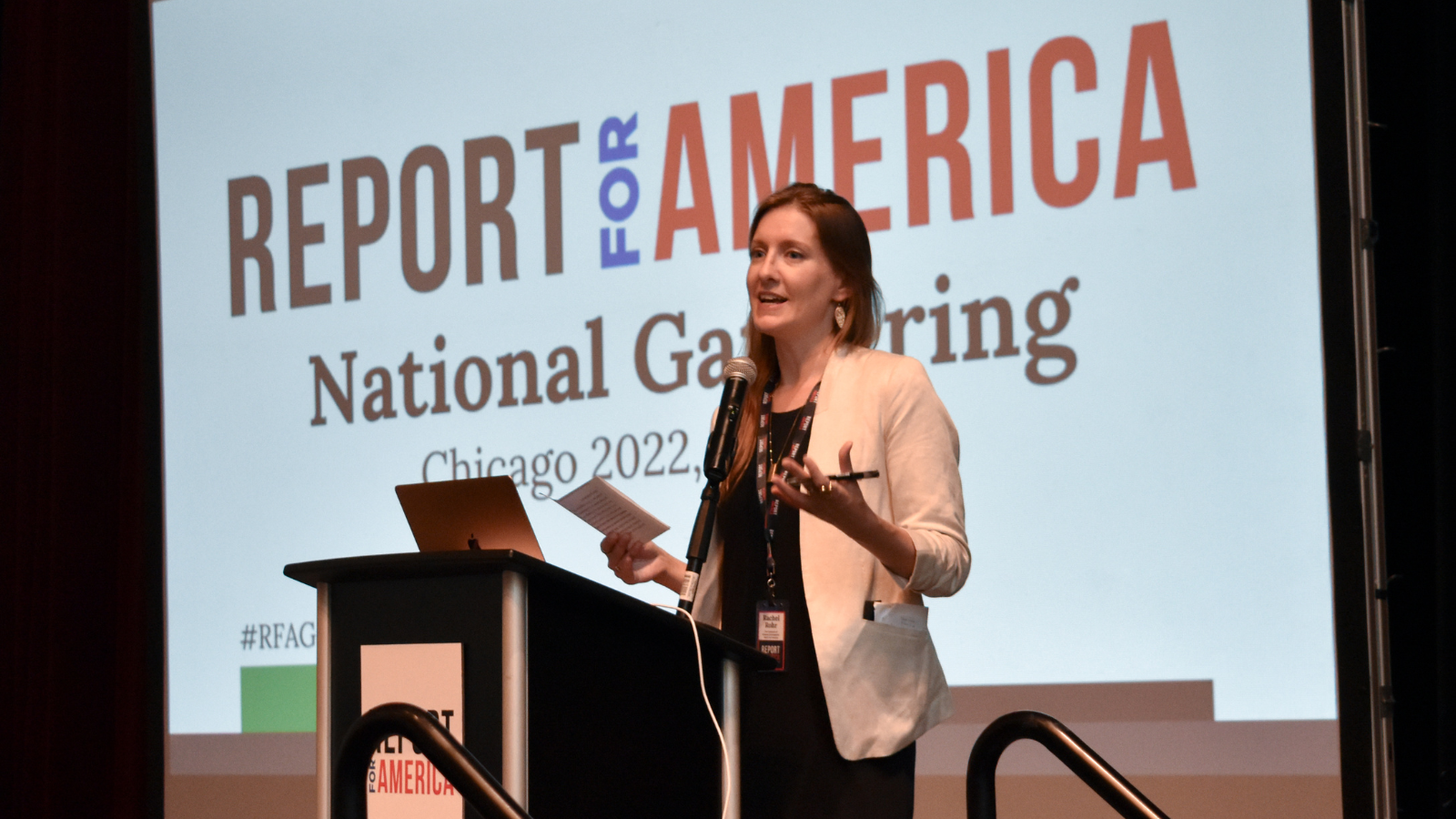
Rachel Rohr is vice president of program development at Report for America, a national service program that places journalists into local newsrooms to report on under-covered issues and communities.
Like the Knight-Wallace Fellowships, Report for America runs on a tight programmatic cycle. We had selected our 2025-26 corps members and our program year had started when Congress voted to rescind funding for public media in July. About 20% of the local newsrooms Report for America has supported since 2018 are public media stations. We reached out across our network to find out who was hardest hit.
In Alaska, one of our alumni at Alaska Public Media helped direct us to two urgent situations.
KRBD, a station in the southeast city of Ketchikan, was about to hire reporter Hunter Morrison when 37% of its budget evaporated. The small newsroom typically has a news director and one reporter covering a region that includes a busy tourist and fishing community as well as Alaska’s only Native American reservation. Not being able to fill the vacant reporter position would leave 20,000 people without essential local news coverage.
At KOTZ, a one-person newsroom above the Arctic Circle in Kotzebue, the station’s board and leadership told the news director, Desiree Hagen, that they would have to close the radio station within a year. In addition to serving as the news director, Hagen is the only reporter at KOTZ, which receives 41% of its funding from the Corporation for Public Broadcasting.
Shuttering the newsroom would cut off the primary local news source and safety information for approximately 10,000 people, most of whom are Alaska Natives.
Most of the stories Hagen covers involve weather alerts, Indigenous cultural programming, and news
on issues such as road closures, subsistence meetings, and essential hunting and fishing information —
updates vital for a community where 60% to 80% of the diet depends on harvested wild food. Shuttering
the newsroom would cut off the primary local news source and safety information for approximately 10,000 people, most of whom are Alaska Natives.
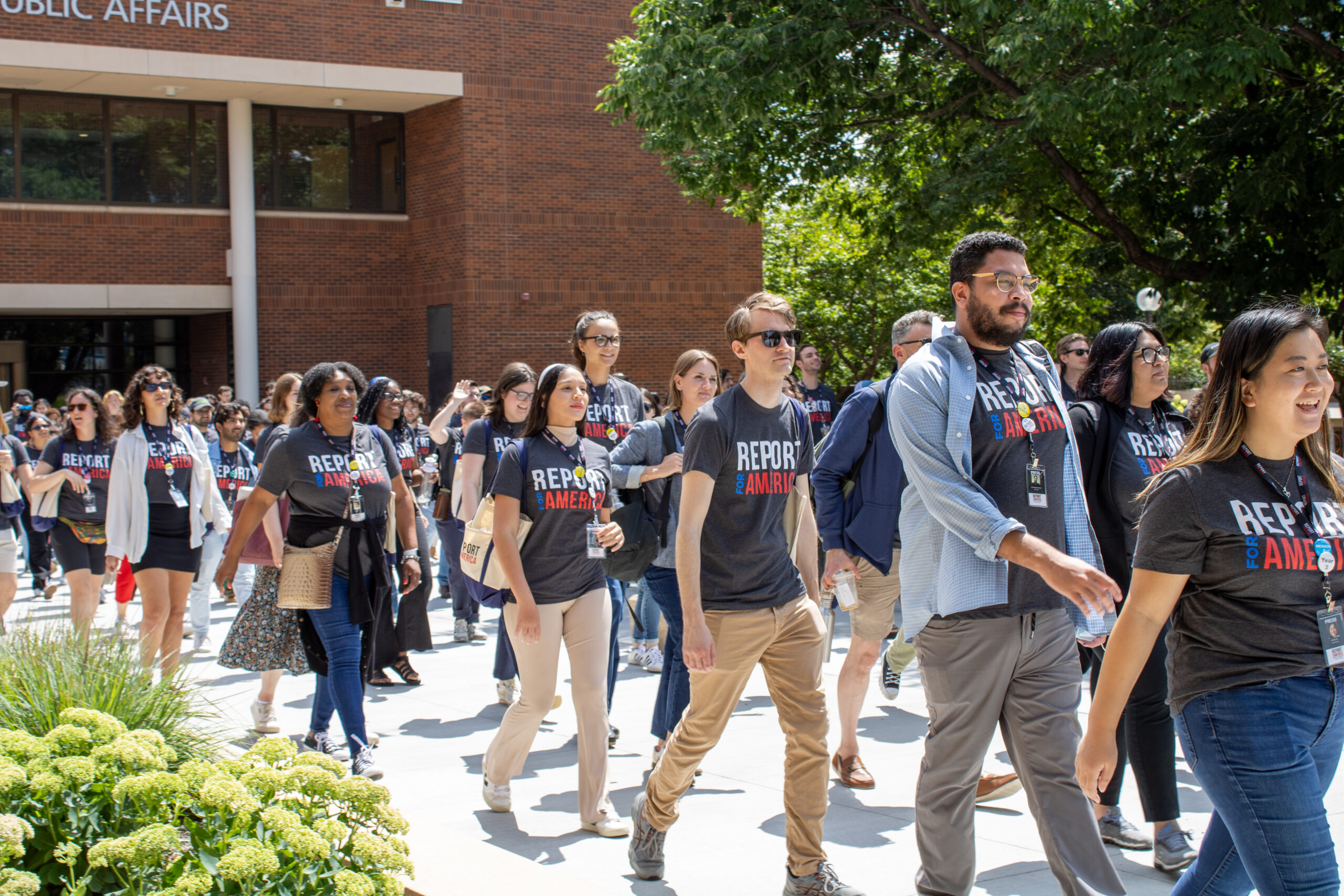
We accepted Hagen and Morrison as corps members. Instead of our usual grants that cover 50% of reporters’ salaries in the first year, we’ll cover 100% of the reporters’ salaries and benefits in the first year — something we’ve never done before.
We’ll also assist the newsrooms with funding and sustainability strategy. And the reporters will be able to enjoy all the perks of being corps members. That includes mentorship, training, professional memberships and — perhaps best of all for reporters in rural and remote places — a supportive peer network of Report for America corps members and alumni.
As Desiree Hagen, who is deeply committed to continuing her work as news director and reporter, told us, “The funding prevents the voices of rural Alaska and the Arctic from going silent.”
This article is part of Rising to Meet the Moment, a series from the Fall 2025 issue of the Wallace House Journal, featuring reflections from Knight-Wallace alumni, Wallace House board members and the Livingston Awards community on meeting today’s challenges with focus, resilience and resolve. Read more stories from our series:
Christopher Baxter, “Unexpected hope“
Lynette Clemetson, “Stepping up with focus and resolve“
Hayes Ferguson, “Nurturing innovation, adaptability and purpose“
Stephen Henderson, “Choosing Civility“
Samantha Henry, “The future of our profession: student journalism“
Tracy Jan, “News deserts and fewer watchdogs“
Margaret Low, “Game Over? Not a chance“
Peggy Lowe, “Defunded, but not defeated“
Amy Maestas, “Building trust through community collaborations“
Kunal Majumder, “Defending the right to report“
Seema Mehta, “Why we keep reporting“
Rachel Rohr, “Swift action for the hardest hit“
Gerard Ryle, “We will not retreat“
Laura Santhanam, “Preserving knowledge“
Mazin Sidahmed and Maria Arce, “Training newsrooms to serve immigrant communities“
Celeste Watkins-Hayes, “Bending without breaking: resilience in academia“
Thomas Zurbuchen, “Never let a good challenge go to waste“