
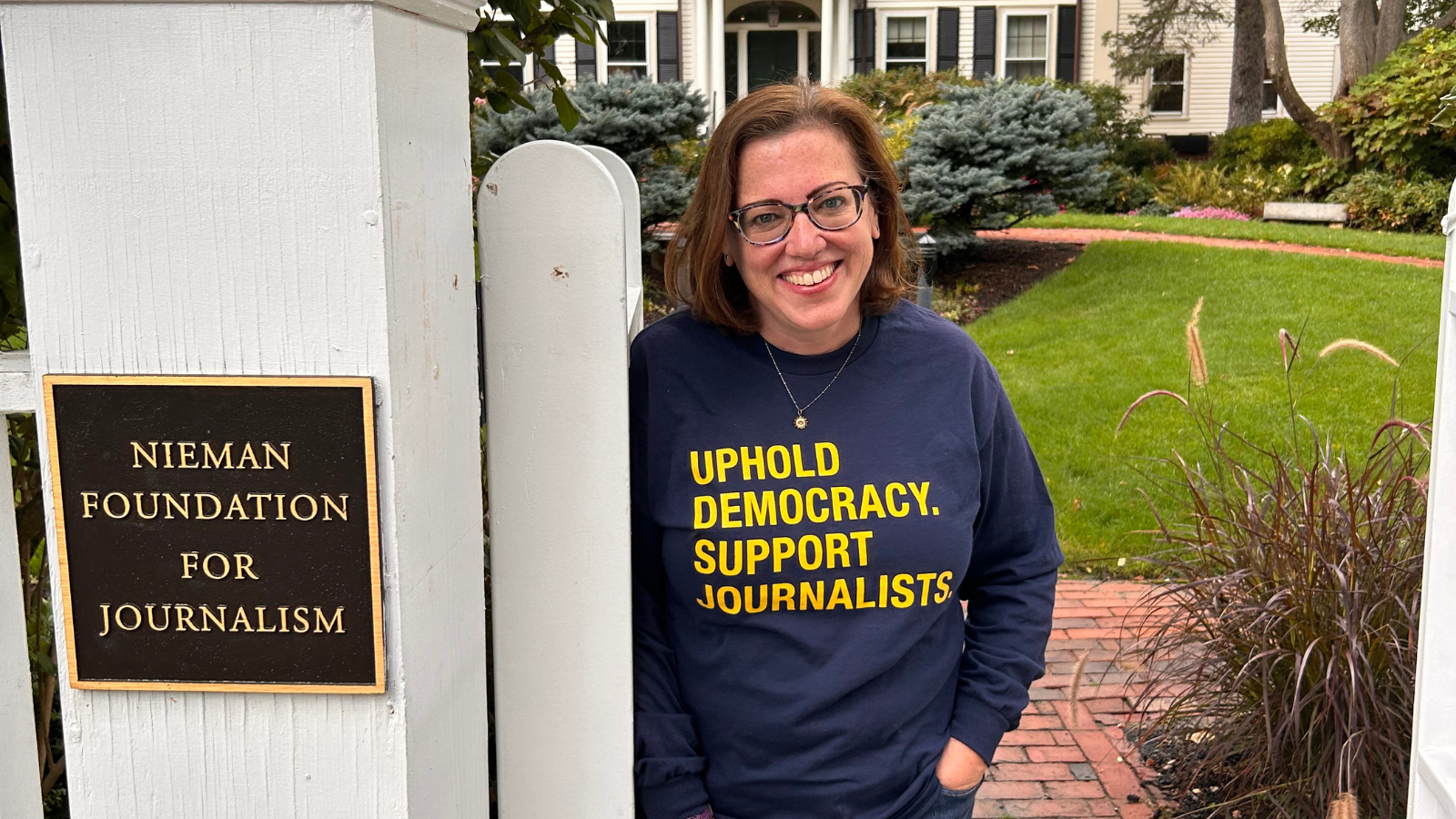
Samantha Henry is editor of Nieman Reports, the flagship publication of the Nieman Foundation for Journalism at Harvard.
The Nieman Foundation for Journalism at Harvard — where I came to work following my Knight-Wallace Fellowship year — currently occupies multiple rings on the Trump administration’s bullseye: We’re a media organization, host to international journalists on U.S. visas and at the heart of the Ivy League.
Setting aside the very real consequences that President Donald Trump’s actions have had on the university, from a media perspective, it often feels like a battle over who gets to control the narrative. Some outlets echo the administration’s talking points: insisting the campus is rife with antisemitism and an unsafe environment for those who disagree with the liberal worldview. Others label Harvard heroic for pushing back against the administration’s demands and view it as a symbol of strength in the face of relentless assault.
But the “heroic Harvard” narrative does not neatly accommodate the concessions the university has made — and may still make — nor does it account for the way Harvard’s leadership largely stayed silent as the university’s first Black woman president was fed to the congressional wolves.
There is one sector of the media that has largely resisted these oversimplifications, and it gives me hope for the future of our profession: student journalism.
The reality — as we should always try to emphasize in journalism — is much more complex and nuanced than the hero-villain narrative allows.
However, there is one sector of the media that has largely resisted these oversimplifications, and it gives me hope for the future of our profession: student journalism. Whether at The Harvard Crimson or outlets across the country that attend Nieman’s annual student journalism conference, many have been covering developments on their campuses with nuance, bravery in the face of intimidation and an ongoing commitment to platforming a wide range of perspectives.
For example, when an international student at nearby Tufts University was forcibly detained by masked immigration agents — ostensibly for having contributed to an op-ed in the school’s newspaper — The Crimson and other student outlets quickly published editorials in support of their student media colleagues.
“If publishing an op-ed can land a student in a detention center, then the freedoms of the press and speech are not just under threat — they are collapsing,” The Crimson’s editorial read, before urging its own university to take a stand. “In a world where an op-ed is grounds for deportation, democracy dies a silent death. Harvard must ensure it does not go quietly with it.”
This article is part of Rising to Meet the Moment, a series from the Fall 2025 issue of the Wallace House Journal, featuring reflections from Knight-Wallace alumni, Wallace House board members and the Livingston Awards community on meeting today’s challenges with focus, resilience and resolve. Read more stories from our series:
Christopher Baxter, “Unexpected hope“
Lynette Clemetson, “Stepping up with focus and resolve“
Hayes Ferguson, “Nurturing innovation, adaptability and purpose“
Stephen Henderson, “Choosing civility“
Samantha Henry, “The future of our profession: student journalism“
Tracy Jan, “News deserts and fewer watchdogs“
Margaret Low, “Game Over? Not a chance.“
Peggy Lowe, “Defunded, but not defeated“
Amy Maestas, “Building trust through community collaborations“
Kunal Majumder, “Defending the right to report“
Seema Mehta, “Why we keep reporting“
Rachel Rohr, “Swift action for the hardest hit“
Gerard Ryle, “We will not retreat“
Laura Santhanam, “Preserving knowledge“
Mazin Sidahmed and Maria Arce, “Training newsrooms to serve immigrant communities“
Celeste Watkins-Hayes, “Bending without breaking: resilience in academia“
Thomas Zurbuchen, “Never let a good challenge go to waste“