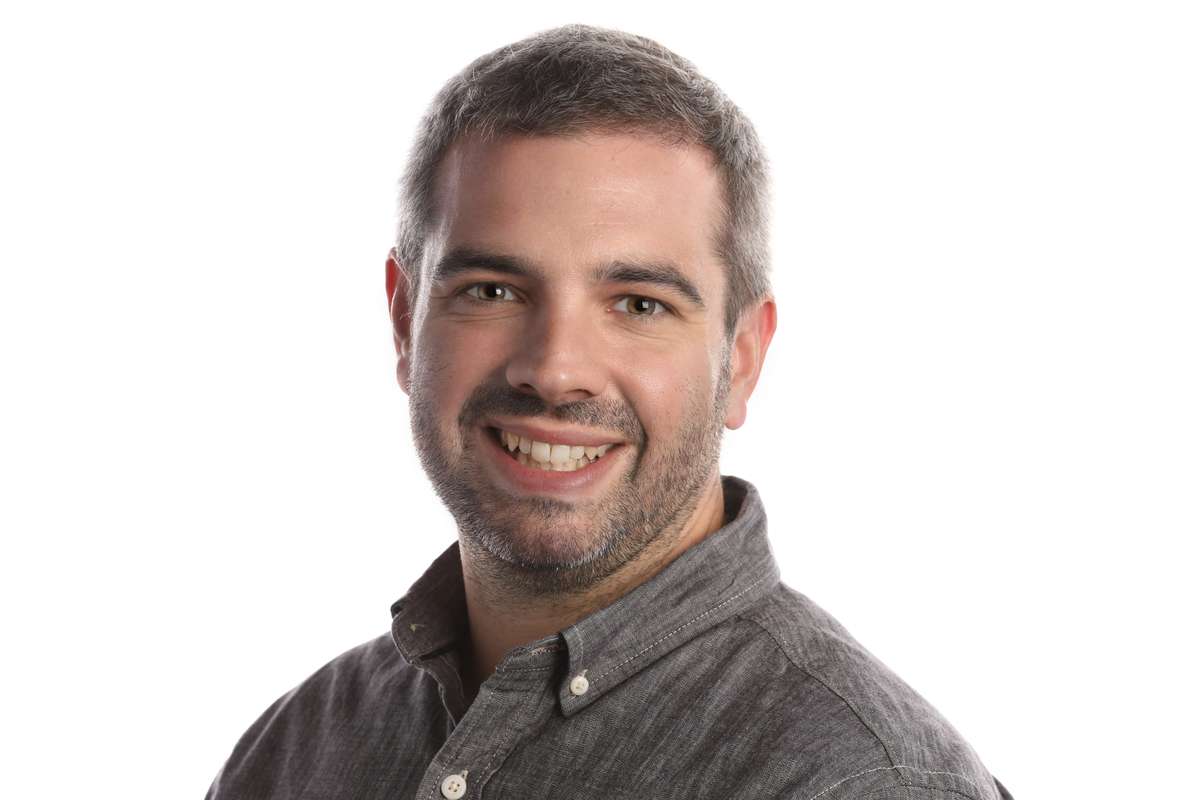
Migration as Imagination, a personal exploration with Ismail Einashe

Monday, March 16 | 5:30 PM

University of Michigan Museum of Art
525 S State St, Ann Arbor, MI 48109

Helmut Stern Auditorium

Free and open to the public

Register Here.

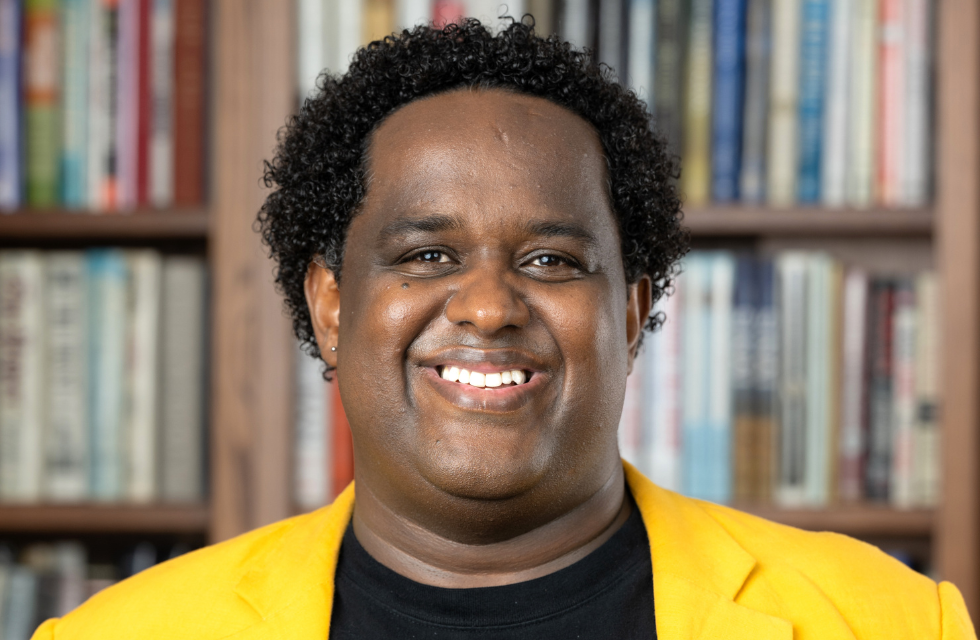
Join Ismail Einashe, award-winning British-Somali writer and 2025-2026 Knight-Wallace Journalism Fellow, for a deeply personal presentation exploring how art can reclaim the humanity of migrants and their stories, too often lost in the headlines of global displacement.

Drawing on a decade of reporting on migration, his recent book “Strangers” by Tate Publishing, and his own journey from Somalia to Britain, alongside work from the likes of Mona Hatoum, Arshile Gorky, Tania Bruguera and more, Einashe will blend art, poetry, music and tales of a lost home—both humorous and harrowing, into an experience that is part artistic presentation, part storytelling session.  

As he traces threads between artistic disciplines and his own experiences, he will recontextualise the migrant experience as an act of imagination, showing how art has the ability to challenge our dominant cultural narratives and bring us closer to the struggles and humanity of people we too easily categorise as ‘strangers’.

About Ismail Einashe

Ismail Einashe is a London-based journalist and author whose work on migration and refugee issues has appeared in numerous publications – including Foreign Policy, The Guardian, BBC News, The Nation, The Sunday Times and ArtReview. He is the author of “Strangers” (2023), a book by Tate Publishing that explores migration through the lens of art, and he co-edited “Lost in Media: Migrant Perspectives and the Public Sphere” (2019), a collection of critical essays examining how migrants are represented in European media. Einashe is also part of a team of journalists working on a cross-border journalism collaborative called Lost in Europe, which investigates the disappearance of child migrants.

Co-Sponosors
UMMA
Penny Stamp Speaker Series

EXPLORE MORE WALLACE HOUSE EVENTS

The Future of Our Profession: Student Journalism

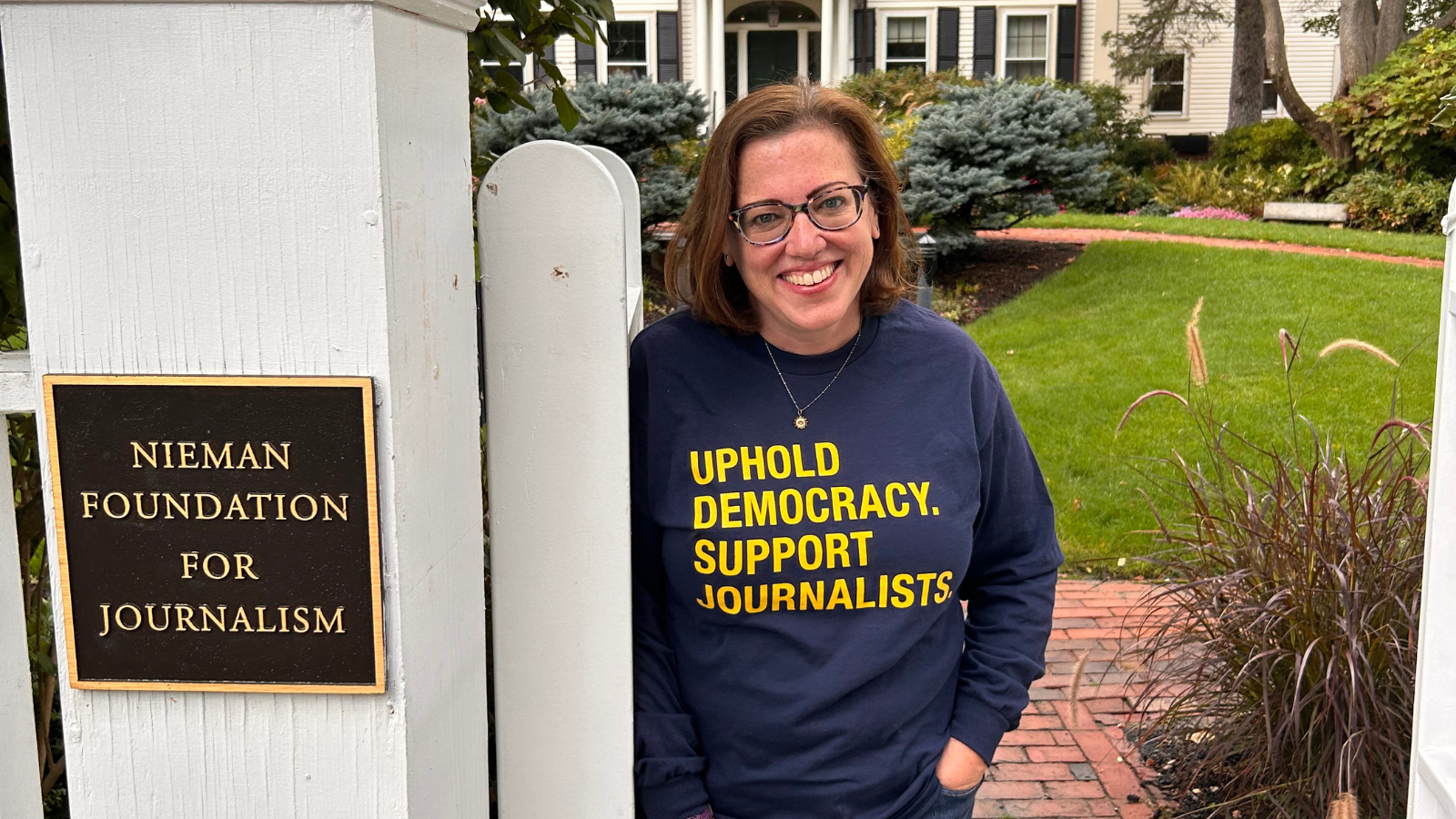
Samantha, wearing her Wallace House swag, standing in front of Walter Lippman House, home of the Nieman Foundation. (Photo credit: Peter Canova)

Samantha Henry is editor of Nieman Reports, the flagship publication of the Nieman Foundation for Journalism at Harvard.

The Nieman Foundation for Journalism at Harvard — where I came to work following my Knight-Wallace Fellowship year — currently occupies multiple rings on the Trump administration’s bullseye: We’re a media organization, host to international journalists on U.S. visas and at the heart of the Ivy League.

Setting aside the very real consequences that President Donald Trump’s actions have had on the university, from a media perspective, it often feels like a battle over who gets to control the narrative. Some outlets echo the administration’s talking points: insisting the campus is rife with antisemitism and an unsafe environment for those who disagree with the liberal worldview. Others label Harvard heroic for pushing back against the administration’s demands and view it as a symbol of strength in the face of relentless assault.

But the “heroic Harvard” narrative does not neatly accommodate the concessions the university has made — and may still make — nor does it account for the way Harvard’s leadership largely stayed silent as the university’s first Black woman president was fed to the congressional wolves.

There is one sector of the media that has largely resisted these oversimplifications, and it gives me hope for the future of our profession: student journalism.

The reality — as we should always try to emphasize in journalism — is much more complex and nuanced than the hero-villain narrative allows.

However, there is one sector of the media that has largely resisted these oversimplifications, and it gives me hope for the future of our profession: student journalism. Whether at The Harvard Crimson or outlets across the country that attend Nieman’s annual student journalism conference, many have been covering developments on their campuses with nuance, bravery in the face of intimidation and an ongoing commitment to platforming a wide range of perspectives.

For example, when an international student at nearby Tufts University was forcibly detained by masked immigration agents — ostensibly for having contributed to an op-ed in the school’s newspaper — The Crimson and other student outlets quickly published editorials in support of their student media colleagues.

“If publishing an op-ed can land a student in a detention center, then the freedoms of the press and speech are not just under threat — they are collapsing,” The Crimson’s editorial read, before urging its own university to take a stand. “In a world where an op-ed is grounds for deportation, democracy dies a silent death. Harvard must ensure it does not go quietly with it.”


This article is part of Rising to Meet the Moment, a series from the Fall 2025 issue of the Wallace House Journal, featuring reflections from Knight-Wallace alumni, Wallace House board members and the Livingston Awards community on meeting today’s challenges with focus, resilience and resolve. Read more stories from our series:

Christopher Baxter, “Unexpected hope

Lynette Clemetson, “Stepping up with focus and resolve

Hayes Ferguson, “Nurturing innovation, adaptability and purpose

Stephen Henderson, “Choosing civility

Samantha Henry, “The future of our profession: student journalism

Tracy Jan, “News deserts and fewer watchdogs

Margaret Low, “Game Over? Not a chance.

Peggy Lowe, “Defunded, but not defeated

Amy Maestas, “Building trust through community collaborations

Kunal Majumder, “Defending the right to report

Seema Mehta, “Why we keep reporting

Rachel Rohr, “Swift action for the hardest hit

Gerard Ryle, “We will not retreat

Laura Santhanam, “Preserving knowledge

Mazin Sidahmed and Maria Arce, “Training newsrooms to serve immigrant communities

Celeste Watkins-Hayes, “Bending without breaking: resilience in academia

Thomas Zurbuchen, “Never let a good challenge go to waste

Unexpected Hope

Christopher Baxter is CEO/president and founding editor of Spotlight PA, a nonpartisan, nonprofit newsroom producing investigative and public-service journalism for Pennsylvania. He received the 2014 Livingston Award for local reporting.

As I crisscross Pennsylvania, from the steel towns of the Mon Valley to the farm fields of Lancaster County, I encounter the same refrain: “We don’t know who to trust anymore.”

The collapse of local news has left entire communities in information deserts. National media feels increasingly disconnected from their daily realities, and the volume of social media is dialed so high that it’s easier to tune out the news than to find your way through.

Yet in these conversations — honest, sometimes uncomfortable exchanges about news, trust, the Constitution and our free society — I find unexpected hope.

When Spotlight PA launched in 2019, we made a radical bet: that rigorous, independent, nonprofit journalism could break through the noise. That in our communities, readers of varying political stripes hungered for reporting grounded in facts, not ideology. That transparency and accountability still mattered, even in an era of declining trust in institutions.

I’ve spoken to an entire room of Republicans cheering President Donald Trump’s second election, groups of Democrats looking for meaningful ways to raise alarm, and countless folks across this state who care less about politics and more about what’s best for their community.

But when we moved the conversation to his local community, the partisanship faded.

And at every turn, Spotlight PA’s mission to produce truly independent, unbiased journalism is met with cheers. Why? Because the beauty of truly nonpartisan reporting is that it’s both nonpartisan and bipartisan — working in service to all people, wherever the truth leads.

But we are at a precarious moment. One of the greatest antidotes to our partisan times — independent local reporting — is in severe financial distress and requires greater investment from all of us.

This moment is not about Spotlight PA or any single news organization or journalist. It’s not even about journalism or the news industry itself. It’s about a free society, which depends on the free flow of information grounded in truth and reality.

If we lose that, we lose everything.

I recently had lunch with a staunch, pro-Trump Republican and highly successful business leader. We started with national politics, and it was sharply partisan. He criticized recent national media reporting as “psyops” and he made clear he supports the president and his policies.

But when we moved the conversation to his local community, the partisanship faded. He talked about working together for the good of all, seeking bipartisan input and creating forums for discussion. And we agreed that trusted, unbiased local news was essential.


This article is part of Rising to Meet the Moment, a series from the Fall 2025 issue of the Wallace House Journal, featuring reflections from Knight-Wallace alumni, Wallace House board members and the Livingston Awards community on meeting today’s challenges with focus, resilience and resolve. Read more stories from our series:

Christopher Baxter, “Unexpected hope

Lynette Clemetson, “Stepping up with focus and resolve

Hayes Ferguson, “Nurturing innovation, adaptability and purpose

Stephen Henderson, “Choosing civility

Samantha Henry, “The future of our profession: student journalism

Tracy Jan, “News deserts and fewer watchdogs

Margaret Low, “Game Over? Not a chance.

Peggy Lowe, “Defunded, but not defeated

Amy Maestas, “Building trust through community collaborations

Kunal Majumder, “Defending the right to report

Seema Mehta, “Why we keep reporting

Rachel Rohr, “Swift action for the hardest hit

Gerard Ryle, “We will not retreat

Laura Santhanam, “Preserving knowledge

Mazin Sidahmed and Maria Arce, “Training newsrooms to serve immigrant communities

Celeste Watkins-Hayes, “Bending without breaking: resilience in academia

Thomas Zurbuchen, “Never let a good challenge go to waste

Preserving Knowledge

Laura Santhanam is health editor at Mississippi Today.

For days after this year’s presidential inauguration, I stepped away from each interview I conducted with data archivists, librarians, legal experts, health researchers and political scientists feeling like I had attended a funeral. Federal datasets were disappearing from government websites — the kind of information that makes most people’s eyes glaze over, but that has provided evidence documenting the realities of climate change, health disparities, racial and gender inequities, for years, if not decades.

As a journalist who covers health, science and medicine, these data gave strength and purpose to the anecdotes my reporting uncovered, elevating individual stories and giving them context.

It helped that people passionate about preserving knowledge were scrambling to save datasets before they were digitally set ablaze, like a modern-day burning of the Library of Alexandria. Without those data, anyone with the loudest microphone — and the most power — could more easily level baseless assertions about vaccine science, rising sea levels or the economy.

A week after my Knight-Wallace Fellowship ended, I participated in a panel discussion hosted by the U-M Center for Political Studies. By then, volunteer data rescuers were finding lost datasets. Many that resurfaced had been compromised. Variables had been stripped away that had once recorded racial and gender diversity of respondents.

We urged them to weave caveats that acknowledged the mishandled data, or where data was no longer being collected.

Organizers booked a room at the U-M Institute for Social Research, assuming a couple dozen people would trickle in. The room filled to capacity with more than 80 people, with a few dozen more on Zoom. It was an inspiring act of collective will.

One of the gifts of the fellowship is the ability to meet and work with faculty. Josh Pasek, a political scientist who explores the intersection of politics, communication and misinformation, was on the panel with me, and he is passionate about steering efforts to save data and understand how to measure the truth going forward.

In June, the two of us traveled to the University of Southern California to share what we had learned with journalists in the Center for Health Journalism. Reporters in the program’s National Fellowship had launched six-month investigations into complicated health issues affecting their communities, and many hoped to rely on data to demonstrate their findings.

Josh and I shared strategies they could use as researchers and storytellers. We urged them to weave caveats that acknowledged the mishandled data, or where data was no longer being collected. We encouraged transparency with their newsrooms and audiences about what has been lost. We also stressed to this roomful of eager journalists that their reporting was more important than ever. At a time when our records are at risk, fearless reporting may be our one hope for shining a light on our world and the decisions that shape it.


This article is part of Rising to Meet the Moment, a series from the Fall 2025 issue of the Wallace House Journal, featuring reflections from Knight-Wallace alumni, Wallace House board members and the Livingston Awards community on meeting today’s challenges with focus, resilience and resolve. Read more stories from our series:

Christopher Baxter, “Unexpected hope

Lynette Clemetson, “Stepping up with focus and resolve

Hayes Ferguson, “Nurturing innovation, adaptability and purpose

Stephen Henderson, “Choosing civility

Samantha Henry, “The future of our profession: student journalism

Tracy Jan, “News deserts and fewer watchdogs

Margaret Low, “Game Over? Not a chance

Peggy Lowe, “Defunded, but not defeated

Amy Maestas, “Building trust through community collaborations

Kunal Majumder, “Defending the right to report

Seema Mehta, “Why we keep reporting

Rachel Rohr, “Swift action for the hardest hit

Gerard Ryle, “We will not retreat

Laura Santhanam, “Preserving knowledge

Mazin Sidahmed and Maria Arce, “Training newsrooms to serve immigrant communities

Celeste Watkins-Hayes, “Bending without breaking: resilience in academia

Thomas Zurbuchen, “Never let a good challenge go to waste

The 38th Graham Hovey Lecture with NPR’s Andrea Hsu

“Inside the Firings and the Future of the Federal Workforce”

September 11, 2025 | 5 p.m.
Reception following the lecture

Wallace House Gardens
620 Oxford Road, Ann Arbor

Welcome remarks by Laurie McCauley,
Provost, University of Michigan

Watch the video recording.

A sweeping effort to expand presidential power and overhaul the federal government began the moment Donald Trump returned to the White House on January 20, 2025. Executive orders targeted the federal workforce, reducing its size and making it more responsive to executive authority. Within a few months, tens of thousands of federal employees were fired, and far more resigned amid threats of mass layoffs. While a flurry of lawsuits has slowed those actions, it’s abundantly clear that the government workforce is not what it was on January 20. What’s unclear is what the government will ultimately become and how the country will be changed in the process.

NPR labor and workplace correspondent Andrea Hsu, a 2012 Knight-Wallace Fellow, has been closely covering the upheaval inside government agencies and the legal fights surrounding it. She’ll share insights from those still working within federal agencies and those who have recently been pushed out, and explore what this transformation could mean for how Americans experience and rely on their government.

This is an in-person event and will not be live-streamed. However, a recording of the lecture will be available on our website following the event.

About the Speaker

Andrea Hsu began her journalism career as a locally hired researcher for the BBC’s Beijing bureau. She joined NPR’s Washington, D.C., newsroom in 2002, spending nearly two decades as a producer for “All Things Considered.” In late 2020, she transitioned to NPR’s business desk, where she reported on how the COVID-19 pandemic reshaped the workforce. Since 2021, she has served as NPR’s labor and workplace correspondent, focusing on the evolving dynamics of work in the United States. As a 2012 Knight-Wallace Fellow at the University of Michigan, Hsu studied innovative approaches to health care awareness.

About the Graham Hovey Lecture

The annual Graham Hovey Lecture recognizes a Knight-Wallace journalist whose career exemplifies the benefits of a fellowship at the University of Michigan and whose ensuing work is at the forefront of our national conversations. The event is named for the late Graham Hovey, director of the fellowship program from 1980 to 1986 and a distinguished journalist for The New York Times.

Michigan Public is a co-sponsor of this event.

Engaging Gen Z in the Era of Algorithmic News Consumption

Lessons from a Knight-Wallace Fellow

Over time, I’ve become increasingly enthralled by how news reaches people. As the media landscape has changed, so have the ways people engage with news. Rather than fight a losing battle to keep news consumers where they were, I’ve followed their transition from print to digital, from static images to short-form videos. These shifts dictated my path from photographer to photo editor, to social media director at National Geographic, and, recently, to Knight-Wallace Fellow.

While working at TIME and National Geographic, I noticed a problem. We knew which content performed well on social media but didn’t fully understand what brought the content through the platforms’ algorithms and into users’ feeds. The issue wasn’t just who liked our content but who never got to see it. This disproportionately affected younger generations, who are the future of social media and the future of journalism.

They receive most of their news from social media platforms, which are served to them algorithmically by individual creators — not traditional news sources. Younger audiences no longer actively choose their news; instead, algorithms largely choose it for them.

What better place to try to tackle this issue than a campus full of Gen Z students? Early on, the Wallace House staff connected me with professors at the University of Michigan School of Information: Sarita Schoenebeck, Cliff Lampe and Paul Resnick. I started with general coursework but soon focused on marketing and leadership at the Ross School of Business. This helped me better understand the intersection between business and tech within the media landscape.

When I wasn’t taking business classes or attending Wallace House seminars, I collaborated with Professor Resnick to study students’ social media habits. Rather than asking students about their social media usage, we had them share news-related videos from their feeds. What I found surprised me — in ways both discouraging and hopeful.

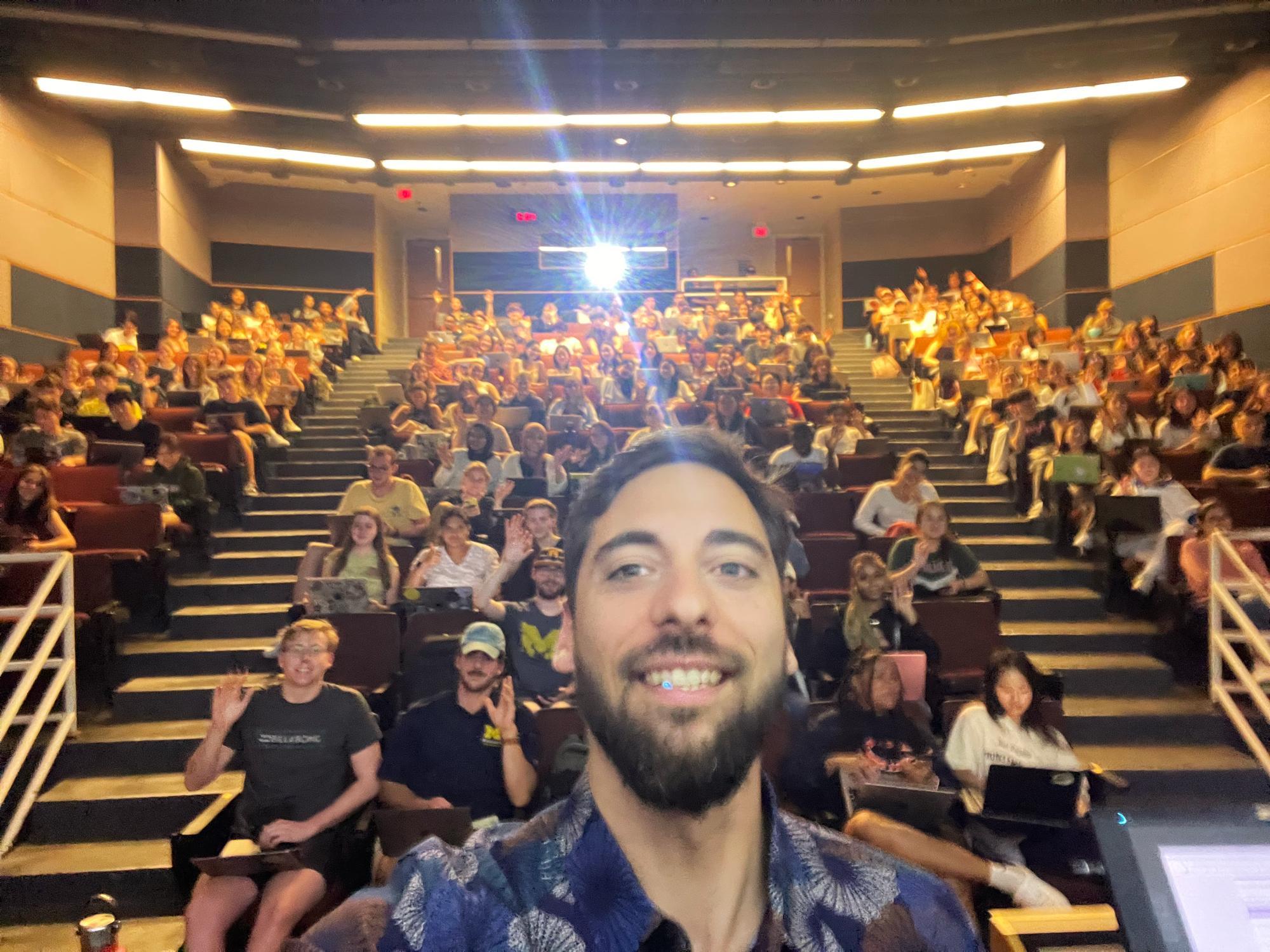
Josh Raab with fellow students at the University of Michigan School of Information.

Time and again, I’d been told that young people don’t care about news, that social media is rife with misinformation, and that little can be done about it. While some of that is true, here are a few of the findings that changed my thinking:

  • Young people care about the news and are getting more of it than ever on social media platforms. Seventy-five percent of the news stories students saw were new to them.
  • While misinformation and bias exist, Michigan students had a good barometer for bullshit. Trustworthiness scores for news videos rated by students and journalists were within 10% similarity on average.
  • Individual creators have surpassed traditional media accounts. Fifty-four percent of the news videos weren’t from traditional sources — and students tended to trust creators more.
  • Seventeen percent of the news-related videos covered local news — making algorithmic social media a potential resource as traditional local news outlets face sharp declines.
  • The vast majority of news videos came from accounts that students did not follow. Students said they wanted more news on social media but were unsure who to follow for reliable content.

This all presents an interesting opportunity. Younger demographics are consuming more news than ever, and it’s increasingly coming from social news creators like Dylan Page, Jessica Burbank or Weather With Peyton. These creators are effective but often lack the journalistic support of traditional newsrooms.

The stimulation of my fellowship year and the quiet calm of Ann Arbor have been replaced by a new job at Google and the cacophony of New York City sirens. Still, the fellowship year and my findings continue to inform my thinking. I remain grateful for the experience — and just a little jealous of the current fellows floating around Ann Arbor, looking forward to their next seminar or planning a group outing to a football game or expedition to Detroit. In the future, I hope to launch a platform to connect news creators with journalists, provide fact-based news, combat misinformation and better reach social media consumers.

Josh Raab is a senior manager at Google, where he heads social strategy for Android, Google Chrome and Google Play.


This article appeared in the Fall 2024 issue of the Wallace House Journal.

Dieu-Nalio Chery, Photojournalist, Finds Renewed Purpose in Documenting the Haitian Diaspora


A Knight-Wallace Press Freedom Fellow in Action

When Donald Trump used the national debate stage to amplify false claims that Haitian immigrants were eating the pets of residents in Springfield, Ohio, Haitian photojournalist Dieu-Nalio Chery felt a mix of sadness and purpose.

“It’s painful for me to do a project on Haitians here [in the U.S.],” says Chery. “Haitians [in the U.S.] are suffering a lot. They are victims of racism. They are exploited. … Sometimes, when a community is underrepresented, the media will not spend money for a journalist to dig deeper. I feel that I can help with that.”

Chery grew up in the Haitian countryside and began working in his uncle’s photo studio in Port-au-Prince in his 20s. The powerful and heroic images that Chery captured throughout his ensuing two decades as a photojournalist — including 11 years working for The Associated Press — have become iconic records of 21st-century Haiti.

Much of Chery’s photography has focused on human rights issues — struggles of civilians living in slums, grassroots protest movements, government-perpetrated massacres of political opponents, the devastating aftermath of the 2010 earthquake and other natural disasters, the cholera epidemic, United Nations relief efforts and gang violence.

Chery’s most personally meaningful photography experience occurred in 2008, in the aftermath of Hurricane Ike. He accompanied a team of United Nations soldiers to save the lives of 35 children and teachers trapped in an orphanage surrounded by floodwaters. Despite not knowing how to swim, Chery waded in water up to his chin and carried children on his shoulders, one by one, to safety. He took moving photos throughout the successful rescue.

“We didn’t know if we would get out of that water,” Chery recalls. “It was crazy that day. I felt proud to be a part of that.”

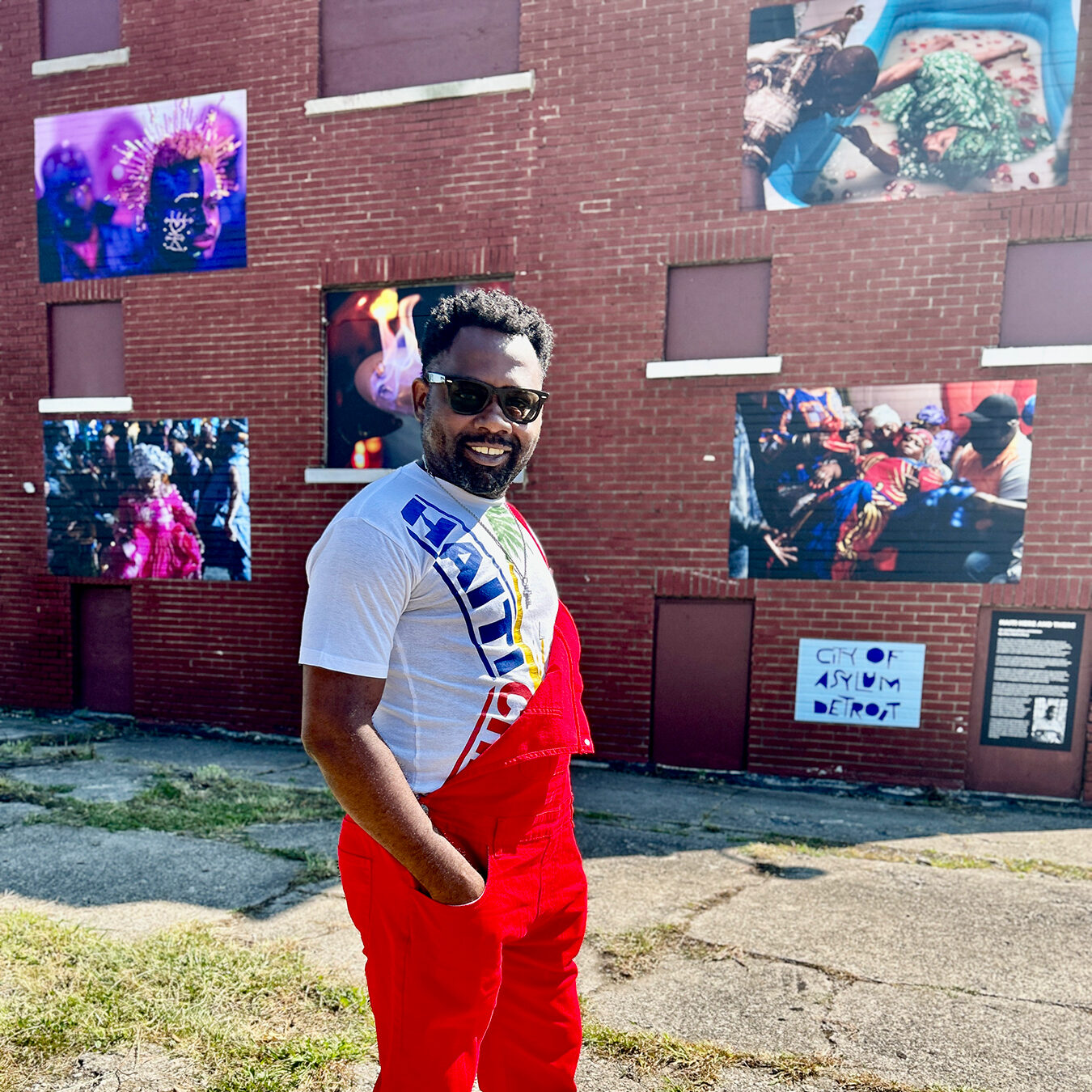
Dieu-Nalio Chery standing infornt of a building displaying his photography
City of Asylum/Detroit projected Dieu-Nalio Chery’s photography onto the walls of its office building in Hamtramck, Michigan, as part of a September 2024 celebration of the Haitian community. Photo Credit: Joseph Sywenkyj

In 2019, while photographing the ratification ceremony of a newly appointed prime minister, Chery suffered an accidental gunshot wound to his jaw yet still managed to take an award-winning photograph that showed both the shooter — a Haitian senator — and the spent cartridges flying through the air.

In 2020, Chery was a finalist for the Pulitzer Prize in breaking news photography for a series of searing photos taken during protests across Haiti that called for the resignation of then-President Jovenel Moïse. Two years later, Chery was targeted for assassination by a powerful Haitian gang and narrowly escaped, fleeing Haiti. He and his family are now cobbling together a new life in the United States and seeking asylum. Chery has earned multiple prestigious fellowships while freelancing for major outlets, including The New York Times, Reuters and The Washington Post.

One of Chery’s ongoing goals is to write the articles that accompany his photography. In 2022, he wrote a feature story and created a photo essay for The Washington Post titled “Vodou in Photos: How Followers of an Ancient Faith Are Battling Stereotypes.” In 2023, he co-authored and photographed a piece for The New York Times about gentrification in Miami’s “Little Haiti” neighborhood.

Chery’s Knight-Wallace Fellowship project is aimed at capturing the Haitian diaspora’s diversity and resilience — highlighting how the community has “endured, grown, struggled and thrived
across generations.”

He will supplement his photography with crowd-sourced family photos, as well as images found in attics, basements, churches and university libraries.

Community engagement is central to Chery’s approach. He gave a powerful guest lecture at a recent University of Michigan symposium on Haiti. He also shared his Haitian diaspora photography at a public exhibition organized by City of Asylum/ Detroit. The event was held outdoors in a public space to ensure inclusivity and community spirit. Chery’s photography was projected onto the walls of City of Asylum’s future office building while guests enjoyed a spread of Haitian food.

Chery hopes that his next exhibition will be in Springfield, Ohio — the sudden epicenter of a vitriolic national immigration debate and the home of more than 12,000 Haitian immigrants. Chery would love to present his work to Springfield residents, as well as create a photo essay of portraits alongside quotes and text that illuminate residents’ diverse stories.

He says: “I want to make something [in Springfield] that can help unite the community.”

Some of Dieu-Nalio Chery’s photography can be viewed at visura.co/dieunalio.


This article appeared in the Fall 2024 issue of the Wallace House Journal.

Ashley Bates is the Associate Director of the Knight-Wallace Fellowships.

Zahra Nader, Afghan Journalist, Seeks Sustainability for Zan Times

A Knight-Wallace Press Freedom Fellow in Action

Zahra Nader vividly recalls the day her youngest sister was born in Kabul, Afghanistan. There was no running water in her family’s home, so Nader, then age 15, ran to get water to clean the baby — the sixth daughter in a family with only one son. She knew that the arrival of yet another girl in their male-dominated culture signaled more financial hardship for her parents. As she retrieved the water, she decided “I am going to become the boy that my family needs.”

Her loving and hardworking parents, neither of whom had the opportunity to learn to read and write, never imagined that their ambitious young daughter would become a talented writer, a New York Times reporter and a social justice-focused media entrepreneur.

Zahra Nader brainstorms with her classmates during her weekly Impact Studio workshop at the University of Michigan Ross School of Business. Photo Credit: Josh Jarmanning

Nader started publishing her poetry in high school and wrote articles for a local Afghan paper. At a private university in Kabul, she majored in law and continued to work in local journalism while studying English at a private center. She also attended a training program on how to work for international media outlets, after which she published her first English-language article in The Huffington Post about divorced women in Afghanistan.

She earned a meeting with The New York Times bureau chief in Kabul and ultimately landed a full-time job there. She reported primarily on women’s issues and gained access where male reporters could not — covering honor killings, “virginity test” facilities, households headed by single women and the social stigma of being a divorcee or a widow.

As the security situation deteriorated, Nader, her husband and her then-3-year-old son were forced to flee Afghanistan. They made a new home in Canada, where Nader struggled to chart a new path. A friend advised her that she now lives by: “You have finished one marathon in Afghanistan. You are starting another one in Canada. You always start from the beginning.” Buoyed by this encouragement, Nader applied for and was admitted to a master’s degree program and later a doctoral program in women’s studies at York University.

Shortly after that, the Taliban seized control of her homeland. Feeling compelled to act, Nader launched Zan Times, a non-profit Farsi and English online news site covering human and women’s rights in Afghanistan. (“Zan” means “woman” in Farsi.) She subsequently raised more than $30,000 through a fundraising campaign and earned some foundation grants. As the site’s editor-in-chief, Nader manages a team of mostly female journalists and editors, both in Afghanistan and in exile. She also leads the organization’s fundraising efforts and training programs for young reporters. All of her reporters are paid for their work.

As a 2025 Knight-Wallace Fellow, Nader is studying business models and management strategies that will create a roadmap for sustainability for Zan Times.

Zan Times highlights grassroots stories of suffering, courage and hope. One recent article, written by an anonymous reporter, chronicles strikes and protests organized by female public school teachers that partially succeeded in compelling the Taliban to reverse its decision to slash their salaries. Other articles cover ongoing brutality and executions by the Taliban, the struggles of Afghan female workers in Iran, novels and short stories written by Afghan authors and the life-threatening conditions faced by LGBTQ+ individuals in Afghanistan.

As a 2025 Knight-Wallace Fellow, Nader is studying business models and management strategies that will create a roadmap for sustainability for Zan Times. She was among 11 entrepreneurs selected for the esteemed Impact Studio program at the University of Michigan Ross School of Business. There, she participates in an intensive, two-semester incubator that helps innovators and entrepreneurs “bring impactful ideas to life.”

Nader is thrilled to have the opportunity for formal business coaching and loves the program’s interactive nature and the peer-to-peer learning it inspires. She is particularly eager to learn more about fundraising and marketing, with the goal of expanding the reach of the Zan Times weekly email newsletter and finding new institutional and individual donors.

After her Knight-Wallace Fellowship, Nader plans to continue leading Zan Times while concurrently finishing her Ph.D. and writing a dissertation focused on the stories of Afghan women’s rights activists from the 1960s, 1970s and 1980s. She will keep tackling new challenges and running new marathons. “It’s very important to me,” Nader says. “A lot of my relatives — especially the girls and my nieces — everybody’s looking up to me.”

The Zan Times English-language website can be viewed at zantimes.com.


Ashley Bates is associate director of Wallace House Center for Journalists.

This article appeared in the Fall 2024 issue of the Wallace House Journal.

The 37th Graham Hovey Lecture with Mazin Sidahmed of Documented

“Sorting Immigration Facts from Fiction: The Power of Local Reporting Amid National Politics”

September 10, 2024 | 5 p.m.
Reception following the lecture

Wallace House Gardens
620 Oxford Road, Ann Arbor

Welcome remarks by Valeria Bertacco,
Vice Provost for Engaged Learning, University of Michigan

Watch the video recording.

In a deeply polarizing election year, immigration remains one of the most contentious, sensationalized issues in American politics. Beyond the partisan rallying cries influencing the presidential race, immigration plays out in individual communities where needs, resources and actions often transcend party lines and knee-jerk responses. How journalists cover immigration – and who their coverage ultimately serves – can shape how Americans understand and debate this issue for generations.

Join Mazin Sidahmed, 2021 Knight-Wallace Reporting Fellow and co-founder of the non-profit newsroom Documented, for a discussion on how shifting our journalism focus from national coverage to local news outlets and from “reporting about” to “reporting for and with” immigrant communities can help us discern immigration fact from fiction and improve outcomes for everyone.

This is an in-person event and will not be live-streamed. However, a recording of the lecture will be available on our website following the event.

About the Speaker

Mazin Sidahmed is the co-founder and co-executive editor of Documented, an independent, non-profit newsroom dedicated to reporting with and for immigrant communities in New York City. He previously worked for the Guardian US in New York during the 2016 US elections, covering various issues, including surveillance and criminal justice, and the rise of hate crimes following the election. Sidahmed left the news desk to join the award-winning Guardian Mobile Innovation Lab, where he helped develop new mobile-specific story formats. He started his career writing for The Daily Star in Beirut, where he reported on the Syrian refugee crisis, weapons transfers to Lebanon and the plight of migrant domestic workers.

As a 2021 Knight-Wallace Reporting Fellow, Sidahmed reported for Documented on the role of local police in federal immigration enforcement.

About the Graham Hovey Lecture

The annual Graham Hovey Lecture recognizes a Knight-Wallace journalist whose career exemplifies the benefits of a fellowship at the University of Michigan and whose ensuing work is at the forefront of our national conversations. The event is named for the late Graham Hovey, director of the fellowship program from 1980 to 1986 and a distinguished journalist for The New York Times.

Michigan Public is a co-sponsor of this event.

The 36th Graham Hovey Lecture with ProPublica’s Anna Clark

“Government Secrecy from Flint to Oxford: Freedom of Information and the Public’s Right to Know”

September 12, 2023 | 5 p.m.
Reception following the lecture

Wallace House Gardens
620 Oxford Road, Ann Arbor

Welcome remarks by Tabbye Chavous,
Vice Provost for Equity and Inclusion and Chief Diversity Officer

Watch the video recording.

Michigan’s transparency laws are among the most restrictive in the nation. The state is one of only two that totally exempts the governor’s office and lawmakers from open records laws. With political polarization high and public trust in institutions low, a lack of transparency threatens to further weaken the social fabric. Pushing past the official version of events is essential to understanding abuses of power and exploring possible remedies.

For nearly two decades of reporting from and about Michigan, 2017 Knight-Wallace Fellow and ProPublica journalist Anna Clark has covered numerous consequential stories, from the Flint water crisis to the mass shooting at Oxford High School. Join her for a discussion on the dangers of a culture of secrecy for Michigan and beyond, and what it takes to push back.

This event will not be livestreamed. A recording of the lecture will be available on our website following the event.

About the Speaker

Anna Clark is a ProPublica journalist who lives in Detroit. She is the author of The Poisoned City: Flint’s Water and the American Urban Tragedy, which won the Hillman Prize for Book Journalism and the Rachel Carson Environment Book Award, and was longlisted for the Andrew Carnegie Medal for Excellence in Nonfiction.

Clark’s writing has appeared in The New York Times, The Washington Post, Elle, The New Republic, Politico, Columbia Journalism Review, and other publications. She edited “A Detroit Anthology,” a 2015 Michigan Notable Book.

She is a nonfiction faculty member in Alma College’s MFA Program in Creative Writing. She was a Fulbright fellow in creative writing in Kenya. As a 2017 Knight-Wallace Fellow at the Univeristy of Michigan, Clark explored how chronic underfunding of American cities imperils residents.

About the Graham Hovey Lecture

The annual Graham Hovey Lecture recognizes a Knight-Wallace journalist whose career exemplifies the benefits of a fellowship at the University of Michigan and whose ensuing work is at the forefront of our national conversations. The event is named for the late Graham Hovey, director of the fellowship program from 1980 to 1986 and a distinguished journalist for The New York Times.