Preserving Knowledge

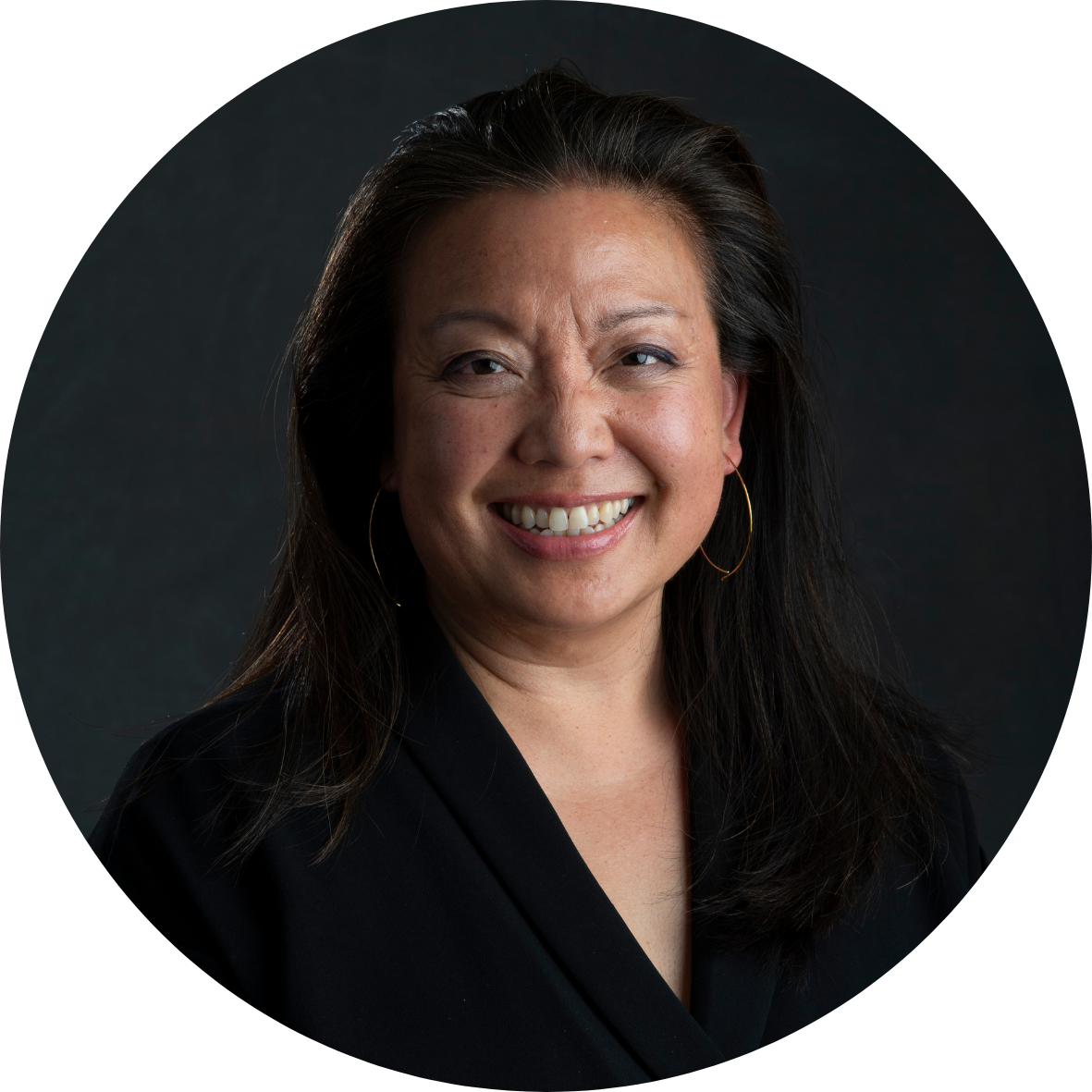
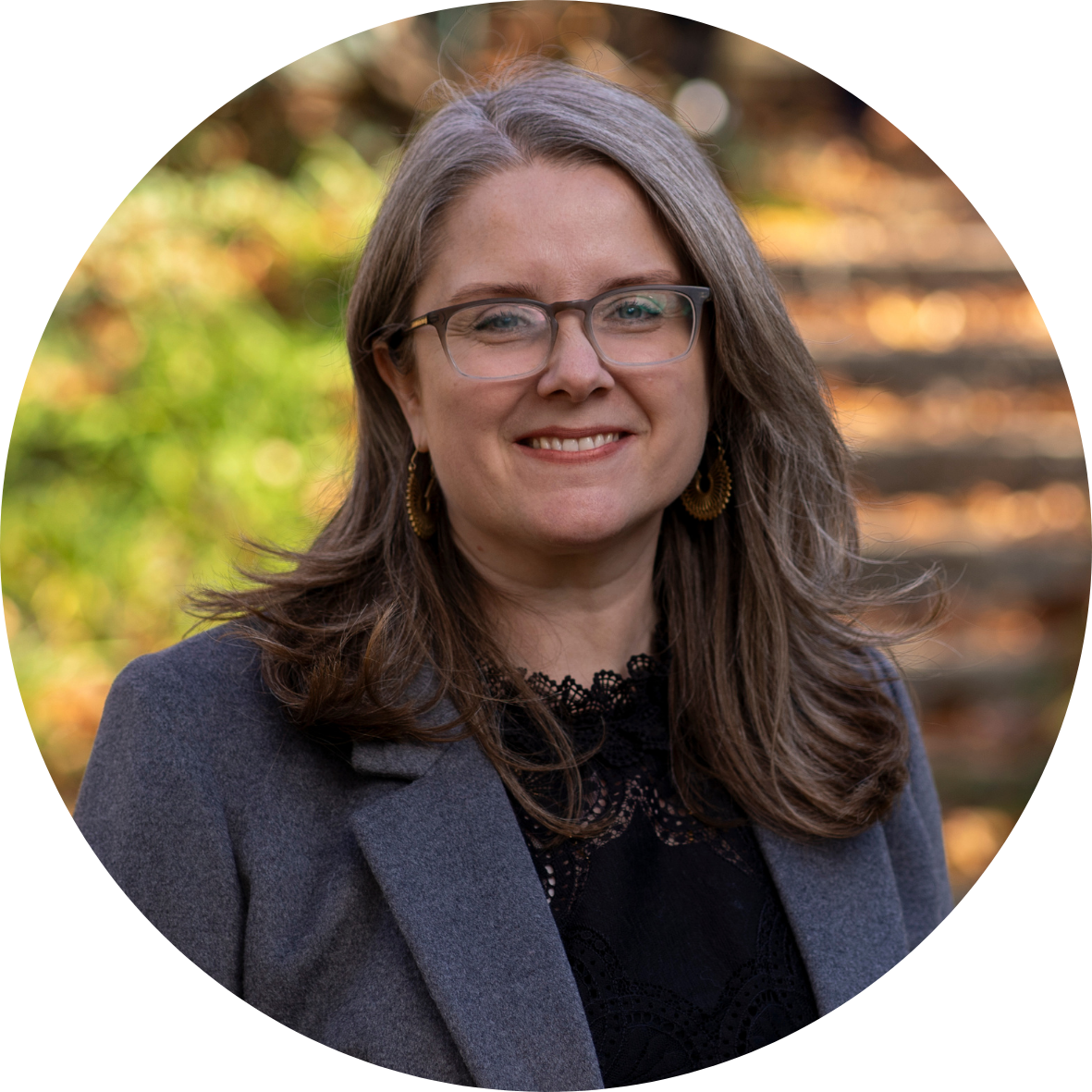
Laura Santhanam is health editor at Mississippi Today.
For days after this year’s presidential inauguration, I stepped away from each interview I conducted with data archivists, librarians, legal experts, health researchers and political scientists feeling like I had attended a funeral. Federal datasets were disappearing from government websites — the kind of information that makes most people’s eyes glaze over, but that has provided evidence documenting the realities of climate change, health disparities, racial and gender inequities, for years, if not decades.

As a journalist who covers health, science and medicine, these data gave strength and purpose to the anecdotes my reporting uncovered, elevating individual stories and giving them context.

It helped that people passionate about preserving knowledge were scrambling to save datasets before they were digitally set ablaze, like a modern-day burning of the Library of Alexandria. Without those data, anyone with the loudest microphone — and the most power — could more easily level baseless assertions about vaccine science, rising sea levels or the economy.

A week after my Knight-Wallace Fellowship ended, I participated in a panel discussion hosted by the U-M Center for Political Studies. By then, volunteer data rescuers were finding lost datasets. Many that resurfaced had been compromised. Variables had been stripped away that had once recorded racial and gender diversity of respondents.

We urged them to weave caveats that acknowledged the mishandled data, or where data was no longer being collected.

Organizers booked a room at the U-M Institute for Social Research, assuming a couple dozen people would trickle in. The room filled to capacity with more than 80 people, with a few dozen more on Zoom. It was an inspiring act of collective will.

One of the gifts of the fellowship is the ability to meet and work with faculty. Josh Pasek, a political scientist who explores the intersection of politics, communication and misinformation, was on the panel with me, and he is passionate about steering efforts to save data and understand how to measure the truth going forward.

In June, the two of us traveled to the University of Southern California to share what we had learned with journalists in the Center for Health Journalism. Reporters in the program’s National Fellowship had launched six-month investigations into complicated health issues affecting their communities, and many hoped to rely on data to demonstrate their findings.

Josh and I shared strategies they could use as researchers and storytellers. We urged them to weave caveats that acknowledged the mishandled data, or where data was no longer being collected. We encouraged transparency with their newsrooms and audiences about what has been lost. We also stressed to this roomful of eager journalists that their reporting was more important than ever. At a time when our records are at risk, fearless reporting may be our one hope for shining a light on our world and the decisions that shape it.


This article is part of Rising to Meet the Moment, a series from the Fall 2025 issue of the Wallace House Journal, featuring reflections from Knight-Wallace alumni, Wallace House board members and the Livingston Awards community on meeting today’s challenges with focus, resilience and resolve. Read more stories from our series:

Christopher Baxter, “Unexpected hope

Lynette Clemetson, “Stepping up with focus and resolve

Hayes Ferguson, “Nurturing innovation, adaptability and purpose

Stephen Henderson, “Choosing civility

Samantha Henry, “The future of our profession: student journalism

Tracy Jan, “News deserts and fewer watchdogs

Margaret Low, “Game Over? Not a chance

Peggy Lowe, “Defunded, but not defeated

Amy Maestas, “Building trust through community collaborations

Kunal Majumder, “Defending the right to report

Seema Mehta, “Why we keep reporting

Rachel Rohr, “Swift action for the hardest hit

Gerard Ryle, “We will not retreat

Laura Santhanam, “Preserving knowledge

Mazin Sidahmed and Maria Arce, “Training newsrooms to serve immigrant communities

Celeste Watkins-Hayes, “Bending without breaking: resilience in academia

Thomas Zurbuchen, “Never let a good challenge go to waste

Training Newsrooms to Serve Immigrant Communities

Mazin Sidahmed is co-founder of Documented, a nonprofit newsroom that focuses on reporting with and for immigrant communities.

María Arce recently joined Documented as a program manager, leading national training and capacity-building work.

Documented is known for approaching immigrants through a circular journalism model. Rather than reporting on or about immigrant communities in New York City, we start by listening to and understanding their needs — an ongoing process that drives the entire editorial wheel. After receiving more than 100 requests from newsrooms nationwide wanting to learn about our approach, Documented thought it was time to start a training program.

Although conceived years earlier, the launch of our training program coincided with the recent ramp-up in targeting immigrant communities around the country. As a result, newsrooms are scrambling to cover changing policies and also connect with impacted communities.

We believe that the traditional linear journalism approach, in which reporters and editors decide what their audiences want, is obsolete. It is especially limiting when covering immigrant communities, because most reporters and editors making decisions hold a passport or work visa and have no experience with the critical concerns of the people they are covering.

We want to help journalists represent immigrants fairly, free from stereotypes and oversimplifications, providing journalism that helps them make informed decisions.

Last March, Carlos, a community member in New York, reached out with an urgent question: “Is it safe to attend my court hearing?” His friends warned him not to go, and his consulate offered no clear guidance.

We published an explainer on the consequences of missing court and an investigation, incorporating Carlos’ situation and expert sources. We made clear that we are not legal advisors or advocates. But pursuing a full and nuanced answer to Carlos’ question allowed us to address the needs of many immigrants like him.

The circular model’s success depends not on merely recruiting bilingual talent but also on partnering with bicultural thinkers who are part of immigrant communities and are trusted by them. At Documented, we employ a trusted community correspondent, and it was this person that Carlos shared his question with. This approach demands daily persistence, with trust as the bridge that enables us to provide the information our audience needs. It also calls for redefining roles and updating workflows to embed the circular model throughout the entire reporting process.

We are hopeful that newsrooms will step up and work with us to reimagine their approach and presence in people’s lives and neighborhoods, and that in doing so, both journalism and the communities they serve will emerge stronger.


This article is part of Rising to Meet the Moment, a series from the Fall 2025 issue of the Wallace House Journal, featuring reflections from Knight-Wallace alumni, Wallace House board members and the Livingston Awards community on meeting today’s challenges with focus, resilience and resolve. Read more stories from our series:

Christopher Baxter, “Unexpected hope

Lynette Clemetson, “Stepping up with focus and resolve

Hayes Ferguson, “Nurturing innovation, adaptability and purpose

Stephen Henderson, “Choosing civility

Samantha Henry, “The future of our profession: student journalism

Tracy Jan, “News deserts and fewer watchdogs

Margaret Low, “Game Over? Not a chance

Peggy Lowe, “Defunded, but not defeated

Amy Maestas, “Building trust through community collaborations

Kunal Majumder, “Defending the right to report

Seema Mehta, “Why we keep reporting

Rachel Rohr, “Swift action for the hardest hit

Gerard Ryle, “We will not retreat

Laura Santhanam, “Preserving knowledge

Mazin Sidahmed and Maria Arce, “Training newsrooms to serve immigrant communities

Celeste Watkins-Hayes, “Bending without breaking: resilience in academia

Thomas Zurbuchen, “Never let a good challenge go to waste

Defunded, but Not Defeated

Peggy Lowe is an investigative reporter based at KCUR in Kansas City.

My time in the Knight-Wallace Fellowship, as it was designed to do, helped me write my second act. After years at a wire service and newspapers in Colorado and California, I decided during my 2008-2009 academic year at the University of Michigan to return to the Midwest, where I grew up, and move into public media. I wanted to trade the downward, depressing slide of newspapers for the hope and growth I saw at NPR and its emerging collaborations.

I landed at Harvest Public Media, which was then just six Midwest stations based at KCUR in Kansas City and among the first regional collaborations launched with funding from the Corporation for Public Broadcasting (CPB). I helped build a startup focused on covering the changing world of food production, energy and climate change, health determinants and rural life.

What I didn’t anticipate was that my new job would land me at ground zero on the map of media deserts — those vast spaces where fewer and fewer communities were being covered with daily news. I was proud as hell that public media had stepped up while traditional print media was running away. Public media committed to creating new models to fill the geographic gaps, hiring more reporters and covering the middle of the country for national audiences.

I remain committed to the goals I created as a Knight-Wallace Fellow — most importantly, doing investigative reporting on local issues with a focus on social justice.

Harvest has become a mighty force, now fueled by the connection of 23 stations, serving as a model for other reporting collaborations, such as the Kansas News Service and NPR’s Midwest Newsroom, both of which are based at KCUR.

But since the defunding of CPB, all of this reporting from the middle of America is in jeopardy. And that’s a shame. A listener who recently started donating to KCUR urged others to join him, saying our reporters showed up when other outlets failed to, and that the depth and accuracy of the reporting is “unmatched.”

“I get to hear interviews not just from local public officials I like, but also a lot who I disagree with, and always with fair but challenging questions,” the new donor wrote. “We need a lot more of that in society.”

While KCUR will be fine, thanks mostly to our generous hometown, many smaller stations that relied on the federal funding will close, diluting these well-built collaborations and drying up this much-needed coverage from reporting deserts.

In spite of the crisis, I know public media will remain a force. Funders are coming forward, new business models are being built, and in the meantime, we continue to cover our communities with gusto. I remain committed to the goals I created as a Knight-Wallace Fellow — most importantly, doing investigative reporting on local issues with a focus on social justice. And I choose to believe what has become a mantra at KCUR: “Defunded, but not defeated.”


This article is part of Rising to Meet the Moment, a series from the Fall 2025 issue of the Wallace House Journal, featuring reflections from Knight-Wallace alumni, Wallace House board members and the Livingston Awards community on meeting today’s challenges with focus, resilience and resolve. Read more stories from our series:

Christopher Baxter, “Unexpected hope

Lynette Clemetson, “Stepping up with focus and resolve

Hayes Ferguson, “Nurturing innovation, adaptability and purpose

Stephen Henderson, “Choosing civility

Samantha Henry, “The future of our profession: student journalism

Tracy Jan, “News deserts and fewer watchdogs

Margaret Low, “Game Over? Not a chance

Peggy Lowe, “Defunded, but not defeated

Amy Maestas, “Building trust through community collaborations

Kunal Majumder, “Defending the right to report

Seema Mehta, “Why we keep reporting

Rachel Rohr, “Swift action for the hardest hit

Gerard Ryle, “We will not retreat

Laura Santhanam, “Preserving knowledge

Mazin Sidahmed and Maria Arce, “Training newsrooms to serve immigrant communities

Celeste Watkins-Hayes, “Bending without breaking: resilience in academia

Thomas Zurbuchen, “Never let a good challenge go to waste

Building Trust Through Community Collaborations

Amy Maestas is director of the Collaborative Journalism Resource Hub at Montclair State University.

I’m motivated and inspired by the ongoing evolution of journalism in all ways, but especially collaborative journalism. At the Collaborative Journalism Resource Hub, where I am director, we are building on the success of journalism collaboratives in the United States. In the last six years, I’ve helped catalyze and support journalism collaboratives of varying sizes and in a variety of places. During my KnightWallace Fellowship, I studied how to inspire and lead innovation in news organizations amid constant disruption.

When collaboratives work, they can achieve what no single news organization could do alone. They include community and civic organizations in their work, which expands the reach of their journalism, fills gaps in coverage, builds trust and delivers storytelling in innovative ways.

In Dallas, a choral ensemble writes and performs songs based on Dallas Media Collaborative’s stories about housing affordability and equity. In Wichita, collaborative partners host community fairs that include organizations focused on youth mental health. In Salt Lake City, young people are creating zines to educate their peers about the shrinking Great Salt Lake — work led by the Great Salt Lake Collaborative. In fact, that same collaborative used their journalism to develop an education curriculum for fifth-grade public school students.

These examples illustrate how journalism collaboratives can orient around the needs of their communities and create a community-first value system. They contribute to the evolution of local information ecosystems; their journalism becomes more accessible and better represents people’s lived experiences. When community members begin to see themselves reflected in local media, they often develop a sense of agency and are motivated to take action — and with it, often come changes in their attitudes toward local journalism.

In collaboratives, news organizations are no longer doing business as usual; they have adopted a mindset that lets go of traditional journalistic paradigms. They are building resiliency and the capacity to adapt to change and disruption. They have moved past the well-worn storylines about “resource-strapped” newsrooms or stories about how one ingenious person came to the rescue after the closure of a news organization.

These successes have not been easy. Working together productively and authentically is difficult. Being sustainable is even harder. But the list of journalism collaboratives is expanding, and the resources to support them are building. The Hub was just launched in January, but I believe we were created specifically for this moment.


This article is part of Rising to Meet the Moment, a series from the Fall 2025 issue of the Wallace House Journal, featuring reflections from Knight-Wallace alumni, Wallace House board members and the Livingston Awards community on meeting today’s challenges with focus, resilience and resolve. Read more stories from our series:

Christopher Baxter, “Unexpected hope

Lynette Clemetson, “Stepping up with focus and resolve

Hayes Ferguson, “Nurturing innovation, adaptability and purpose

Stephen Henderson, “Choosing civility

Samantha Henry, “The future of our profession: student journalism

Tracy Jan, “News deserts and fewer watchdogs

Margaret Low, “Game Over? Not a chance

Peggy Lowe, “Defunded, but not defeated

Amy Maestas, “Building trust through community collaborations

Kunal Majumder, “Defending the right to report

Seema Mehta, “Why we keep reporting

Rachel Rohr, “Swift action for the hardest hit

Gerard Ryle, “We will not retreat

Laura Santhanam, “Preserving knowledge

Mazin Sidahmed and Maria Arce, “Training newsrooms to serve immigrant communities

Celeste Watkins-Hayes, “Bending without breaking: resilience in academia

Thomas Zurbuchen, “Never let a good challenge go to waste

Defending the Right to Report

Kunāl Majumder is Asia-Pacific program coordinator for the Committee to Protect Journalists.

In April, as my fellowship ended, I felt an urgency to return to work. In my cohort of 18 Knight-Wallace Fellows, most of my peers were reporters, editors and producers. I was somewhat of an outlier, working on press freedom and the safety of journalists. That distinction itself reflects how the profession is changing: defending the right to report has become as urgent as reporting itself.

During the academic year that I spent at the University of Michigan, the global press freedom crisis only grew sharper. A record number of journalists were killed in 2024 — 125 by the Committee to Protect Journalists’ (CPJ) count, most of that number driven by journalists targeted in Gaza. Last year was the deadliest year since CPJ began keeping track more than three decades ago.

Journalists today can no longer take their rights or safety for granted — not only in authoritarian countries or conflict zones, but even in democracies like my own India, or the United States.

In India, press freedom is under sustained pressure. Journalists face criminalization, misuse of security laws, and police investigations designed to intimidate them. Media capture has become a reality. Spyware and digital censorship, particularly on social media, add new layers of surveillance and silencing. Although fewer journalists are currently in jail compared with previous years, many continue to face criminal charges. The harassment does not end with being released from prison, and the struggle to clear one’s name is exhausting and unending.

The role of the United States in upholding free speech and press freedom has always been crucial. Yet in recent years, successive administrations have prioritized security and trade over democratic values. In 2024, journalists in the U.S. were arrested or detained at least 48 times. This year, the threats have grown even sharper, with incidents such as the arrest and deportation of reporter Mario Guevara; the visa cancellation of student journalist Rümeysa Öztürk for writing an op-ed; multimillion-dollar media settlements that encourage self-censorship; and the shutdown of Voice of America and Radio Free Asia.

As I said in a TEDx talk during my fellowship, press freedom lies at the heart of all democratic freedoms. Attacks on journalists mark a democratic decline and rising authoritarianism, often justified under security or other pretexts. In India, for instance, anti-terror laws have been misused to try to jail journalists, including 2023 Knight-Wallace Fellow Masrat Zahra, who faced prison time for her reporting from Indian-administered Kashmir. She is currently in exile in the U.S.

At CPJ, my work revolves around documenting attacks, pressing for accountability and assisting those under threat. Safety training has also become central to this mission. During my Knight-Wallace Fellowship, I developed an augmented-reality prototype with my fellowship classmate, Katie O’Brien, to help prepare journalists for hostile environments. The idea came from recognizing that risks to safety are no longer limited to conflict zones. The fellowship gave me space to imagine solutions. The world I return to demands action.


This article is part of Rising to Meet the Moment, a series from the Fall 2025 issue of the Wallace House Journal, featuring reflections from Knight-Wallace alumni, Wallace House board members and the Livingston Awards community on meeting today’s challenges with focus, resilience and resolve. Read more stories from our series:

Christopher Baxter, “Unexpected hope

Lynette Clemetson, “Stepping up with focus and resolve

Hayes Ferguson, “Nurturing innovation, adaptability and purpose

Stephen Henderson, “Choosing civility

Samantha Henry, “The future of our profession: student journalism

Tracy Jan, “News deserts and fewer watchdogs

Margaret Low, “Game Over? Not a chance

Peggy Lowe, “Defunded, but not defeated

Amy Maestas, “Building trust through community collaborations

Kunal Majumder, “Defending the right to report

Seema Mehta, “Why we keep reporting

Rachel Rohr, “Swift action for the hardest hit

Gerard Ryle, “We will not retreat

Laura Santhanam, “Preserving knowledge

Mazin Sidahmed and Maria Arce, “Training newsrooms to serve immigrant communities

Celeste Watkins-Hayes, “Bending without breaking: resilience in academia

Thomas Zurbuchen, “Never let a good challenge go to waste

News Deserts and Fewer Watchdogs

Tracy Jan is a senior editor for ProPublica’s Local Reporting Network, where she partners with local news outlets on investigative projects.

Headlines about the state of local journalism are bleak.

More than 3,000 newspapers have folded in the last 20 years. Of those that remain, private equity firms have stripped many of their investigative firepower. The number of news deserts is growing.

The result? Less-informed voters and taxpayers, and fewer professional watchdogs reporting on city councils, school boards and state governments, scrutinizing power and uncovering malfeasance.

Those stakes have driven me to return to local journalism, where I began my career more than two decades ago covering the county courthouse and the sheriff’s department at The Oregonian. I spent the last 13 years as a national reporter and editor for The Boston Globe and The Washington Post. When ProPublica offered me the opportunity to collaborate with local news outlets on investigative stories as a senior editor for our Local Reporting Network, I saw no more urgent mission.

Since January, I have worked with reporters and editors from legacy publications like The Salt Lake Tribune and the Bangor Daily News, as well as nonprofit newcomers including MLK50 in Memphis, The Current in Savannah, Verite News in New Orleans and The Frontier in Oklahoma. We’ve examined how the nation’s only Medicaid work requirement program is failing Georgians, how criminal justice laws championed by Louisiana Governor Jeff Landry are keeping people in prison longer, and how government programs meant to help low-income renters and homeowners contribute to Maine’s homelessness crisis.

Our partnership model demonstrates that the future of local news is stronger when we work together. And so is our democracy.

One of my favorite parts of the job is visiting reporters and their newsrooms to better understand their communities and the nuances of the issues they will be spending a year covering. I’ve listened to whistleblowers recount the failures of Oklahoma’s oil and gas regulators and toured oil fields to witness the resulting environmental damage. These reporting trips have made me a more effective editor, fueling questions that have helped the reporters sharpen their reporting goals and think even more ambitiously.

Visiting our partner newsrooms has also given me a fuller understanding of the new media landscape. There is promise in the startups that have sprung up to fill the holes left by shrinking or shuttered legacy papers.

Our partnership model demonstrates that the future of local news is stronger when we work together.

And so is our democracy.


This article is part of Rising to Meet the Moment, a series from the Fall 2025 issue of the Wallace House Journal, featuring reflections from Knight-Wallace alumni, Wallace House board members and the Livingston Awards community on meeting today’s challenges with focus, resilience and resolve. Read more stories from our series:

Christopher Baxter, “Unexpected hope

Lynette Clemetson, “Stepping up with focus and resolve

Hayes Ferguson, “Nurturing innovation, adaptability and purpose

Stephen Henderson, “Choosing civility

Samantha Henry, “The future of our profession: student journalism

Tracy Jan, “News deserts and fewer watchdogs

Margaret Low, “Game Over? Not a chance.

Peggy Lowe, “Defunded, but not defeated

Amy Maestas, “Building trust through community collaborations

Kunal Majumder, “Defending the right to report

Seema Mehta, “Why we keep reporting

Rachel Rohr, “Swift action for the hardest hit

Gerard Ryle, “We will not retreat

Laura Santhanam, “Preserving knowledge

Mazin Sidahmed and Maria Arce, “Training newsrooms to serve immigrant communities

Celeste Watkins-Hayes, “Bending without breaking: resilience in academia

Thomas Zurbuchen, “Never let a good challenge go to waste

We Will Not Retreat

Gerard Ryle is executive director of the International Consortium of Investigative Journalists, which produced the Panama Papers, Paradise Papers and Pandora Papers.

I used to think the hardest part of journalism was prying loose facts others worked hard to conceal. And it is hard — buried documents, money routed through endless, shady paths, lawyers hired to bury the trail and corporate filings engineered to confuse. But over time, I’ve learned there’s another challenge just as steep: getting the resources to do the work.

Around the world, journalism is shrinking at the moment we need it most. When budgets are slashed, investigative reporting, which takes the longest and costs the most to produce, is the first to go.

At the International Consortium of Investigative Journalists (ICIJ), we feel these pressures all the time. We’ve had to stretch every dollar further and dip into our reserves. But we’ve made a deliberate choice: We will not retreat. And we’re finding ways to do more.

We see ICIJ not just as a newsroom but as part of a larger media ecosystem. And when that ecosystem is under strain, our responsibility is to strengthen it, not pull back. Even in these lean times, we’ve doubled down to help others survive.

We continue sharing the technology we built to handle massive data leaks. We resist the lone-wolf style of journalism by offering scoops to small newsrooms without the resources to find them on their own. And we keep training reporters so they can carry out this kind of work in their own countries and languages.

Just this year, we trained hundreds of journalists, from Argentina to Zimbabwe, on the secure, collaborative methods we created. The training took many forms: individual mentoring, small group seminars, onboarding sessions for new partners, full-semester courses at Dortmund University in Germany and presentations at major industry gatherings.

The model we’ve built ensures no single government or institution can suppress the story.

Strengthening other newsrooms fortifies the ecosystem. It’s how we make sure investigative journalism can weather financial strain, adapt to new challenges, withstand political pressure and remain a force for accountability wherever it’s practiced.

If this way of working sounds familiar, it should. It’s the model we used a decade ago when the Pulitzer Prize-winning Panama Papers showed the world what happens when collaboration meets secrecy head-on. We brought together 376 journalists from 70 countries to produce the biggest journalistic investigation the world had ever seen. Every project since — from 2017’s Paradise Papers to this year’s China Targets — was built on this foundation, evolving to take on ever more complex forms of secrecy.

The model we’ve built ensures no single government or institution can suppress the story.

Three factors keep this work going: the courage of whistleblowers who share information with us despite the risks; the grit of journalists who won’t stop digging; and our belief that reporters working together can withstand forces working against transparency.

Our investigations led to the ousting of four world leaders and changed laws in more than 70 countries. They helped governments claw back billions in taxes and exposed hidden wealth on a scale the world had never seen. Along the way, we built a new model of journalism that others are now using, too.

The path to that impact runs through Wallace House. My fellowship in 2005-2006 provided the rare gift of time to think differently about how journalism could be done. I came to see that while traditional journalism has its place, collaboration across borders was needed to tell the biggest, most consequential stories.

Charles Eisendrath put my conviction to the test just a few years later with an invitation to apply to lead ICIJ. Charles was director of Wallace House and on the board of the Center for Public Integrity, which ICIJ was part of at the time. That call was a turning point, not just for me, but for the new model of journalism ICIJ would come to pioneer.

I’ve seen what happens when the truth gets out. Leaders step down. Loopholes close. And citizens are reminded of how free societies are supposed to work. The test now is whether we can equip the next generation to carry this torch and keep the truth alive.


This article is part of Rising to Meet the Moment, a series from the Fall 2025 issue of the Wallace House Journal, featuring reflections from Knight-Wallace alumni, Wallace House board members and the Livingston Awards community on meeting today’s challenges with focus, resilience and resolve. Read more stories from our series:

Christopher Baxter, “Unexpected hope

Lynette Clemetson, “Stepping up with focus and resolve

Hayes Ferguson, “Nurturing innovation, adaptability and purpose

Stephen Henderson, “Choosing civility

Samantha Henry, “The future of our profession: student journalism

Tracy Jan, “News deserts and fewer watchdogs

Margaret Low, “Game Over? Not a chance

Peggy Lowe, “Defunded, but not defeated

Amy Maestas, “Building trust through community collaborations

Kunal Majumder, “Defending the right to report

Seema Mehta, “Why we keep reporting

Rachel Rohr, “Swift action for the hardest hit

Gerard Ryle, “We will not retreat

Laura Santhanam, “Preserving knowledge

Mazin Sidahmed and Maria Arce, “Training newsrooms to serve immigrant communities

Celeste Watkins-Hayes, “Bending without breaking: resilience in academia

Thomas Zurbuchen, “Never let a good challenge go to waste