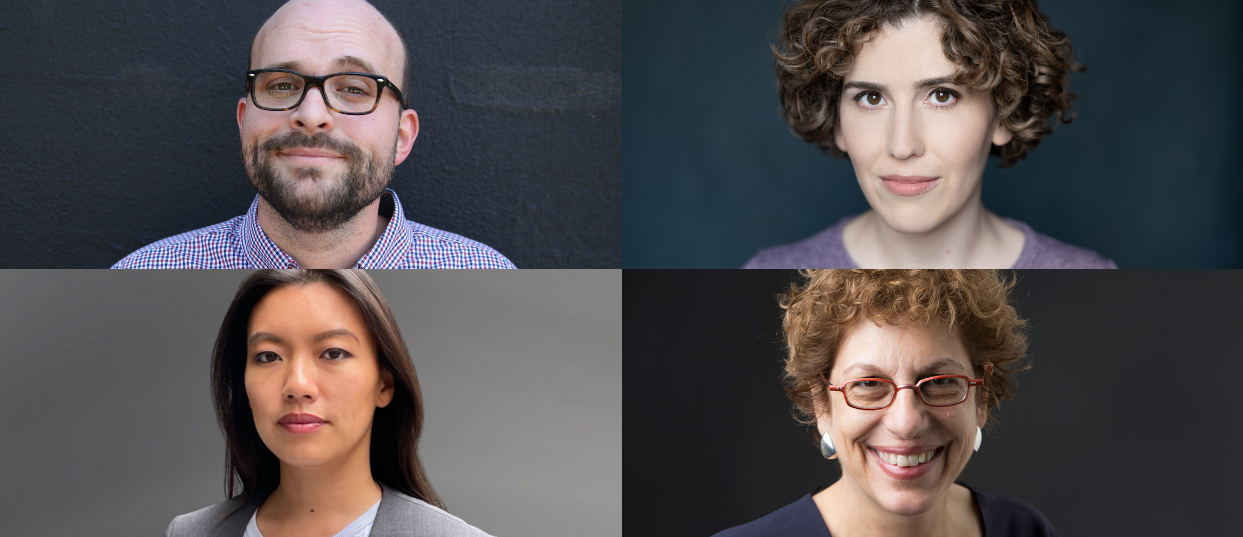
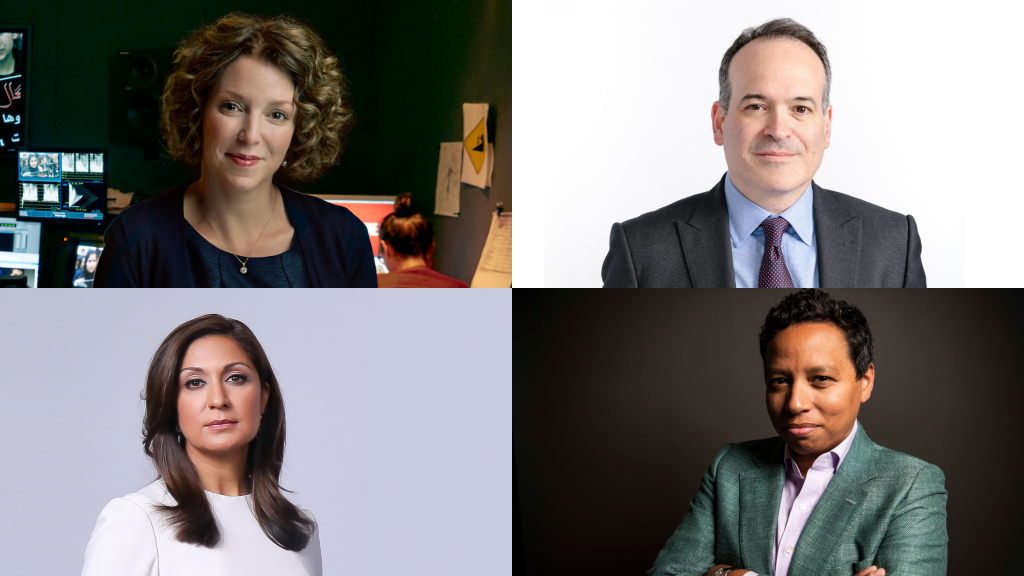
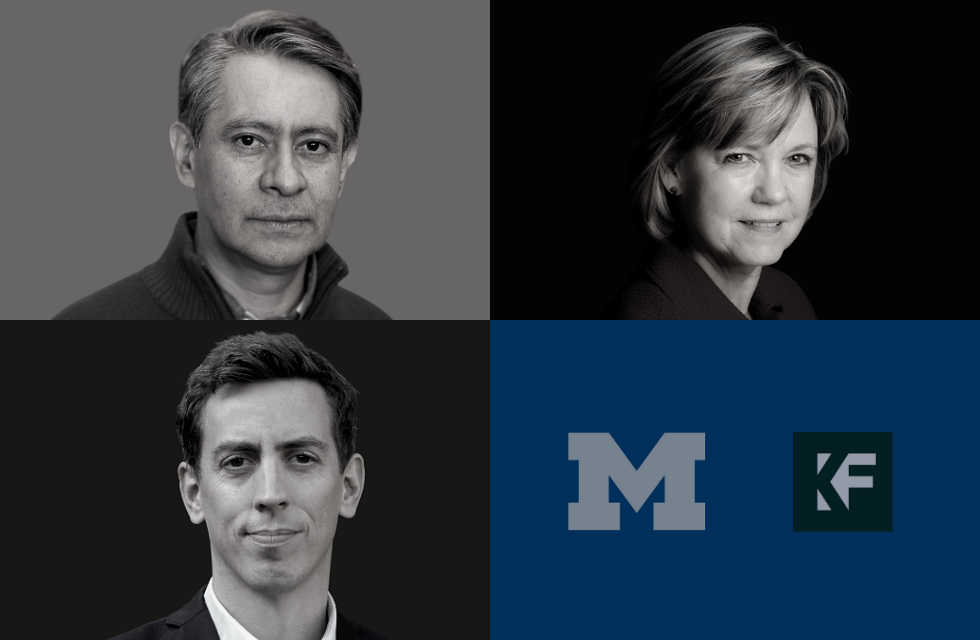
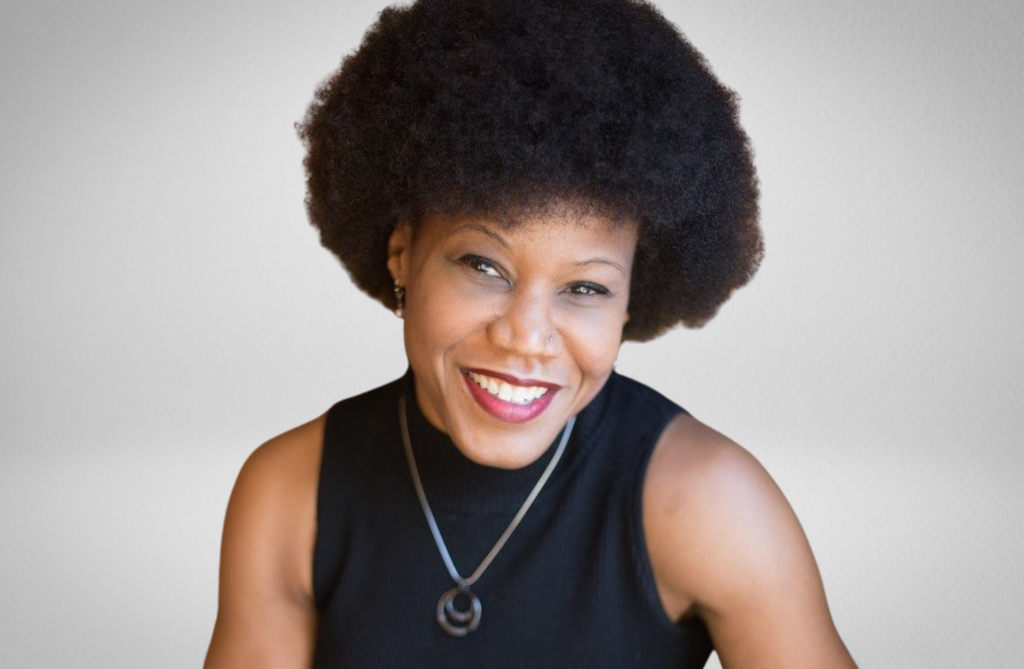
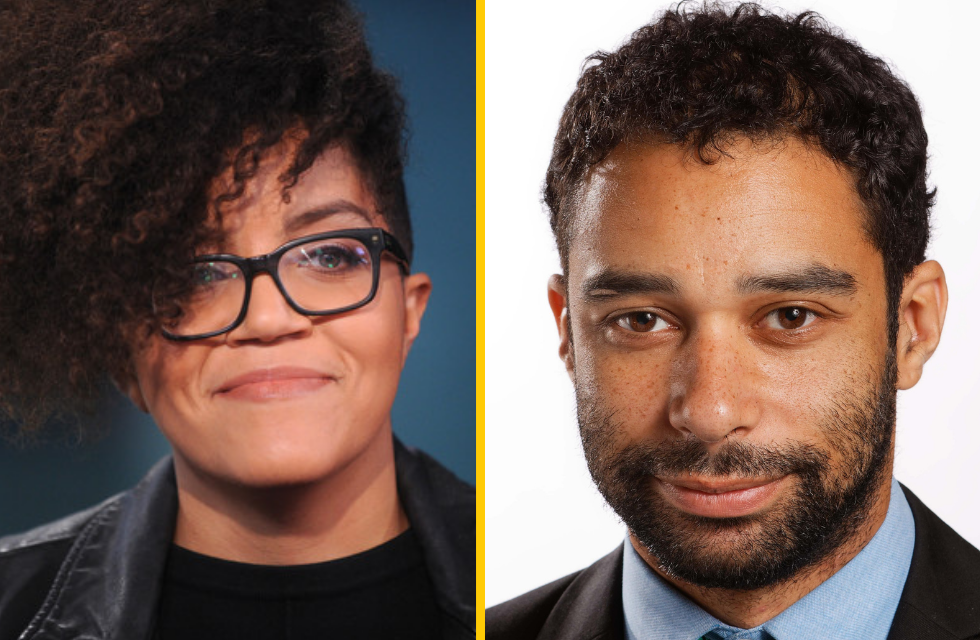
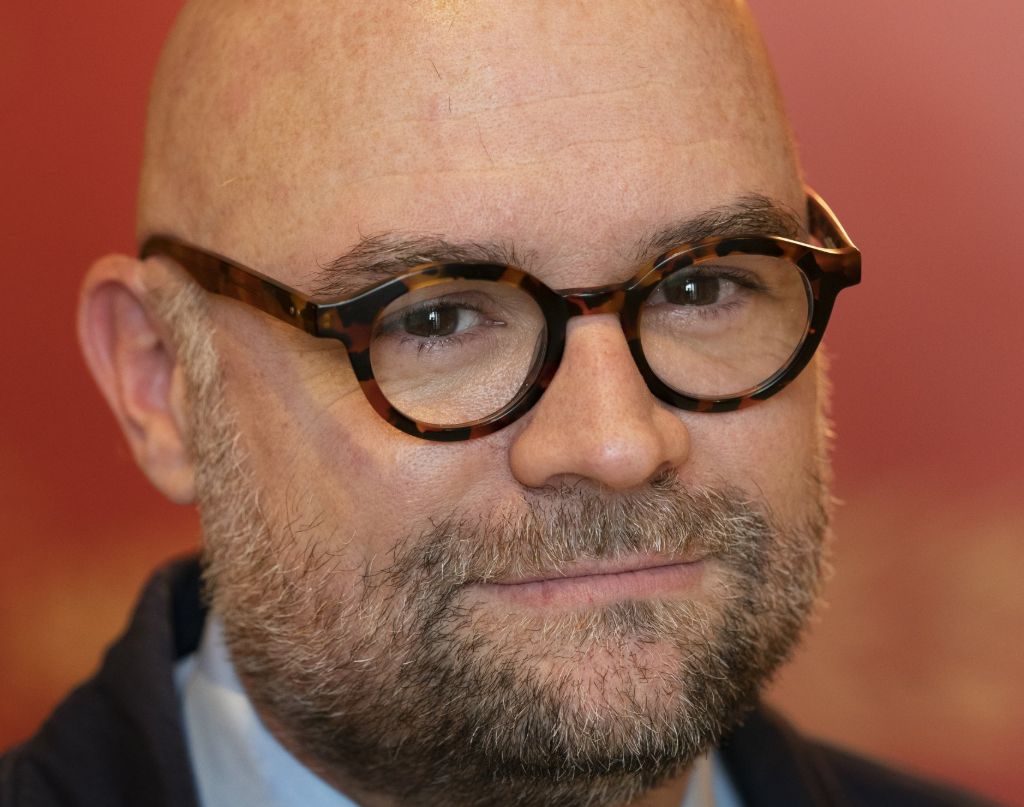
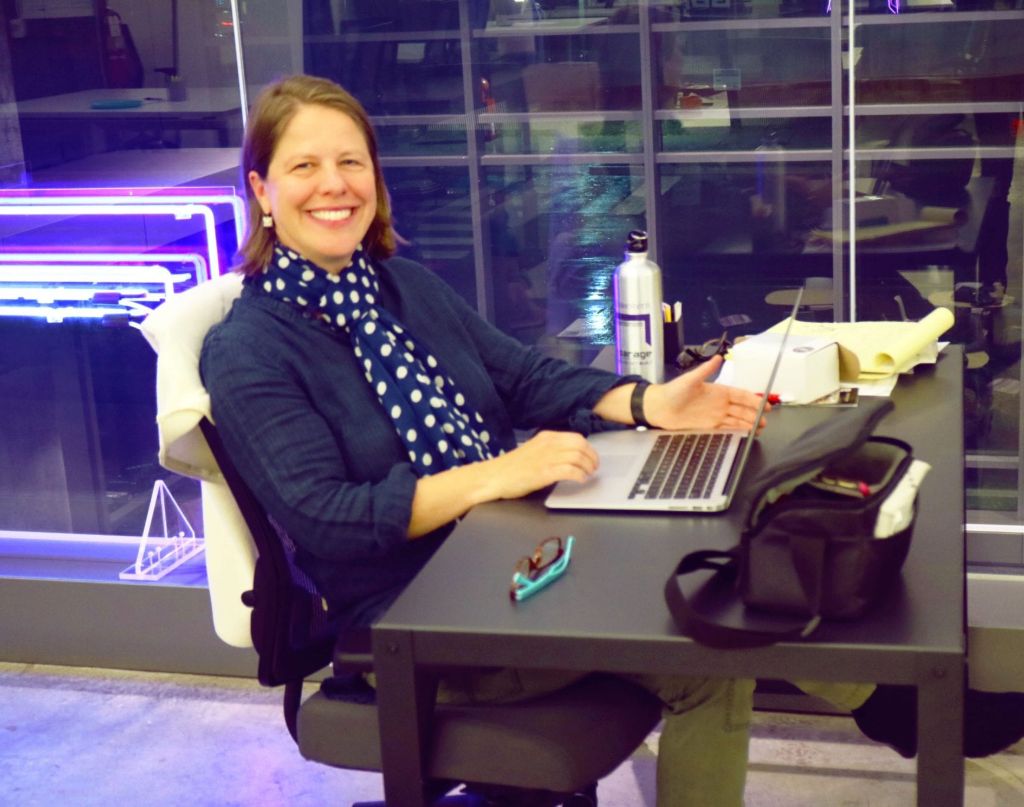
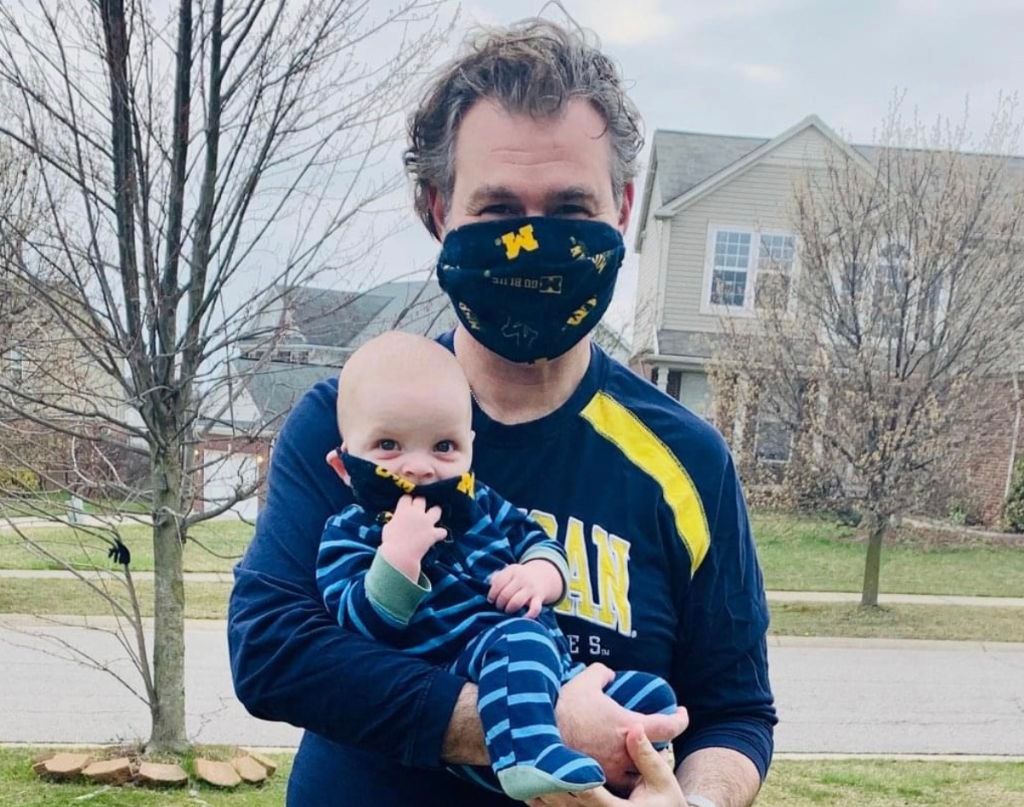
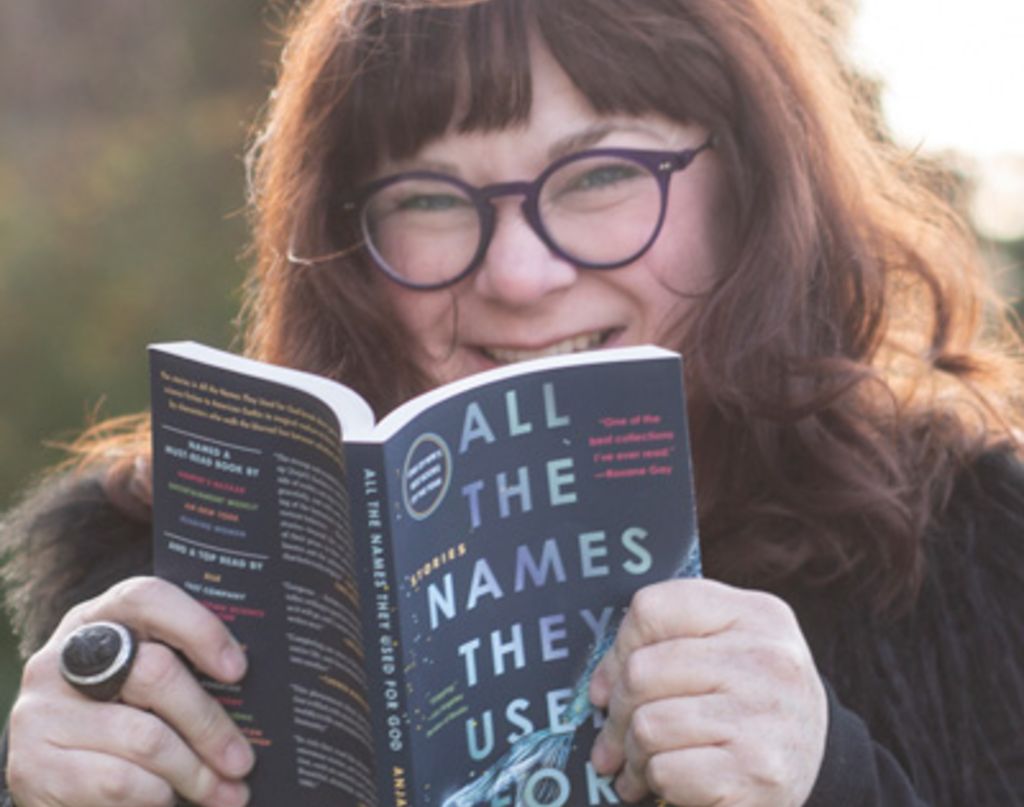
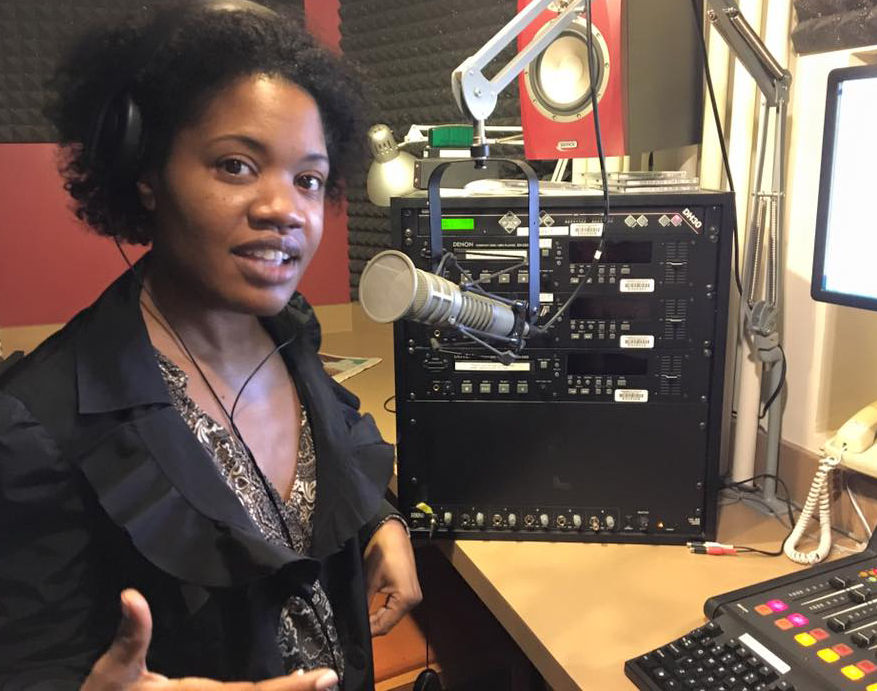
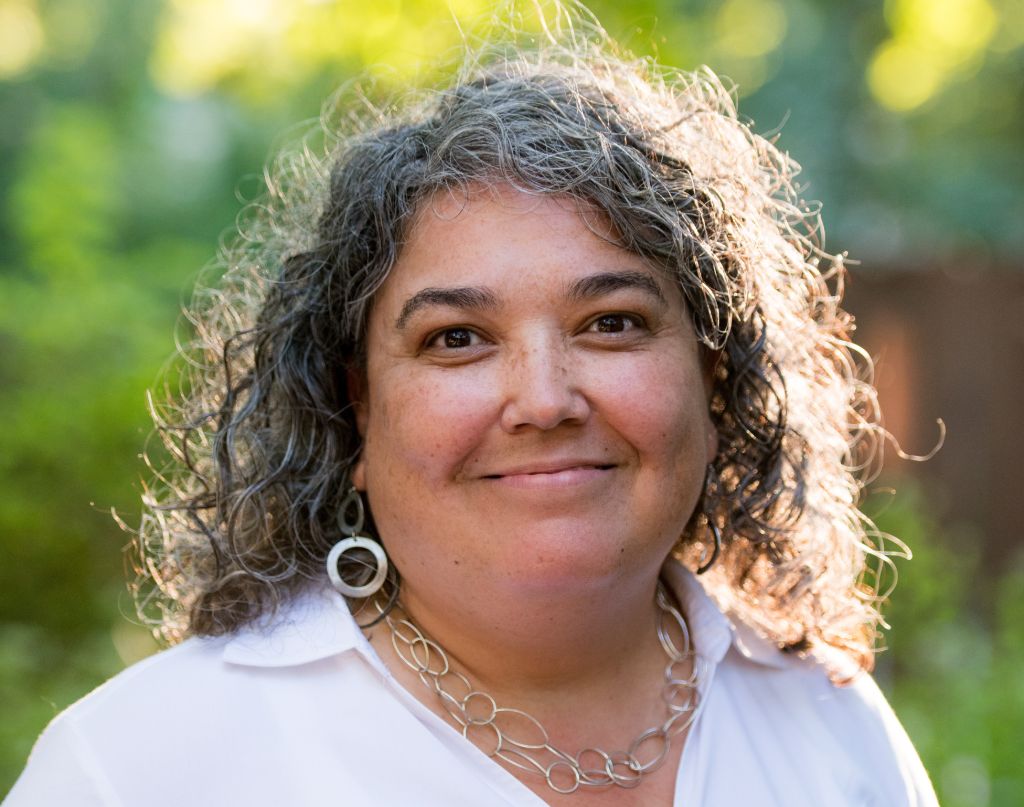
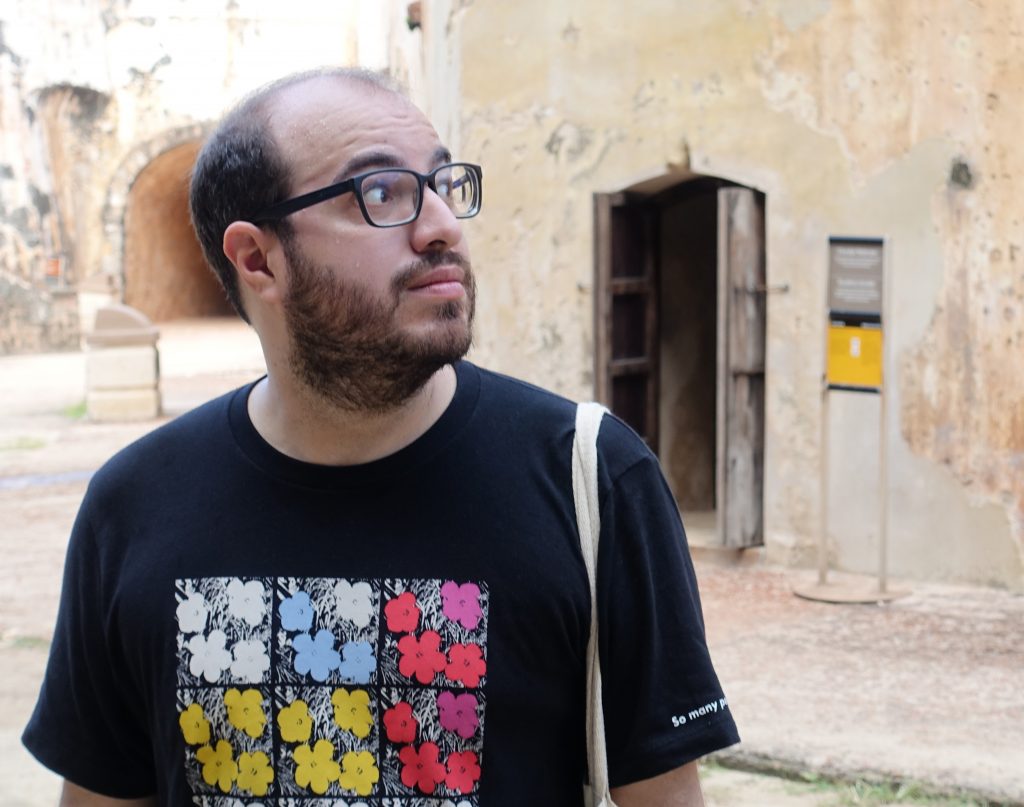
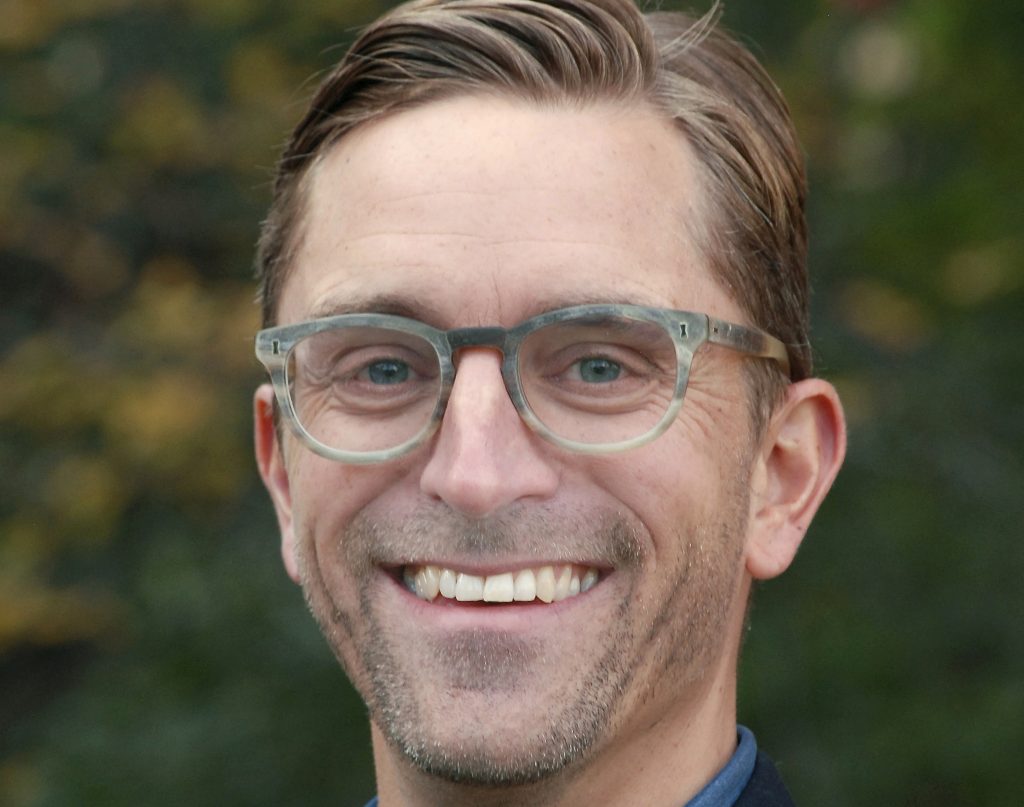
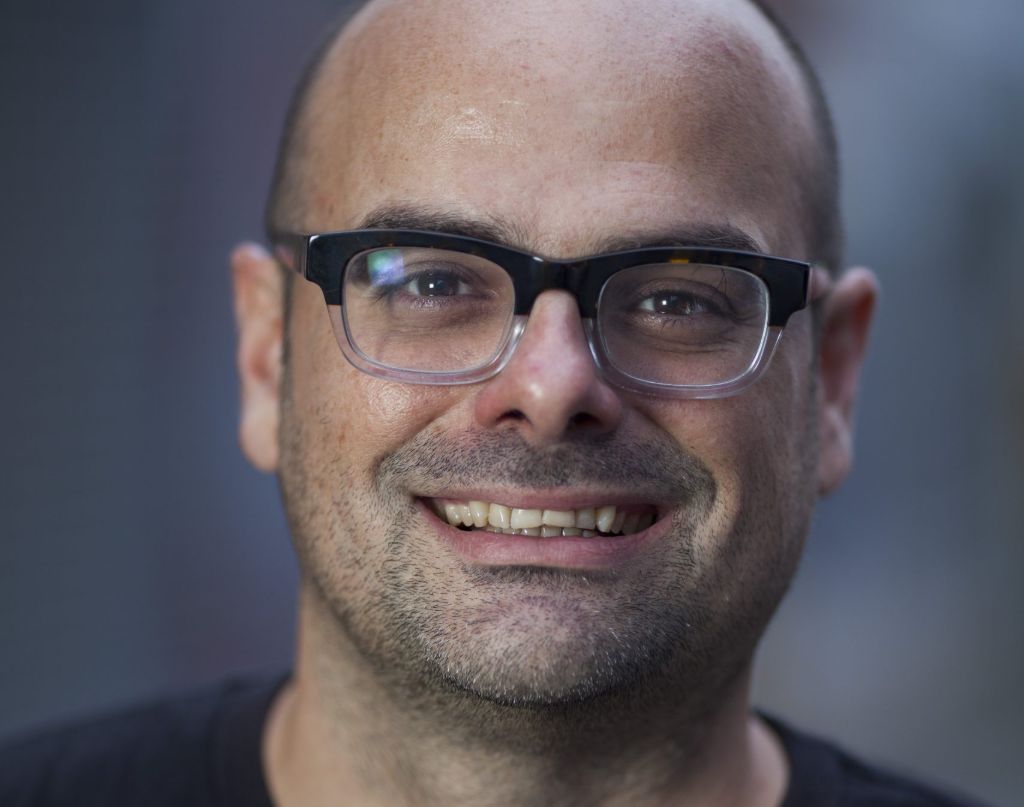
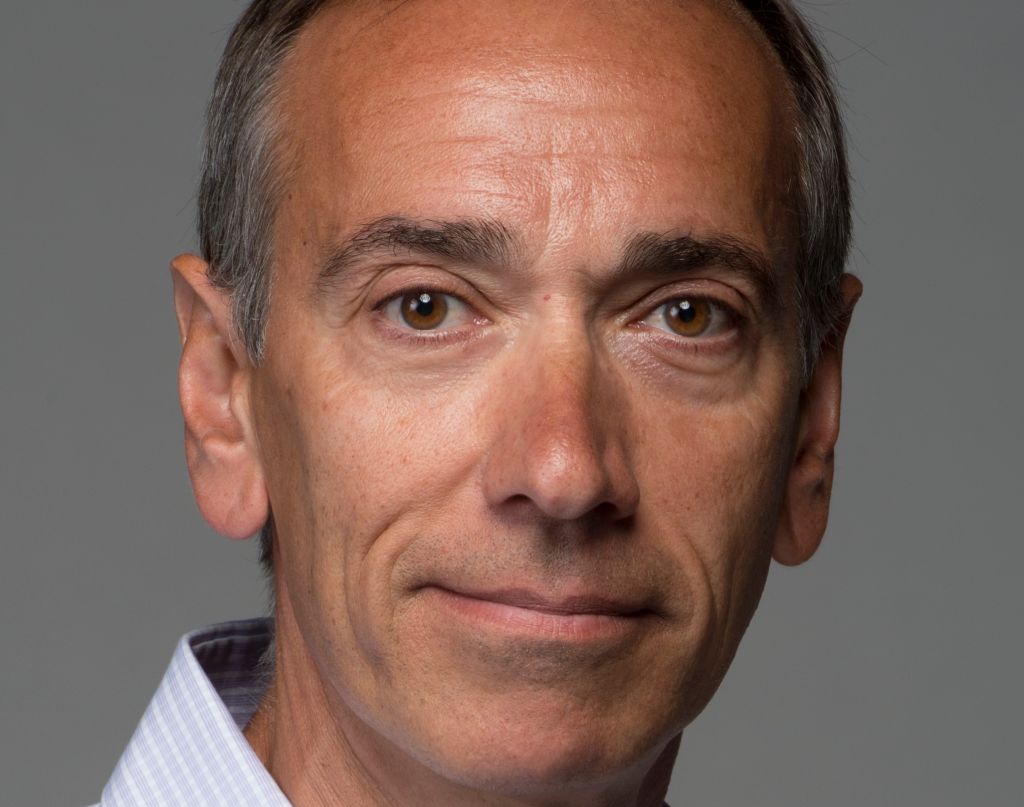
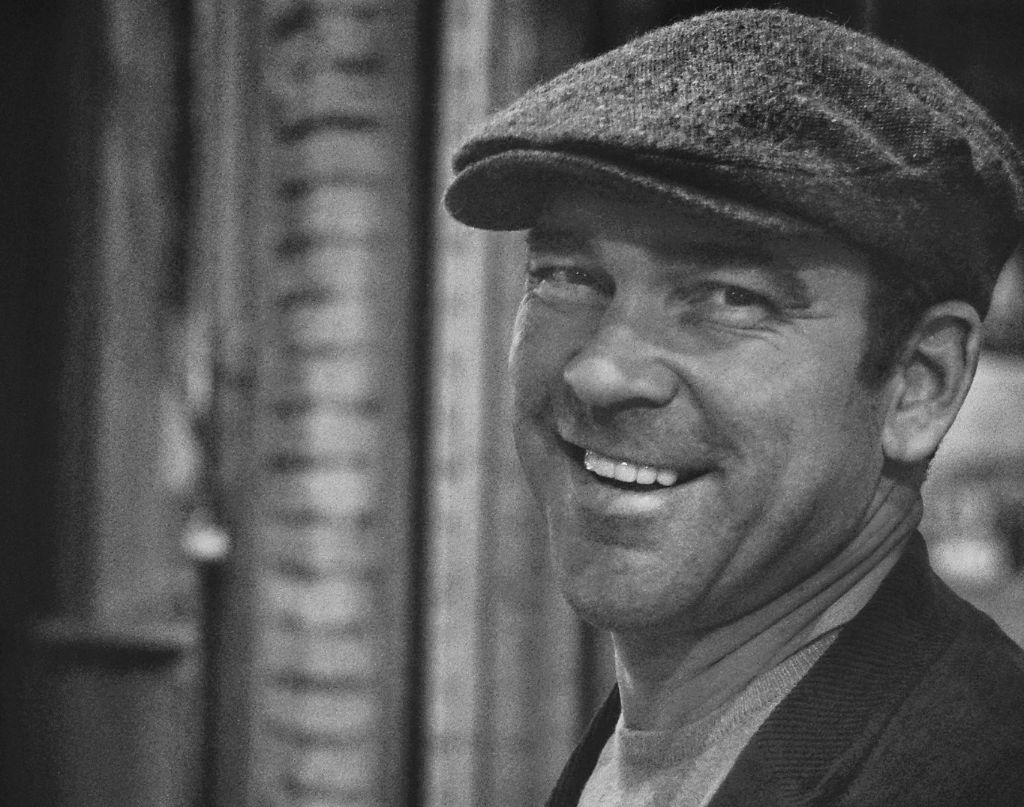
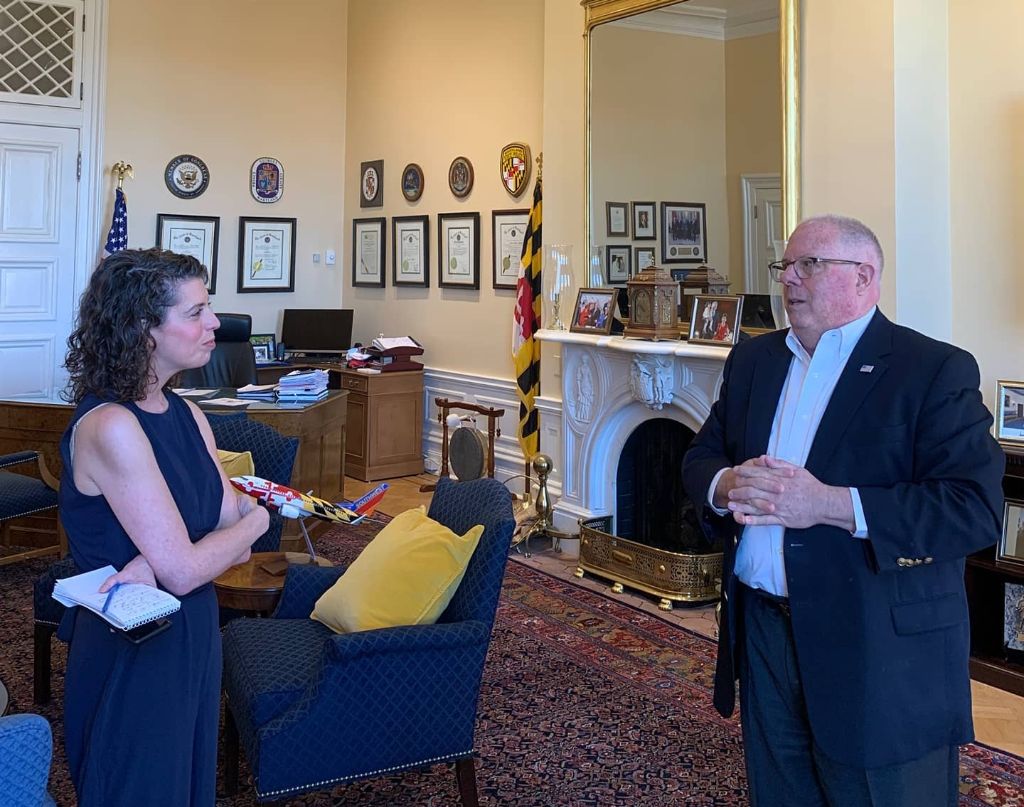
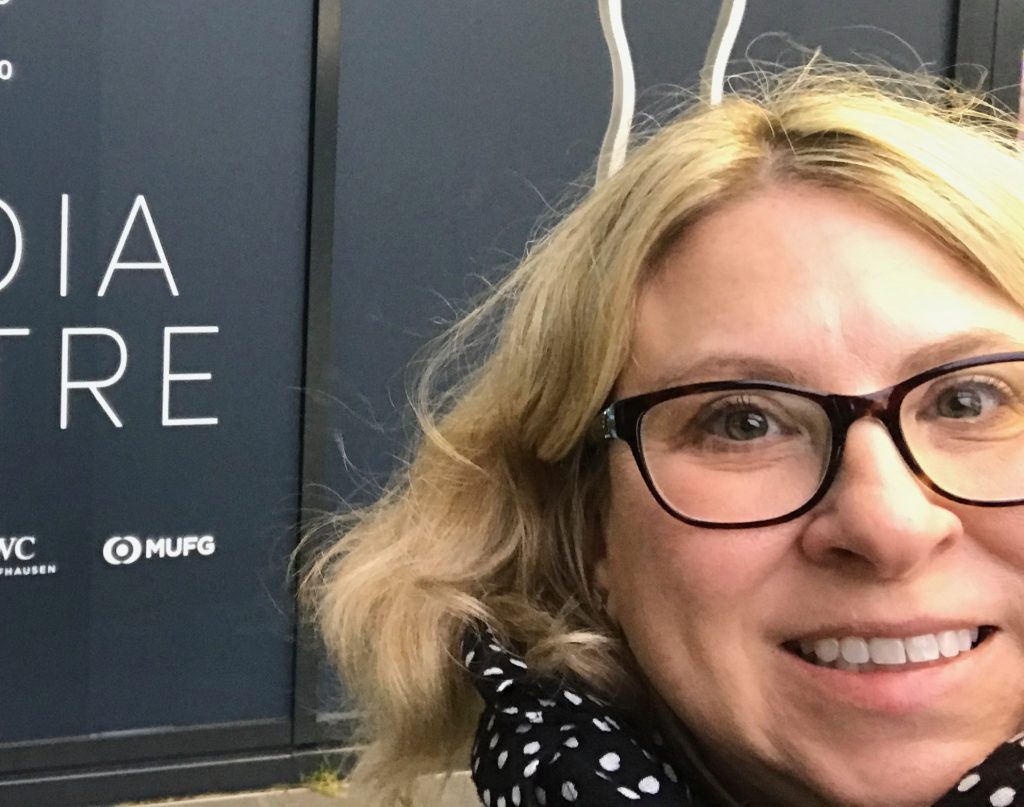
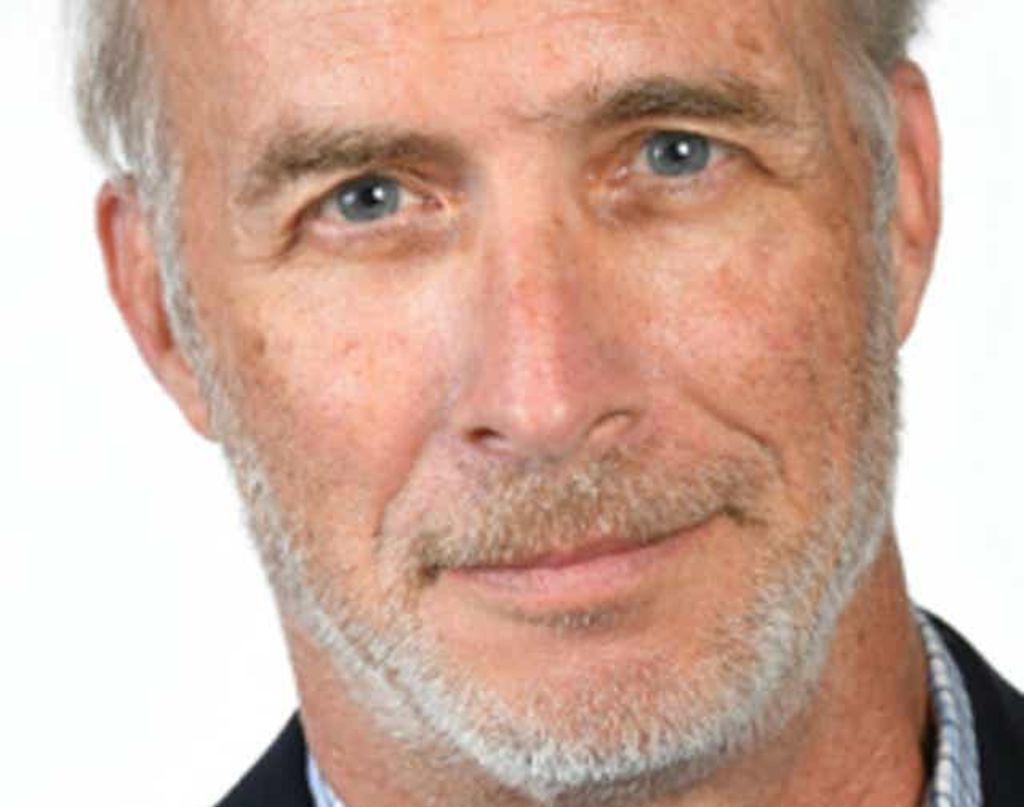
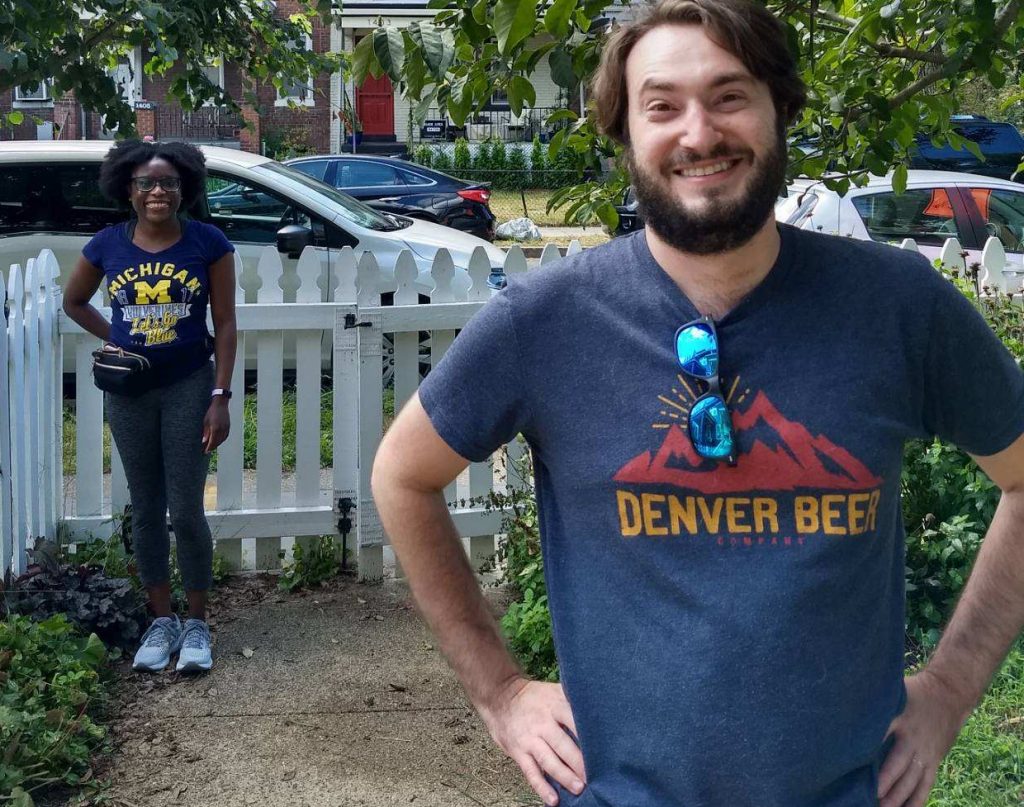
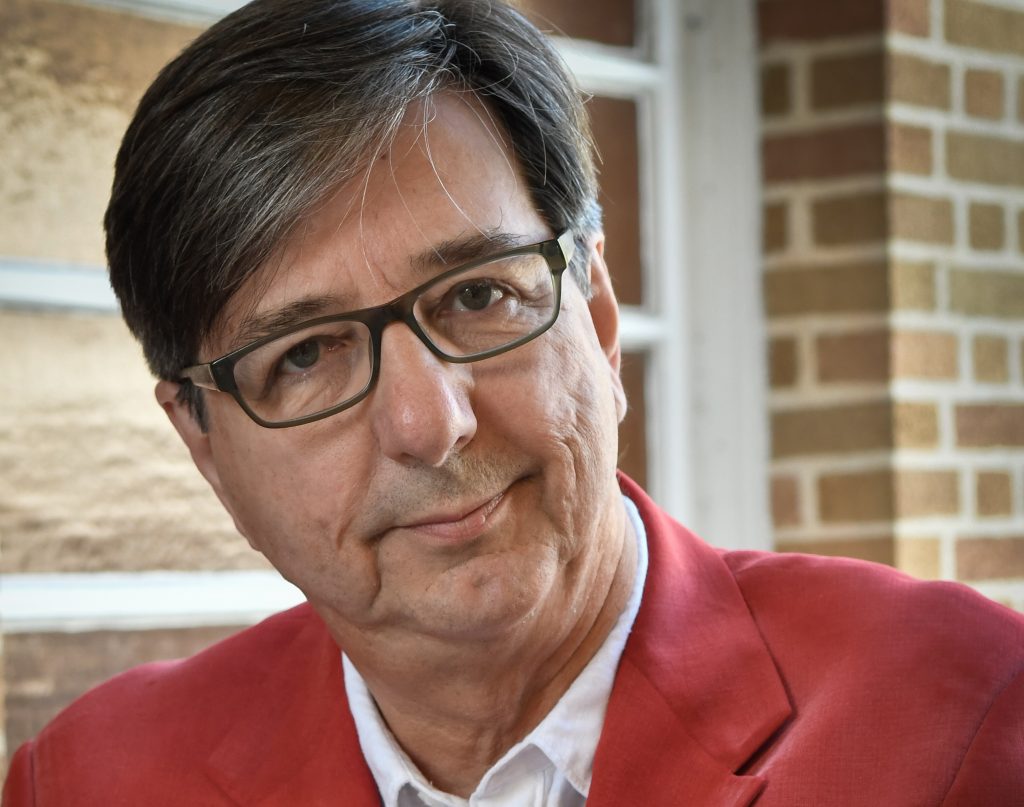
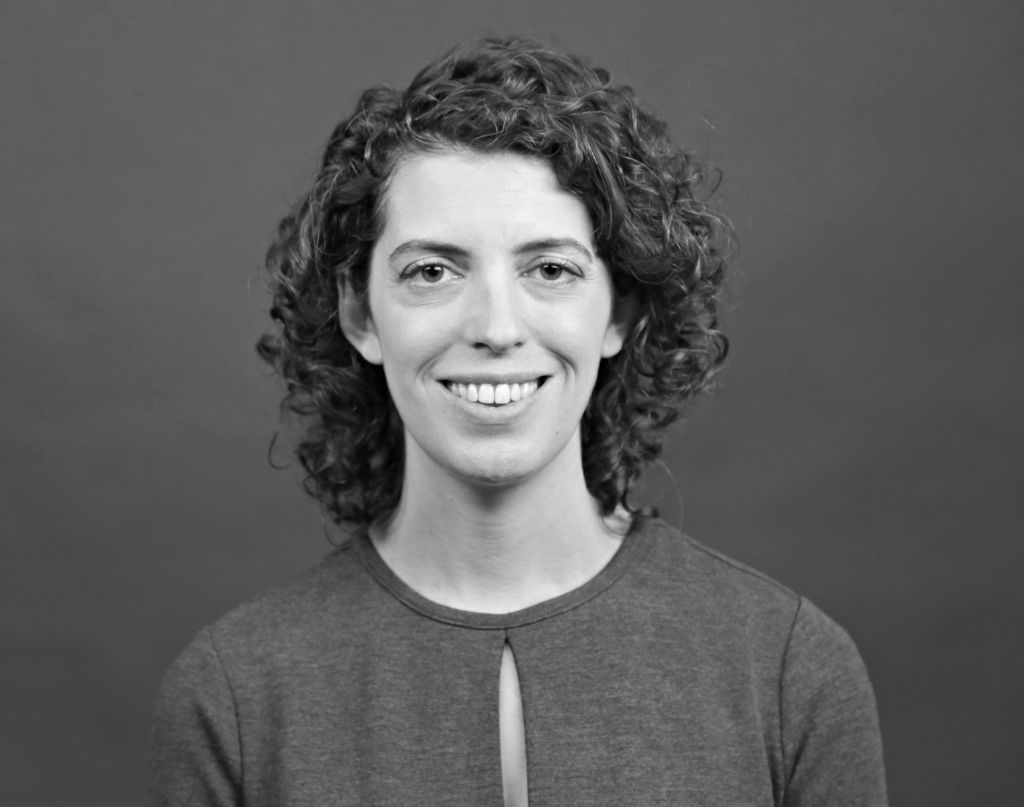
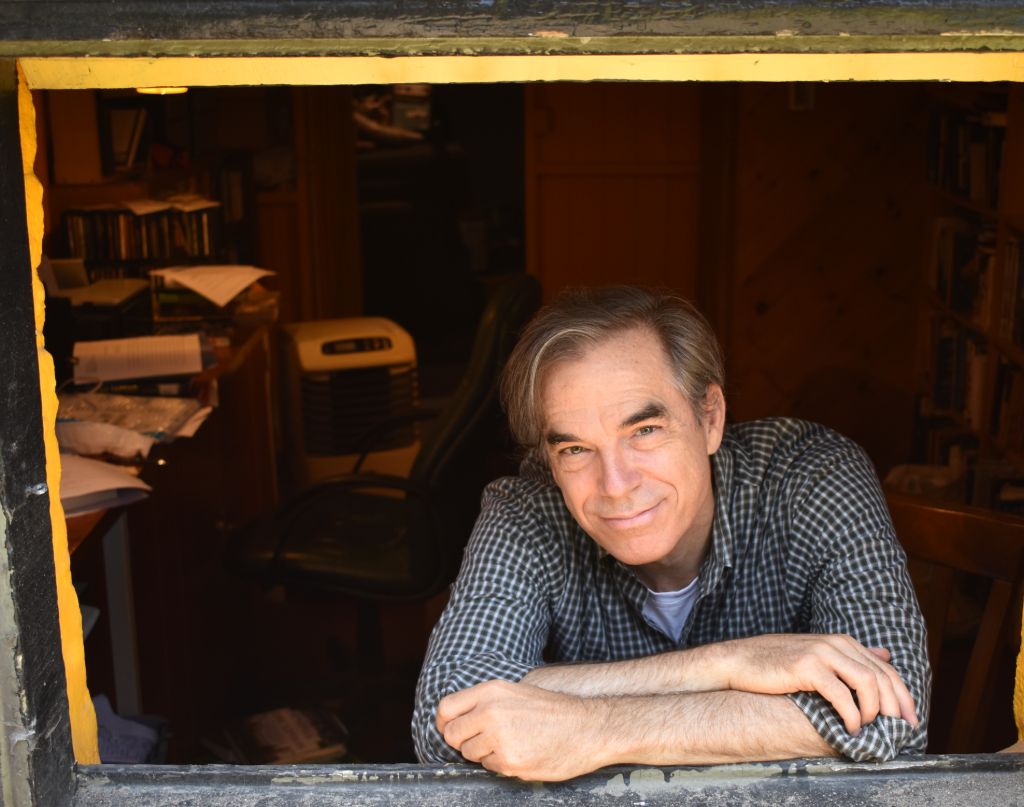
2021 Livingston Award winners (counter-clockwise from top left) Joshua Sharpe of The Atlanta Journal-Constitution, Hannah Dreier of The Washington Post, and Chao Deng of The Wall Street Journal and 2021 Clurman Award recipient Susan Chira, editor-in-chief of The Marshall Project.
Today the Livingston Awards honor stories that represent the best in local, national and international reporting by journalists under age 35. The winning stories highlight an investigation proving the innocence of a man serving two life sentences for murder, the deadly consequences of a teenage asylum-seeker in the flawed U.S. immigration system, and early Covid reporting from Wuhan, China. The $10,000 prizes are for work released in 2020.
The Livingston Awards also honored Susan Chira, editor-in-chief of The Marshall Project with the Richard M. Clurman Award for mentoring. The $5,000 prize is given each year to an experienced journalist who has played a pivotal role in guiding and nurturing the careers of young reporters. The prize is named for the late Richard M. Clurman, former chief of correspondents for Time-Life News Service and architect of the Livingston Awards.
Livingston Awards national judges Anna Quindlen, author, Matt Murray of The Wall Street Journal, Raney Aronson-Rath of FRONTLINE and Lydia Polgreen of Gimlet introduced the winners at an online ceremony, hosted former Livingston Award national judge Christiane Amanpour of CNN and PBS.
“We are always moved by the work of our Livingston Award entrants, finalists and winners. But the work published in 2020 is especially important and inspiring. Under incredibly difficult reporting circumstances, these tenacious journalists doggedly pursued work that pushed criminal justice, immigration and global public health systems – toward truth, transparency and greater accountability,” said Livingston Awards Director Lynette Clemetson. “We are proud to honor this year’s winners and we look forward to extending the reach of their work and following their promising careers.”
Celebrating its 40th year, the awards bolster the work of young reporters, create the next generation of journalism leaders and mentors, and advance civic engagement around powerful storytelling. The sponsors include the University of Michigan, Knight Foundation, the Indian Trail Charitable Foundation, the Mollie Parnis Livingston Foundation, Christiane Amanpour, the Fred and Judy Wilpon Foundation, and Dr. Gil Omenn and Martha Darling.
The 2021 winners for work released in 2020 are:
Local Reporting
Joshua Sharpe, 33, of The Atlanta Journal-Constitution for “The Imperfect Alibi,” an exhaustive re-examination of a 35-year old double murder mystery that debunked the alibi of a long-overlooked suspect and proved the innocence of a man wrongly imprisoned for 20 years.
Only very rarely does one of our stories – one of us – change the course of human events. For more than two decades, a man said that he wasn’t the person who murdered a deacon and his wife, both pillars of the local black community in Spring Bluff, Georgia. Joshua Sharpe asked the right questions, refusing easy answers and pretty much proved that man was telling the truth and was innocent. And that another man was guilty of those crimes and had gotten over for so many years with an alibi so thin that you could read a newspaper through it. – Anna Quindlen
National Reporting
Hannah Dreier, 33, of The Washington Post for “Trust and Consequences,” a portrait of Kevin Euceda, a teenage asylum-seeker fleeing Honduras, who was held in U.S. custody and required to see a therapist only to have notes from those confidential sessions turned over to ICE and used against him in court hearings.
Hannah Dreier’s series does what the best reporting can do. It leaves an indelible impression by making abstract policy and institutional decisions, human and concrete, and shows the effect they can have on real lives. Whatever one’s views on immigration, no one who reads these stories can fail to be moved outraged and informed by them. – Matt Murray
International Reporting
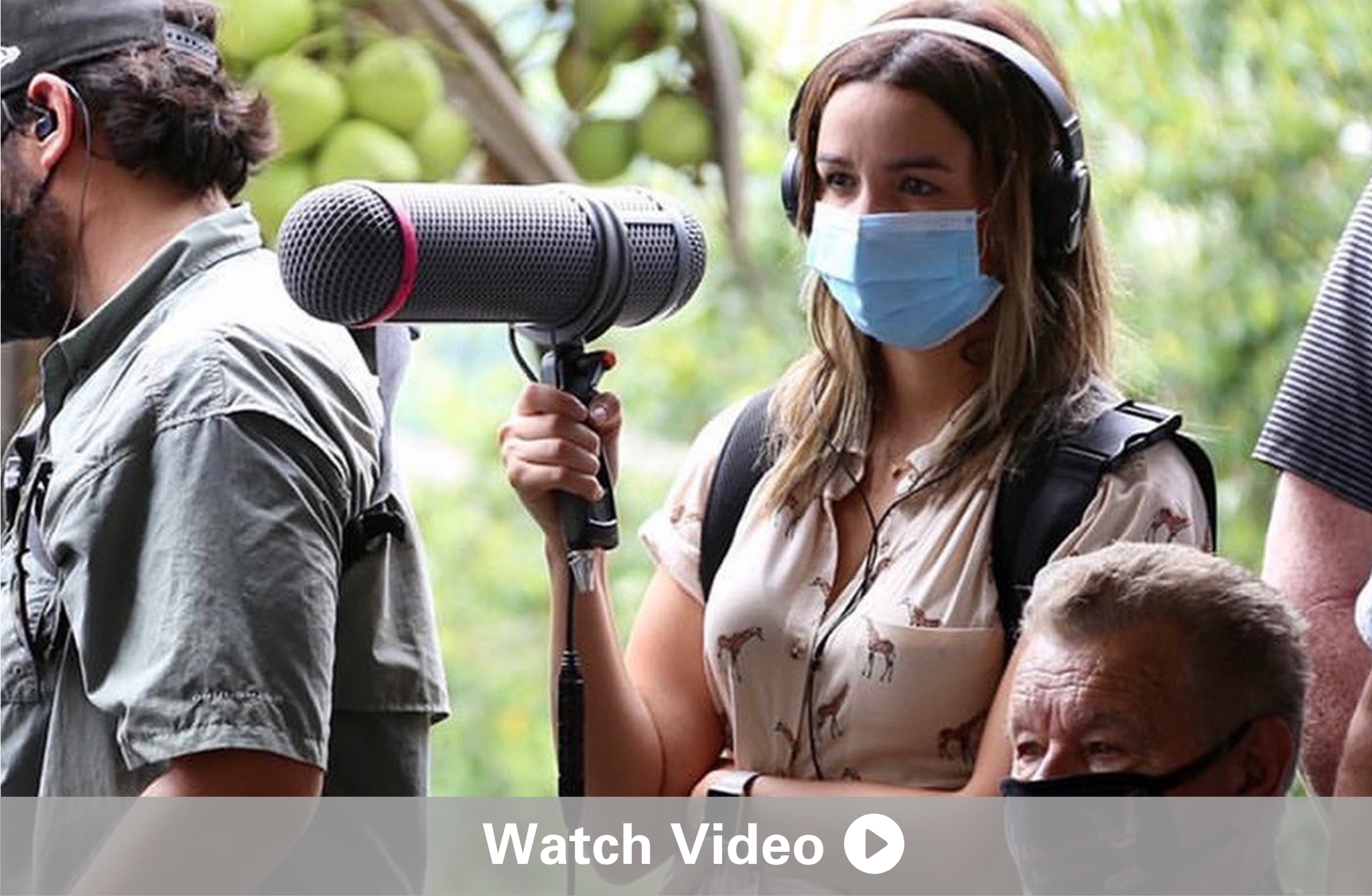
Chao Deng, 32, of The Wall Street Journal for “On the Front Lines in Wuhan,” a remarkable series of reports which, despite the Chinese government’s attempts to silence her, tells the complex and rapidly evolving story on the ground at the epicenter of the coronavirus pandemic in the early stages of the crisis.
The gathering of anonymous accounts from government officials, paired so eloquently with family stories of Chinese citizens, dealing with the then mysterious outbreak. Chao Deng’s reporting amplified the voices of the citizens of Wuhan. It was, and is, vital and crucially important journalism. – Raney Aronson-Rath
Mentoring Award
Susan Chira was honored with the Richard M. Clurman Award for her newsroom commitment to counseling, nurturing and inspiring young journalists. Chira is the editor-in-chief of The Marshall Project and former deputy executive editor of The New York Times. In a video tribute introduced by Lydia Polgreen, reporters from The New York Times and The Marshall Project spoke about Chira’s influence on their careers.
Susan inspired me to follow in her footsteps and become a leader, a mentor, a coach and an editor. Looking back now I know that the most important work of my life is not the swashbuckling exploits that I enjoyed as a young foreign correspondent. Susan inspired and championed that work for sure. But more importantly, she inspired me to emulate her leadership and to be a Susan Chira for everyone who wasn’t lucky enough to work with the real Susan Chira. – Lydia Polgreen
In addition to Quindlen, Murray, Aronson-Rath and Polgreen, the Livingston national judging panel includes; Ken Auletta of The New Yorker, Dean Baquet of The New York Times; John Harris, co-founder of Politico, Clarence Page of the Chicago Tribune; María Elena Salinas, CBS News contributor; Bret Stephens of The New York Times; and Kara Swisher of The New York Times and Vox Media.
The Livingston Awards for Young Journalists are the most prestigious honor for professional journalists under the age of 35 and are the largest all-media, general reporting prizes in American journalism. Entries from print, online, visual and audio storytelling are judged against one another, as technology blurs distinctions between traditional platforms. The $10,000 prizes are awarded annually for local, national and international reporting. The Livingston Awards are a program of Wallace House at the University of Michigan, home to the Knight-Wallace Fellowships for Journalists and the Wallace House Presents event series.
Wallace House and the University of Michigan announced today the 2021 Livingston Awards finalists in local, national and international reporting. The awards support young journalists and honor the best reporting and storytelling by journalists under the age of 35 across all forms of journalism. The 50 finalist selections were chosen from more than 500 entries for work released in 2020.
This year’s Livingston Award winners will be announced at a virtual ceremony on June 10, 2021. Hosted by Christiane Amanpour, former Livingston Award winner and judge, the event is open to everyone. Information and registration can be found here.
“We are proud and honored to acknowledge and showcase the reporting of this year’s Livingston Award finalists, who produced exceptional works of journalism despite the numerous intersecting challenges facing the nation today,” said Wallace House Director Lynette Clemetson. “That we received more than 500 strong entries this year is testament to the conviction and dedication of young journalists to pursue stories that need to be told, especially in the most difficult times.”
Celebrating its 40th year, the awards bolster the work of young reporters, create the next generation of journalism leaders and mentors, and advance civic engagement around powerful storytelling. The sponsors include the University of Michigan, Knight Foundation, the Indian Trail Charitable Foundation, the Mollie Parnis Livingston Foundation, Christiane Amanpour, the Fred and Judy Wilpon Foundation, and Dr. Gil Omenn and Martha Darling.
The Livingston Awards regional judges read all qualifying entries to select the finalists in local, national and international reporting. The regional judging panel includes Molly Ball, national political correspondent, Time; Stella Chávez, immigration and demographics reporter, KERA Public Radio (Dallas); Chris Davis, executive editor and Vice-President of Investigative Journalism, Gannett; David Greene, former host, “Morning Edition,” NPR; Stephen Henderson, host, “Detroit Today,” WDET; Shirley Leung, columnist and associate editor, The Boston Globe; and Amna Nawaz, senior national correspondent, PBS “NewsHour.”
The Livingston Awards national judges review all finalist entries and select the winners. The national judges are Raney Aronson-Rath, executive producer, “Frontline,”; Ken Auletta, author and media and communications writer, The New Yorker; Dean Baquet, executive editor, The New York Times; John Harris, co-founder, Politico; Matt Murray, editor in chief, The Wall Street Journal; Clarence Page, syndicated columnist; Lydia Polgreen, head of content, Gimlet; Anna Quindlen, author; María Elena Salinas, contributor, CBS News; Bret Stephens, op-ed columnist, The New York Times; and Kara Swisher, executive producer, Code Conference and host of the podcasts “Sway” and “Pivot.”
We present the 2021 Livingston Awards finalists and invite you to review their work here.
Local Reporting
Haley BeMiller, Green Bay Press-Gazette
Lauren Caruba, San Antonio Express-News
Lakeidra Chavis, The Trace in partnership with The Chicago Sun-Times
Ann Choi, Rachel Holiday Smith and Will Welch, The City (NY, NY)
Jessica Contrera, The Washington Post
Courtney Crowder, The Des Moines Register
Andrew Ford, Asbury Park Press in partnership with ProPublica
Eileen Grench, The City (NY, NY)
Samantha Hogan and Agnel Philip, The Maine Monitor and ProPublica with support from Report for America
Lizzie Johnson, San Francisco Chronicle
Josh Kaplan, DCist in partnership with Spotlight DC
Soumya Karlamangla, Los Angeles Times
Ana Ley, The Virginian-Pilot
Nichole Manna, Fort Worth Star-Telegram
Jessica Miller, The Salt Lake Tribune
Thad Moore, The Post and Courier (Charleston, S.C.)
Bridget Read, New York Magazine
Eric Sandy, Cleveland Scene
Joshua Sharpe, The Atlanta Journal-Constitution
National Reporting
Kenzi Abou-Sabe, Adiel Kaplan and Kit Ramgopal, NBC News Investigative Unit
Hamed Aleaziz, BuzzFeed News
Bethany Barnes, Tampa Bay Times
Eric Boodman, STAT
Sydney Brownstone, Scott Greenstone and Will James, KNKX Public Radio and The Seattle Times
Elizabeth Bruenig, The New York Times
Chabeli Carrazana, The 19th
Elizabeth Dias, The New York Times
Hannah Dreier, The Washington Post
Blake Ellis and Melanie Hicken, CNN
Katie Engelhart, The California Sunday Magazine
Alissa Escarce, Max Siegelbaum and Mazin Sidahmed, Documented, Latino USA and Type Investigations
Eli Hager, The Marshall Project in partnership with The Atlantic
Ellen Huet and Shawn Wen, Bloomberg News
Jamiles Lartey, The Marshall Project
Daniel Lombroso, The Atlantic
Alysia Santo and Elaine Sheldon, The Marshall Project in partnership with FRONTLINE and America ReFramed on WORLD Channel
Emily Shugerman, The Daily Beast
Roman Stubbs, The Washington Post
Sarah Zhang, The Atlantic
International Reporting
Josh Baker, FRONTLINE
Luisa Conlon, Gabriela Dematteis and Paola Ramos, Vice News
Maddy Crowell, Virginia Quarterly Review
Chao Deng, The Wall Street Journal
Caitlin Dickerson, The New York Times
Emily Feng, NPR
Ruby Gaviola, Lauryn Schroeder and Kate Morrissey, San Diego Union-Tribune
Claire Harbage and Kat Lonsdorf, NPR in partnership with the John Alexander Project
Isayen Herrera and Julie Turkewitz, The New York Times
In 2012 Mexican journalist Regina Martinez was murdered in her home. She had been reporting on the links between drug cartels, public officials and thousands of individuals who had mysteriously disappeared. Eight years later, her investigations were published simultaneously around the world as The Cartel Project.
Forbidden Stories, a nonprofit newsroom created by Laurent Richard during his year as a Knight- Wallace Fellow at the University of Michigan, organized the project, secretly bringing together an international network of journalists dedicated to continuing the work of Martinez. Sixty reporters from 18 countries, followed her leads to expose a global network of Mexican drug cartels and their political connections around the world.
For a behind-the-scenes look at the global investigation, join the journalists who made it happen. Laurent Richard of Forbidden Stories, Dana Priest of The Washington Post and Jorge Carrasco, editor of Mexican news magazine Proceso, and a longtime friend of Regina Martinez, will share how collaborative journalism can keep alive the work of reporters who are silenced by threats, censorship or death.
The Eisendrath Symposium on International Reporting honors Charles R. Eisendrath, former director of Wallace House, and his lifelong commitment to international journalism.
https://vimeo.com/529004920
More about The Cartel Project
About the speakers Jorge Carrasco is a director of Proceso, an influential independent weekly in Mexico. Before joining Proceso 15 years ago, he was a reporter for El Economista and head of the UN Secretary General’s press office for Mexico, Cuba and the Dominican Republic.
Dana Priest has been a national security and investigative reporter for The Washington Post for more than 30 years. She is the recipient of two Pulitzer Prizes, an Emmy and two George Polk Awards, among other prizes. She is the author of two best-selling books and the Knight Chair in Public Affairs Journalism at the University of Maryland.
Laurent Richard is a French award-winning documentary filmmaker, producer and founder of Forbidden Stories, a network of investigative journalists whose mission is to continue and publish the work of other journalists facing threats, prison, or murder. Richard was a 2017 Knight-Wallace Fellow at the University of Michigan, where he developed Forbidden Stories.
About the moderator Lynette Clemetson is the Charles R. Eisendrath Director of Wallace House, home of the Knight-Wallace Fellowships for Journalists and the Livingston Awards for Young Journalists at the University of Michigan.
About the translator Ana Avila is an investigative journalist from Mexico, a 2020 Knight-Wallace Fellow and the current Marsh Visiting Professor of Journalism at the University of Michigan.
Knight Foundation is a co-sponsor of this event.
Knight Foundation is a national foundation with strong local roots. We invest in journalism, in the arts, and in the success of cities where brothers John S. and James L. Knight once published newspapers. Our goal is to foster informed and engaged communities, which we believe are essential for a healthy democracy. For more, visit knightfoundation.org.
Forging new paths to produce in-depth journalism and finding a community of fellows along the way
Last year in response to a public health crisis, newsroom upheavals, international travel restrictions and uncertainty around on-campus instruction, Wallace House adapted our fellowship model to address the remote needs of Covid-19, awarding eleven Reporting Fellowships for journalists to report on major issues in a moment of great challenge and change.
It is a first for our program, which since the 1970s has been built around bringing journalists from around the world together for a residential experience in Ann Arbor. This year we work weekly with our 47th class of Fellows from their workspaces in Colorado, Texas, Nebraska, Wisconsin, Michigan, Ohio, Maryland, New York and Puerto Rico.
They gather with us remotely for seminars and workshops with university faculty and journalism change-makers. In spite of the confines of Zoom calls and virtual webinars, they’ve developed a supportive fellowship community. Beyond the scheduled activities, Fellows gather regularly in small groups or one-on-one, sharing tips, talking story structure and inspiring one another. Even remotely, the connection between our Fellows is palpable.
“The thing that surprised me most about the program is the interaction with other fellows, even in the remote model. It has been encouraging and inspiring.” Mya Frazier, Columbus, Ohio
Each Reporting Fellow is focusing on a project that requires several months to develop. For some, this working fellowship provides a chance to step back from fast turnaround work. For others, it offers a chance to develop something for a new media organization. And some are using the experience to experiment with new styles of storytelling or a new topic that they’ve wanted to explore.
“For me, the opportunity to spend nine months on a project is really unprecedented to be completely honest. It’s very rare to have that amount of time to really delve into one topic as a journalist.” – Alissa Figueroa, Baltimore, Maryland
While most of our fellows are working on long-form projects that will appear later in the year, some work has already been published as a result of the Reporting Fellowship.
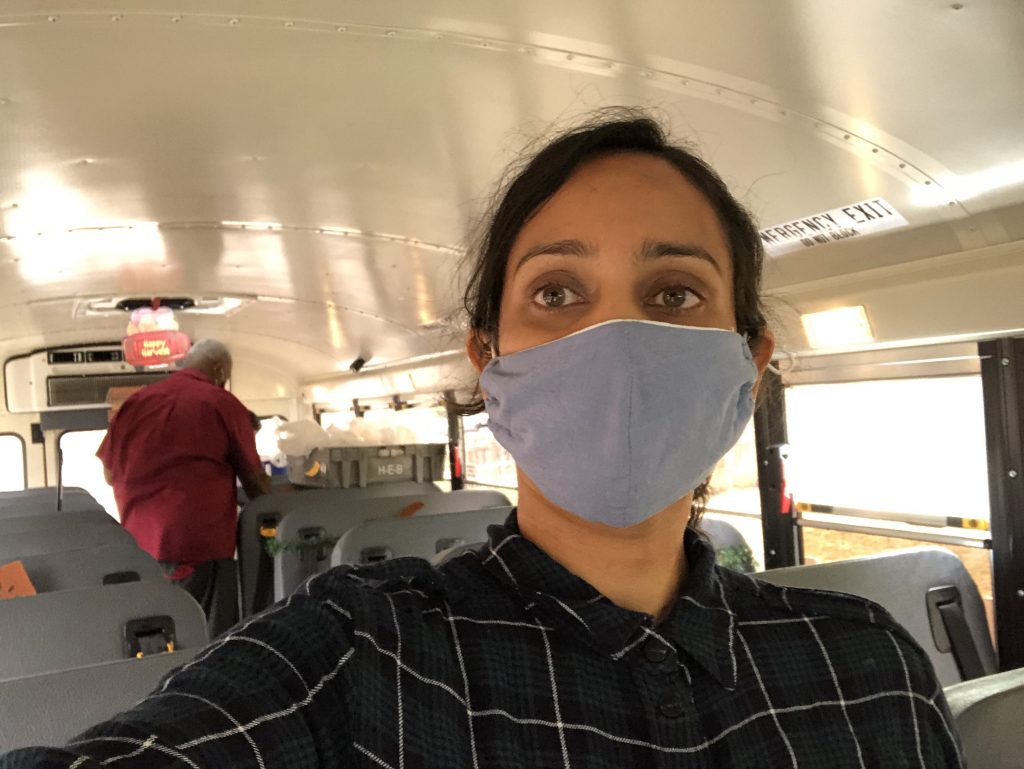
With schools across the nation turning to distance-learning methods, Reporting Fellow Sindya Bhanoo reports on the large swaths of students being left behind. Sindya partnered with the non-profit news organization, Mission Local, to produce “Report Card,” her first illustrated audio piece. Using multimedia storytelling and poignant illustrations, the work is a touching look at the challenges faced by children during the continuing public health crisis. She is also developing a series for Texas Monthly. The first piece “You See So Much in Our Field You Wouldn’t Believe” chronicled San Antonio bus-drivers-turned-relief-workers delivering meals to the hungry in their communities.
Sindya Bhanoo rides along with bus driver, Bobby Richardson, as he delivers meals to families in need.
This year Reporting Fellow Ted Genoways is investigating how Covid-19 exposes threats to the nation’s food security and the risks posed to the safety of front-line food industry workers as well as consumers. In addition to developing his long-term project, Ted reported for The Washington Post feature “24 hours in the life of American workers.” From Nebraska, Ted profiled Eric Reeder, president of a food workers union, to tell of the hardships and barriers essential workers experience. With no end to the pandemic insight, these workers are faced with the ultimatum to continue to work in potentially unsafe conditions or risk losing the job.
The Reporting Fellowship has also benefited newsrooms by allowing them to partner with staffers or freelancers to pursue important editorial priorities. STAT News is partnering with Nicholas St. Fleur to create a new beat on the intersection of race, medicine and the life sciences. To date, Nick has published stories on the vaccine rollout and how Covid-19 disproportionately affects minority communities. In his role for STAT, Nick led a discussion with experts in a virtual event addressing how to prevent a black market for the vaccines.
Nicholas St. Fleur joined STAT News to cover the intersection of race and medicine and the life sciences.
The Knight-Wallace Reporting Fellowship is giving these journalists the flexibility and much-needed support to flourish within their space, produce journalism examining pressing issues, and be a part of the fellowship community that is a cherished hallmark of every Knight-Wallace class. As our Reporting Fellows continue on their fellowship journey we will be sure to share it with you.
We are repeating the remote fellowship for the upcoming academic year. Applications for the 2021-2022 Knight-Wallace Reporting Fellowship are now open. For more information on how to apply, please visit the apply page.
Raney Aronson-Rath, Matt Murray, Amna Nawaz and Lydia Polgreen appointed to Livingston Judging Panels
Wallace House welcomes the addition of Raney Aronson-Rath, Matt Murray, Amna Nawaz and Lydia Polgreen to the Livingston Awards judging panels. They will join our long-serving regional and national judges in identifying the best reporting and storytelling by journalists under the age of 35.
Aronson-Rath, executive producer of the PBS investigative documentary program “Frontline,” and former Livingston Awards regional judge will move to the national judging panel. Murray, editor-in-chief of The Wall Street Journal, and Polgreen, head of programming for Gimlet, will also join the national judging panel. This esteemed group of judges includes Ken Auletta, media and communications writer, The New Yorker; Dean Baquet, executive editor, The New York Times; John Harris, co-founder, Politico; Clarence Page, syndicated columnist; Anna Quindlen, author; María Elena Salinas, contributor, CBS News; Bret Stephens, op-ed columnist, The New York Times and Kara Swisher executive producer, Code Conference and host of the podcasts “Sway” and “Pivot.”
Nawaz, senior national correspondent for PBS “NewsHour” will join the regional judging panel. The group of accomplished journalists includes Molly Ball, senior political reporter, Time; Stella Chavez, education reporter KERA public radio (Dallas); Chris Davis, executive editor and vice-president of investigations, Gannet; David Greene, former host, “Morning Edition,” NPR; Stephen Henderson, host, WDET, public radio Detroit and DPTV, Detroit Public Television and Shirley Leung, columnist and associate editor, The Boston Globe.
“The Livingston Awards highlight excellence across all forms of journalism. Raney, Lydia, Matt and Amna bring exceptional combined experience across visual, audio, print, broadcast, digital, daily and longform investigative journalism,” said Livingston Awards Director, Lynette Clemetson. “Their work with young reporters applying high standards to new storytelling approaches will add valuable insights to our already robust judging ranks.”
Aronson-Rath is the executive producer of “Frontline,” PBS’ flagship investigative journalism series, and is a leading voice on the future of journalism. She oversees the program’s acclaimed investigative reporting on-air and online and directs the series’ editorial vision. Appointed to the position in May 2015, she joined “Frontline” in 2001. Aronson-Rath has been with the Livingston Awards since 2005 serving as a regional judge.
Murray is editor-in-chief of The Wall Street Journal and Dow Jones Newswires, responsible for all global newsgathering and editorial operations. He previously served as executive editor since 2017, and had been deputy editor-in-chief since 2013. He joined Dow Jones & Company in 1994 as a reporter for the Pittsburgh bureau.
Polgreen is head of content at Gimlet, a podcast studio at Spotify. Prior to that, she was editor in chief of HuffPost following a 15-year career at The New York Times that included roles as associate masthead editor, deputy international editor, South Africa bureau chief, correspondent for the New Delhi bureau and chief of the West Africa bureau. Polgreen received the 2009 Livingston Award for international reporting for her series, “The Spoils.”
Nawaz serves as senior national correspondent and primary substitute anchor for PBS “NewsHour.” Previously she was an anchor and correspondent at ABC News and served as a foreign correspondent at NBC News, reporting from Pakistan, Afghanistan, Syria, Turkey and the broader region. She is also the founder and former managing editor of NBC’s Asian America platform, built to elevate the voices of America’s fastest-growing population.
“It is especially meaningful that Lydia and Raney assume these new roles as long-standing members of the Livingston community – Lydia as a former winner for international reporting, and Raney as a long-serving regional judge. As their own careers as executives and change-makers in journalism have grown, they have maintained their commitment to the mission of the Livingston Awards, to recognize and lift up the next generation of leaders.”
Now Accepting Entries
The Livingston Awards are now accepting entries for work published in 2020. The entry deadline is February 1, 2021.
About the Livingston Awards
The Livingston Awards for Young Journalists are the most prestigious honor for professional journalists under the age of 35 and are the largest all-media, general reporting prizes in American journalism. Entries from print, online, visual and audio storytelling are judged against one another, as technology blurs distinctions between traditional platforms. The $10,000 prizes are awarded annually for local, national and international reporting. The Livingston Awards are a program of Wallace House at the University of Michigan, home to the Knight-Wallace Fellowships for Journalists and the Wallace House Presents event series.
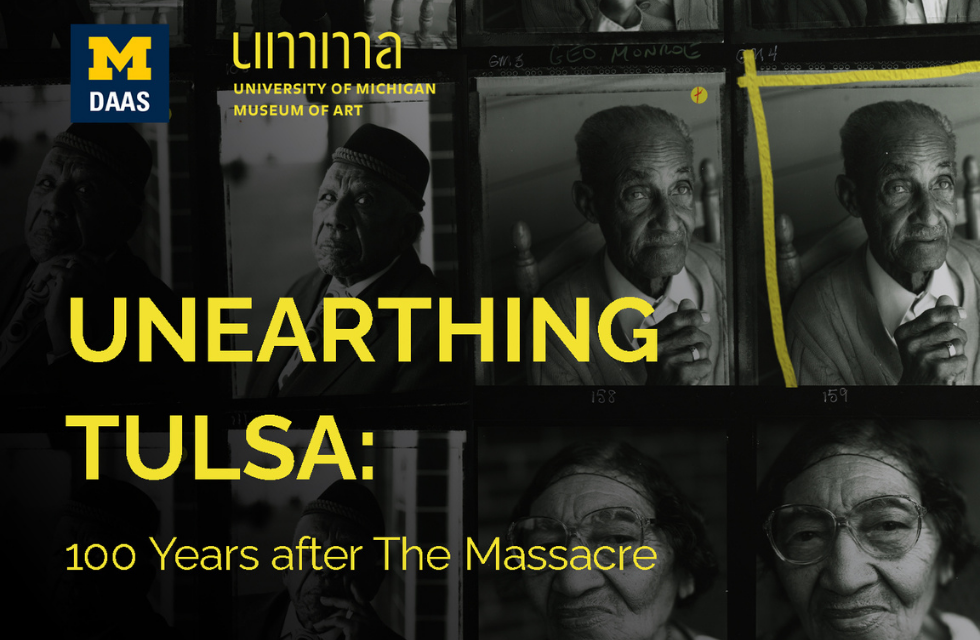
Maybe you’ve heard of the Tulsa Race Massacre. It was one of the most horrific examples of white supremacist terrorism in the history of the United States and knowledge of the event was actively suppressed for over fifty years.
From May 31 to June 1, 1921, the Massacre saw the murder of hundreds of Black residents of the Greenwood neighborhood—a bustling and vibrant community known then as Black Wall Street—and more than one-thousand homes and businesses burned to the ground.
As we approach the 100-year anniversary of the Tulsa Race Massacre, UMMA and Wallace House invite you to revisit a moment in 1999 when the New York Times Magazine published Pulitzer Prize winning journalist Brent Staples‘ article “Unearthing a Riot,” which was the most significant national media coverage of the event at the time. Portraits of survivors made by renowned photojournalist and U-M alumnus Fred Conrad accompanied this important essay.
In this program, Staples and Conrad will be joined by U-M professor, best-selling author, and historian Scott Ellsworth, author of newly published book The Ground Breaking: An American City and Its Search for Justice, who will facilitate a conversation that will expand our understanding of what has been involved in making the history of Tulsa more visible and, by extension, illuminating the ever-present reality of racial terror and the resiliency of Black communities in our country.
This program is presented by UMMA as part of their ongoing commitment to anti-racist action, and organized in collaboration with professor Scott Ellsworth, a longtime Museum partner, and the Department of Afroamerican and African Studies with support from Wallace House.
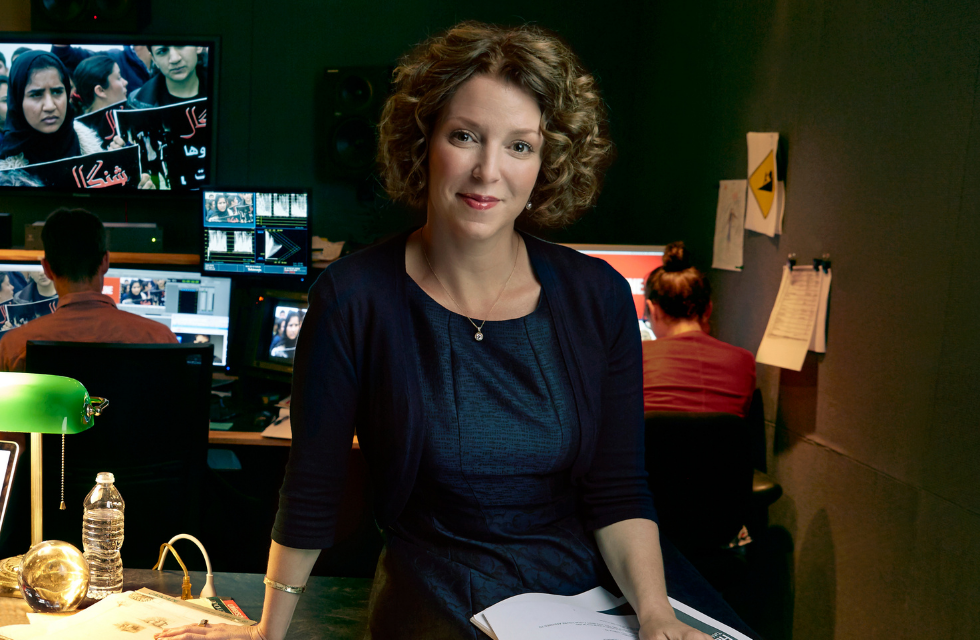
Raney Aronson-Rath is the executive producer of FRONTLINE, PBS’ flagship investigative journalism series, and a leading voice on the future of journalism. Aronson-Rath oversees FRONTLINE’s acclaimed reporting on air and online and directs the series’ editorial vision, executive producing over 20 documentaries each year on critical issues facing the country and world. Under her leadership, FRONTLINE has earned two Oscar nominations, and has won every major award in broadcast journalism, including Peabody Awards, Emmy Awards, an Institutional Peabody Award, and the first Alfred I. duPont-Columbia Gold Baton awarded in a decade. She also serves as a judge for the Livingston Awards for Young Journalists.
Aronson-Rath has led an ongoing charge for transparency in journalism – including throughthe FRONTLINE Transparency Project, an effort to open up the source material behind FRONTLINE’s reporting. She served as the sole public media representative on the Knight Commission on Trust, Media, and Democracy, a blue-ribbon panel that published a landmark report on the causes and consequences of growing distrust in democratic institutions, including the press.
This conversation will be moderated by Lynette Clemetson, Director of Wallace House.
This program is a Penny Stamps Speaker Series Event, brought to you with support from Wallace House, Detroit Public Television and PBS Books
Domestic violent extremism: Threats, policies, and new approaches
Free and open to the public. Join the conversation: #PolicyTalks
In the aftermath of the insurrection at the U.S. Capitol on January 6, 2021, a fierce debate has emerged in the media, academia, and public policy about the threat of domestic violent extremism in the United States and what solutions and new approaches are needed to confront this. Towsley Foundation Policymaker in Residence Javed Ali will host Janet Reitman from the New York Times Magazine and Heidi Beirich, Co-Founder of the Global Project Against Hate and Extremism, for an in-depth conversation on these and related issues. They will explore what key factors led to the insurrection on January 6, what policy gaps were exposed in the run-up to the events, and how different approaches are needed to tackle this threat before it worsens.
This event is a Policy Talks at the Ford School and Harry A and Margaret D Towsley Foundation Lecture Series event, co-sponsored by Wallace House.
An Ounce of Prevention: Confronting Concerns about the COVID-19 Vaccine
With Nicholas St. Fleur, Knight-Wallace Reporting Fellow
Moderated by Lynette Clemetson
Thursday, March 25, 2021
11 a.m. ET
Covid-19 has wreaked havoc on our nation for almost a year. Death tolls are hitting their highest daily peak. The advent of a vaccine presents the promise of a way out of this pandemic. However, concerns over the safety of the vaccine in conjunction with the historical reservations of People of Color regarding medical research and treatment have made for a tepid response to the availability of the vaccine. What are the best options to move forward? How do we address the concerns of those reluctant to take the vaccine? Join panelists Dr. Jessie Marshall, Adjunct Clinical Assistant Professor of Internal Medicine, University of Michigan Medical School, Dr. Najibah Rehman, Medical Director, Detroit Health Department and Nicholas St. Fleur, Knight-Wallace Reporting Fellow, University of Michigan for a Town Hall Meeting as we discuss the concerns and offer solutions.
This conversation will be moderated by Lynette Clemetson, Director of Wallace House.
In 2012 Mexican journalist Regina Martinez was murdered in her home. She had been reporting on the links between drug cartels, public officials and thousands of individuals who had mysteriously disappeared. Eight years later, her investigations were published simultaneously around the world as The Cartel Project.
Forbidden Stories, a nonprofit newsroom created by Laurent Richard during his year as a Knight- Wallace Fellow at the University of Michigan, organized the project, secretly bringing together an international network of journalists dedicated to continuing the work of Martinez. Sixty reporters from 18 countries, followed her leads to expose a global network of Mexican drug cartels and their political connections around the world.
Join journalists Laurent Richard of Forbidden Stories, Dana Priest of The Washington Post and Jorge Carrasco of Proceso for a behind the scenes look at the global investigation and learn how collaborative journalism can keep alive the work of reporters who are silenced by threats, censorship or death.
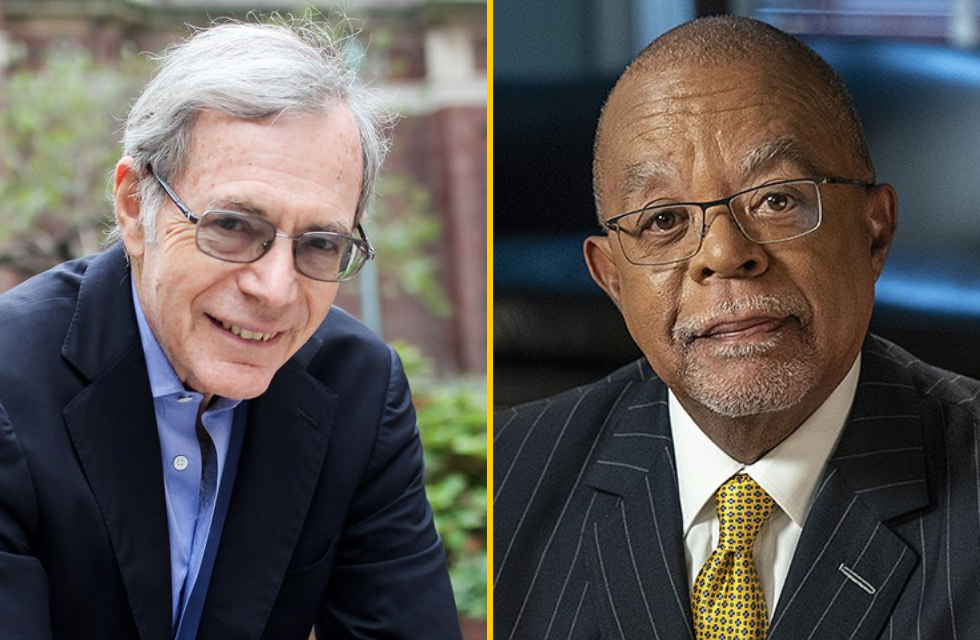
Eric Foner and Henry Louis Gates, Jr.
Henry Louis Gates, Jr. and Eric Foner: In Conversation
Pausing for a moment of post-inaugural reflection, following one of our nation’s most contentious presidential elections and it’s aftermath, this conversation brings together filmmaker, scholar, journalist and cultural critic, Henry Louis Gates, Jr. with prominent historian Eric Foner to contemplate how a divided nation comes together. The two will discuss Reconstruction, the all-too-brief period following the Civil War when the United States made its first effort to become an interracial democracy. The period saw the Constitution rewritten to incorporate the ideal of racial equality, but ended as a result of a violent backlash that erased many of the gains that had been made, with consequences we still confront as a nation. The program will also preview Gates’ most recent project, “The Black Church,” which will premiere on PBS in February.
Henry Louis Gates, Jr. is the Alphonse Fletcher University Professor and Director of the Hutchins Center for African & African American Research at Harvard University. Professor Gates is an author and filmmaker whose work includes “Reconstruction: America after the Civil War,” and the related books, “Dark Sky Rising: Reconstruction and the Dawn of Jim Crow,” with Tonya Bolden, and “Stony the Road: Reconstruction, White Supremacy, and the Rise of Jim Crow.” Gates’ groundbreaking genealogy series, “Finding Your Roots,” is now in its sixth season on PBS.
Eric Foner, DeWitt Clinton Professor Emeritus of History at Columbia University, is one of this country’s most prominent historians. Professor Foner’s publications have concentrated on the intersections of intellectual, political and social history, and the history of American race relations. His books include “Reconstruction: America’s Unfinished Revolution, 1863-1877,” winner of the Bancroft Prize, Parkman Prize, and the Los Angeles Times Book Award and “The Second Founding: How the Civil War and Reconstruction Remade the Constitution.”
This conversation will be moderated by Lynette Clemetson, Director of Wallace House.
This Penny Stamps Speaker Series event andU-M Reverend Martin Luther King Junior Symposiumevent is part of the Democracy & Debate theme semester with support from Wallace House and the Ford School of Public Policy.
Majora Carter
Community as Corporation: Talent Retention in Low-Status America with Majora Carter, Urban Revitalization Strategist
Majora Carter, real estate developer, urban revitalization strategy consultant, MacArthur Fellow, and Peabody Award-winning broadcaster, will speak as part of the Real World Perspectives on Poverty Solutions series. The virtual lectures introduce the key issues regarding the causes and consequences of poverty. The series explores interdisciplinary, real-world poverty solutions from a wide variety of perspectives and encourages the formation of a broad community of learners to engage in these issues together.
This conversation will be moderated by Lynette Clemetson, Director of Wallace House.
This event is part of the Real World Perspectives on Poverty Solutionsspeaker series in partnership with the William Davidson Institute, Wallace House, the Institute for Healthcare Policy and Innovation, and Gerald R. Ford School of Public Policy
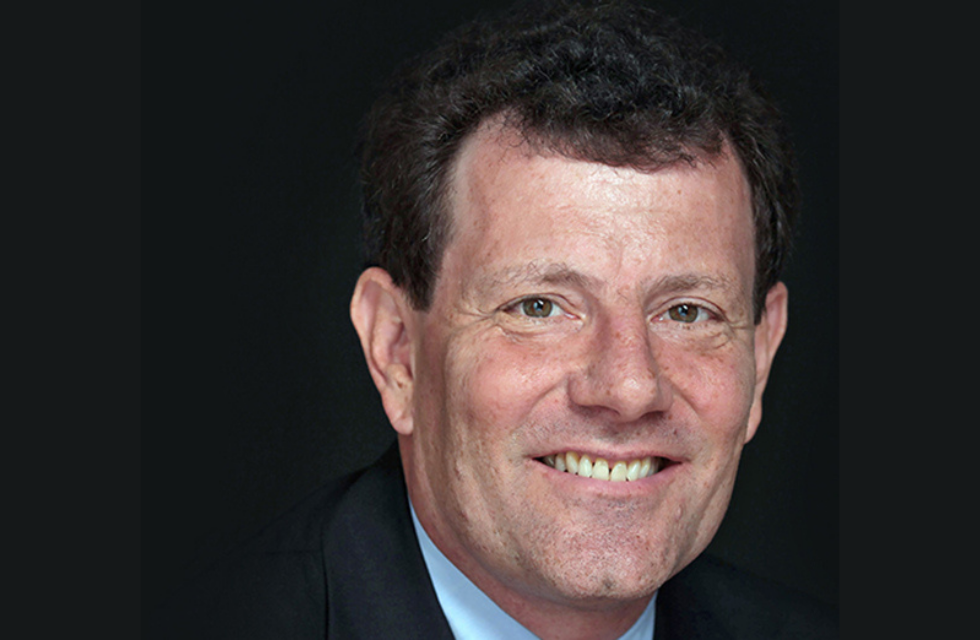
Nicholas Kristof
Tightrope: Americans Reaching for Hope Nicholas Kristof, New York Times Columnist and Author
Nicholas Kristof, New York Times columnist and author, will speak as part of the Real World Perspectives on Poverty Solutions series. The virtual lectures introduce the key issues regarding the causes and consequences of poverty. The series explores interdisciplinary, real-world poverty solutions from a wide variety of perspectives and encourages the formation of a broad community of learners to engage in these issues together.
This event is part of the Real World Perspectives on Poverty Solutionsspeaker series in partnership with the William Davidson Institute, Wallace House, the Institute for Healthcare Policy and Innovation, and Gerald R. Ford School of Public Policy
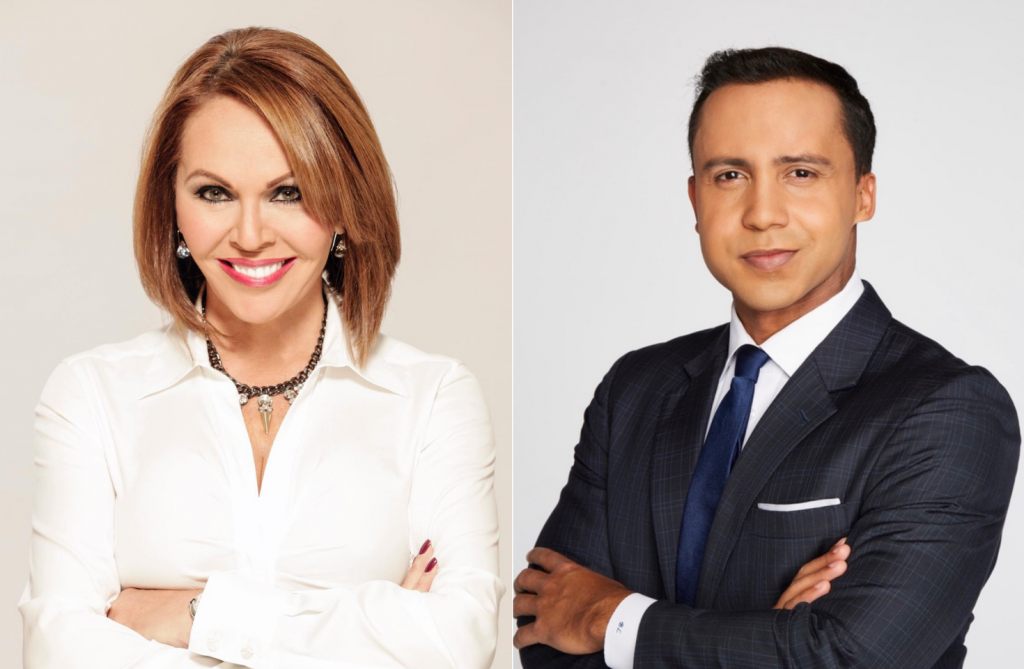
María Elena Salinas and Bryan Llenas
María Elena Salinas and Bryan Llenas: Covering America at a Moment of Rupture
Wednesday, October 21, 2020
5 PM ET
From partisan politics to diversity shortfalls in U.S. newsrooms, what does it mean for the reporters on the ground? Hear from two of America’s most prominent Latinx journalists on the value of representation and reporting in this hyper-partisan moment. Join our conversation with CBS News contributor, María Elena Salinas and Fox News national correspondent, Bryan Llenas.
The conversation will include introductions by Robert Yoon, Associate Director of Wallace House.
Join us for a conversation with two senior political reporters, Jane Coaston of Vox and Daniel Strauss of The Guardian. Hear what it’s like to be a political reporter during an election season and what political and policy issues are at play in this presidential election. Paula Lantz, associate dean of the Ford School and James Hudak Professor of Health Policy will moderate the conversation.
Our lens on history powerfully influences how we envision and shape the future. Join two of our country’s most accomplished storytellers, documentary filmmaker, Ken Burns, and journalist and author, Isabel Wilkerson, as they discuss the complexities of the American narrative and how grappling with the past might lead us forward.
This conversation will be moderated by Lynette Clemetson, Director of Wallace House.
This is a Penny Stamps Speaker Series event and part of the Democracy & Debate Theme Semester with support from Wallace House and the University of Michigan Museum of Art (UMMA).
A favorite feature of our Wallace House Journal, our Knight-Wallace alumni updates can now be found on our website.
The Knight-Wallace Fellowship extends beyond a year of study and exploration in Ann Arbor. Fellows remain part of the Wallace House family, gathering for reunions, collaborating on post-fellowship projects and being a source of support for each other. As Associate Director of Wallace House, Robert Yoon will reach out to alumni to find more ways to keep connected and engaged with the program and fellow Fellows.
Do you have updates about a new position, award or honor, or special project or books? Alumni can complete this form and we’ll share your news here. Spouses and partners who participated as affiliates during the fellowship, we want to hear from you too.
Appointed the Marsh Visiting Professor of Journalism at the University of Michigan. She is teaching courses on minority and gender misrepresentation in journalism and covering justice struggles this semester. @anaavilamexico
Niala Boodho
Niala Boodhoo ‘20
Named host of Axios Today, a new podcast from Axios. Each weekday morning, Boodhoo and her team cover topics ranging from the White House, Congress, the economy and insights to trends shaping the world. @NialaBoodhoo
Janet H. Cho
Janet H. Cho ‘20
Received an AARP AAJA Coronavirus Response Grant. Cho plans to write about how immigrant-owned small businesses navigate the pandemic and profile the Asian American immigrant families behind some favorite Ann Arbor shops, restaurants and small businesses. @janetcho
Patrick Coolican
Patrick Coolican ’14
Named editor-in-chief of The Minnesota Reformer, an independent start-up news organization and part of the nonprofit States Newsroom. For Coolican the opportunity to execute a new vision of a local news outlet and collaborate with talented young journalists was impossible to pass up. Their mission to do investigations, analysis and storytelling, and write about people whose stories are rarely told is “exhausting and exhilarating,” he said. @jpcoolican
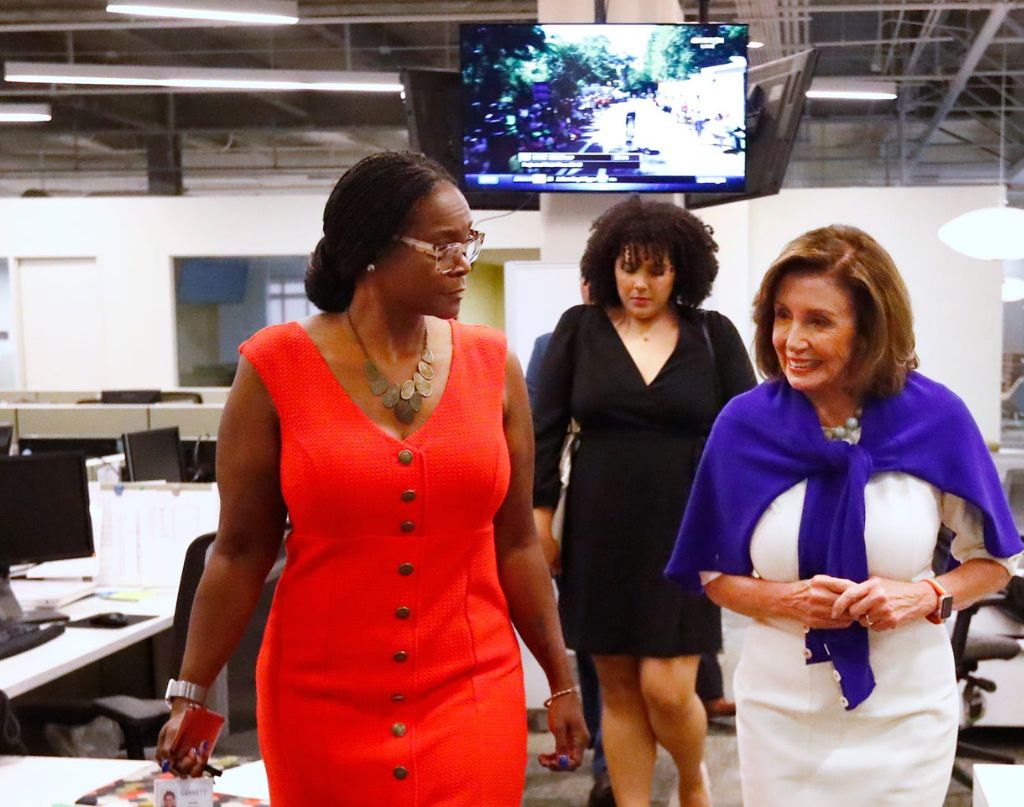
Suzette Hackney with House Speaker Nancy Pelosi photo credit Kelly Wilkinson/IndyStar
Suzette Hackney ‘13
Became a national columnist for USA TODAY and the USA TODAY Network, where she will travel the country to “give voice to the voiceless through vivid and raw storytelling.” Her first USA TODAY column appeared on September 15. Previously, she was a columnist and the director of Opinion & Community Engagement for The Indianapolis Star. @suzyscribe
Amy Haimerl
Amy Haimerl ’13
Joined the advisory board of the Mississippi Free Press, a new non-profit project dedicated to reporting and investigating issues facing the complex and complicated state. The news team is focused on getting to truth and solutions. @haimerlad
Sonya Green Ayears
Sonya Green Ayears ‘17
Named executive director of Making Contact, a weekly podcast and radio program on social justice issues and grassroots solutions to inform and inspire audiences to take action. “I feel destined to be here at this moment, in this time,” Green told us. “My values of economic equity, racial and gender justice align with Making Contact.” She also recently earned an M.S. degree in Organizational Leadership from Mercer University in Macon, Georgia. @aboutsonya
Amy Maestas
Amy Maestas ’17
Joined the Solutions Journalism Network as region collaborative manager, where she will oversee collaborations among news and community organizations in parts of the Midwest and the West. The solutions-oriented partnerships aim to strengthen local media ecosystems and use community engagement as a tool to build conversations and trust in communities. Maestas’ new role allows her to build on the research and work she did as a Knight-Wallace Fellow, during which she focused on the future of local media. @maeamy_co
Maurício Meireles
Maurício Meireles ’20
Became a reporter-at-large at Folha de São Paulo and host of the weekday podcast “Café da Manhã,” a Spotify and Folha de São Paulo project covering current events in Brazil and the world. Rodrigo Vizeu, who participated in the Fellowship as a spouse affiliate in 2017-2018, created the podcast upon returning to Folha de São Paulo from Ann Arbor. The morning show is now Spotify’s most downloaded podcast in Brazil. Previously, Meireles was a literature reporter and columnist at Folha de São Paulo. @mmeireles
John Shields
John Shields ’18
Joined The Economist in January 2020 to launch “Checks and Balance,” a weekly podcast on American politics. It is now their best-performing podcast in terms of listener and subscription metrics. Shields joined The Economist after 15 years with the BBC. He devoted his fellowship year in 2018 to developing and pitching what became the BBC’s first daily podcast @johneshields
Luis Trelles
Luis Trelles ‘19
Joined Latino USA as a senior editor. In his new position, he develops long-form stories about the issues affecting diverse Latinx communities across the country. He was previously an editor and producer with Radio Ambulante. Last December, Luis organized and led an unforgettable Knight-Wallace Fellowship trip to his beloved Puerto Rico. @cu_bata
Awards and Honors
Greg AmanteMikes Kessler
Greg Amante ’16 and Mike Kessler ’17
Won a 2020 Sports Emmy Award in the category of Outstanding Sports Journalism for their ESPN/Outside The Lines investigation, “The Squad: 44 Years, 41 Allegations.” Amante was producer with Kessler as a reporter on the team. They uncovered a trail of sexual abuse by a former Olympian and current track coach, Conrad Mainwaring. Their story resulted in the arrest of Mainwaring.
The two met when Amante was a Fellow and Kessler came to town for interview weekend. They hit it off. Later they talked casually about working on a project together. Reporting the Mainwaring story and realizing how big it could be, Kessler went straight to Amante with it. “I didn’t expect KWF to serve me in such an overt way, or for the project to happen so soon after my fellowship ended,” said Kesler. “But I guess that’s the point of KWF: Connect disparate but like-minded journalists and see what happens.”
Molly Ball observed the social distance protocol when interviewing Maryland Governor Larry Hogan.
Molly Ball ‘10
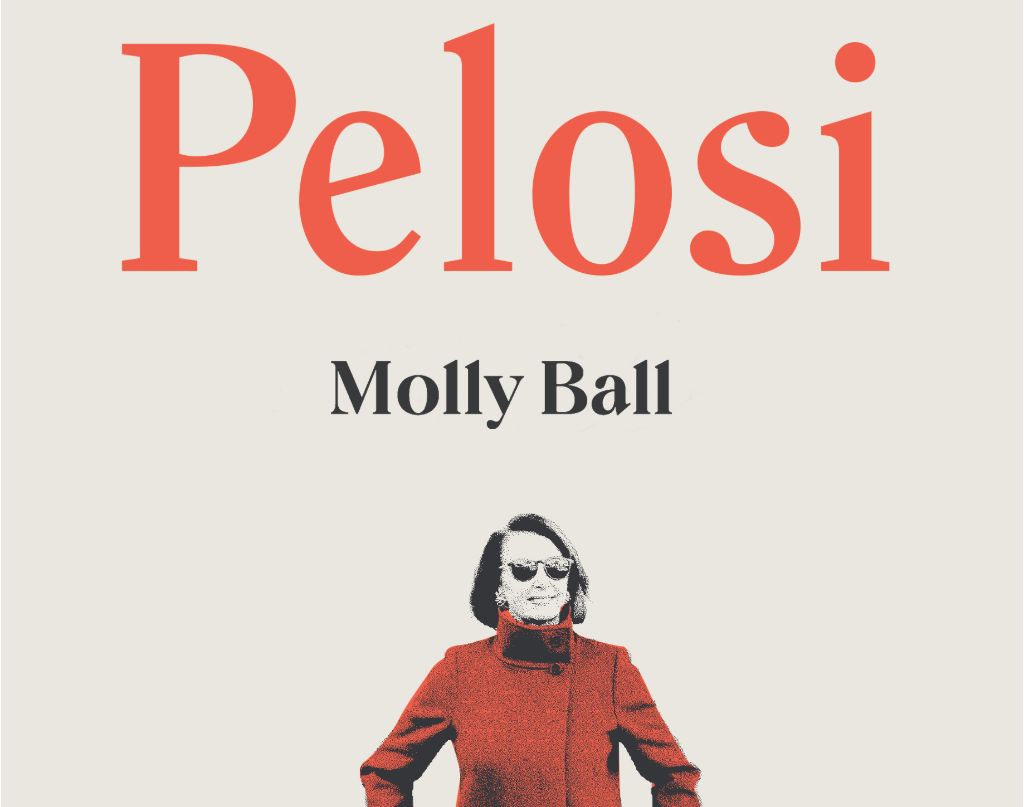
Named Outstanding Print Journalist in this year’sWashingtonian magazine’s Washington Women in Journalism Awards. Ball also released her first book, “Pelosi,” now a New York Times bestseller. See below @mollyesque
Joanne Gerstner
Joanne Gerstner ’13
Received the 2020 Distinguished Alumni Achievement Award from her alma mater Oakland University. The award recognizes professional achievement and leadership. Gerstner is the first female sports journalist to win the award. She will be honored in June 2021. @joannecgerstner
Craig Gilbert
Craig Gilbert ’10
Won a first place National Headliner Award for excellence in political coverage. As Washington Bureau Chief for the Milwaukee Journal Sentinel, he was recognized for his analysis of the Wisconsin’s divided electorate. The judges noted he “writes with an authority that provides readers with context, not only of their state’s politics but with an important understanding of how their state fits into the national perspective.” @WisVoter
Delece Smith-Barrow and Josh Krammer met for a walk and socially distanced for a photo op. Photo credit Alli Bailey.
Delece Smith-Barrow ‘17 and Josh Kramer ‘17
Recieved the National Headliner Award for Digital Innovation for their Hechinger Report and CalMatters collaboration “A Game of College,” an interactive planning tool and resource for families to prepare for college. This reporting might not have taken such a creative, visual and interactive form if Delece and Josh had not met as Fellows. Here’s their game, with information to help students chart highschool coursework, extracurriculars and SAT/ACT prep, financial aid and employment in college. Play now and get inspired for your next project. @DeleceWrites, @jessohackberry
Paul Wilborn
Paul Wilborn ’99
Won the Gold Medal for Fiction in the 2019 Florida Book Awards “Cigar City: Tales From a 1980s Creative Ghetto,” a collection of linked short stories about the young artists, writers, poets, musicians and actors who inhabited Tampa’s Ybor City in the 1980s. @PaulWilborn1
Books
Molly Ball
Molly Ball ’10
Released her first book “Pelosi,” now a New York Times bestseller. The first biography written with the House Speaker’s cooperation, Ball was granted unprecedented access. She first profiled Pelosi in 2018 for a Time cover story, where she is the national political correspondent. @mollyesque
A lot of reviewers have noted that James J. Strang had a lot in common with Donald J. Trump, but Harvey choses to let readers connect those dots for themselves. One of the many things Harvey says he loved about working on the book was spending countless hours in 19th-century newspaper databases. Although most papers were unapologetically partisan during the antebellum era, the quality of the prose was often superb. A huge boom in the number of news outlets, combined with stunning technological advances such as the telegraph, caused a communications revolution that some scholars have compared to the Information Age. Like Trump, Strang was brilliant at exploiting this emerging media to create and spread his own version of the truth. @MilesHa91389803
Donovan Hohn
Donovan Hohn ’13
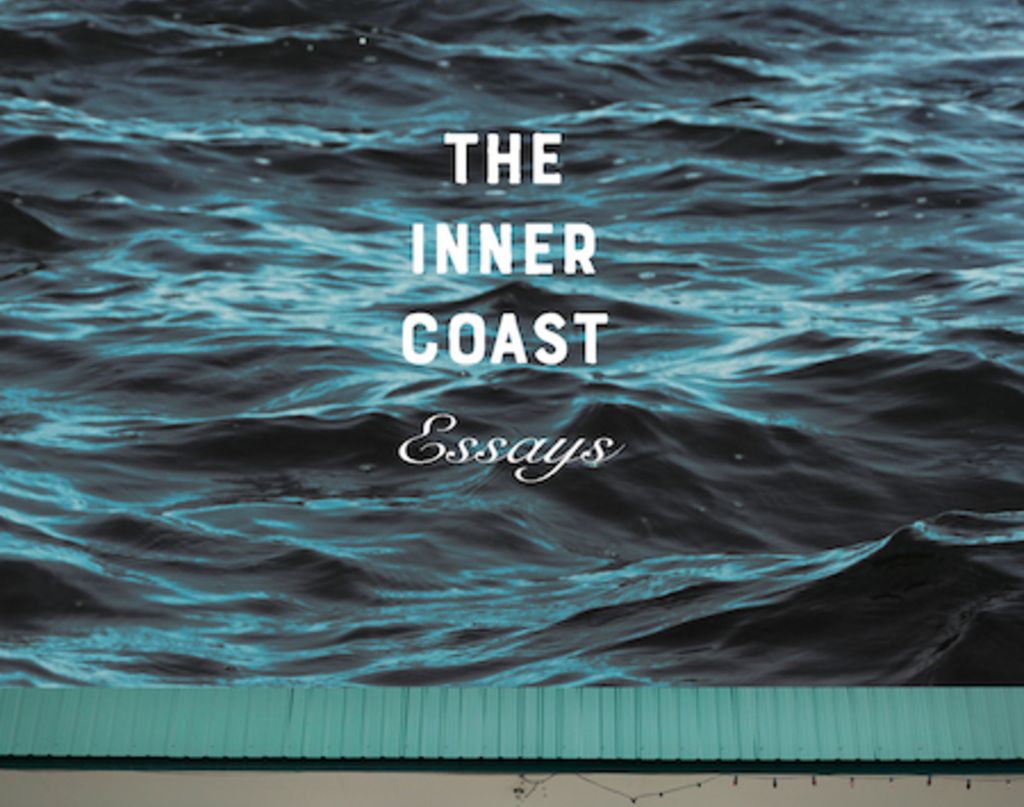
Published “The Inner Coast,” a collection of ten essays – many of which previously appeared in magazines such as Harper’s and The New York Times Magazine, features physical, historical, and emotional journeys through the American landscape. @donovanhohn
Wallace House welcomes Robert Yoon, political journalist and University of Michigan visiting professor, as its Associate Director.
In his new position, Yoon will support Wallace House Director, Lynette Clemetson, with the management of the organization’s programs and the daily operations, activities and outreach of the Knight-Wallace Fellowship programs and initiatives.
“As Associate Director, I’m looking forward to working with top journalists from around the world and helping them explore new ways to produce powerful and innovative journalism when the world needs it the most,” said Yoon.
Yoon, a 2018 Knight-Wallace Fellow, oversaw CNN’s political research operation for more than 17 years. In that role, he planned, organized and covered major political news stories and events including five presidential campaigns, numerous congressional and gubernatorial elections and Supreme Court nominations. He has prepared moderators from multiple news organizations for more than 30 presidential debates. As a media consultant during the 2020 campaign season, Yoon analyzed Election Night data for several major networks and helped plan a Democratic presidential primary debate.
His contributions to CNN’s election and breaking news coverage have earned him two Emmy Awards, a Peabody Award, and two National Headliner Awards, including one for his work on the investigation of the 9/11 terror plot. In 2016, he was named by Mediaite as one of the most influential people in the news media.
In addition to his role at Wallace House, Yoon will continue to teach courses on political messaging and campaigns within the university’s College of Literature, Science, and the Arts during the fall 2020 semester. He holds degrees from Harvard University and the University of Michigan. Yoon will start at Wallace House on July 1.
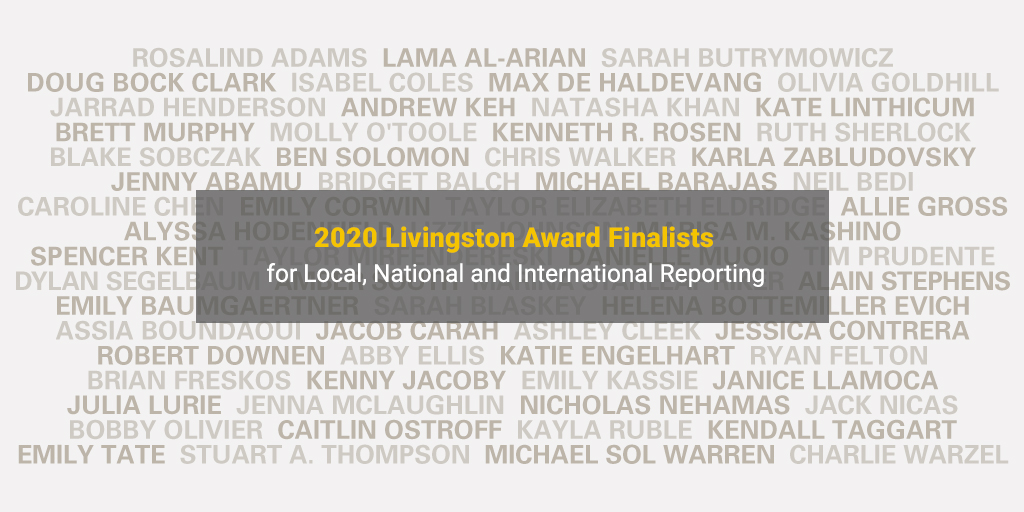
Wallace House and the University of Michigan announced today the 2020 finalists in local, national and international reporting. The awards support young journalists and honor the best reporting and storytelling by journalists under the age of 35 across all forms of journalism. The 56 finalist selections were chosen from more than 500 entries for work released in 2019.
This year’s Livingston Award winners will be announced on the Wallace House website and Twitter on June 4, 2020 and honored in person in June 2021, when we hope to return to our traditional awards luncheon. We will not gather this year due to public health concerns.
“This year’s Livingston Award finalists affirm the persistence, commitment and creativity of journalists to push beyond the surface to reveal complex truths and illuminate the human experience,” said Wallace House Director Lynette Clemetson. “The more than 500 entries we received are a testament to the role young journalists play in pushing the craft forward despite industry challenges and public efforts to invalidate journalism’s role in society. In recognizing these finalists we hope to extend the reach of their work and encourage the further development of their careers.”
Funded by the John S. and James L. Knight Foundation and the University of Michigan to support the vital role of a free and independent press, the awards bolster the work of young reporters, create the next generation of journalism leaders and mentors, and advance civic engagement around powerful storytelling. Other sponsors include the Indian Trail Charitable Foundation, the Mollie Parnis Livingston Foundation, Christiane Amanpour and Dr. Gil Omenn and Martha Darling.
The Livingston Awards regional judges read all qualifying entries to select the finalists in local, national and international reporting. The regional judging panel includes: Raney Aronson-Rath, executive producer, “Frontline,” PBS; Molly Ball, national political correspondent, Time; Stella Chávez, education reporter, KERA Public Radio (Dallas); Chris Davis, Vice-President of Investigative Journalism, Gannett; David Greene, host, “Morning Edition,” NPR; Stephen Henderson, host, “Detroit Today,” WDET; and Shirley Leung, columnist and associate editor, The Boston Globe.
The Livingston Awards national judges review all finalist entries and select the winners. The national judges are Christiane Amanpour, chief international correspondent, CNNi and host, “Amanpour on PBS”; Ken Auletta, author and media and communications writer, The New Yorker; Dean Baquet, executive editor, The New York Times; John Harris, co-founder, Politico; Clarence Page, Chicago Tribune; Anna Quindlen, author; María Elena Salinas, contributor, CBS News; Bret Stephens, op-ed columnist, The New York Times; and Kara Swisher, editor at large, Recode.
We present the 2020 Livingston Awards finalists and invite you to review their work here.
Local Reporting
Jenny Abamu, WAMU
Bridget Balch, Richmond Times-Dispatch
Michael Barajas, Texas Observer
Neil Bedi, Tampa Bay Times
Caroline Chen, ProPublica co-published with NJ Advance Media and WNYC
Emily Corwin, New Hampshire Public Radio
Taylor Elizabeth Eldridge, Type Investigations in partnership with The Appeal
Allie Gross, Detroit Free Press
Alyssa Hodenfield, The Sacramento Bee
Lizzie Johnson, San Francisco Chronicle
Marisa M. Kashino, Washingtonian
Spencer Kent, NJ Advance Media
Taylor Mirfendereski, KING 5
Danielle Muoio, POLITICO New York
Tim Prudente, The Baltimore Sun
Dylan Segelbaum and Amber South, The York Daily Record
Marina Starleaf Riker, San Antonio Express-News
Alain Stephens, The Trace in partnership with NBC Bay Area, NBC San Diego and NBC Los Angeles
National Reporting
Emily Baumgaertner, Los Angeles Times
Sarah Blaskey, Nicholas Nehamas and Caitlin Ostroff, Miami Herald
Helena Bottemiller Evich, POLITICO
Assia Boundaoui, PBS’s POV
Jacob Carah, Abby Ellis and Kayla Ruble, FRONTLINE
Ashley Cleek and Janice Llamoca, Latino USA
Jessica Contrera, The Washington Post
Robert Downen, Houston Chronicle
Katie Engelhart, The California Sunday Magazine
Ryan Felton, Consumer Reports
Brian Freskos, The Trace in partnership with The New Yorker
Kenny Jacoby, USA TODAY Network
Emily Kassie, The Marshall Project in partnership with The Guardian
Julia Lurie, Mother Jones
Jenna McLaughlin, Yahoo News
Jack Nicas, The New York Times
Bobby Olivier and Michael Sol Warren, NJ Advance Media
Kendall Taggart, BuzzFeed News
Emily Tate, EdSurge and WIRED
Stuart A. Thompson and Charlie Warzel, The New York Times
International Reporting
Rosalind Adams, BuzzFeed News
Lama Al-Arian and Ruth Sherlock, NPR
Sarah Butrymowicz, The Hechinger Report in partnership with Marie Claire
Due to the COVID-19 pandemic and uncertainty in the coming months around travel, group gatherings and campus activity, we have made the tough decision to cancel our Knight-Wallace Reunion scheduled for Labor Day weekend, September 4-6, 2020.
We will look at ways to gather our Knight-Wallace family at a later time. Further updates will be posted on our website, social media channels and in our newsletter.
Now more than ever, each of us is reminded why journalists and the work they do every day matters. We look forward to a time when we can share in celebrating journalism, our support for each other and the enduring relationships of our Knight-Wallace family.