Knight-Wallace Fellows Lead History’s Biggest Journalism Collaboration

obermayer-obermaier
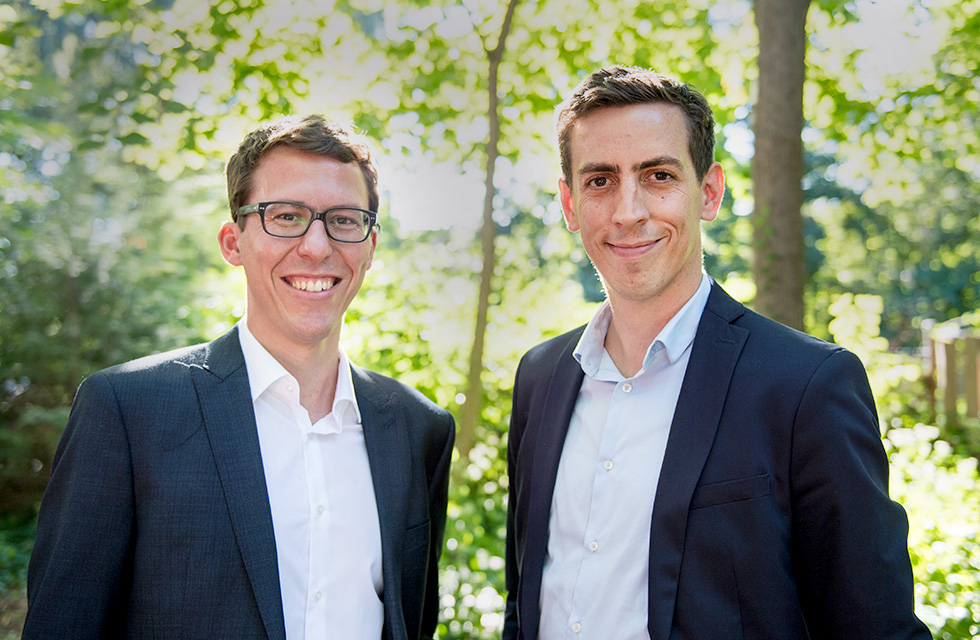
Current Fellow Bastian Obermayer (left) received an
email from “John Doe.” Knight-Wallace classmate
Laurent Richard (right) oversaw Premières Lignes
Télévision’s coverage of the Luxembourg Leaks in 2014.

In the winter of 2015, current Knight-Wallace Fellow Bastian Obermayer, deputy head of the investigative unit at the Süddeutsche Zeitung in Munich, received an anonymous email. “John Doe” offered a massive trove of data from the Panamanian law firm Mossack Fonseca. Obermayer and colleague Frederik Obermaier soon realized that the 2.6 terabytes of data (11.5 million financial and legal records from 214,000 offshore companies) were too much for them to handle alone. They contacted Gerard Ryle ’06, director of the International Consortium of Investigative Journalists (ICIJ), and asked for support.
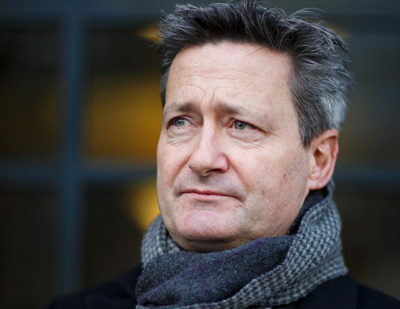
Gerard Ryle
Gerard Ryle ’06, organized a global
newsroom and directed the reporting
and publishing around the world.

Through ICIJ, a secret database was established, a secure communication network was set up, and soon Ryle was leading a virtual newsroom. Three hundred seventy-six journalists in 76 countries searched through the files and shared information on who was hiding money. On April 3, 2016, the investigations were published simultaneously around the world as The Panama Papers. The first big revelation led to the resignation of Iceland’s prime minister over his ownership of an offshore company.

ICIJ put together an extensive website with stories, databases, videos, graphics and even an online game to help readers understand how tax havens work. The Süddeutsche Zeitung published a multimedia project in German and English. Obermayer and Obermaier’s book, “The Panama Papers,” was published in English and in 14 other languages as of this writing.
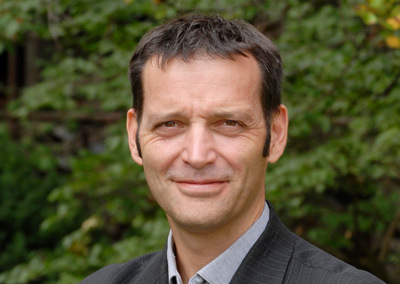
Edouard Perrin
Edouard Perrin ’16, had experience
investigating huge data troves
after receiving the Luxembourg
Leaks. 

In addition to Obermayer and Ryle, one other Knight-Wallace Fellow Edouard Perrin ’16, of Premières Lignes Télévision in Paris worked on The Panama Papers.

Since April, The Panama Papers project has received many awards, including the Online News Association’s Al Neuharth Innovation in Investigative Journalism Award, the Data Journalism Award in Vienna and the Barlett & Steele Gold Award. Worth magazine ranked Ryle number 55 of the top 100 most powerful people in the global financial world.

You can watch Ryle’s latest TED Talk about the story behind the biggest data leak and the largest international collaboration in the history of investigative journalism.
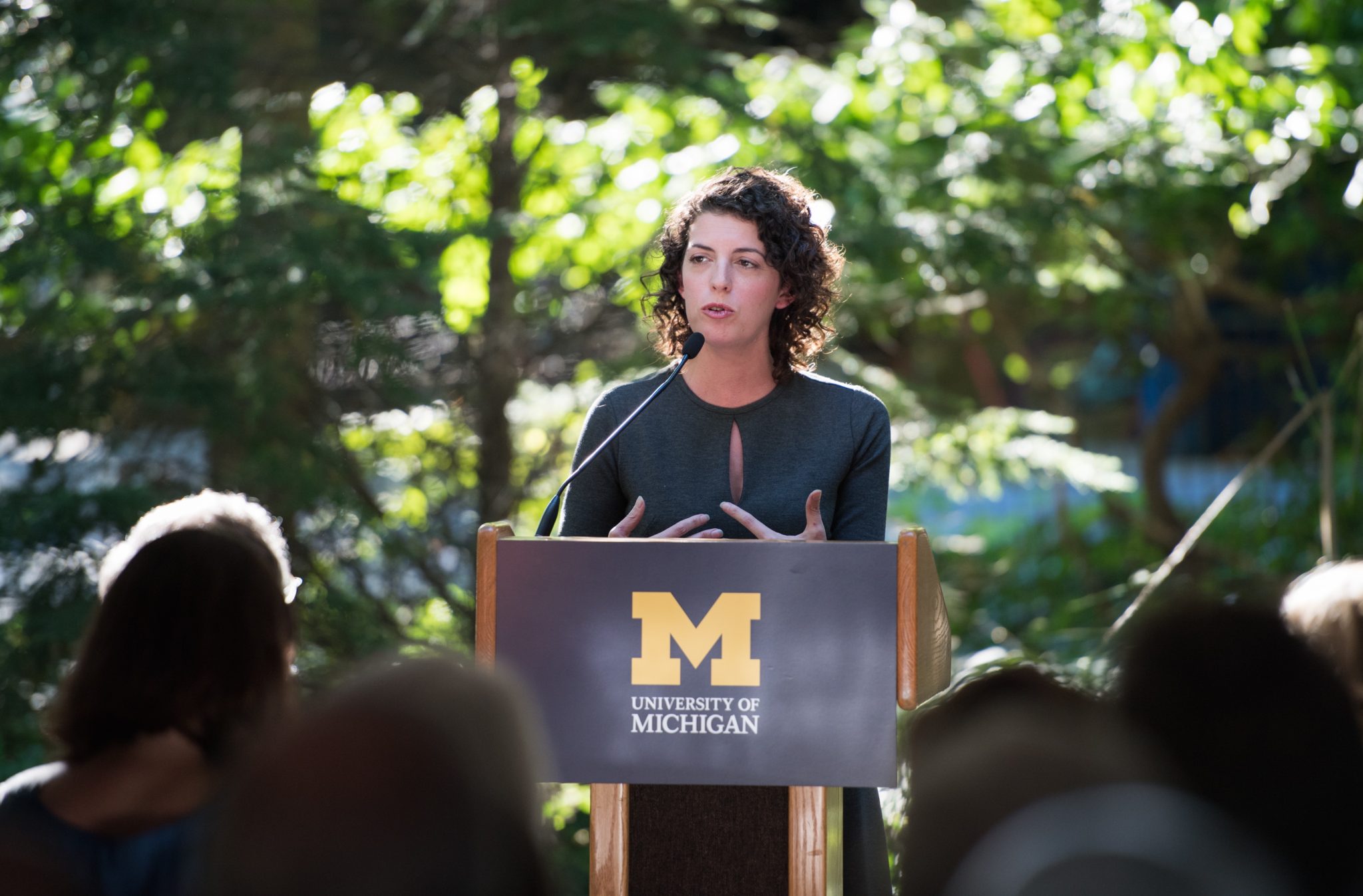


31st Graham Hovey Lecture

Molly Ball31st Graham Hovey Lecture with political reporter Molly Ball ’10


“Election 2016: The Great Disruption of American Politics”

September 12, 2016

Watch the video recording.


A prominent voice from the campaign trail, Molly Ball appears regularly as an analyst on NBC’s “Meet the Press,” CBS’s “Face the Nation,” PBS’s “Washington Week,” CNN, MSNBC, Fox News and NPR. She is the recipient of the Toner Prize for Excellence in Political Reporting, the Sandy Hume Memorial Award for Excellence in Political Journalism and the Lee Walczak Award for Political Analysis for her coverage of political campaigns. The lecture addresses the upheaval of the U.S. political establishment and examine whether this is a fleeting or enduring phenomenon.

Ball previously was a staff reporter for Politico, the Las Vegas Review-Journal, the Las Vegas Sun and The Cambodia Daily. She began her journalism career working for newspapers in Ohio and Pennsylvania, as well as The New York Times and The Washington Post.

She earned a B.A. in English Language and Literature from Yale University. As a Knight-Wallace Fellow at Michigan, 2009-2010, she studied economic policy, government spending and taxation in Nevada and the effects of rapid population growth.

The annual lecture honors Knight-Wallace alumni whose subsequent careers exemplify the benefits of sabbatical studies at U-M. It is named for the late Graham Hovey, director of the fellowship program from 1980-1986 and a distinguished journalist for The New York Times.

Watch the video recording.

×

The 31st Graham Hovey Lecture

Molly Ball

The Knight-Wallace Fellowships for Journalists present the 31st Graham Hovey Lecture

Molly Ball ‘10 of The Atlantic
“Election 2016: The Great Disruption of American Politics”

Wallace House Gardens

Special remarks by Mark S. Schlissel, President, University of Michigan
Hosted by Lynette Clemetson, The Charles R. Eisendrath Director of Wallace House

A prominent voice from the campaign trail, Ball appears regularly as an analyst on NBC’s “Meet the Press,” CBS’s “Face the Nation,” PBS’s “Washington Week,” CNN, MSNBC, Fox News and NPR. She is the recipient of the Toner Prize for Excellence in Political Reporting, the Sandy Hume Memorial Award for Excellence in Political Journalism and the Lee Walczak Award for Political Analysis for her coverage of political campaigns.

Ball previously was a staff reporter for Politico, the Las Vegas Review-Journal, the Las Vegas Sun and The Cambodia Daily. She began her journalism career working for newspapers in Ohio and Pennsylvania, as well as The New York Times and The Washington Post.

She earned a B.A. in English Language and Literature from Yale University. As a Knight-Wallace Fellow at Michigan, 2009-2010, she studied economic policy, government spending and taxation in Nevada and the effects of rapid population growth.

The annual lecture honors Knight-Wallace alumni whose subsequent careers exemplify the benefits of sabbatical studies at U-M. It is named for the late Graham Hovey, director of the fellowship program from 1980-1986 and a distinguished journalist for The New York Times.

The Hovey Lecture is free and open to the public. A reception follows the lecture.

A live webcast will be available here. Video will be posted after the event.

For more information and to RSVP, call (734) 998-7666.


A Fête to Celebrate Charles R. Eisendrath

Charles Eisendrath
Knight-Wallace alumni, university colleagues and journalism luminaries honor Charles R. Eisendrath’s legacy to journalism.


By STEVE FRIESS ’12

In a massive events space on University of Michigan’s North Campus elegantly arrayed with energetic servers buzzing around, Dave Farrell ’93 offered up a worthwhile reminder of how far the Knight-Wallace Fellowships have come.

Today, of course, the program is renowned for its international travel to South America and Turkey, so Farrell wanted to explain to the 400 attendees at an April 15 fête for retiring Director Charles Eisendrath his role in how those exotic trips became a part of the deal.

“Farrell,” Eisendrath told the then-Detroit News staffer, “go down to the university transit hut and sign out the biggest van you can find.” He did as he was told, returning to the newly acquired Wallace House with a cargo vehicle. A little later, Farrell drove the van “with fellows stuffed in the back” to Detroit.

David Ferrell
David Farrell ‘93 recalls Eisendrath and the Fellowship’s first
“news tour.”

“Our destination was to find a guy who nailed a hubcap to a tree and called it art,” Farrell told the audience.

From such humble beginnings, the program swelled along with the prestige of the Livingston Awards, and Eisendrath became an icon of journalism. No explanation was necessary, for example, for the cakes perched as each table’s centerpiece coated in white fondant frosting and bedecked by a candy bowtie. Over dinner, university administrators and faculty, former Fellows and other colleagues stretching all the way back to 1970s reminisced and honored the larger-than-life human nucleus of two of the profession’s most important programs.

“I have no bleeping idea what course of study Eisendrath pursued,” said Charles Wolfson, a Fellow from “CBS News”, along with Eisendrath in the class of 1974-75. “I have this vague recollection that Charles spent some time at the School of Natural Resources. Maybe he was on the cutting edge of learning about what we’d come to know as climate change. But he was probably trying to figure out how to grow more cherries per acre on his farm.”

Eisendrath, who came to University of Michigan from his job as a foreign correspondent for Time, would never leave. He taught journalism and took over as director of the school’s now-gone masters program in 1980. That year  he  also became founding director of the Livingstons.

One of his students, commentator Jack Lessenberry of Michigan Public Radio, recalled Eisendrath’s teaching style – which felt familiar to anyone who had been a Fellow. “Charles gave us some simple instructions, threw us in the deep end and expected us to swim on our own,” said Lessenberry, head of journalism at Wayne State University.

“In my 20s and not at all sure what I wanted to do with my life, Charles Eisendrath showed me how to be a journalist and taught me the important and most fun profession in the world,” he intoned in his signature NPR style. “He did more to shape me professionally than anyone else and has been an important part of my life ever since.”

Farrell turned his attentions mostly to recognizing Eisendrath’s wife, Julia, whom he described as “the diamond we found in the fellowship year.” The “program’s first lady,” he said, “has the gift of communicating in such a way that makes everyone she talks to feel as though they are the only and the most important person in the world. When you talk to Julia, you know she really listens and when she speaks to you, you know she’s speaking from her heart.”

Julia Eisendrath
Julia Eisendrath, first lady of Wallace House and den mother to three decades
of Knight-Wallace Fellows.

The tributes filled two hours and included testimonials from University of Michigan Provost Martha Pollack, University of Michigan Regent Kathy White, Council of Michigan Foundations CEO Robert Collier, New York Times executive editor Dean Baquet, New Yorker cartoon editor Bob Mankoff, former fellows Tracy Jan ’15 and Rachel Dry ’13, Wallace House associate director, Birgit Rieck and ragtime pianist extraordinaire Bob Milne, who led the outgoing fellowship class in a rousing original composition called, “The Man in the Hat.”

Will Potter, KWF ’16, spoke on behalf of the group – Eisendrath’s last crop – to explain how an Ann Arbor speakeasy called The Last Word would now offer an honorary drink, the “Thunderous Round,” which is made of Traverse City whiskey, cherry liqueur, agave syrup, bitters and “a splash of mediocre sherry.” Eisendrath’s evaluation of the seminar offering at Wallace House.

To end the festivities, Eisendrath called up each Wallace House staff member to thank them with gifts and praise for their longtime support, and introduced the incoming Wallace House director, Lynette Clemetson. A Fellow in 2009-10 and most recently a senior director at NPR, she donned the chestnut-hued Worth & Worth straw Fedora that he gave her as a “symbol of continuity.”

Clemetson used the occasion to announce that the Knight Foundation was pledging $50,000 towards an annual symposium on international journalism at the University in honor of Eisendrath’s keenest interest.

“To listen to all you’ve created, to be the beneficiary of what you’ve created and know it has strengthened me and my career and enabled things I did after the fellowship … to be able to come back is the greatest honor for the greatest man who has done so much for me,” she said to close out the night.

KWF12
Over 200 Knight-Wallace alumni came from far and near to celebrate with Eisendrath, including many from the class of 2011-2012.

Knight-Wallace Fellows Class of 2016-2017 Named

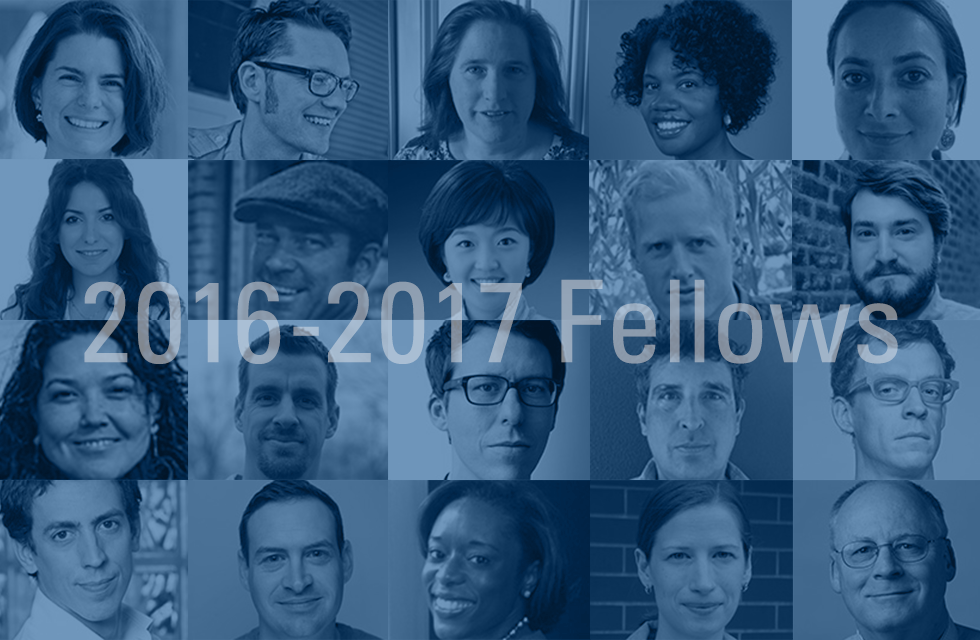
Ann Arbor, MI – The Knight-Wallace Journalism Fellowship program at the University of Michigan has named 13 American and nine international journalists for the academic year 2016-2017. The group is the 43rd to be offered fellowships by the University.

2016-2017 Fellows

“There is a 28-year age span between the Fellows in the class of 2017, touching the extremes of what we mean by mid-career fellowship,” Director Charles Eisendrath notes. “But above all we look for capacity for personal and professional growth regardless of age, and the successful candidates share it equally.”

While on leave from regular duties, Knight-Wallace Fellows pursue customized studies and attend twice-weekly seminars. Headquarters of the program is Wallace House, a gift from the late newsman Mike Wallace and his wife, Mary. The program at Wallace House includes training in narrative writing and multi-platform journalism. International news tours to Turkey and Brazil are also an integral part of the program.

Knight-Wallace Fellows receive a stipend of $70,000 for the eight-month academic year plus full tuition and health insurance. The program is entirely funded through endowment gifts by foundations, news organizations and individuals committed to improving the quality of information reaching the public.

Fellows and their study projects are:

Fernando Canzian Da Silva, reporter, Folha de São Paulo (Brazil). Enhancing methods of print journalism with video and graphics

Anna Clark, freelance writer, Detroit, Mich. Common Good: How chronic underfunding of American cities imperil residents

Nicholas Deshais, staff writer and city hall reporter, The Spokesman-Review (Spokane, Washington). How driving less will change our cities

Deirdre Falvey, senior features commissioning editor, The Irish Times. Blending oral history and art for long-form journalism

John Goetz, editor and investigator, Norddeutscher Rundfunk, NDR (Berlin). How racism laid the groundwork for establishing the “new” Germany in the early 1990s

Sonya Green, news and public affairs director, 91.3 KBCS (Seattle, Washington). The impact of white privilege on how news is covered

Leana Hosea, reporter and producer, BBC. Clean water issues in the US: Comparing the African American and Native American experience

Dina Ibrahim, senior journalist, Al Arabiya English, (United Arab Emirates). Impact of the rise of the Islamic State on Iraq’s modern state national identity

Michael Kessler, freelance writer, (Los Angeles magazine). Media and police bias in missing-persons cases

Jin Kim, staff writer, Chosun Ilbo (Seoul). The past, present and future of the global automobile industry

Arno Kopecky, freelance writer and author, Vancouver, Canada. Re-imagining growth for a finite planet

Josh Kramer, freelance cartoonist. Creating a style guide for journalistic and nonfiction comics

Amy Maestas, senior editor, The Durango Herald. The future for hyper-local newspapers

Brian Mockenhaupt, contributing editor, Outside Magazine. Veterans’ alienation and the struggle to re-assimilate after war

Bastian Obermayer, deputy head of the investigative unit, Süddeutsche Zeitung (Munich). Understanding the global menace from tax havens

Gustavo Patu, business reporter, Folha de São Paulo. Tax systems and budgetary processes in developing countries

Austin Ramzy, Asia correspondent, International New York Times. Myanmar’s dramatic democratization in an increasingly authoritarian Southeast Asia

Laurent Richard, investigative reporter, Premières Lignes Télévision (Paris). Defeating censorship with collaborative journalism

Stephen Sawchuk, associate editor, Education Week. How policy contributes to K-12 educational inequality

Delece Smith-Barrow, reporter, U.S. News &World Report. Why few underrepresented minorities thrive as professors

Erica Westly, freelance writer and author (Reuters). The history of swimming instruction and drowning prevention

James Wright, deputy editor for metro and business news, The Las Vegas Review-Journal. How mega-donors in U.S. politics influence U.S. foreign policy

The selection committee included outgoing Director Charles Eisendrath ‘75 and incoming Director Lynette Clemetson ‘10, John Costa ‘93 (president, Western Communications, and editor-in-chief, The Bulletin, Bend, ORE.), Ford Fessenden ‘90 (graphics editor, The New York Times), Kate Linebaugh ‘08 (reporter, The Wall Street Journal), Bobbi Low (professor, UM), Birgit Rieck (associate director, KWF), Carl Simon (professor, UM), Yvonne Simons ‘03 (assistant news director at CBS 13, Sacramento), and Doug Tribou ‘16, (reporter and producer at “Only a Game,” NPR/WBUR).

NPR’s Lynette Clemetson named next director of Wallace House

Contact: William Foreman, 734-330-0474, [email protected]
U-M has a satellite uplink TV studio and an ISDN radio line for interviews.

Read the announcement in Spanish.

ANN ARBOR – Lynette Clemetson will be the new director of the Knight-Wallace Fellowships and Livingston Awards at the University of Michigan – two of the nation’s most prestigious programs for journalists.

Clemetson, senior director of strategy and content initiatives at NPR, begins her new position on July 1. She will succeed Charles R. Eisendrath, who will retire after three decades. He founded the Livingston Awards and led a $60 million endowment drive to permanently establish the fellowships. Last year, the programs were rebranded as Wallace House.

“Lynette Clemetson will further strengthen the University of Michigan’s engagement with modern journalism,” U-M President Mark Schlissel said. “The Knight-Wallace Fellowships and the Livingston Awards recognize and support journalists who are helping us gain a deeper understanding of the most complex issues facing our world.”

Lynette Clemetson

Clemetson’s news career has been as wide ranging as it has been distinguished. Her experiences include reporting about Hong Kong’s return to Chinese rule for Newsweek, covering politics and demographics for The New York Times, launching the website TheRoot for the Washington Post Company and guiding multi-platform projects for NPR.

“The programs of Wallace House are vital to journalism, even more so in today’s complex media world,” said Clemetson, a Knight-Wallace fellow in 2009-10.

“It is an honor to build on Charles Eisendrath’s strong legacy, the program’s international focus and its connection to the University of Michigan,” she added. “I look forward to expanding Wallace House’s role in supporting media innovation and experimentation and being a prominent force for good in sustaining journalists of all sorts in their mission, passion and craft.”

Eisendrath said, “I came to know Lynette as a Knight-Wallace fellow after having been impressed with her application credentials. By the time she left, I realized that the most impressive thing about her wasn’t the credentials, it was the personal qualities that had earned them.”

Since its founding in 1973, the Knight-Wallace Fellowship program has enabled a total 677 mid-career journalists from 35 countries to step away from their deadline pressures and spend an academic year at U-M, enjoying the freedom to take any courses that interest them.

The fellows – selected for their exceptional work, leadership and potential – explore new subjects and deepen their understanding of issues they have been covering. They enrich the campus by mixing with students and faculty, contributing immeasurably to U-M’s educational and research milieu. Numerous fellows have gone on to write notable books, win awards, develop and run journalism projects and bring distinction to their news organizations.

The program is also the only journalism fellowship that involves study tours abroad. In recent years, the fellows have traveled to Brazil, Turkey, Russia, Argentina and Canada.

“As a journalist and a news executive, Lynette Clemetson has brought passion and a commitment to strategic innovation to her work. She is the right person to lead Wallace House as a new generation of journalists seeks the opportunities for learning and engagement that it provides,” said Martha Pollack, provost and executive vice president for academic affairs.

The Livingston Awards, the largest all-media, general reporting prize in the U.S., are often called the “Pulitzer for the young.” The program offers $10,000 prizes to journalists under the age of 35 for local, national and international reporting.

“At the annual Livingston Awards luncheon in New York, 200 or so leaders of journalism attend. They come not for the chilled salmon but to be reminded that journalism is a noble calling. Many struggle to escape depression. It’s a tough time in the business,” said Ken Auletta, an author and media and communications writer for The New Yorker.

“Yet after watching young journalists humbly step to the winners podium and glancing at their work, the sun shines,” added Auletta, who has been a Livingston judge for three decades. “Beneficiaries of both Michigan’s distinguished programs become part of a journalistic community that pumps oxygen into a profession so vital to a healthy democracy.”

The fellowship program was founded in 1973 by Ben Yablonky, a journalist, labor activist and educator. It was funded by the National Endowment for the Humanities and called the Michigan Journalism Fellows program.

The program’s second director was Graham Hovey, a former New York Times journalist who served in 1980-86.

When the federal funding ended and threatened the program’s existence in 1985, a team of prominent newspaper editors gathered a coalition of donors, led by the John S. and James L. Knight Foundation.

Eisendrath, a fellow in the program in 1974-75, was as a TIME correspondent in Washington, London, Paris and bureau chief in Buenos Aires. He joined U-M’s journalism faculty in 1975 and directed its master’s program in journalism for a decade. He became the founding director of the Livingston Awards in 1981 and took over the fellowship program in 1986.

In 1992, a gift from 60 Minutes correspondent Mike Wallace and his wife, Mary, a former TV producer, allowed for the purchase of the program’s current headquarters. Wallace House is an arts-and-crafts-style home near campus. The fellowship program was renamed the Knight-Wallace Fellows at Michigan.

Subsequent gifts have established fellowships in business, legal, medical, sports, investigative, international and educational reporting, broadening the scope of the fellowship.

On the Road to a New Exit

Interstate 75 connects my life in Ann Arbor to another, very different existence at a cherry orchard in northern Michigan. The house is 115 years old and has been touched by five generations of us. Inside and beyond, in the woods and fields, stuff and changes accumulate. Such things mark what you’ve done and what you haven’t; what things people in your gene pool accomplished with reminders to try some.

So as I found myself driving through life’s higher numbers in bumptious good health, 75 came to take on special significance. As that birthday approached, it became a sort of road sign. I had been traveling north and south on I-75. Maybe E-75, October 9, 2015, should signal highway Eisendrath leading to life beyond Wallace House. The numbers worked in the way journalists prefer in anniversaries: 40 years at the University of Michigan, 35 running the Livingston Awards, 30 directing the Fellowships.

Director's-MORGAN---07
Julia and Charles Eisendrath


What made me take the turn leading to retirement from all three, however, did not come until late last summer. I don’t like leaving important things undone, and until then, the Livingston Awards had been neither strongly embraced by the University, nor had it garnered endowment. At the awards lunch in New York last June, however, President Mark Schlissel told the winners “I look forward to hearing about your accomplishments and to coming back many times in the future to join in celebrating the future of journalism.” In August, a longtime donor sent the first of checks to total $1 million for endowment. Suddenly, I felt confident that the Livingstons were firmly on the way to permanence at a University I’ve loved for a long time.

Unsurprisingly, the decision to make of this revelation came at the farm, surrounded by all those reminders. That’s where such things happen.

But why leave a job I’ve been lucky enough to more-or-less design? Fair question. Again, it’s the numbers. Pride in having tried to guide journalists to as satisfying a life as I’ve had runs deep. How much could I add in a few more years? By contrast, although every job has brought enormous pleasure, Wallace House way above all, jobs have always dominated my life. The only chance to explore what I might do without one is right now. I know what I would advise Fellows in such situations.

Hence taking the exit off the big road I’ve known so well to smaller ones I think may lead to intriguing places with Julia, my lifelong road-trip navigator and the co-pilot of our lives together. Many, I hope, will lead to you.

A Year of Fellowship and Official Visits

On the eve of the KWF ’15 trip to Brazil, President Dilma Roussef went on television to appeal for patience and support for fiscal austerity measures. Her appear-ance was widely met with jeers and some nasty names.

The fellows arrived in the economic and cultural center of São Paulo at a pivotal time for Brazil. The once-promising economy is on a downward spiral and anger is rising over a massive corruption scandal involving the state-run oil company Petrobras. We learned all about this and more in seminars and roundtables organized by Suzana Singer, editor at Folha de São Paulo, in between lavish meals and a dance lesson. Our hosts Sabine Righetti ’13, Sylvia Colombo ’14 and Silas Marti made sure everything went smoothly.

There were plenty of surprises along the way, starting on our first day when we got a special viewing of an apartment in the landmark Copan building, a curvy structure in the heart of downtown that was designed by modern- ist architect Oscar Niemeyer. Reporter Fabricio Lobel recently rented the flat and opened his new home to us for a glimpse of the glorious view from his windows. We then took a bus to the Liberdade neighborhood, home to the city’s vibrant Japanese community, for a sushi and tempura dinner. Coffee plantations lured Japanese workers to the area more than a century ago and Brazil now has the largest Japanese diaspora in the world.

We also met with some of the coun- try’s top luminaries. Henrique Meirelles, a former Central Bank governor and current chairman of holding company J&F, gave us a rundown of the evolution of the economic problems that have caused inflation to spike and the Brazilian currency to plunge against the dollar. We discussed what’s driving the growing global demand for meat. Meirelles has some ex- pertise in the subject; J&F controls JBS, the largest meat production company in the world. Then we returned to an auditorium at Folha for a candid discussion with Delton Dallagnol, a federal prosecutor who is leading the task force investigating the Petrobras scandal. He explained how the arrest of a single money launderer led to a probe that has reached into the president’s inner circle. I’d pick Bradley Cooper to play him in the movie.

A major highlight was a new addition to the Brazil program. We hopped on a plane for an hour-long ride to Belo Horizonte, the capital of the southeastern state of Minas Gerais. World Cup fans will remember this area for its Mineirao stadium, the site of Brazil’s devastating loss to Germany last year. The first order of business was of course dinner at the restaurant Xapuri, where we were treated to stewed chicken, farofa and other local delicacies capped by a buffet of delicious desserts.

The following day took us on a mountainous trip to the Inhotim open-air museum, a 5,000 acre complex filled with contemporary art installations and exotic gardens. The park is de- signed to encourage an in- teractive experience between visitors and the art. The best example of that was the Cosmococa pavilion where one room has a dimly lit swimming pool in which a few brave fellows took a dip while listening to the music of composer John Cage. Another room plays Kimmi Hendrix tunes while visitors lie in hammocks. We had lunch at a buffet, battling bees for dishes of salad, fish and pastries. Then the park’s creator, mining magnate Bernardo Paz, met with us to discuss his vision saying, “This is not a museum. This is life.”

Later, a bus took us on a 2 1⁄2 hour ride to Ouro Preto (which means Black Gold in Portuguese), a 17th cen- tury colonial mining town. There Silas Marti, Folha’s arts and design critic, gave us a tour of the church of St. Francis of Assisi designed by AntÔnio Francisco Lisboa, which is perched on a steep hilltop and features carved decorations and golden woodwork, paintings and statues. It also boasts an amazing view of the cobblestone- street lined city.
For the weekend, it was back to São Paulo. We spent our next to last day with renowned architects Fernanda Barbara and Fabio Valentim who treated us to a personalized tour of the museums in the modernist Ibirapuera Park, including the Afro-Brazil museum. Brazil was the last place in the Americas to abolish slavery, in 1888, and the exhibit includes rare photos.

A bonus was watching skaters defying gravity under a long concrete canopy that distinguishes the park. We also saw the Sesc Pompeia, a unique cultural and leisure center with two towers that act as a sports center and are linked by covered walkways. That night fellows enjoyed a forro dance lesson and a glimpse of local clubbing. After some awkward but fun moments on the dance floor, the group got more comfortable in an adjacent dining area where they were offered caipirinhas and beer.

The last day summed everything up. We started with a tour of several poor neighborhoods on the outskirts of São Paulo. Our tour guides were bloggers who write for Folha’s Mural blog with the mission of portraying more than poverty and violence. We saw crowded favelas occupying land literally across the street from barricaded wealthy housing units. Break dancers and graffiti artists showed Fellows how they give voice to youths. In a sharp contrast that must be felt daily by all Brazilians, we then gathered for lunch at a swanky steak house where waiters carved meat straight onto your plate until you turned up a red card signaling for them to stop. Finally we boarded the bus for the airport, on the same day that hundreds of thousands of Brazilians gathered in the downtown streets to protest the president and call for her impeachment.

Fellow’s Dream to Help the Deaf No Longer Silenced

Ann Arbor is a familiar place for me. It is where I grew up and it’s the town I’m proud to say my family calls home. An interview in the spring of 2014 for a Knight-Wallace Fellowship at Wallace House, however, took me to a nook of the city just east of the campus’ edge and it changed my life. I walked into 620 Oxford Rd. unsure of what would be asked of me, or what I would say or do, after responding to the “What’s your dream?” query that I knew was coming.

As I sat at the short end of a long, rectangular table my plan to impress the nine-member selection committee surrounding me seemed to be working. I was using American Sign Language while I answered the first question and that was playing well. “When you do that, make sure you have napkins to hand out because they’ll all be drooling,” friend and former Knight-Wallace Fellow John U. Bacon advised while preparing me for this very moment. What I could not be prepared for was what happened next.

After discussing sign language, deaf culture and my experiences as a child of deaf parents, Charles Eisendrath lowered his head, peered at me and asked, “Have you ever thought about putting together your knowledge and passion of sign language, deaf culture and sports?” That question put the wheels in motion for a journey I didn’t see coming like a linebacker making a blindside sack. “No,” I said quietly, knowing my response did not impress any of the assembled panelists.

“Well, why not?” Eisendrath pressed.

“With the day-to-day grind of my job along with being a husband and dad, I haven’t had time to think about it,” I said, trying to defend a dormant dream.

“Maybe you should,” he fired back.

“Maybe you should give me a spot in this Fellowship and I’ll come up with something,” I shot back with a disarming smile.

“Well played,” University of Michigan President Mark Schlissel said with a nod when hearing a recollection of the aforementioned exchange during his recent Wallace House visit with the Fellows.

“And someday,” I told Schlissel matter-of-factly, “this will be a Michigan Difference commercial.”

Back when I began the fellowship my plan was to write my first book. Scotty Bowman, Mike Babcock, Larry Brown, Jim Leyland, Tom Izzo, Lloyd Carr, Bob Bowman, John Beilein, Mark Dantonio and Carol Hutchins—some of the best coaches in a handful of sports—agreed to help me. Those interviews about leadership and communicating will have to wait. Since my first semester individual mandatory meeting with Eisendrath, relentlessly pursuing a platform to make media accessible to my parents, my nephews and about one million people in the U.S. has become my mission. Attempting to make the most of an opportunity with infinite possibilities, a slew of experts in and around the University have set me up for success by graciously sharing tips and connecting me with other people, all of whom have been eager to help. Five students in Len Middleton’s course that focuses on creating a business plan are helping me put my dream on paper. A 12-minute pilot program was filmed on campus and has been reviewed by two focus groups of deaf people meeting at Wallace House.

A second pilot has been scheduled for April. Hopefully by this summer, a Deaf Access Media website and YouTube channel will feature a 30-minute weekly show that will give deaf and hard-of-hearing people news, business, politics, sports, entertainment and more in American Sign Language for the first time. The show will attempt to address the failure of closed captioning, which is in English, a second language for some deaf and hard of hearing people. In some cases, English is a distant second language. My plan is to expand to a daily show and repurpose radio and podcasts along with all forms of media for deaf audiences.

My project is as close to my heart as my rib cage and my fellow Fellows and the Knight-Wallace Fellows are not far removed. Each person, including the staff, who has the good fortune to walk through the doors at 620 Oxford has provided me with encouragement. Some have chipped in with their expertise behind cameras and at keyboards.

When our year kicked off with the Hovey Lecture in the fall of 2014, Bacon implored the new class to come away from the fellowship with something tangible to show for the opportunity. I’m thankful that with a team the late, great Bo Schembechler would be proud of, I will do just that this spring. I also hope something else Bacon said isn’t published for many decades. “Man, Lage,” Bacon said, shaking his head from side to side when he heard about my project. “If you pull this off, it will be in the lead of your obituary.”

Learning to Wear Many Multimedia Hats

What’s the best way to get to know new people who share a common interest? Join a club. As we settled in for the first semester of our fellowship, we noticed a recurring theme in discussions at Wallace House: the growing need to be your own everything on assignments. We would have to become the videographer, photographer and audio technician on every story. The message came in loud and clear, over and over again: newsrooms are looking for more content to post on the website, on Facebook, on Twitter, and it’s up to us to be efficient providers.

With these ideas in mind, we started the Knight-Wallace AV Club. Think beyond the high school version; there are no film projectors or running slide shows. This AV Club focused on digital world problems including improving camera and audio skills. Print, radio and television journalists joined the club. Most had basic knowledge of professional DV cams and audio setup but some were starting from scratch. My biggest concern stemmed from past experience. After I had completed my former company’s training program, I went for months without needing to use the equipment and suddenly, I would need to haul out that box of gear, hoping my memory didn’t fail me on deadline. However, the club’s built-in mandate to practice together gave promise to committing these techniques to our long-term memory banks.

We quickly found that this fellowship organization needed a faculty advisor. New Knight-Wallace board member Jim Burnstein and Assistant Director, Birgit Rieck, found just the right fit in Screen Arts and Cultures instructor, Victor Fanucchi. He navigated around our busy class and seminar schedules to create a program tailored to our individual needs. Working out of both Wallace House and Michigan’s Instructional Support Services Media Center, Victor covered a different topic each week. Club members got the chance to focus on one area of learning: lighting, audio, composition or a complete overview of each topic. The same amount of time was spent on the science behind shutter speed selection as strengthening a person’s comfort level handling the equipment.

Television producer Eric Strauss said, “Even as someone who has already had experience using videos cameras, lights and microphones as a producer at ABC News, I found the KWF AV club very valuable. Victor was able to combine introductory and advanced elements in the same class. For me, the sessions proved to be refreshers and an opportunity to learn some advanced techniques.”

I am left-handed by nature. Working with Victor, however, I realized I was faster and steadier working with my right hand. Beyond learning from Victor, we learned from each other. Jason Margolis, correspondent with Public Radio International’s program “The World,” shared his audio knowledge. He offered tips for handling sound in spaces with less than ideal acoustics and how to get the best microphone position for interviews on the fly. Associated Press reporter Samantha Henry recounted her experiences as a multimedia journalist, reassuring us that with patience we, too, could successfully navigate this new way of covering stories from a multitude of different angles.

Even after completing the formal sessions, Club members are still in action. As fellow Larry Lage develops his project, a news platform for the deaf and hard of hearing, we are video documenting his progress and conducting on-camera interviews as part of his audience research.

Bottom line: the future favors multimedia journalists. As newsrooms rely more on social media to promote content and engage viewers, we can find more opportunities to extend coverage and raise our digital profiles by improving our abilities across all platforms. The Knight-Wallace AV Club brought us all a little closer to reaching that goal.