Stepping Up With Focus and Resolve

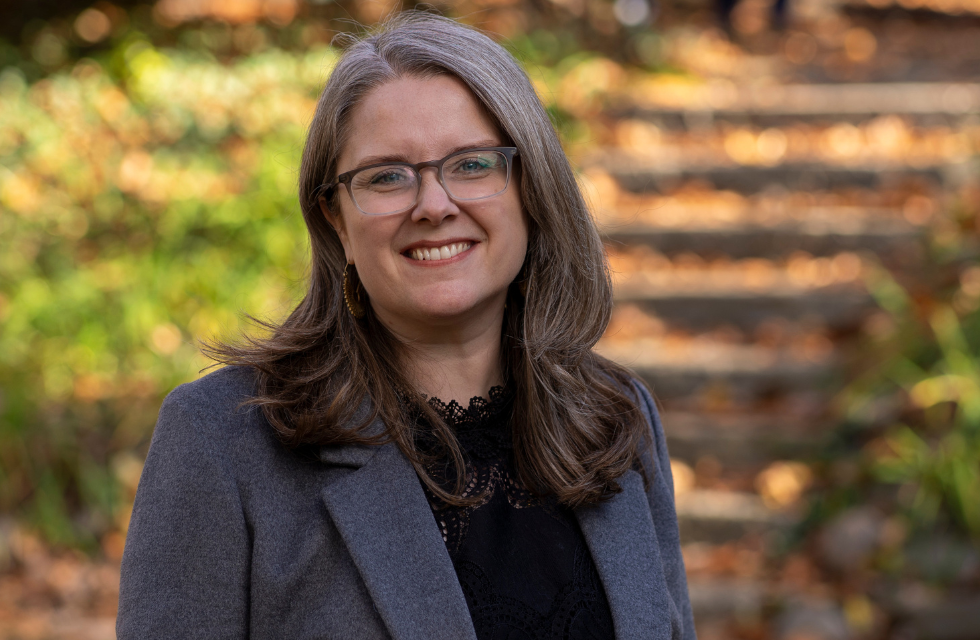
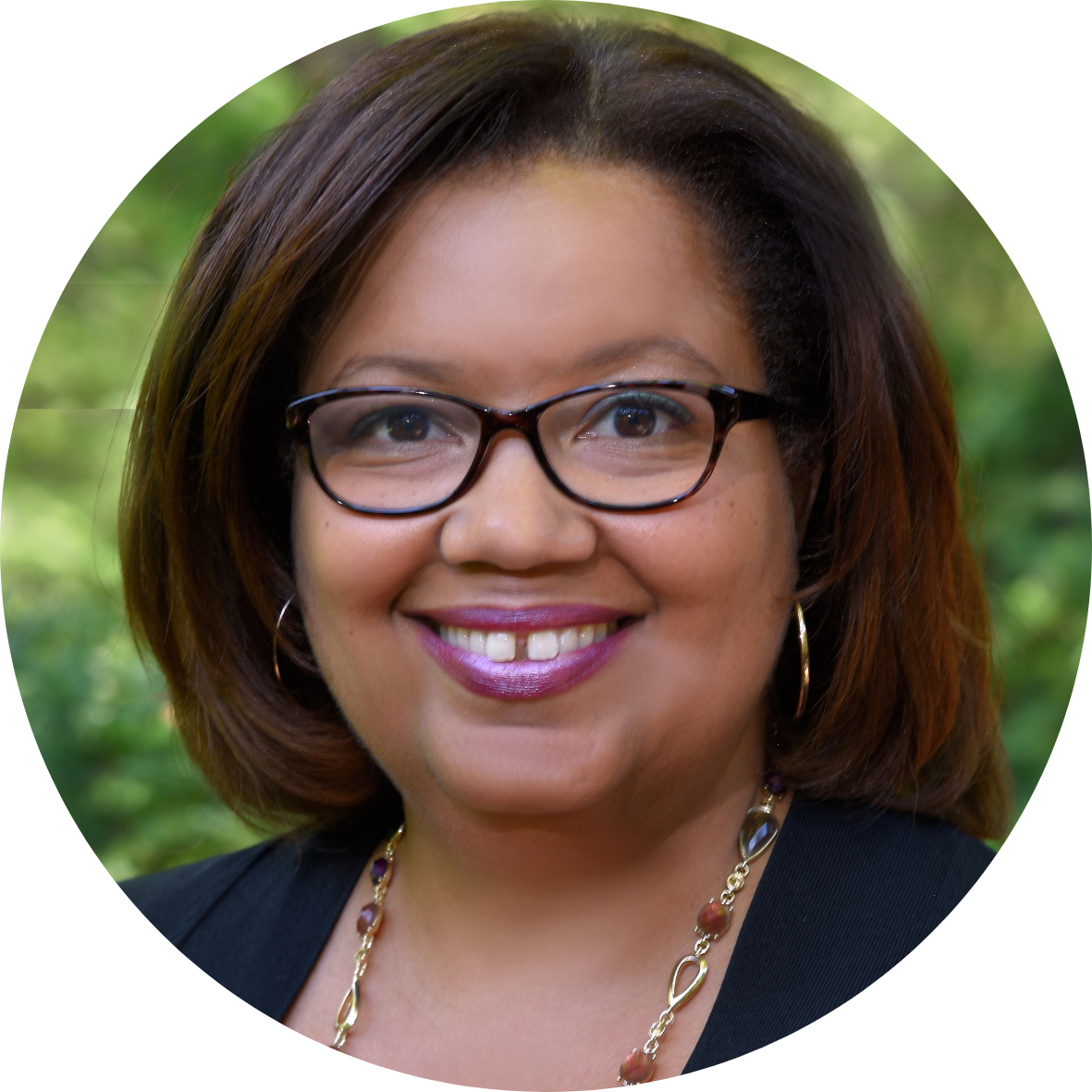
Lynette Clemetson is the director of Wallace House Center for Journalists.
This is my 10th academic year as director of Wallace House. Over the years, among the key benefits I tout when speaking to journalists about our programs is the university as refuge, a sturdy port in the ever-turbulent storm that is the journalism industry.

As the last academic year came to a close, that didn’t feel like something I could continue to promise with any degree of confidence.

The Trump administration was targeting universities around the country, threatening colossal funding cuts and issuing demands that reached into governance, hiring, admissions and academic freedom. The University of Michigan discontinued its strategic diversity plan. Some departments were scrubbing websites of words and phrases that could draw government retribution. It was unclear whether international students — our own international Fellows included — would be granted entry to the United States.

The threats and absurdities haven’t gone away. The people in our extended Wallace House network — journalists, scientists, scholars, policy and legal experts — are prime targets in the strategic attempt to weaken institutions and consolidate presidential power.

Yet in the face of numerous obstacles, campus this fall still brims with possibility. The harsh realities of a raw and hostile national landscape are being met with expressions of creativity, collaboration, innovation, active listening, welcome and compassion. There is a tangible focus and resolve across departments and faculty, in student activities and community events that offer an ever-present reminder of what makes the University of Michigan special.

As our new Knight-Wallace Fellows move through the intellectual bounty of the fall semester, I am reminded time and again that the qualities that drew me here as a Fellow and that infuse my enthusiasm for outreach as director are no less true now than they have ever been.

But from our perch at Wallace House, each week we’re seeing inspiring evidence across our network of people stepping up boldly with both short-term assistance and long-term resolve.

The excellent work of alumni also reminds me that the dedicated journalists who Wallace House has helped to develop and empower over five decades are well-positioned to meet the moment.

And so this issue of the Wallace House Journal is built around resilience. Not naiveté or blind optimism. But the kind of clear-eyed focus and mission-driven leadership needed to respond to the multiple serious challenges we face with fortitude and vision.

We’ve all witnessed our share of feckless leadership over the past several months, from media executives and university presidents who somehow believed that cowering and capitulating might provide them protection. But from our perch at Wallace House, each week we’re seeing inspiring
evidence across our network of people stepping up boldly with both short-term assistance and long-term resolve.

In these pages, you’ll read stories of our colleagues reaching across organizations to lend financial, editorial and strategic support; about collaborations to build community-level trust and cross-border accountability; and about journalists pairing with scholars to rescue data essential to the work of both. We can all draw strength from these vignettes — and hopefully also ideas.

If after paging through, you feel inspired to reach out to a Knight-Wallace Fellow you haven’t spoken to in a while, or one you have never met, a Livingston Award winner you applauded, a faculty member whose research you’ve been wondering about, a board member you struck up a friendship with, or an engaged
community member you had a great conversation with at one of our events, go ahead and reach out. Check in.

That’s what networks are for. This is an exceptional one — and its members are not in retreat.


This article is part of Rising to Meet the Moment, a series from the Fall 2025 issue of the Wallace House Journal, featuring reflections from Knight-Wallace alumni, Wallace House board members and the Livingston Awards community on meeting today’s challenges with focus, resilience and resolve. Read more stories from our series:

Christopher Baxter, “Unexpected hope

Lynette Clemetson, “Stepping up with focus and resolve

Hayes Ferguson, “Nurturing innovation, adaptability and purpose

Stephen Henderson, “Choosing Civility

Samantha Henry, “The future of our profession: student journalism

Tracy Jan, “News deserts and fewer watchdogs

Margaret Low, “Game Over? Not a chance.

Peggy Lowe, “Defunded, but not defeated

Amy Maestas, “Building trust through community collaborations

Kunal Majumder, “Defending the right to report

Seema Mehta, “Why we keep reporting

Rachel Rohr, “Swift action for the hardest hit

Gerard Ryle, “We will not retreat

Laura Santhanam, “Preserving knowledge

Mazin Sidahmed and Maria Arce, “Training newsrooms to serve immigrant communities

Celeste Watkins-Hayes, “Bending without breaking: resilience in academia

Thomas Zurbuchen, “Never let a good challenge go to waste

Why We Keep Reporting

Seema Mehta is a political reporter at the Los Angeles Times.

I’ve covered politics at the Los Angeles Times for nearly two decades, and I cannot recall a more challenging time to do this work. The nation is deeply polarized. Many voters believe the mainstream media is fake news and won’t talk to us, making it harder to tell stories that reflect the viewpoints of all Americans. It seems impossible to keep up with the firehose of news coming out of the White House, including many policies that disproportionately affect Californians.

The ICE raids that began in Los Angeles in June and the ensuing deployment of the National Guard on the streets of the nation’s second-largest city are prime examples. In the early days, my colleagues and I wrote about the chaos that was violently unfolding amid one of the largest immigrant populations in the U.S., the legalities of the efforts, the administration’s justifications and Democrats’ opposition.

In the midst of an avalanche of breaking news, I heard about a veteran who had self-deported to South Korea.

Sae Joon Park legally immigrated when he was 7 years old and grew up in Los Angeles, becoming part of Southern California’s skateboarding and surfing scene in the 1980s.

After graduating from high school, Park joined the Army and was deployed to Panama in 1989 as the U.S. tried to depose the nation’s de facto leader, General Manuel Noriega. Park was shot twice, honorably discharged and awarded a Purple Heart.

Park said he spiraled into addiction as he sought to self-medicate his PTSD, leading to drug convictions and prison time. He eventually sobered up, moved to Hawaii and raised two children. Every year, Park was required to check in with federal officials and show that he was employed and sober.

People are willing to speak to us during the most harrowing moments of their lives, and we are privileged to be able to share their stories.

During his most recent check-in, Park was about to be detained and deported, but immigration agents placed an ankle monitor on him and gave him three weeks to get his affairs in order and self-deport. He is not allowed to return to the United States for 10 years. He worries he will miss his mother’s passing and his daughter’s wedding.

I spoke with him two days after he left the United States. He remains in South Korea.

Park’s saga is not uplifting. But it is a reminder of the importance of our work and motivation to keep doing it, to show the real-world impacts of decisions being made in the halls of power. People are willing to speak to us during the most harrowing moments of their lives, and we are privileged to be able to share their stories.


This article is part of Rising to Meet the Moment, a series from the Fall 2025 issue of the Wallace House Journal, featuring reflections from Knight-Wallace alumni, Wallace House board members and the Livingston Awards community on meeting today’s challenges with focus, resilience and resolve. Read more stories from our series:

Christopher Baxter, “Unexpected hope

Lynette Clemetson, “Stepping up with focus and resolve

Hayes Ferguson, “Nurturing innovation, adaptability and purpose

Stephen Henderson, “Choosing civility

Samantha Henry, “The future of our profession: student journalism

Tracy Jan, “News deserts and fewer watchdogs

Margaret Low, “Game Over? Not a chance

Peggy Lowe, “Defunded, but not defeated

Amy Maestas, “Building trust through community collaborations

Kunal Majumder, “Defending the right to report

Seema Mehta, “Why we keep reporting

Rachel Rohr, “Swift action for the hardest hit

Gerard Ryle, “We will not retreat

Laura Santhanam, “Preserving knowledge

Mazin Sidahmed and Maria Arce, “Training newsrooms to serve immigrant communities

Celeste Watkins-Hayes, “Bending without breaking: resilience in academia

Thomas Zurbuchen, “Never let a good challenge go to waste

The 38th Graham hovey Lecture: Inside the firings and the Future of the Federal Workforce

Q&A with Andrea Hsu of NPR

Andrea Hsu is the labor and workplace correspondent for NPR, focusing on the evolving dynamics of work in the United States. As a 2012 Knight-Wallace Fellow, Hsu studied innovative approaches to health care awareness. She returned to Wallace House in September to deliver the 38th annual Graham Hovey Lecture. Before the event, Hsu spoke with Lynette Clemetson, director of Wallace House.

Clemetson: You started as a labor and workplace reporter during the COVID-19 pandemic, and the job was shaped by the pandemic. What was the focus of your beat when you started?

HSU: It started out as a temporary stint, filling in on the business desk in the fall of 2020, when a lot of office workers were working from home. Their offices had closed, and many schools were also closed. Working parents were figuring out what to do with their children. At the same time, there were the essential workers who had to keep things going – people working in grocery stores, hospitals, nursing homes and factories. It was a period of upheaval for all different types of workers.

When did it shift from being pandemic-driven to being focused on the federal workforce?

Not until this year. In fact, covering the federal workforce had never been part of my beat. Before January of this year, I think I had done maybe three stories on the federal workforce: one about the rollback of telework in the government, and two about federal employee unions.

But sometime between the election and the inauguration, a memo went out to staff announcing that I would be covering the federal workforce. This was a surprise to me! And then, as soon as Trump took office on January 20, he began signing executive orders that laid out huge changes for the federal workforce, and that took over my beat.

When did it shift from being pandemic-driven to being focused on the federal workforce?

Not until this year. In fact, covering the federal workforce had never been part of my beat. Before January of this year, I think I had done maybe three stories on the federal workforce: one about the rollback of telework in the government, and two about federal employee unions.

But sometime between the election and the inauguration, a memo went out to staff announcing that I would be covering the federal workforce. This was a surprise to me! And then, as soon as Trump took office on January 20, he began signing executive orders that laid out huge changes for the federal workforce, and that took over my beat.

I was really struck by how worried these people were, not just about their own jobs security, but about what would happen to the work they were doing.

So were federal workers expecting change?

There were ideas from Trump’s first term that he reintroduced. Some of them were in Project 2025. Still,
it was the speed at which this all happened that was surprising to people. On January 28, eight days after the inauguration, an email went out inviting almost the entire federal workforce to resign. More than 2 million people got this email. There was a lot of confusion over whether the offer was legal or if it was even real. Shortly after that, in the middle of February, federal agencies started firing probationary employees en masse. Those were mostly people in their first or second year on the job, fired supposedly for performance reasons, even though many had stellar performance reviews.

My colleagues and I began getting all kinds of messages from federal workers — emails, LinkedIn messages, and mostly Signal messages. Many federal workers were scared to speak out but were very willing to send screenshots of communications they were getting as they tried to make sense of what was happening.

The public messaging was that it was about cleaning out waste in Washington. Who were you hearing from?

The people contacting me were from all over the country, largely not in Washington. In fact, 80% to 85% of federal workers don’t live in the Washington, D.C. area. That often comes as a surprise to people. I was hearing from people in Georgia, Utah, Alaska — all over the country.

What did you learn from that flood of messages?

I was really struck by how worried these people were, not just about their own job security, but about what would happen to the work they were doing. These are people who feel a deep sense of responsibility to the public.

I imagine some of their jobs are not visible to the general public at all.

Yes. For example, one woman worked for the USDA Agricultural Research Service in Logan, Utah. She was a Ph.D. scientist, and her job was helping alfalfa farmers in Washington state. She was helping them manage pests in their alfalfa fields. The farmers she was working with grow alfalfa for seed, which is then used as feed for the U.S. dairy industry, which supplies our milk. The reason the government pays a researcher like her to be out there helping these farmers is that her work is seen as critical to America’s food supply. I heard from many people like this who took the time to explain these things to me.

What will the reductions look like by the end of this year?

According to the U.S. Office of Personnel Management, by the end of December, the federal workforce will be down roughly 300,000, to about 2.1 million employees. So that’s about one in eight federal workers out by the end of the year. Many of those leaving are people with a lot of experience, so
there is worry about the loss of institutional knowledge.

What are you watching going forward?

The push by the Trump administration to turn much more of the federal workforce into “at will” employees. The administration has argued that the president needs to be able to remove those who are unwilling to help him fulfill the promises he made to the American people. Currently, only about 4,000 federal employees, out of more than 2 million, are political appointees who serve at the pleasure of the president. The rest enjoy civil service protections, designed to give the federal government stability and continuity through changeovers in administration. Upending this system would really change the nature of the federal workforce. Ultimately, this will come down to the Supreme Court to decide.

Andrea Hsu was a 2012 Knight-Wallace Fellow


This interview appeared in the Fall 2025 issue of the Wallace House Journal.

Wallace House Presents an Evening with Jake Tapper

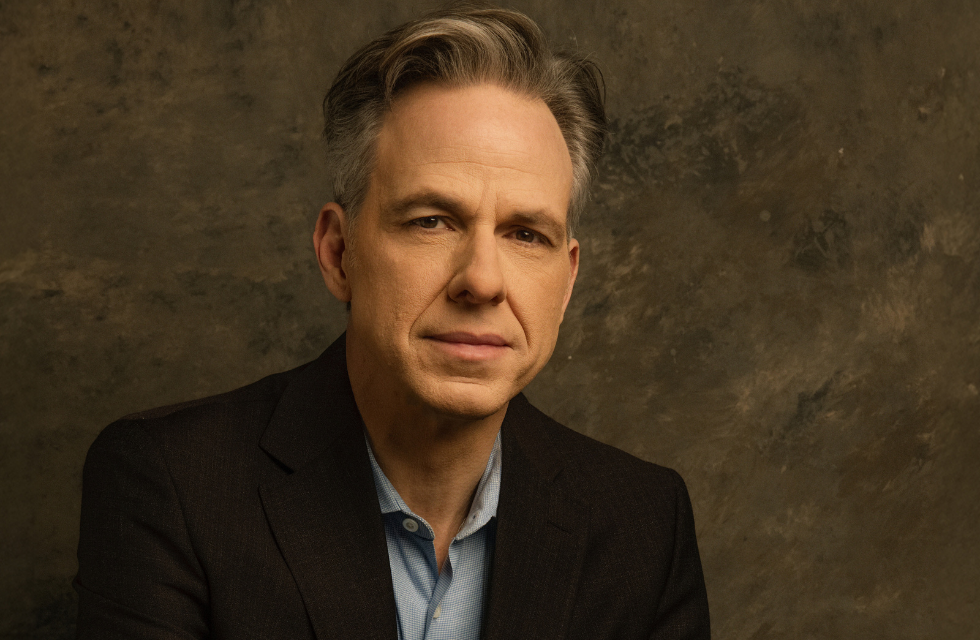
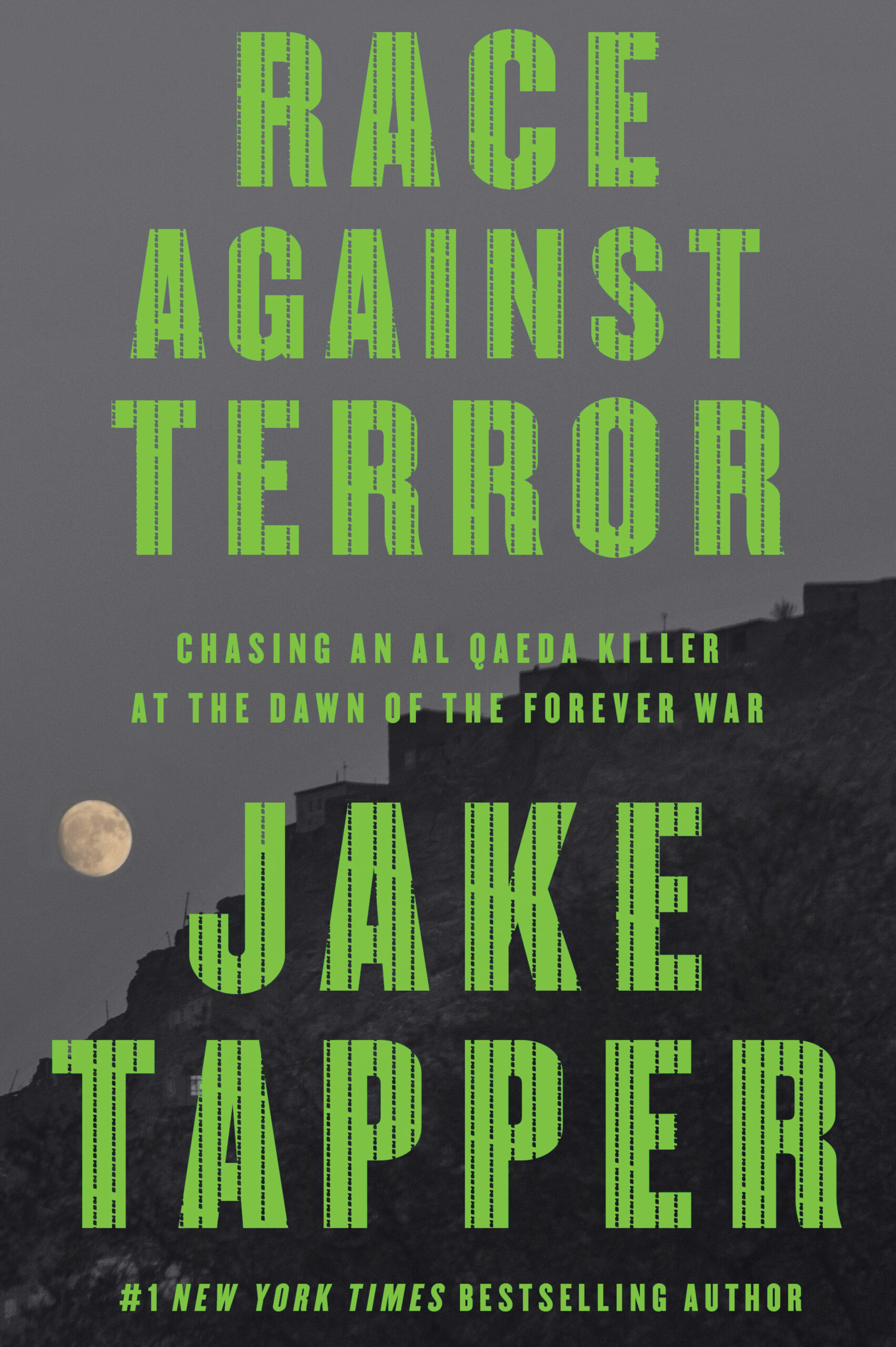
An Evening with Jake Tapper: Race Against Terror

A book conversation with Jake Tapper, CNN anchor and author, and Javed Ali, Associate Professor, Ford School

6:30 PM | Wednesday, Nov. 19, 2025

Annenberg Auditorium | Gerald R. Ford School
735 S State St., Ann Arbor, MI 48104

Registration for this event is now full. Please join our wait list.

This is an in-person event.
The event will also be livestreamed here.

Join Jake Tapper in conversation with Javed Ali as they discuss Tapper’s newly released nonfiction thriller, “Race Against Terror: Chasing an Al Qaeda Killer at the Dawn of the Forever War.” With the rigor of investigative reporting, Tapper follows two U.S. attorneys racing to prosecute an al Qaeda operative after a 2011 confession and traces the global hunt for justice in a dramatic, little-known case of the War on Terror. Hear how prosecutors, soldiers, and intelligence agents worked across continents — and what this case reveals about the threats we still face today. 

Signed copies of Tapper’s newly released book, “Race Against Terror,” will be available for purchase at the event by bookseller Literati.

About Jake Tapper

Jake Tapper is a CNN anchor and chief Washington correspondent. Jake Tapper joined the network in January 2013. Tapper currently anchors a two-hour weekday program, “The Lead with Jake Tapper,” which debuted in March 2013. He has hosted CNN’s Sunday morning show, “State of the Union,” since June 2015. In April 2021, he became the lead anchor for CNN for Washington, D.C. events. In addition to Tapper’s reporting, he is also the New York Times bestselling author of several books, including “Race Against Terror: Chasing an Al Qaeda Killer at the Dawn of the Forever War” and “The Outpost: An Untold Story of American Valor,” as well as three novels “The Hellfire Club,” “The Devil May Dance,” and” All the Demons Are Here.”

About Javed Ali

Javed Ali is an associate professor of practice at the Gerald R. Ford School of Public Policy. He joined the Weiser Diplomacy Center in 2021. Ali brings more than 20 years of professional experience in national security and intelligence issues in Washington, D.C. He writes and provides commentary across a number of media sites and platforms, including MSNBC, CBS, CNN, ABC, The New York Times, The Washington PostThe Hill, and Newsweek.

Co-Sponsors
Gerald R. Ford School of Public Policy
Weiser Diplomacy Center

EXPLORE MORE WALLACE HOUSE EVENTS

Wallace House Presents Journalist and Author Karen Hao

“Empire of AI: Dreams and Nightmares in Sam Altman’s OpenAI”

5 PM | MONDAY, OCT 20, 2025

Rackham Auditorium
915 E. Washington Street

This event is free and open to the public.

Register for this event.
Registrations are not required, but allow us to send you event updates and reminders.

As Artificial Intelligence claims increasing influence over our lives, it’s easy to believe AI’s creeping dominance is inevitable. But is it?

Join award-winning journalist Karen Hao and Patrick Barry, clinical assistant professor at the University of Michigan Law School, for an eye-opening discussion on Hao’s best-selling book, “Empire of AI.

As the first reporter to gain extensive access to OpenAI when its founder, Sam Altman, promoted it as an altruistic research non-profit, Hao has followed the company’s meteoric rise. Drawing on seven years of reporting across five continents, Hao sheds light on the hidden impacts of AI —  from the exploitation of data workers in the Global South to the immense environmental costs of its energy and water consumption. Discover whose priorities are being advanced, whose voices are overlooked, and how we can work together to build a more equitable future for the world with AI.

Empire of AI” will be available for purchase from BookSweet at the event. The author will stay for a short book signing after the program.

About the speaker
Karen Hao is an author and award-winning journalist covering the intersections of AI and society. She is a contributor to The Atlantic and leads the Pulitzer Center’s AI Spotlight Series, a program training thousands of journalists around the world on how to cover AI. Previously, she was a foreign correspondent for The Wall Street Journal and a senior editor at MIT Technology Review. Hao was recognized with an American National Magazine Award in 2022 for “outstanding achievement for magazine journalists under the age of 30,” and an American Humanist Media Award in 2024. Her book, “The Empire of AI: Dreams and Nightmares in Sam Altman’s OpenAI,” was published in May 2025 and was an instant New York Times bestseller.

About the moderator
Patrick Barry is a clinical assistant professor and the director of digital academic initiatives at the University of Michigan Law School, as well as a visiting lecturer at the University of Chicago Law School and the UCLA School of Law. His research interests include persuasion, creativity, team dynamics, and artificial intelligence. He is the author of twelve books and has created several online series for the educational platform Coursera, including “Good with Words: Writing and Editing” and “AI for Lawyers and Other Advocates.” 

Co-Sponsors:
Science, Technology, and Public Policy (STPP) Program

U-M School of Information
Dissonance Event Series
Information and Technology Services
Center for Ethics, Society, and Computing (ESC)

EXPLORE MORE WALLACE HOUSE EVENTS

The 38th Graham Hovey Lecture with NPR’s Andrea Hsu

“Inside the Firings and the Future of the Federal Workforce”

September 11, 2025 | 5 p.m.
Reception following the lecture

Wallace House Gardens
620 Oxford Road, Ann Arbor

Welcome remarks by Laurie McCauley,
Provost, University of Michigan

Watch the video recording.

A sweeping effort to expand presidential power and overhaul the federal government began the moment Donald Trump returned to the White House on January 20, 2025. Executive orders targeted the federal workforce, reducing its size and making it more responsive to executive authority. Within a few months, tens of thousands of federal employees were fired, and far more resigned amid threats of mass layoffs. While a flurry of lawsuits has slowed those actions, it’s abundantly clear that the government workforce is not what it was on January 20. What’s unclear is what the government will ultimately become and how the country will be changed in the process.

NPR labor and workplace correspondent Andrea Hsu, a 2012 Knight-Wallace Fellow, has been closely covering the upheaval inside government agencies and the legal fights surrounding it. She’ll share insights from those still working within federal agencies and those who have recently been pushed out, and explore what this transformation could mean for how Americans experience and rely on their government.

This is an in-person event and will not be live-streamed. However, a recording of the lecture will be available on our website following the event.

About the Speaker

Andrea Hsu began her journalism career as a locally hired researcher for the BBC’s Beijing bureau. She joined NPR’s Washington, D.C., newsroom in 2002, spending nearly two decades as a producer for “All Things Considered.” In late 2020, she transitioned to NPR’s business desk, where she reported on how the COVID-19 pandemic reshaped the workforce. Since 2021, she has served as NPR’s labor and workplace correspondent, focusing on the evolving dynamics of work in the United States. As a 2012 Knight-Wallace Fellow at the University of Michigan, Hsu studied innovative approaches to health care awareness.

About the Graham Hovey Lecture

The annual Graham Hovey Lecture recognizes a Knight-Wallace journalist whose career exemplifies the benefits of a fellowship at the University of Michigan and whose ensuing work is at the forefront of our national conversations. The event is named for the late Graham Hovey, director of the fellowship program from 1980 to 1986 and a distinguished journalist for The New York Times.

Michigan Public is a co-sponsor of this event.

Announcing the 2025 Livingston Award Winners

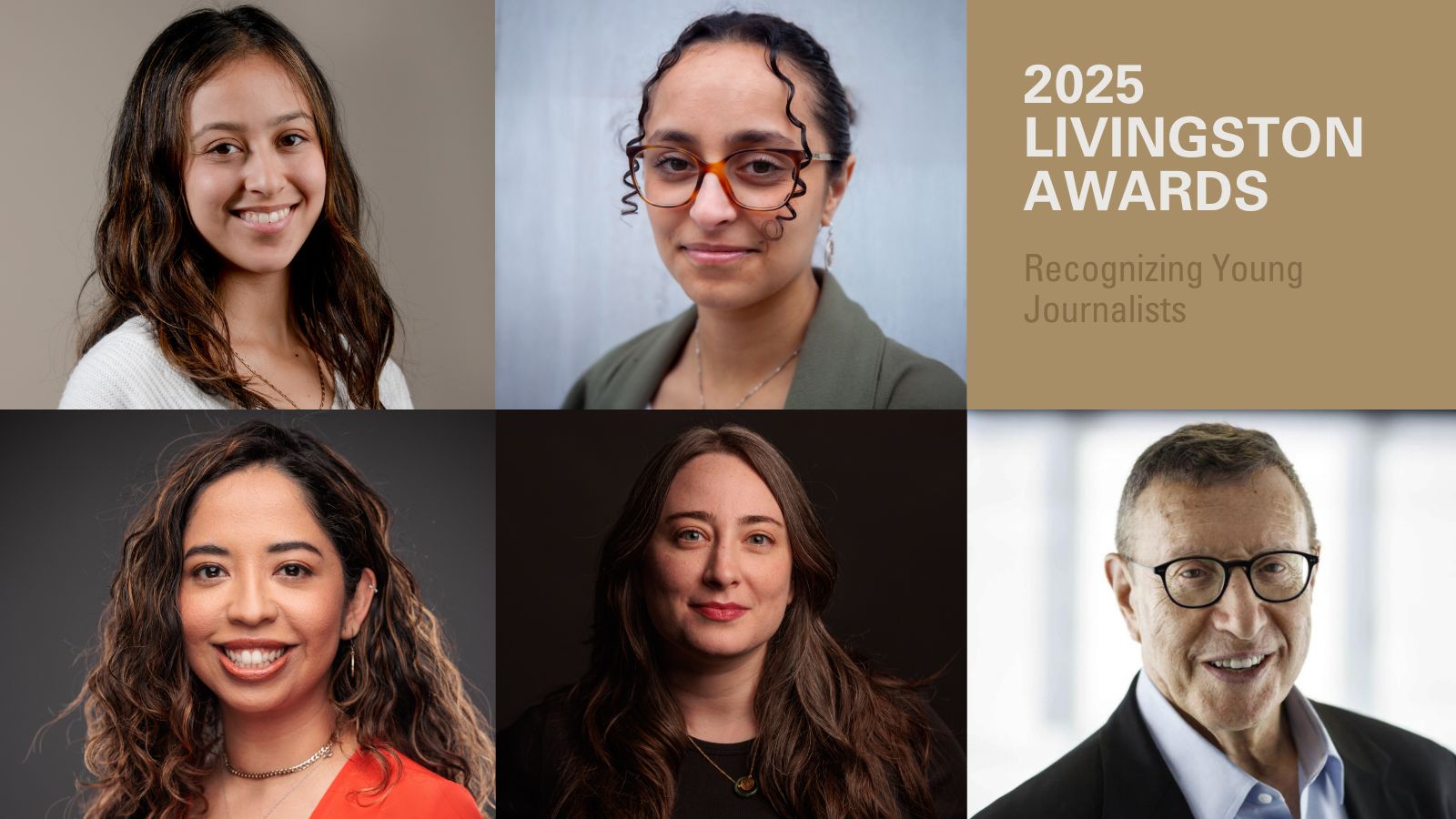
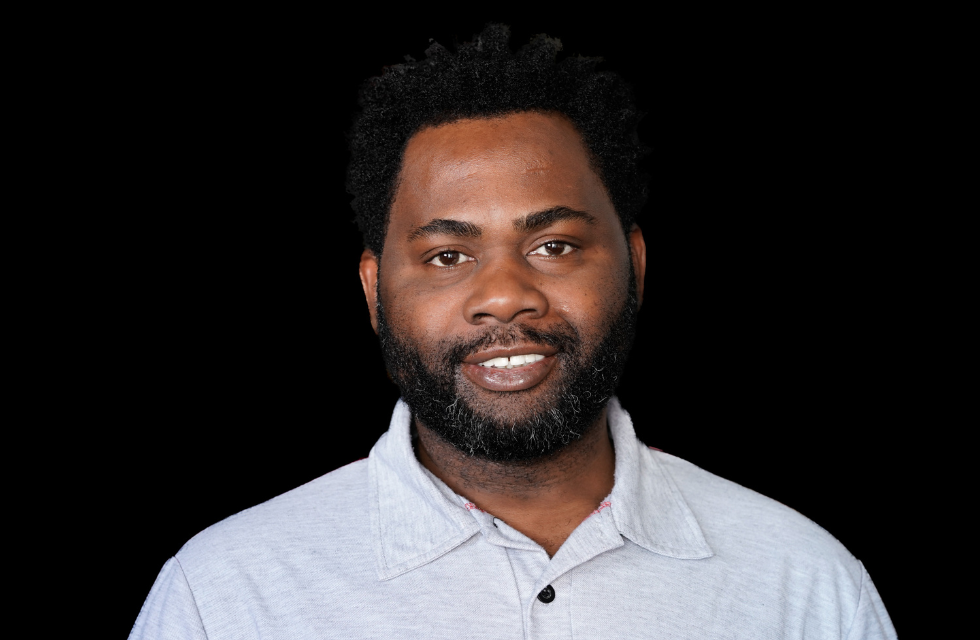
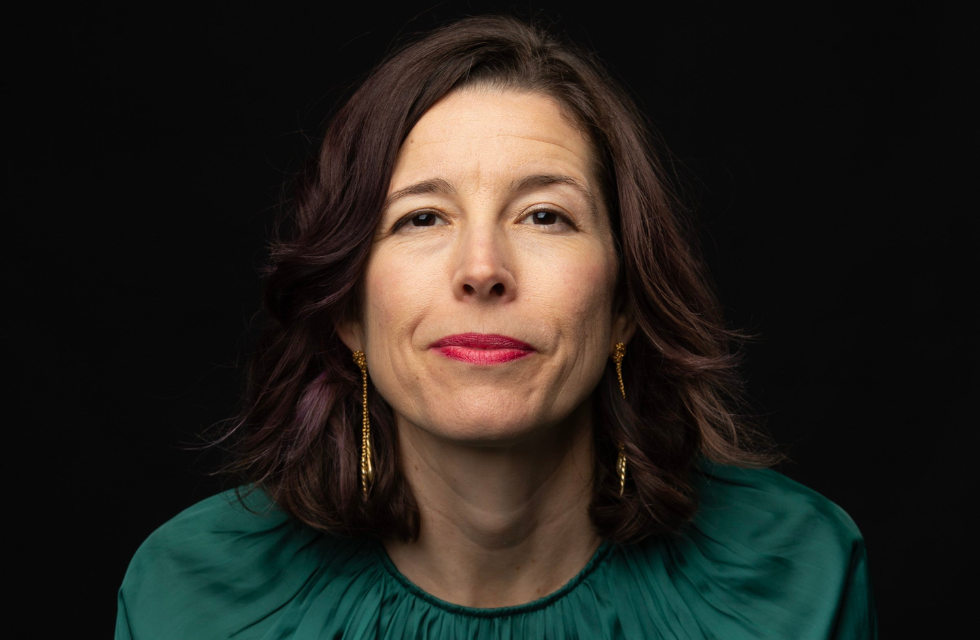
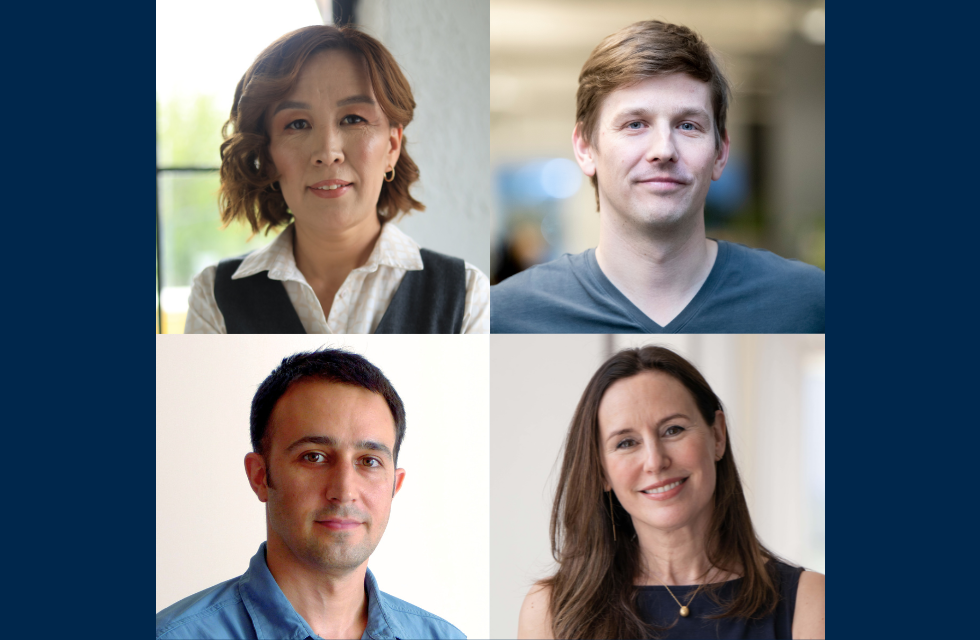
2025 Livingston Award winners (clockwise from top-left) Jessika Harkey of The Connecticut Mirror, Nicole Sadek of the International Consortium of Investigative Journalists (ICIJ), Norman Pearlstine, the Richard M. Clurman Award recipient, Sydney Brownstone and Esmy Jimenez of The Seattle Times and KUOW Public Radio.

Today the Livingston Awards honored exceptional journalists under the age of 35 for outstanding work in local, national and international reporting. This year’s winning stories include a local investigation into how Hartford, Connecticut’s public school system graduated a student with honors who, after 12 years in the district, could not read or write; a powerful podcast series exposing the systemic struggles of those living with severe mental illness in the U.S.; and a deeply reported investigation into the health and environmental consequences of Western oil operations on the village of Berezovka, Kazakhstan. The $10,000 prizes are for work released in 2024.

The Livingston Awards also honored Norman Pearlstine with the Richard M. Clurman Award for mentoring. Throughout a career spanning leadership roles at The Wall Street Journal, Time Inc., Bloomberg L.P., and the Los Angeles Times, Pearlstine has championed newsroom talent and guided generations of journalists. Named for the late Richard M. Clurman, former chief of correspondents for Time-Life News Service and the architect of the Livingston Awards, the prize is presented annually to a veteran journalist who has had a profound impact on the development and careers of journalists.

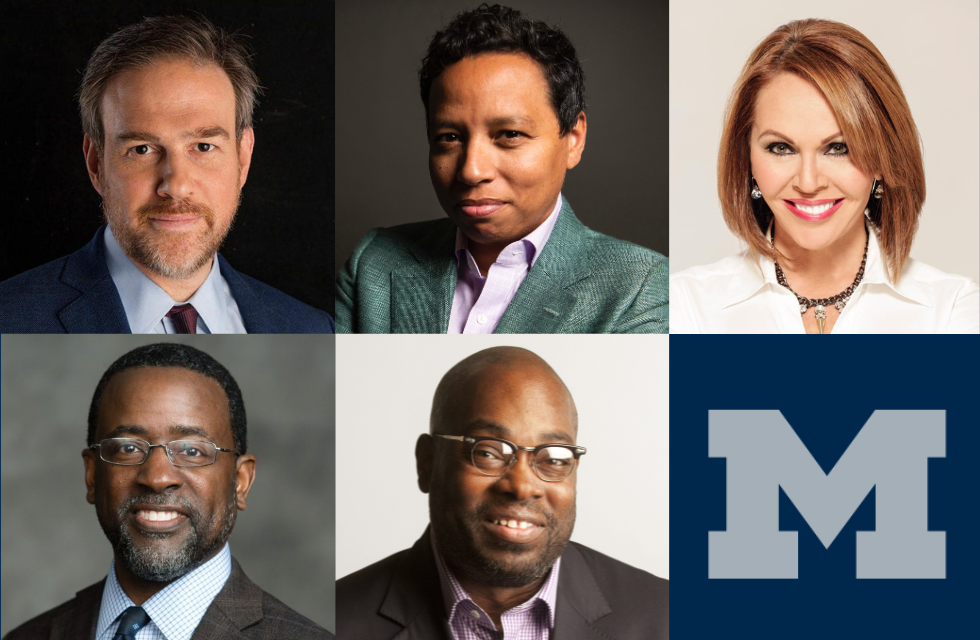
Livingston Awards national judges María Elena Salinas, independent journalist, formerly of ABC News and Univision, Lydia Polgreen, opinion columnist at The New York Times, Sally Buzbee, news editor for the United States and Canada, Reuters and Sewell Chan, senior fellow at the Annenberg Center of Communication Leadership and Policy, introduced the winners at a ceremony hosted by Livingston Awards judge Audie Cornish, anchor of “CNN This Morning with Audie Cornish.”

“At a time of escalating efforts to discredit the press and undermine the role of journalism in our society, recognizing the work of these young reporters is both urgent and necessary,” said Lynette Clemetson, Livingston Awards director. “Their stories uncovered fresh angles on familiar issues and offered compelling entry points that refocused our attention and spurred discourse and action, reminding us of journalism’s role in a healthy democracy.” 

Celebrating its 44th year, the awards bolster the work of young reporters, cultivate the next generation of journalism leaders and mentors, and advance civic engagement through powerful storytelling. Major sponsors include the University of Michigan, Knight Foundation, the Indian Trail Charitable Foundation, the Mollie Parnis Livingston Foundation and the Hochman and Allard Families, Christiane Amanpour, the Judy and Fred Wilpon Family Foundation, Dr. Gil Omenn and Martha Darling, CNN and The Joyce Foundation.

The 2025 winners for work released in 2024 are listed below.

Local Reporting

Jessika Harkay, 24, of The Connecticut Mirror for “Aleysha Ortiz,” a three-part story following a graduate of Hartford Public High School who completed her education without acquiring the ability to read or write. Despite attending Hartford public schools since age six and graduating with honors, Ortiz’s learning disabilities were inadequately addressed by the school system. Her case has sparked bipartisan concern among Connecticut lawmakers, highlighting systemic issues in special education and prompting calls for increased accountability and reform within the state’s educational institutions.

The first few paragraphs of the article grab you. How is it possible that a young lady who graduated from high school and is now entering college was never taught how to read and write? Aleysha Ortiz’s story is fascinating not just because of the obvious failure of the Hartford public school system, but because of how this remarkable young woman is fighting for her right to learn in spite of her learning disabilities. Jessika Harkay, a 24-year-old education reporter for The Connecticut Mirror, stumbled upon Aleysha’s story and ran with it. In doing so she gave Aleysha a voice and prompted efforts to make sure this doesn’t happen again.
María Elena Salinas, Livingston Awards national judge

National Reporting

Esmy Jimenez, 30 and Sydney Brownstone, 34, The Seattle Times in partnership with KUOW Public Radio, for three episodes from Season One of the podcast “Lost Patients.” Their stories explored the visceral experience of psychosis, the anguish of families whose loved ones are being endlessly “churned” through shelters, jails and hospitals, and the discovery of little-known archives — prompting descendants to discover institutionalized relatives for the first time.

When faced with a catastrophe that defies easy explanation, let alone solutions, the human impulse is usually to look away. But when Esmy Jimenez and Sydney Brownstone began reporting on people with
persistent psychosis, they did what great journalists have always done: look deeper, dig further and never lose sight of the human stories at the heart of America’s mental health crisis. There are few villains and no saints in their panoramic podcast ‘Lost Patients,’ which reaches back through decades — even centuries — to try to understand how as a society we abandoned the most gravely mentally ill people, and offer us an opportunity to rethink how we treat the most vulnerable among us
.”
Lydia Polgreen, Livingston Awards national judge

International Reporting

Nicole Sadek, 26, International Consortium of Investigative Journalists (ICIJ) for “The Lost Village,” an investigation into how toxic emissions from Western oil operations in Berezovka, Kazakhstan, led to a suspected wave of illness and the forced relocation of residents. In 2014, about 20 children at the village’s only school fainted and suffered seizures. Though the companies funded the relocation starting in 2015, they never accepted responsibility for the health crisis and environmental devastation.

Nicole Sadek brought tenacity and sensitivity to the story of a decade-old tragedy – the relocation of an entire village in northwestern Kazakhstan because of serious health issues suffered by its people linked to a nearby Western-run oil and gas field. Her reporting, with its description of the difficulties the villagers of Berezovka faced in securing assistance or accountability, allowed a wider audience to understand this story and its clear warnings for the future.
Sally Buzbee, Livingston Awards national judge

Mentoring Award

Norman Pearlstine, who held top editorial roles at some of the nation’s most influential news organizations, including executive editor of the Los Angeles Times, editor-in-chief and chief content officer at Time Inc., chief content officer at Bloomberg L.P., managing editor and executive editor at The Wall Street Journal and executive editor at Forbes, was honored with the Richard M. Clurman Award for his commitment to counseling, nurturing and inspiring young journalists. In a video tribute, generations of journalists reflected on Pearlstine’s mentorship and his lasting influence on their careers.

“While many can claim Norm as a former boss, I feel particularly fortunate. He saw potential in me that I sometimes couldn’t see myself, building my confidence with each challenge he entrusted me to handle.”
Kimi Yoshino, The Baltimore Banner

In addition to Buzbee, Chan, Cornish, Polgreen and Salinas, the Livingston national judges panel includes Raney Aronson-Rath, Matt Murray, Bret Stephens, and Kara Swisher.

More on the winners here.

A Voice of Resistance and Renewal on World Press Freedom Day

My Fight for Freedom of Speech Began With, “You Are Listening to Radio Liberty!”

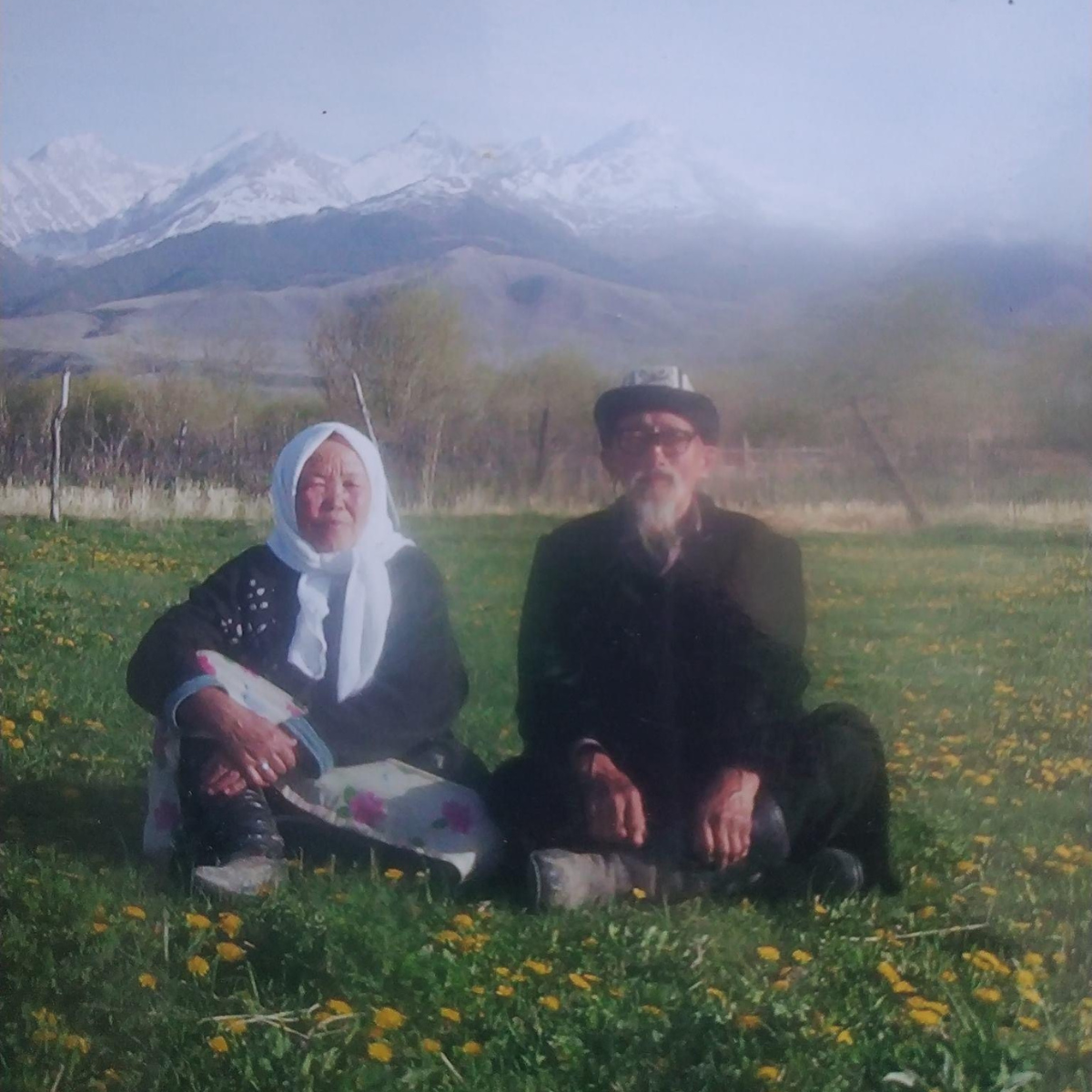
I was born in Kyrgyzstan, a small former Soviet Union country, where only the giant Tien Shan mountains separated us from China. I was raised by my grandparents. My grandfather was a dissident who had escaped Chinese communism only to live under Soviet totalitarianism. In his world, information was power, and the radio was a lifeline.

Besides the state-issued radio in our small home, my grandfather kept a smaller one powered by batteries. No matter the season –  whether through driving rain, annoying summer heat, or deep snow – he would slip the little radio into his pocket, mount his donkey, and ride into the mountains. 

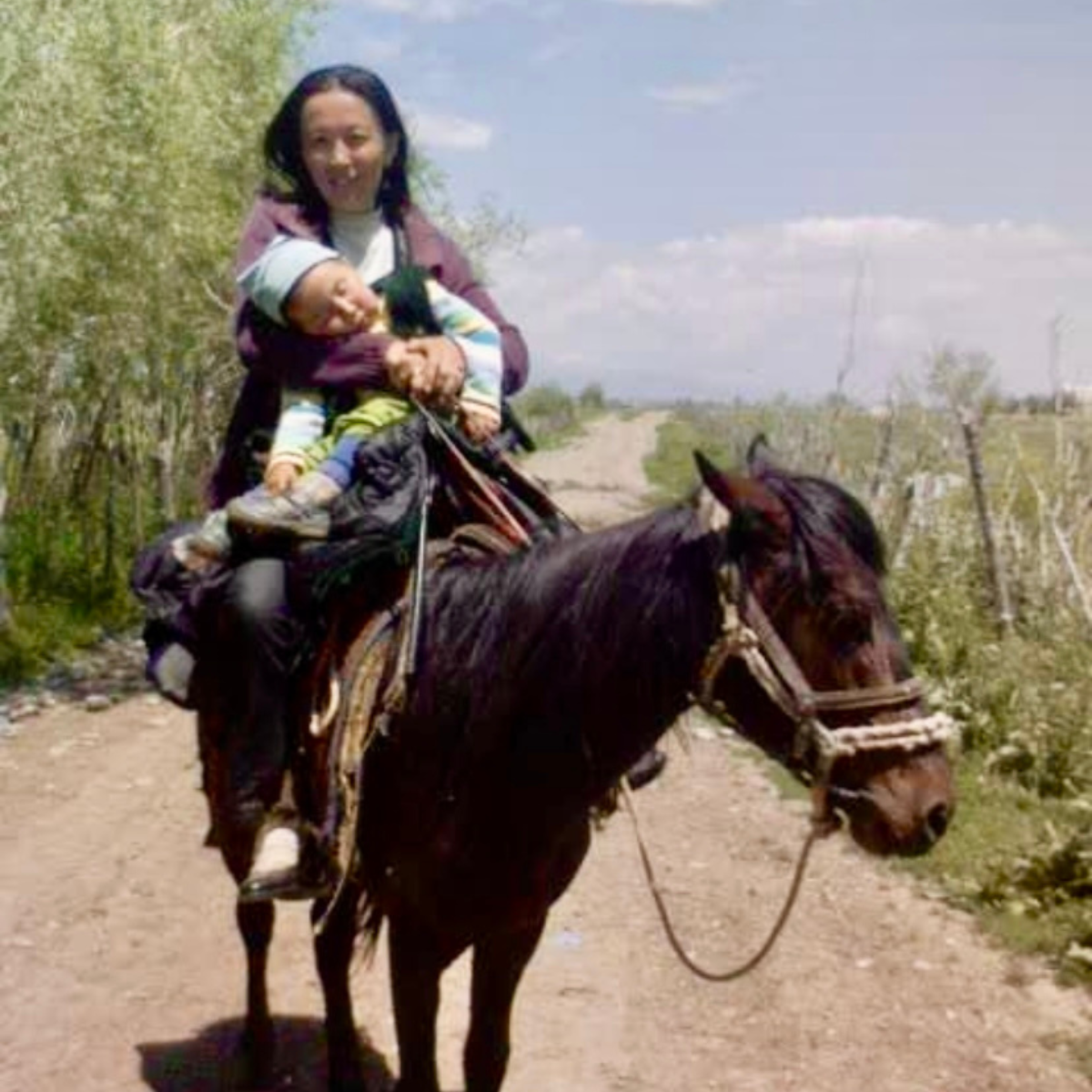
Chynybaeva’s grandparents in the backyard of her home in At-Bashy, Kyrgyzstan, 2004

When I was nine, I begged him to take me along, and eventually, one early summer morning, he agreed. We saddled a donkey, my grandfather leading in front, me clinging to the saddle behind him. As we climbed higher into the hills, he kept glancing anxiously around, urging the donkey to move faster.

When we reached a remote ridge, invisible from the valley and village below, he turned to me. “Promise me,” he said, “you won’t tell anyone — not even your grandmother — what we are about to do.” I nodded solemnly.

He switched on the radio and tuned it carefully, searching for the right frequency. Through the static, a voice broke out. “Good morning, Kyrgyzstan! You are listening to Radio Azattyk!” The word Azattyk in Kyrgyz means liberty. Back then, listening to Radio Free Europe/Radio Liberty (RFE/RL) was a crime, as it is today in Russia and many other former Soviet countries.

At that moment, I understood that beyond the brutally curated broadcasts of Soviet media, there existed another voice. A voice that spoke of a world outside of official propaganda — which was always in Russian. A voice that reported not only about Soviet parades but about the lives of ordinary people – lives like ours in my language, in Kyrgyz.

On that mountain, with a crackling radio in my grandfather’s hands, my journey for freedom of speech and my fight for freedom began. 

Chynybaeva and her son, At-Bashy, Kyrgyzstan, 2010

More than 20 years later,  I had fulfilled my childhood dream of becoming a journalist. Now it was my voice greeting eager listeners in my country: “Good morning, Kyrgyzstan! You are listening to Radio Azattyk.”

My grandfather passed away five years before I joined Radio Azattyk, Radio Free Europe/Radio Liberty’s (RFE/RL) Kyrgyz Service in Bishkek. 

Through Radio Azattyk, ordinary people, many for the first time, heard that their own Kyrgyz language was not something to be hidden or silenced by Moscow’s demand but something to be valued, that democracy was not a distant dream, but a right they deserved; and that corruption, injustice, and inequality could be discussed openly, without fear. Azattyk offered investigative journalism  — when state media was scared or censored — covering corruption, government failures and human rights abuses, and amplifying the voices of the oppressed.  

Facing Repression – Finding New Hope

Except for the Baltic states, almost all former Soviet Union countries are now governed by authoritarian regimes, where building a free press at the grassroots level is often an impossible task.

In the past five years, the crackdown on independent media in most of the countries of the Former Soviet Union has become brutal. A recent example from Kyrgyzstan: in January of last year, 11 independent investigative journalists were detained in a single morning, with some later sentenced to five or six years in prison.

Living in an environment hostile to free speech, every journalist in Kyrgyzstan knows that seeking to report the truth inevitably invites intimidation – both online and offline. Physical threats and police interrogations have become a routine part of life for reporters.

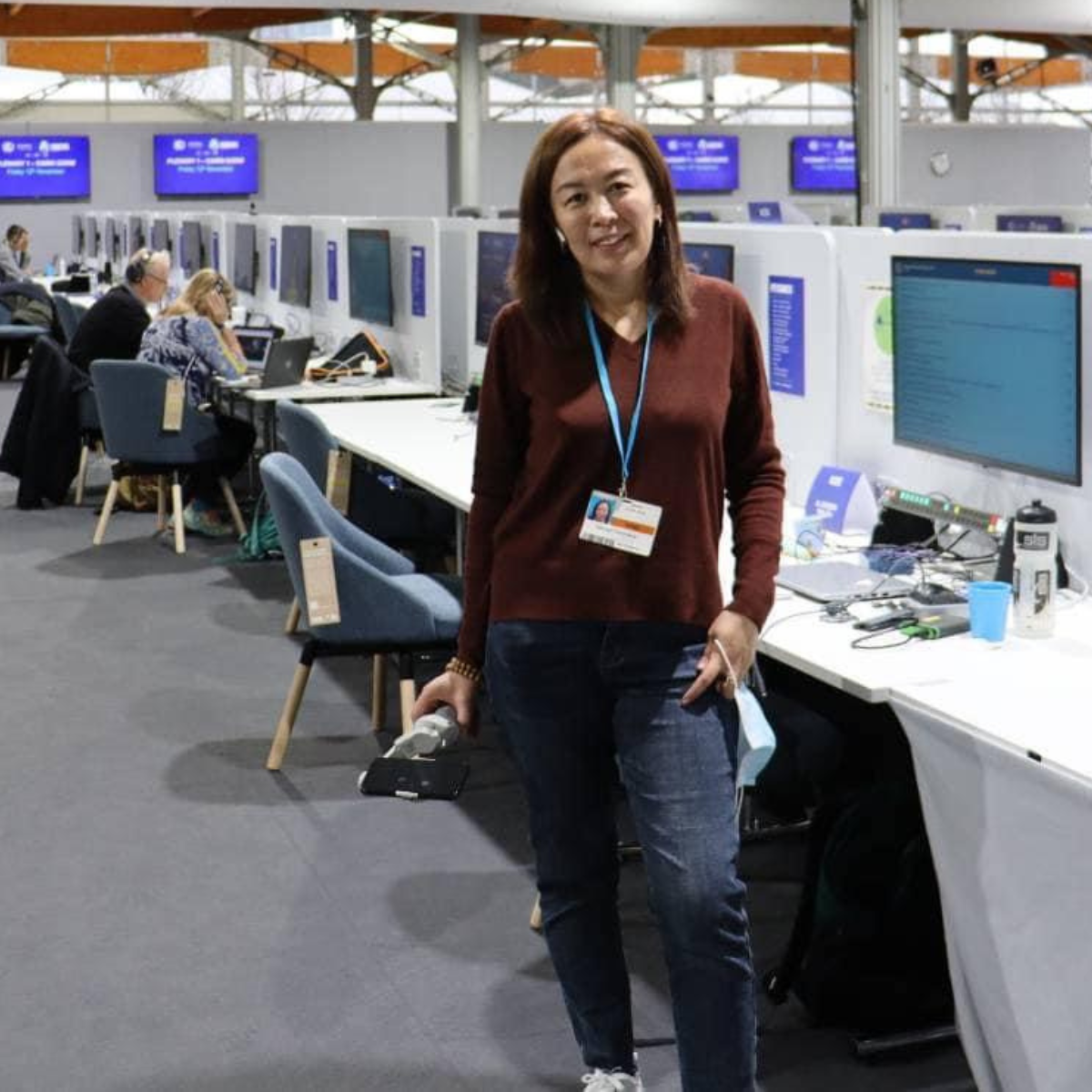
Chynybaeva reporting for RFE/RL at the UN Climate Change Conference, Glasgow, Scotland, 2021

In this climate of constant threats, burnout, and isolation I often felt crushed by fear and doubt. Like many of my colleagues, I was losing hope — feeling that the fight for free speech had become like battling windmills.

That’s when Wallace House stepped in.

The Knight-Wallace Fellowship didn’t just offer me an academic opportunity. It gave me something even more precious: a community. A place where I could finally share what I had carried, where I could reflect, and begin to heal – personally and professionally. 

Wallace House welcomed me into a global family of journalists who believe, as I do, in the fearless pursuit of truth. It allowed me to take classes at the University of Michigan and to be in conversation with journalism leaders and innovators – the former editor of The Washington Post, reporters with the digital investigations team at The New York Times –  people who I could never even dream of meeting from my remote post in Kyrgyzstan.

Through the Knight-Wallace Fellowship, I found new strength. New purpose. New allies. New friends. And I gained support to think strategically about how to continue my work.

The world is now witnessing the slow erosion of independent journalism – from the steppes of Central Asia to small-town America. Under the weight of misinformation, digital surveillance, financial hardship, and rising autocratic pressure, dozens of small-scale newsrooms have been forced to halt their operations. 

In this environment, organizations like Radio Free Europe/Radio Liberty and Wallace House can offer a vital lifeline. Without them, thousands of voices will fall silent. Hundreds of my colleagues – brave journalists seeking justice and truth – will be left without support and face life-threatening danger.

And when our voices are gone, the people who suffer most are not the journalists: it’s the communities we serve.

On this World Press Freedom Day, I hope people will remember millions of grandfathers like mine, who are still secretly climbing a mountain top in search of truth, despite their fear of an authoritarian regime. Today’s fight for free speech is for a world where truth doesn’t require a donkey ride into the mountains.

Baktygul Chynybaeva is a 2024-2025 Knight Wallace Fellow and former correspondent for Radio Free Europe/Radio Liberty covering issues in Central Asia and across her home country of Kyrgyzstan. During her fellowship year, she focused on developing training programs for journalists in exile from Central Asia and Russia.


Join us in supporting journalists on World Press Freedom Day and beyond. Donate now.

To learn more about how to make a major gift in support of these efforts, please contact Jennifer Halseth, Financial Administrator, at [email protected]

Wallace House Presents Our 2024-2025 Events

Wallace House Presents our 2024-2025 lineup of live events with Mazin Sidahmed, Bret Stephens, Lydia Polgreen, María Elena Salinas and Stephen Henderson. Please mark your calendars for the events below and join us.

The 37th Annual Hovey Lecture with Mazin Sidahmed of Documented
“Sorting Immigration Facts from Fiction: The Power of Local Reporting Amid National Politics”

Tuesday, September 10, 2024 | 5 PM
Reception following lecture

Wallace House Gardens, 620 Oxford Road
An in-person outdoor event

Join Mazin Sidahmed, 2021 Knight-Wallace Reporting Fellow and co-founder of the non-profit newsroom Documented, for a discussion on how shifting our journalism focus from national coverage to local news outlets and from “reporting about” to “reporting for and with” immigrant communities can help us discern immigration fact from fiction and improve outcomes for everyone.

This is an in-person event and will not be live-streamed. However, a recording of the lecture will be available on our website following the event.

More information about this event.


2025 Knight-Wallace Fellow Dieu-Nalio Chery

“Contextualize Haiti’s Demising Situation” Photo Project with Dieu-Nalio Chery

Friday, September 13, 2024 | 10:20 AM

Michigan Union Room 2210 2nd Floor
530 S State St, Ann Arbor, MI 48109

Free and open to the public

Our 2025 Knight-Wallace Fellow, Dieu-Nalio Chery, will present his photojournalistic work showcasing Haiti’s descent at the first annual symposium titled: “Contextualize Haiti’s Demising Situation.” Dieu-Nalio Chery is a freelance photojournalist from Haiti who is now based in Michigan. For over a decade, Chery worked for The Associated Press, documenting the profound beauty, searing pain and upheaval in his homeland.

The symposium will bring together scholars and specialists in Haitian Studies, filmmakers, photographers and community leaders to discuss current issues relevant to Haiti, the Haitian diaspora, and actors involved in development in Haiti.

More information about this event.

Co-Sponsors:
College of Literature, Science and the Arts

Office of Academic Mulicultural Initiatives (OAMI)
School of Social Work (Diversity Equity and Inclusion)
Rackham Graduate School
International Institute


A Conversation with NYT Technology Reporter Kashmir Hill

Monday, October 7, 2024 | 4:15 PM

Annenberg Auditorium, Weill Hall
735 S. State St., Ann Arbor, MI 48109

Free and open to the public

Please join us for an engaging conversation with New York Times technology reporter Kashmir Hill and Shobita Parthasarathy, Faculty Director of the Science, Technology, and Public Policy (STPP) Program. Our speakers will explore the intersection of technology and privacy, addressing some of today’s most salient issues.

More information about this event.

Co-Sponsors:
Gerald R. Ford School


2025 Knight-Wallace Fellow Joseph Sywnkyj

WCEE Exhibition. Verses from a Nation in Transition. Ukraine in Photographs by Joseph Sywenkyj

Tuesday, October 1 – Friday, November 29, 2024
International Institute Gallery, Weiser Hall Room 547 | 500 Church Street

WCEE Distinguished Lecture
Monday, October 21, 2024 | 5:30 PM
Weiser Hall Room 1010 | 500 Church Street

Free and open to the public

Joseph Sywenkyj is the 2024-25 Weiser Center for Europe and Eurasia’s Distinguished Fellow, and a Knight-Wallace Fellow at the University of Michigan. An award-winning American photographer of Ukrainian descent, Sywenkyj has lived and worked in Ukraine for the last two decades. He is a frequent contributor to publications in Europe and Eurasia and to The Wall Street Journal, and his photographs have been exhibited in galleries and museums, including the United Nations Visitor’s Lobby in New York and the Taras Shevchenko National Museum in Kyiv.

More information about the photo exhibit.
More information about this event.

Hosted by:
Weiser Center for Europe and Eurasia

Co-sponsors:
International Institute


One Nation, Divergent Views: A Roundtable Discussion

Wednesday, October 23, 2024 | 6 PM

Rackham Auditorium
915 E Washington St, Ann Arbor, MI 48109

Free and open to the public

Watch the video recording.

Join Wallace House and the Institute for Social Research for a live conversation driven by journalism and social science in the run-up to the presidential election. Hear special guests Bret Stephens and Lydia Polgreen of The New York Times, María Elena Salinas of ABC News, and Vince Hutchings of U-M Center for Political Studies in conversation with veteran Michigan journalist Stephen Henderson. As part of the University of Michigan’s Year of Democracy, Civic Empowerment, and Global Engagement initiative, this special event will provide insights on critical issues shaping the 2024 election and social science research on the American voting public.

More information about this event.

Co-Sponsors:
Gerald R. Ford School of Public Policy
Institute for Social Research
U-M’s Year of Democracy, Civic Empowerment and Global Engagement initiative
DPTV


Holger Roonemaa and Inga Springe

Investigative Journalism in the Baltics: Breaking the Kremlin’s Operations in Estonia and Latvia

CREES Noon Lecture
Wednesday, January 15 | Noon to 1:20 PM
555 Weiser Hall

Holger Roonemaa and Inga Springe are two of the foremost investigative journalists covering the ongoing hybrid war between Russia and the Baltic states. Roonemaa, a 2025 Knight-Wallace Fellow from Estonia, and Springe, from Latvia, have spent years uncovering the covert tactics Russia employs to destabilize their countries—efforts that include funding political parties, spreading disinformation, inciting violence, and launching cyber-attacks. Their work has exposed the persistent threat Russia poses to these NATO allies, despite their integration into the European Union and the alliance two decades ago.

More information about this event.

Hosted by:
Center for Russian, East European and Eurasian Studies


An MLK Symposium Event

“Where Do We Go From Here? Perspectives on Race, Democracy and Justice”

Wednesday, January 29 | 6:30 PM
Helmut Stern Auditorium, Musuem of Art

Free and open to the public.


As part of the University of Michigan’s MLK Symposium, please join us for a conversation with three prominent scholars of African American political history about possible futures for movements for racial justice and democratic change during the new presidential administration.

Join Jelani Cobb, Dean of Columbia Journalism School, staff writer for The New Yorker and MSNBC political commentator, alongside U-M professors Angela Dillard and Stephen Ward, to discuss the challenges, and opportunities, facing advocates for Martin Luther King’s vision of racial equality and multiracial democracy in the coming years. 

Lynette Clemetson, director of U-M’s Wallace House Center for Journalists, will be the event’s moderator.

More information about this event.

Co-Sponsor:
Department of Afroamerican and African Studies

Department of History
Eisenberg Institute for Historical Studies


Eisendrath Symposium and WCEE Panel Event

“Press Freedom in Central and Eastern Europe in the Age of Putin”

Thursday, February 13 | 4:30 PM
Rackham Amphitheater

Free and open to the public

With journalists Baktygul Chynybaeva of Kyrgyzstan, Holger Roonemaa of Estonia and Joseph Sywenkyj of Ukraine and the U.S., in conversation with Geneviève Zubrzycki, Director of the Weiser Center for Europe and Eurasia

As the Kremlin tries to silence independent media through bans, censorship and “foreign agent” labels, this repression has spread to Central and Eastern Europe and Central Asia, where some governments are replicating Putin’s laws and tactics. How can journalists safeguard access to accurate information in the face of these escalating threats?

More information about this event.

The Eisendrath Symposium honors Charles R. Eisendrath, former director of Wallace House, and his lifelong commitment to international journalism.

Co-Sponsor:
Weiser Center for Europe and Eurasia


17 Blocks Premiere Screening and Conversation

Tuesday, March 18 | 6 PM
Michigan Theater

Reserve your free ticket here.

In 1999, filmmaker Davy Rothbart gave nine-year-old Emmanual Sanford-Durant a camera. The boy and his family began filming their daily lives in America’s most dangerous neighborhood — just 17 blocks behind the U.S. Capitol. Together, Davy and the Sanfords kept filming and collaborating for 20 years. This critically acclaimed documentary illuminates a nation’s ongoing crisis through one family’s raw, stirring and deeply personal saga.

Watch the trailer.

More information about this event.

Co-Sponsor:
Center for Racial Justice


Laura Santhanam

Disappearing Federal Data: Implications and Preservation Efforts

Tuesday, April 29 | Noon
Institute for Social Research | Room 143
426 Thompson Street

In-person and Live stream

Join Wallace House Center for Journalists and the Institute for Social Research for an expert panel on disappearing federal data. The panel includes Knight-Wallace Fellow Laura Santhanam, Professor of Communication and Media Josh Pasek, Director, Digital Scholarship and Creative Spaces Justin Schell, Government Information, Law and Political Science Librarian Catherine Morse. Moderated by Associate Professor of Information Libby Hemphill, the panel will discuss the current threat to federal data, societal implications, and preservation efforts.

More information

Hosted by:
Institute for Social Research


Announcing the 2025 Livingston Awards Finalists

“In a world where algorithms and devices often constrict our view and narrow our understanding, these finalists exemplify the fierce commitment of reporters to dig beyond dominant narratives. Their work uncovers overlooked stories and voices that demand our attention,” said Lynette Clemetson, director of the awards and the Wallace House Center for Journalists. “We invite you to read, watch, and listen to some of the most compelling journalism of the past year.”

Now in its 44th year, the awards continue to bolster the work of young reporters, encourage the next generation of journalism leaders and mentors, and foster civic engagement around powerful storytelling.

The Livingston Awards regional judges read all qualifying entries to select the finalists in local, national and international reporting. The regional judging panel includes Molly Ball, senior political correspondent, The Wall Street Journal; Meghna Chakrabarti, host and editor, “On Point,” WBUR; Stella Chávez, investigative reporter, The Texas Newsroom; Adam Ganucheau, editor in chief, Mississippi Today; David Greene, co-founder, Fearless Media; Stephen Henderson, host, WDET, public radio Detroit and Detroit Public Television; and Amna Nawaz, co-anchor, PBS “NewsHour.”

A panel of national judges reviews all finalist entries and selects the winners. The national judges are Audie Cornish; Raney Aronson-Rath, executive producer, “FRONTLINE”; Sally Buzbee, news editor for the United States and Canada, Reuters; Sewell Chan, former executive editor, Columbia Journalism Review; Matt Murray, executive editor, The Washington Post; Lydia Polgreen, opinion columnist, The New York Times; María Elena Salinas, independent journalist, formerly of ABC News; Bret Stephens, opinion columnist, The New York Times; and Kara Swisher, podcast host, New York Media.

The Livingston Awards are made possible with support from generous sponsors, including the University of Michigan, the Knight Foundation, the Indian Trail Charitable Foundation, the Mollie Parnis Livingston Foundation, Christiane Amanpour, Dr. Gil Omenn and Martha Darling, the Judy and Fred Wilpon Foundation, and The Joyce Foundation.

We present the 2025 Livingston Awards finalists. You can find their submitted work here.

Local Reporting

  • Hadley Barndollar, MassLive
  • Ana Claudia Chacin and Clara-Sophia Daly, Miami Herald
  • Shannon Chaffers, New York Amsterdam News
  • Wilson Criscione and Kelsey Turner, InvestigateWest
  • Luis Ferré-Sadurní, The New York Times
  • Caroline Ghisolfi, Amelia Winger and Matt deGrood, Houston Chronicle
  • Quinn Glabicki, PublicSource
  • Jessika Harkay, The Connecticut Mirror
  • Grace Hauck and Meredith Newman, Illinois Answers Project and Better Government Association
  • Ivana Hrynkiw, AL.com
  • Andrea Igliozzi, Rashel Cedeño de Abreu, Christian Vazquez-García and Bryan Albor, Univision 19
  • Cleo Krejci, Milwaukee Journal Sentinel
  • Asher Lehrer-Small, Houston Landing
  • Brittny Mejia, Los Angeles Times 
  • Katie Mettler, The Washington Post
  • Bayliss Wagner, Austin American-Statesman

 National Reporting

  • Thomas Birmingham, In These Times
  • Eric Boodman, STAT
  • Chip Brownlee, The Trace
  • Chabeli Carrazana, The 19th
  • Nicole Einbinder and Hannah Beckler, Business Insider
  • Lev Facher, STAT
  • Lauren Gill and Daniel Moritz-Rabson, Bolts in partnership with The Intercept
  • Emily Gogolak, Harper’s Magazine
  • Emma Goldberg, The New York Times
  • Benjamin Guggenheim, POLITICO
  • Esmy Jimenez and Sydney Brownstone, The Seattle Times in partnership with KUOW Public Radio
  • George Joseph and Will Craft, The Guardian US
  • Joshua Kaplan, ProPublica
  • Joseph Lee, Vox
  • Daniel Lombroso, The New Yorker
  • Mark Olalde and Nick Bowlin, ProPublica and Capital & Main
  • Cecilia Reyes, Business Insider
  • Christie Thompson, The Marshall Project

 International Reporting

  • Anna-Catherine Brigida, Houston Landing
  • Eli Cahan, Rolling Stone
  • Mari Cohen, Jewish Currents
  • Jeremy Diamond, CNN Worldwide
  • Jessica Fu, Popular Mechanics
  • Raffaele Huang and Tracy Qu, The Wall Street Journal
  • Lizzie Johnson, Anastacia Galouchka and Kamila Hrabchuk, The Washington Post
  • Lasha Madan, 99% Invisible, SiriusXM
  • Charlie Metcalfe, MIT Technology Review
  • David Pan and Fasika Tadesse Yimer, Bloomberg News
  • Nicole Sadek, International Consortium of Investigative Journalists
  • Liam Scott, Voice of America

More on the finalists’ work and links to watch, listen and read here.