
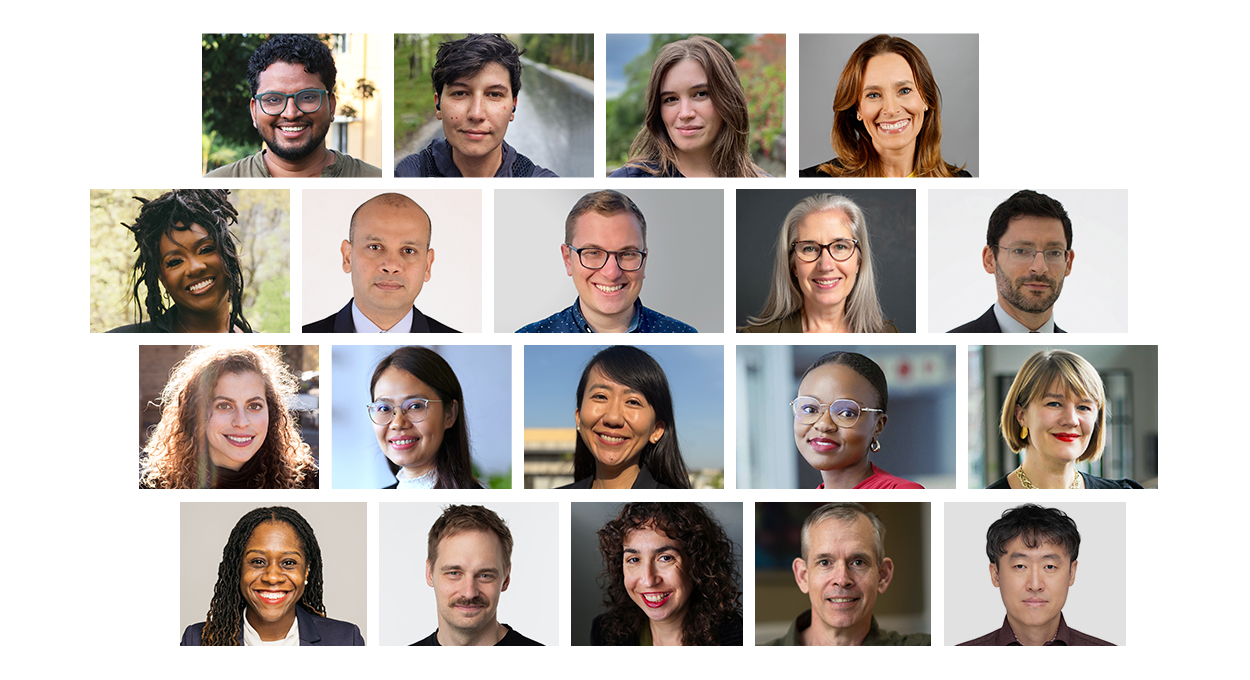
Announcing the 2026-2027 Knight-Wallace Journalism Fellows

Wallace House Center for Journalists and the University of Michigan today announced the Knight-Wallace Journalism Fellows for the 2026-2027 academic year. This cohort of 19 accomplished journalists — from eight countries and across the United States — represents the 53rd class of Fellows in our program’s history.

Over the course of the academic year, the Knight-Wallace Journalism Fellows will pursue ambitious projects exploring pressing issues, including sustainable models for rural and hyperlocal news, the collapse of institutional trust, the future of media innovation and AI, and newsroom culture and censorship. In addition to their individual research, they will participate in biweekly seminars and workshops with scholars, innovators, journalism leaders and social changemakers. 

“One of the most exciting aspects of our work each year is creating the space for accomplished journalists to learn from and with one another,” said Lynette Clemetson, director of Wallace House. “In a time fraught with challenges to the independence, safety and sustainability of the press, it is a privilege to provide this group of leaders and changemakers the time and resources to expand their skills and pursue ambitious work.”

In addition to the academic and intellectual resources provided, Fellows receive a $90,000 stipend, health insurance and relocation and logistical support to enable them to participate in the residential program and prioritize their fellowship research for the academic year. Fellows will reside in the Ann Arbor area and enjoy collaborative workshops and skills training at Wallace House, a gift from the late newsman Mike Wallace and his wife, Mary and the program’s home base.

Among the 2026-2027 class are four journalists selected for fellowships created more recently to expand our longstanding program. These newer specialized fellowships are designed to revitalize local news in the Great Lakes region, strengthen reporting tied to data and social science research, and support arts journalism and criticism. The journalists awarded these fellowships are Matt Fuchs, the James S. House and Wendy Fisher House Social Science Fellow; Clare Roth and Reid Williams, Great Lakes Local News Fellows; and Mankaprr Conteh, the Knight-Wallace Arts Journalism Fellow.

Wallace House’s Knight-Wallace Fellowship program is sustained through endowment gifts from foundations, institutional and individual donors, as well as annual and ongoing contributions from funders committed to journalism’s role in fostering an informed and engaged public.

The 2026-2027 Knight-Wallace Fellows and Their Journalism Projects:

Tanzil Asif, founder of Main Media, will build sustainable models for rural, hyperlocal journalism in India.

Ana Brakus, executive director of Faktograf, will research survival strategies from newsrooms in repressive environments around the world.

Anastasiia Carrier, public health and safety reporter for Charlottesville Tomorrow, will examine accountability gaps in U.S. medical malpractice oversight.

Libby Casey, visual and audio journalist, will explore the power of social media content creators to build journalism’s future in newsrooms. 

Mankaprr Conteh, arts and culture journalist, will trace the history, future and impact of global pop music in mainstream America. Conteh is the Arts Journalism Fellow in partnership with the University of Michigan Arts Initiative.

Allister D’Souza, documentary producer and multimedia journalist, will examine the rise of self-censorship in democratic newsrooms.

Lev Facher, addiction reporter for STAT, will investigate sports betting as America’s next addiction crisis.

Kristin Fraser, multi-platform storyteller, will explore frameworks for archiving past and present television news coverage to preserve the history of TV news.

Matt Fuchs, science and health journalist, will study how science is reshaping our understanding of middle age. Fuchs is the James S. House and Wendy Fisher House Social Science Fellow.

Erica Hellerstein, immigration and labor reporter for El Tímpano, will explore and document America’s battles over history as a window into the country’s unresolved struggle over national identity, memory and belonging.

Van Le, investigative journalist and filmmaker, will examine war trauma and reconciliation among Vietnamese people today, both inside the country and across the diaspora. 

Shan Li, South Asia correspondent for The Wall Street Journal, will explore how economic discontent is fueling Gen Z revolutions across Asia and the U.S.

Nokuthula Manyathi, newsroom manager and digital publishing strategist, will develop recommendations for fostering more empowering newsroom cultures. 

Yongha Park, reporter for The Kyunghyang Shinmun, will explore how AI-powered content can innovate legacy media.

Clare Roth, managing editor of The Ohio Newsroom, will build a collaborative rural news model to sustain reporters who serve news deserts. Roth is a Great Lakes Local News Fellow.

LaCrai Scott, producer for the CBS Evening News, will study the mechanics of building a media company in today’s fragmenting media landscape. 

Luke Vander Ploeg, audio journalist for The New York Times, will explore the continued rise of homeschooling in America as a lens into the collapse of institutional trust.

Rachel Weiner, transportation reporter, will investigate the root causes of traffic deaths in the United States and the efforts to reduce them.

Reid Williams, co-director of the Local Journalism Foundation of Kalamazoo County, will build the case for civic programming in newsrooms. Williams is a Great Lakes Local News Fellow.

Read more about the 2026-2027 Knight-Wallace Fellows and their journalism projects »


About Wallace House Center for Journalists

Committed to fostering excellence in journalism, Wallace House at the University of Michigan is home to the Knight-Wallace Fellowships, the Livingston Awards and the Wallace House Presents event series, programs that recognize exceptional journalists for their work, leadership and potential.
wallacehouse.umich.edu
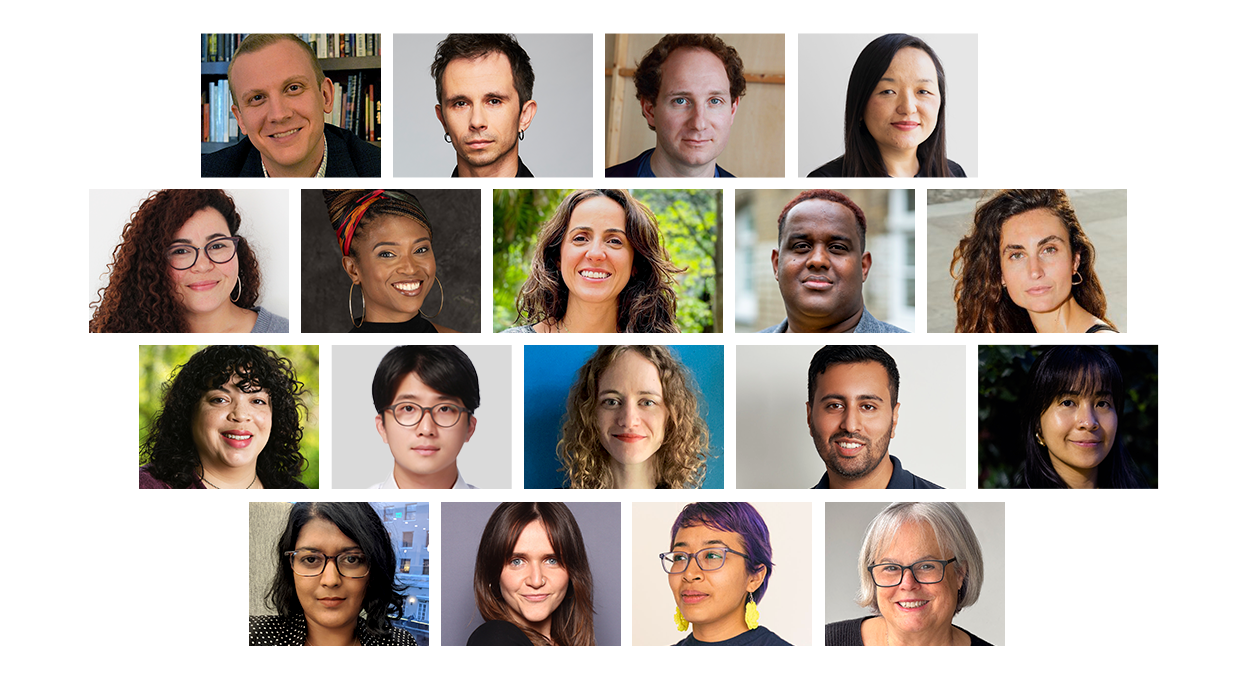
Announcing the 2025-2026 Knight-Wallace Journalism Fellows

Wallace House Center for Journalists and the University of Michigan today announced the Knight-Wallace Journalism Fellows for the 2025-2026 academic year. This incoming cohort of 18 accomplished journalists — from eight countries and across the United States — represents the 52nd class of Fellows in our program’s history.

Over the course of the academic year, the Knight-Wallace Journalism Fellows will pursue ambitious projects exploring pressing issues including climate change and migration; political and institutional mistrust; equity and access in housing and healthcare; and community-engaged journalism. In addition to their individual research, they will work collaboratively in regular seminars and workshops with scholars, innovators, journalism leaders, and social changemakers. 

“At a time when both journalism and higher education are facing unprecedented challenges, our mission to provide accomplished journalists the time and support to focus on in-depth inquiry is especially clear and vital,” said Lynette Clemetson, Director of Wallace House. “It can be difficult in moments of great tumult to pull up and seek perspective. And yet it is essential, alongside our more immediate responses. We are privileged to provide our Fellows with the resources to explore complex, broad-ranging issues. The benefits of their pursuits will extend long term to the communities and audiences they seek to reach.”

In addition to the academic and intellectual resources provided, Fellows receive a living stipend, health insurance and relocation and logistical support to enable them to participate in the residential program and prioritize their fellowship research for the academic year. Fellows will reside in the Ann Arbor area and enjoy collaborative workshops and bi-weekly seminars at Wallace House, a gift from the late newsman Mike Wallace and his wife Mary, and the program’s home base.

Among the 2025-2026 class are four journalists selected for newly created fellowships in areas critical to the future of journalism. These dedicated fellowships — an expansion of our long-standing program — are designed to revitalize local news in the Great Lakes region, strengthen reporting tied to data and social science research, and support arts journalism and criticism. The journalists awarded these fellowships are Tim Alberta of The Atlantic, the James S. House and Wendy Fisher House Social Science Fellow; Elizabeth Jensen of Press Forward Northern Michigan and Irene Romulo of Cicero Independiente, Great Lakes Local News Fellows; and Brittany Moseley of Signal, Akron, the Knight-Wallace Arts Journalism Fellow.

Wallace House’s Knight-Wallace Fellowship program is funded through endowment gifts from foundations, news organizations, individuals and ongoing contributions from funders committed to journalism’s role in fostering an informed and engaged public.

The 2025-2026 Knight-Wallace Fellows and Their Journalism Projects:

Tim Alberta is a journalist, author and staff writer for The Atlantic. As a joint Social Science Fellow with the university’s Institute for Social Research, he will examine how cynicism, misinformation, and populism have, over decades, combined to usher in a new, post-trust society.

David de Jong is a Middle East correspondent for Het Financieele Dagblad, the Netherlands’s premier business newspaper. He will investigate how Michigan’s Dutch-American business dynasties influence U.S. education policy.

Ismail Einashe is a journalist and author whose work on migration and refugee issues has appeared in numerous publications, including The Guardian, Foreign Policy and BBC News. He will examine migration reporting by studying the intersection of the science of trauma and the various creative forms journalists can use in their storytelling.

Heidi Groover is a real estate reporter for The Seattle Times, where her coverage of the region’s housing crisis spans market trends, land-use debates, eviction proceedings and more. She will study the ways that the vanishing American dream will change our communities for generations to come.

Katelyn Harrop is an independent multimedia journalist who most recently worked as a senior producer at WBUR, Boston’s NPR station. She will research how local newsrooms can sustainably leverage on-demand audio as a tool to reach new audiences and increase audience diversity.

Elizabeth Jensen is the co-chair of Press Forward Northern Michigan, an organization working to support local journalism in the region. As a Great Lakes Local News Fellow, Jensen will research strategies to support regional news networks, focusing on organizational structures, platforms and diversified business models.

Hyeonjun Lee is a reporter at Korea’s public broadcast network, KBS, with experience covering both the ruling and opposition parties. He will research U.S. media strategies for leveraging Artificial Intelligence, to deepen his understanding of the fast-changing landscape for broadcast media.

Ashish Malhotra is a producer for Al Jazeera English, where he has spent close to a decade in various roles for the channel’s television and digital departments. He will examine a variety of audio genres, particularly sports podcasts, to understand how they bring people together and make them feel part of a larger community.

Rosem Morton is a freelance documentary photographer, whose work has been featured in National Geographic, The Washington Post, NPR and CNN. She will expand an immersive online platform that uses collaborative multimedia storytelling to foster connection, healing and empowerment for survivors of gender-based violence.

Brittany Moseley is the culture and arts reporter for Signal Akron, a nonprofit newsroom in Northeast Ohio that fuses community building with local news reporting. As a joint fellow with the University of Michigan Arts Initiative, she will study the successes and shortcomings of public funding for the arts and the impact that well-funded art programs have on American cities.

Tenzin Pema is the director of Radio Free Asia’s Tibetan service, where she oversees reporting on Tibet through various formats and platforms. She will investigate China’s multi-pronged strategy to suppress Tibet’s cultural, linguistic and historical identity.

Nidhi Prakash is a journalist focused on accountability, politics and the environment, who worked as an environment reporter for POLITICO and a White House reporter for BuzzFeed News. She will research stories of the impact of climate change on low-income areas, exploring economic and infrastructural issues, conflicts driven by resource scarcity and ground-level resilience.

Clavel Rangel Jiménez is a journalist covering labor unions, migration, human rights, climate, corruption and extractive industries in Venezuela and across the Americas, and co-founder of the Venezuelan Amazon Journalists Network. She will investigate how misinformation and partisan narratives have influenced the displacement and integration of Venezuelan migrants in the U.S.

Irene Romulo is the co-founder of Cicero Independiente, an award-winning, bilingual newsroom that reports with and for the majority immigrant community of Cicero, Illinois. As a Great Lakes Local News Fellow, she will explore how to build, expand and sustain a community-owned newsroom that serves as an information, teaching and gathering space for her community and beyond.

Simone Sebastian is a newsroom leader and founding editorial director of Capital B, a nonprofit news organization dedicated to uncovering important stories about how Black people experience America today. She will explore the gaps in postpartum medical care that have created a silent epidemic of pain, discomfort and life-threatening complications among women in the United States.

Jędrzej Slodkowski is a reporter, editor and deputy head of the culture section for Gazeta Wyborcza, Poland’s largest newspaper. He will explore approaches to journalistic coverage of migration that minimize prejudices yet honestly address the problems and challenges.

Sarah Souli is an independent journalist reporting across the Mediterranean whose work has appeared in The Atavist, The Economist, POLITICO, The Guardian, Vice Magazine, Condé Nast Traveler and others. Focusing on migrant movement across the Mediterranean, Souli will research narrative structures and historic methodologies that can contribute to more holistic reporting about migration in the region.

Nina Weingrill is the co-founder and former director of Énos, one of Brazil’s first civic media organizations. She will explore sustainable models for building local information ecosystems, focusing on the role of civic actors—such as public health workers and grassroots organizations—in bridging gaps left by traditional media.

Read more about the 2025-2026 Knight-Wallace Fellows and their journalism projects »


About Wallace House Center for Journalists

Committed to fostering excellence in journalism, Wallace House at the University of Michigan is home to the Knight-Wallace Fellowships, the Livingston Awards and the Wallace House Presents event series, programs that recognize exceptional journalists for their work, leadership and potential.
wallacehouse.umich.edu
Announcing the 2024-2025 Knight-Wallace Journalism Fellows

Wallace House Center for Journalists and the University of Michigan are pleased to announce the Knight-Wallace Journalism Fellows for the 2024-2025 academic year. This cohort of 18 accomplished journalists from nine countries and a broad cross-section of the U.S. marks the 51st class of Fellows in our program’s history.

The Knight-Wallace Journalism Fellows will pursue ambitious journalism projects, immerse themselves in university courses and participate in weekly seminars with journalism leaders, renowned scholars, media innovators and social change agents.

“We’re honored to introduce the newest cohort of Knight-Wallace Fellows, whose expertise spans a diverse array of critical topics,” said Lynette Clemetson, Director of Wallace House. “Their projects will delve into pressing issues such as protecting vulnerable sources, navigating the implications of technological advancements and supporting reporters in hostile environments. Through their collaborative, cross-disciplinary efforts, they’re poised to make a profound impact not only within journalism but also in the communities they serve.”

In addition to the academic and intellectual resources provided, Fellows will receive $90,000 in stipend and relocation support over nine months, an increase to help the journalists in our program weather industry instability and rising housing prices. Fellows will reside in the Ann Arbor area and enjoy most seminars at Wallace House, a gift from the late newsman Mike Wallace and his wife Mary, and the program’s home base.

Wallace House’s Knight-Wallace Fellowship program is funded through endowment gifts from foundations, news organizations, individuals and ongoing contributions from funders committed to journalism’s role in fostering an informed and engaged public.

The 2024-2025 Knight-Wallace Fellows and Their Journalism Projects:

Dieu-Nalio Chery is a freelance photojournalist from Haiti. He has documented the profound beauty, searing pain and upheaval in his homeland for The Associated Press, and many of his images have become iconic records of Haiti in the 21st century. His work will illuminate the larger story of the Haitian diaspora and combat common stereotypes.

Baktygul Chynybaeva is a journalist from Kyrgyzstan who has covered healthcare, environmental and human rights issues. She will explore avenues for achieving media independence in Kyrgyzstan, Tajikistan and Uzbekistan despite the countries’ economic and media dependencies on Russia.

Denise Guerra is an audio journalist and co-founder of popular news podcasts who focuses on breaking news and narrative storytelling. She will examine how short-form videos affect news consumption and how both news consumers and news creators can best utilize this evolving medium.

Cassie Haynes, J.D., M.P.H., the co-founder of the nonprofit journalism organization, Resolve Philly, is a journalism strategist with executive experience in government, corporate and nonprofit sectors. She will research mechanisms that enable newsrooms to quantify and predict the impact of their reporting on the evolution of social narratives.

Fatemeh Jamalpour is an Iranian journalist who has been interrogated, arrested and jailed by the Iranian government because of her human rights-focused reporting. Her study project will examine Iranian society’s move towards secularization.

Kwanseok Jang is a political reporter with the Seoul-based daily newspaper Dong-A Ilbo. He has 15 years of experience in journalism, including three years covering presidential and administrative policy-making processes. He will explore tensions between the public’s right to information, individual privacy rights and political partisanship, with a focus on the U.S. presidential elections.

Ally Jarmanning is a senior reporter at WBUR in Boston, where she focuses on accountability stories using data and public records. Based on her work with victims of police brutality and survivors of domestic and sexual violence, Jarmanning will create a guide for working with vulnerable sources.

Kunāl Majumder serves as the India Representative for the Committee to Protect Journalists, where he documents and researches press freedom issues and advocates for journalists’ safety. He will engage with diverse experts in public policy, democracy and media studies, exploring ways to advance protections for journalists.

Zahra Nader is the founding editor-in-chief of Zan Times, a non-profit news outlet that covers women, gender-based issues and human rights in Taliban-controlled Afghanistan. She will study business models and management strategies tailored to the needs of entrepreneurial journalists in exile.

Katie O’Brien is a two-time Emmy Award-winning producer at ABC News. She has reported from more than 30 U.S. states and covered dynamic and pivotal stories. She will explore multiple facets of juror biases, including studying juror selection processes and cutting-edge strategies for detecting juror biases through Artificial Intelligence algorithms.

Sarah Rahal is the lead city reporter for The Detroit News, where she covers developments within Detroit City Hall and spotlights important local issues. She will research the challenges and successes that municipalities face as they support refugees and asylum seekers as well as the impact of growing refugee communities on local politics, economics and culture.

Nada Rashwan reports on the Middle East and North Africa with a focus on politics and society in Egypt. She will investigate strategies for engaging youth and producing nuanced journalism under repressive governments, particularly in Egypt and other countries in the Middle East that actively censor the media.

Holger Roonemaa manages the investigative and fact-checking team at the daily news site Delfi Estonia. He is also an editor with the Organized Crime and Corruption Reporting Project (OCCRP). He will develop an investigative journalism hub designed to bridge resource gaps, make use of high-tech investigative methods and bolster data-driven regional partnerships.

Davy Rothbart is an Emmy Award-winning filmmaker, journalist, bestselling author, creator of Found Magazine and a frequent contributor to public radio’s “This American Life.” He will explore the challenges facing wrongfully convicted inmates who lack DNA evidence and examine cases where innocence has still been established despite the obstacles.

Laura Santhanam is a health reporter and coordinating producer for polling at “PBS NewsHour.” She will study what both health professionals and journalists learned about public health messaging from the COVID pandemic and how to more effectively combat misinformation and build trust going forward.

Summer Sewell is an independent journalist who most recently worked as a contributing editor for special packages at Mother Jones. Through narrative storytelling, Sewell will trace the trajectories of two families, one black and one white, who have farmed over generations– recounting the families’ setbacks and triumphs and directly comparing their lost and gained generational wealth.

Joseph Sywenkyj is an American photographer of Ukrainian descent who has lived and worked in Ukraine for approximately 20 years. He will study how the psychology and sociology of war trauma change the identity of individual Ukrainians as well as the shared identity of the nation.

Anastasia Tsioulcas is a correspondent on NPR’s Culture desk and also contributes as a classical music critic to The New York Times, the first journalist to hold such a dual role. As a joint fellow with the University of Michigan Arts Initiative, Tsioulcas will research the effectiveness of recent diversity efforts, with a focus on Detroit and the surrounding region.

Read more about the 2024-2025 Knight-Wallace Fellows and their journalism projects »


About Wallace House Center for Journalists

Committed to fostering excellence in journalism, Wallace House at the University of Michigan is home to the Knight-Wallace Fellowships, the Livingston Awards and the Wallace House Presents event series, programs that recognize exceptional journalists for their work, leadership and potential.
wallacehouse.umich.edu

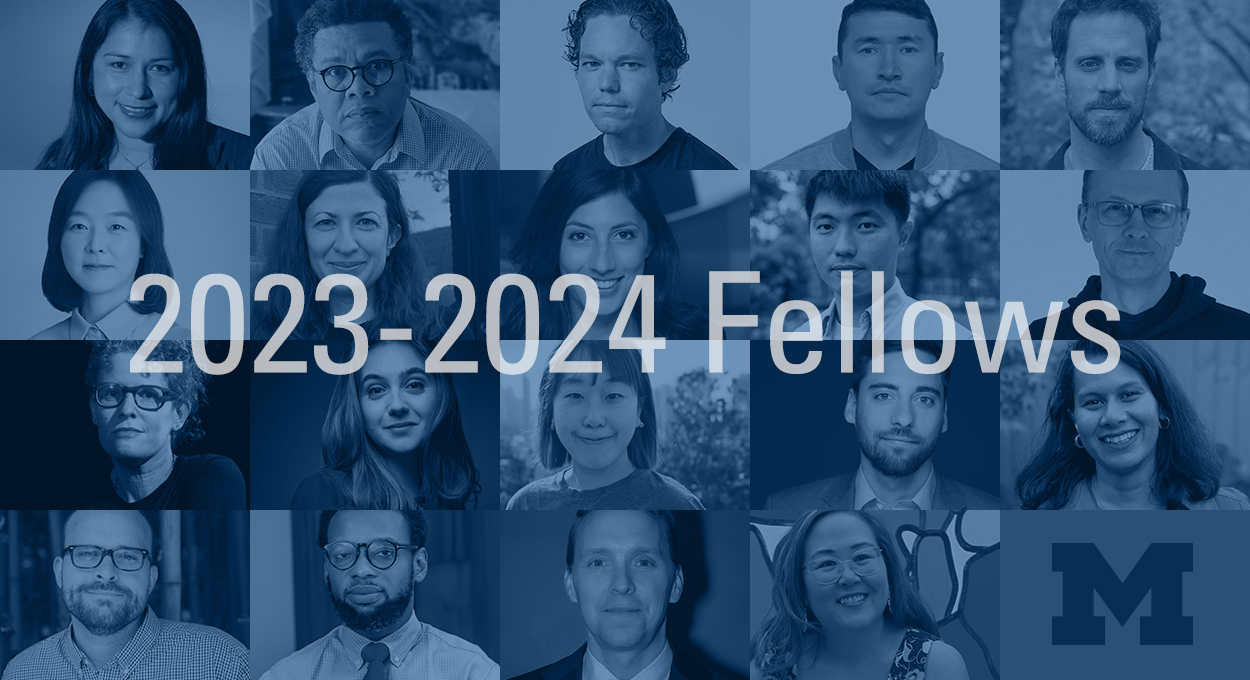
Announcing the 2023-2024 Knight-Wallace Journalism Fellows

The Wallace House Center for Journalists and the University of Michigan are pleased to announce the 2023-2024 class of Knight-Wallace Journalism Fellows. This cohort of 19 accomplished journalists marks the 50th class of Fellows in the program’s history.

Representing nine countries and a broad cross-section of the U.S., the Fellows will pursue ambitious journalism projects, audit courses at the university and participate in weekly seminars with journalism leaders, renowned scholars, media innovators and social change agents. Most seminars will take place at Wallace House, a gift from the late newsman Mike Wallace and his wife, Mary, and the program’s home base.

“These journalists and their compelling range of projects reflect the breadth of challenges journalists must understand – from the far-reaching societal impacts of climate change, to the rise of social media-fueled disinformation, to the unique challenges of reporting from countries ensnared in media crackdowns, wars or rampant violence,” said Lynette Clemetson, Director of Wallace House. “Now more than ever, the work of these and all journalists is essential to protecting and expanding democratic values. We are honored to support them.”

After a three-year pause on international news tours caused by the COVID-19 pandemic, Wallace House plans to travel with this year’s cohort to South Korea in February 2024 to learn more about the country’s changing media environment and engage with its political and social landscape.

The fellowship started in 1973 with a grant from the National Endowment for the Humanities. This class will be joined by alumni from several decades in September 2023 for a weekend reunion honoring the history of the fellowship and the hundreds of journalists from around the world with ties to the program.

Wallace House’s Knight-Wallace Fellowship program is funded through endowment gifts from foundations, news organizations, individuals, and ongoing contributions from funders committed to journalism’s role in fostering an informed and engaged public.

The 2023-2024 Knight-Wallace Fellows and their journalism projects:

Elizabeth Aguilera is an independent multimedia journalist focused on migration, environmental health and equity. She is an editor-at-large for Zócalo Public Square and a mentor and editor for Next Gen Radio. She will explore the impact of climate change on devastated areas of the U.S. that have already suffered from environmental racism, the disproportionate placement of hazardous materials near marginalized communities.

Roberson Alphonse is head of national news at le Nouvelliste, Haiti’s largest daily newspaper, and the director of information at Radio Magik9, where he hosts a popular daily program. He survived an assassination attempt in October of 2022 and was able to flee to Miami, where he has continued hosting his radio show. His project will focus on helping Haitian journalists navigate an increasingly volatile press environment.

Rustin Dodd is a senior reporter at The Athletic where he has written about subjects such as the impact of opioid abuse on professional baseball and the analytics revolution in Major League Baseball and the National Football League. He is the co-author of “Kingdom Quarterback: Patrick Mahomes, the Kansas City Chiefs, and How a Once Swingin’ Cow Town Chased the Ultimate Comeback.” He will examine the rise of legalized sports gambling in the U.S., its societal costs and its implications for sports media. 

Sharif Hassan is a former Washington Post and New York Times reporter from Afghanistan who is now working in exile in Canada following the Taliban takeover of his country. His research will take a deep dive into environmental and sustainability challenges in North America, enabling him to report on these challenges with expertise and cross-regional context.

Peter Hoffman is an independent documentary photographer who has reported on environmental and climate issues for The New York Times, The Wall Street Journal, NPR, Bloomberg Businessweek and others. He will combine photography and narrative storytelling to explore the challenges of stewarding southeast Michigan watersheds– the primary, and often compromised, source of drinking water for numerous communities.

Yunhee Kim is the politics editor for Munhwa Ilbo, a daily newspaper in Seoul, where she has covered three presidential elections and numerous general and local elections, as well as multiple corruption scandals. She will explore how to strengthen Korean presidential election coverage in a hyper-polarized political climate.

Mila Koumpilova is a senior education reporter in Chalkbeat’s Chicago bureau, where she has reported on topics including the pandemic’s impact on vulnerable students and federal COVID-19 relief spending. She will explore how U.S. cities can strengthen programs that aim to re-engage unemployed young people who are not enrolled in high school or college — a goal that policymakers and experts see as key to fighting poverty, racial inequities and gun violence.

Efrat Lachter is an investigative correspondent for Israel’s Channel 12 News and the weekly newsmagazine “Friday Studio.” As the first female war correspondent in her newsroom, much of Efrat’s work has illuminated the lives of women in conflict zones such as Ukraine, Syria and Sudan. She will study ways to preserve journalistic integrity in unstable political contexts.

Victor Kai Shing Law is a senior reporter for AM730, a Hong Kong local newspaper. He was previously a reporter for the Apple Daily newspaper and Stand News, both of which were forced to close amid a government crackdown on independent media. His research will illuminate the vision and mission of Hong Kong’s new experimental media, the challenges they face, and strategies that could broaden their reach.

Jaime Lowe is a frequent contributor to The New York Times Magazine and other publications, as well as the author of three books, including “Breathing Fire: Female Inmate Firefighters on the Front Lines of California’s Wildfires.” Having previously embedded with the maternal-fetal medicine department at the Cleveland Clinic, Lowe will expand on this subject by reporting on evolving abortion law and the availability of reproductive healthcare in the Midwest.

Iuliia Mendel is an independent Ukrainian journalist, political commentator, and opinion writer for The Washington Post who served as Ukrainian President Volodymyr Zelenskyy’s press secretary from June 2019 to July 2021. She wrote a book about this experience, titled “The Fight of Our Lives.” Her research will seek solutions to protect and empower truth-seeking journalists in Ukraine and around the world in a climate of growing populism.

Kwan Ling Mok is a visual journalist and filmmaker who recently reported for Hong Kong’s Ming Pao Weekly and Stand News. Her film “Far from Home,” about a family’s tumultuous experience during the 2019 protest movement, was banned after she refused demands from authorities to make 14 cuts to the 25-minute film. Mok will study Hong Kong’s psychological recovery from China’s recent crackdown, historical patterns of collective trauma and how journalism, especially visual journalism, can foster individual and societal healing.

Josh Raab is the former director of Instagram and TikTok at National Geographic, where he managed teams that oversaw 40 accounts with 325M+ followers, including @NatGeo. He will explore how journalistic videos that have inherently challenging and difficult subject matter, such as climate change and conflict, can break through the algorithmic noise to reach younger audiences and combat misinformation on social platforms that often prioritize entertainment.

Tamanna Rahman is a United Kingdom-based investigative journalist and documentary filmmaker who has directed and reported for the BBC, Channel 4 and VICE. To lay the groundwork for a complex and multifaceted investigative documentary, Rahman plans to meticulously map food production and trade flows, examining the risks and long-term implications of a handful of unregulated companies and commodities traders controlling the main flows of food around the world.

Joshua Sharpe is a journalist with the San Francisco Chronicle whose reporting has helped free two innocent people from life in prison. He is writing a book for W.W. Norton and Company titled “The Man No One Believed.” While tracking multiple cases of potential wrongful conviction, he will take criminal justice courses, study post-conviction relief and examine the unseen ways that such cases damage lives.

‘Fisayo Soyombo is the former managing editor of Sahara Reporters and editor-in-chief of Nigeria’s Foundation for Investigative Journalism. He is best known for “breaking into prison.” Posing as a criminal, he spent five days in a police cell and eight days as an inmate at Ikoyi Prison in Nigeria. While writing an expanded version of his 2019 investigation of the Nigerian criminal justice system, Soyombo will simultaneously explore prison reform, restorative justice and strategies for preventing and responding to inhumane and corrupt practices within prisons.

Ben Steverman is a reporter for Bloomberg News based in New York, where he has covered the U.S.’s wide and persistent racial wealth gap, the pandemic’s effects on inequality, and the tax loopholes and philanthropic strategies deployed by the ultra-rich. His research will examine the broad social costs of the decline of American nightlife– which was struggling well before the pandemic– and what can be done to revive nightlife and help mend the country’s fraying social bonds.

Doris Truong is senior director of teaching and diversity strategies at the Poynter Institute of Media Studies. She previously worked at The Dallas Morning News and The Washington Post in roles ranging from copy editing to oversight of breaking-news operations. She will study ways to help journalists better understand their own gaps in life experience around issues including race, gender, socioeconomics, sexual orientation and stage of life, to thereby strengthen newsgathering and news judgment.

Read more about the 2023-2024 Knight-Wallace Fellows and their journalism projects »


About Wallace House Center for Journalists

Committed to fostering excellence in journalism, Wallace House at the University of Michigan is home to the Knight-Wallace Fellowships, the Livingston Awards and the Wallace House Presents event series, programs that recognize exceptional journalists for their work, leadership and potential.
wallacehouse.umich.edu

Announcing the 2022-2023 Knight-Wallace Journalism Fellows

Today the University of Michigan named the Knight-Wallace Journalism Fellows for the 2022-2023 academic year. After rewarding experiences with two remote fellowship classes, Wallace House will welcome a cohort of 15 journalists to the University of Michigan campus for the return of our in-person fellowship starting in the fall semester. 

The Knight-Wallace Journalism Fellowships offer an academic year of study, collaborative learning and access to the resources of the University of Michigan for journalists to pursue ambitious journalism projects.  

“Journalists responded to the challenges of the past two years with resilience and resolve. Wallace House, too, met the moment with creativity and commitment to support journalists in new and nimble ways,” said Lynette Clemetson, director of Wallace House. “In addition to tackling in-depth reporting and research during the fellowship, this talented cohort of journalists will pursue solutions to help newsrooms evolve. We look forward to the truths they will uncover, the voices they will amplify, and the paths they will forge.” 


Fellowship support includes a $75,000 stipend over eight months, the opportunity to audit courses across the university, professional development workshops and private seminars with journalism leaders and world-renowned experts. Fellows will reside in the Ann Arbor area and enjoy gatherings and activities in the comfort of Wallace House, a gift from the late newsman Mike Wallace and his wife, Mary.

The return to the residential program includes a focus on individual journalism projects. The 2022-2023 Fellows’ pursuits range from investigating pressing global crises including forced migration, the constraints of nationhood, attacks on press freedom and climate change to persistent domestic issues including inequitable policing, broken mental health systems and the exploitation of private information in the digital marketplace.

This is the 49th class of journalism fellows at the University of Michigan. The program is funded through endowment gifts by foundations, news organizations and individuals committed to journalism’s role in fostering an informed and engaged public.


The 2022-2023 Knight-Wallace Fellows and their journalism projects:

Atossa Araxia Abrahamian, an independent journalist who grew up in Geneva, Switzerland, has written and edited extensively about globalization and nationalism for publications including The Nation and The New York Times. She will explore how concepts outside of nationhood are remaking our world. 

María Arce, an Argentinian journalist and multi-platform director for El Vocero in Puerto Rico, has covered hurricanes, earthquakes and major storms for over a decade. She will explore methods to strengthen emergency coverage plans for small newsrooms and proposals to classify journalists as frontline workers. 

Elaine Cromie, a Shimanchu and Puerto Rican photojournalist based in Detroit, is a contributor to publications including The New York Times, The Wall Street Journal and The Washington Post. She will use multimedia storytelling to document efforts to save the indigenous languages of the Shimanchu and Uchinaanchu people native to the islands now called Okinawa. 

Mary Cuddehe, an independent journalist and magazine writer based in Ann Arbor, has reported from Mexico and worked as a mitigation investigator on death penalty cases in the U.S.  She will study the systemic vulnerabilities of storing and sharing medical information in the digital age. 

Orlando de Guzman, is a video journalist and filmmaker based in Ann Arbor whose work has ranged from coverage in the Central African Republic, Brazil and Venezuela to documenting white nationalists converging in Charlottesville in 2017. He will research how sheriffs and county prosecutors participate in criminalization of the poor in the rural Midwest.

Makeda Easter, is a freelance journalist based in Los Angeles where she has covered the intersection of arts and identity. She will build an independent arts media platform dedicated to telling the stories of artists-activists creating change in underreported communities. 

Jarrad Henderson, is an independent filmmaker, educator, and visual journalist based in Washington, D.C., whose compelling storytelling on a variety of social issues at USA Today has won industry accolades. He will focus on taking an innovative and entrepreneurial approach to increasing diversity and equity in visual journalism.

Lindsay Kalter, is an independent health journalist based in Ann Arbor whose work has appeared in The Washington Post, Boston Globe Magazine and POLITICO. Using a blend of hard data analysis and compelling personal portraits, she will investigate the abuse and corruption in facilities meant to treat teens in need of mental health support but end up only further traumatizing them.

Chris Marquette, a congressional ethics and accountability reporter for CQ Roll Call based in Washington D.C., has reported extensively on the U.S. Capitol Police, from its lack of transparency to allegations of misconduct leveled against it. He will research trends in the department’s policing practices and explore areas for reform.

Meg Martin, is a freelance editor and a former managing editor for regional news at Minnesota Public Radio. Her work on the “74 Seconds” podcast on the 2016 killing of Philando Castile won her and her colleagues Livingston, Peabody, and Third Coast awards. She will explore how to revamp small and medium-sized news organizations to better support and connect their editors and team leaders to build more agile, sustainable, and equitable newsrooms.

KyeongRak Min,  is a media strategy reporter for Korea’s Yonhap News Agency, where he has covered the economy, finance, social affairs and North Korea. He will build on his extensive reporting on Korea’s high suicide rate and use a narrative journalism approach to examine the issue as a social phenomenon, including the role Korean media have played in exacerbating the problem.

Antoni Slodkowski, is a Polish journalist based in Tokyo for the Financial Times. He previously spent four years in Myanmar for Reuters as part of the team that won the Pulitzer Prize for its coverage of the ethnic cleansing of the Rohingya. His colleagues Wa Lone and Kyaw Soe Oo were imprisoned by the government as a result of that reporting. He will explore how refugees are using traditional and social media to tell their stories and document the mass migrations of recent years. 

Alexandra Talty, is a multi-media journalist and former Middle East correspondent now based in Southampton, New York. Her reporting on the environment, waterways and climate change has appeared in The New York Times, The Guardian, Outside Magazine, and The Daily Beast, among others. She will examine how the seafood industry, fisheries, and coastal communities are using regenerative practices to supplant lost income and food sources as a result of the climate crisis. 

Asadullah Timory, is an Afghan reporter who worked for The New York Times in western Afghanistan. He was evacuated from the country after it fell to the Taliban in August 2021. He will research the collapse of press freedom in Afghanistan and what awaits displaced Afghan journalists seeking to continue their work in exile. 

Masrat Zahra, is an independent photojournalist and documentary photographer from Indian-administered Kashmir, whose images of human rights violations and everyday hardship have won her international acclaim as well as made her a target of the Indian government. In 2020 she was charged under an anti-terrorism law for posting her photographs on social media. She will research the persecution of Muslims and other minorities in India and the role of the government in violence and polarization.

Read more about the 2022-2023 Knight-Wallace Fellows and their journalism projects »


About Wallace House

Committed to fostering excellence in journalism, Wallace House at the University of Michigan is home to the Knight-Wallace Fellowships, the Livingston Awards and the Wallace House Presents event series, programs that recognize exceptional journalists for their work, leadership and potential.
wallacehouse.umich.edu